Ingredients
Method
For the mung bean batter
- Rinse the soaked mung beans two or three times until the water runs clear, then put them in a small pot with 1 cup of water and bring to a boil. Turn the heat to low, cover, and simmer for 15 minutes, stirring now and then, until the beans are soft and cooked through. Set aside to cool to room temperature.
- Put the cooled beans, coconut milk, 1/4 cup water, sugar, salt, tapioca starch, and rice flour in a blender and blend until smooth, then strain into a bowl.
For the pandan batter
- Blend the pandan leaves with 1 cup of water, then pour through a fine mesh sieve or cheesecloth, pressing to get all the green liquid out.
- Put the pandan juice, coconut milk, sugar, salt, tapioca starch, rice flour, and pandan extract in a blender and blend until smooth, then strain into a second bowl.
To steam the layers
- Bring the water in the steamer to a boil over medium-high heat, then turn it down to low so the steam stays gentle and steady. Lightly grease an 8-inch square pan with a thin layer of oil and steam the empty pan for 2 minutes.
- Stir the pandan batter, pour about 1/2 cup (120 ml) into the hot pan, and spread it evenly. Cover and steam for 5 minutes, until the surface turns slightly translucent and feels springy to the touch.
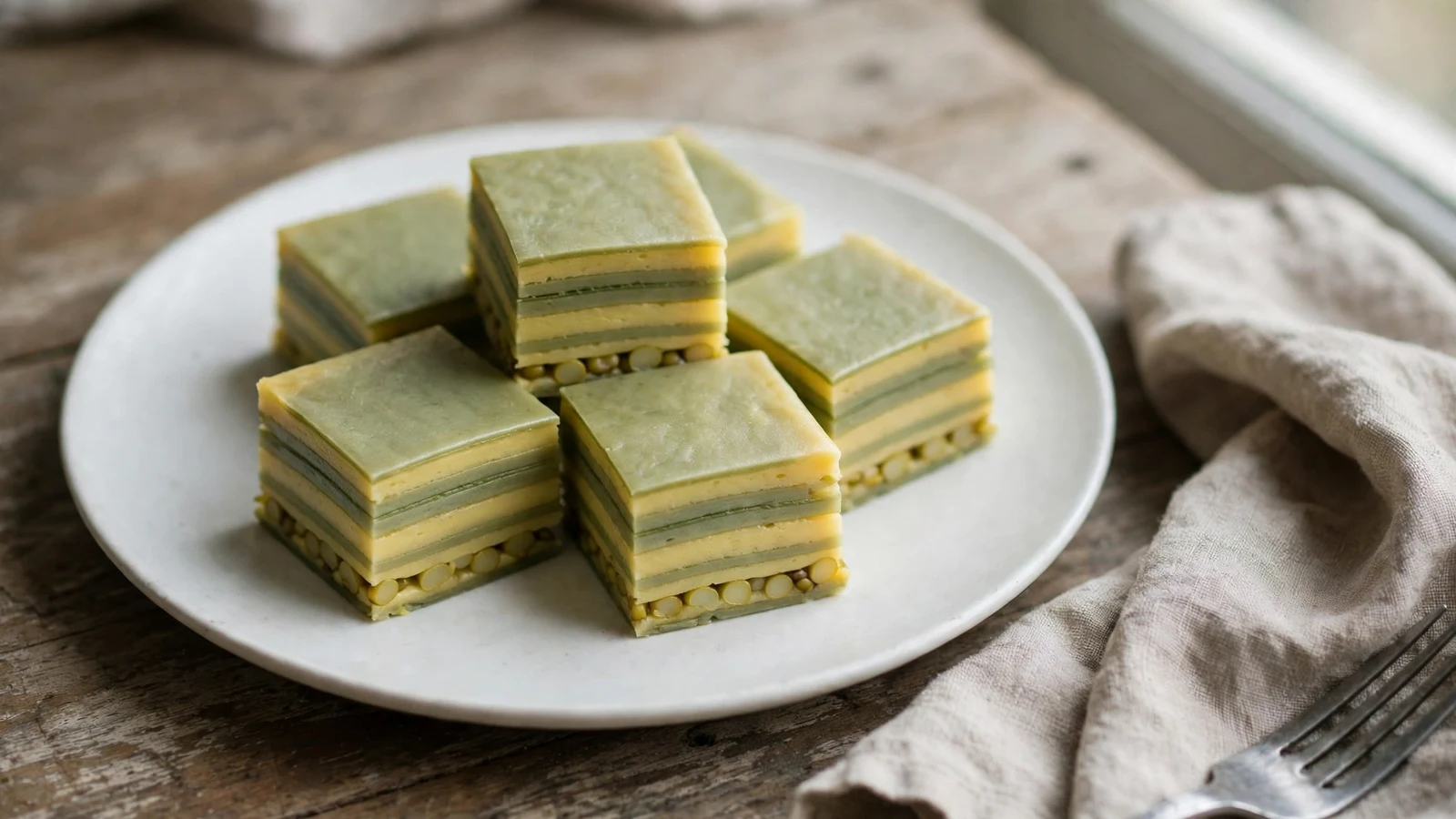
- Lift the lid away from you and wipe it dry, or wrap it in a clean towel. Stir the mung bean batter, pour the same amount over the pandan layer, and steam for 5 minutes. Keep alternating, starting and ending with pandan, until you have 8 layers, 4 green and 4 yellow.
- After the last layer, steam the whole cake for 10 more minutes, until the surface is slightly translucent all the way across and the center does not wobble.
- Let the cake cool completely in the pan, then run a thin knife around the edges and turn it out onto a board. Cut with a knife wrapped in plastic wrap, or lightly oiled, into 16 squares. Best the same day.
Notes
Note 1: Use full-fat coconut milk. Light coconut milk thins the batter and the layers come out soft instead of chewy. Note 2: Stir each batter right before every pour. Tapioca starch sinks fast, and an unstirred pour gives one layer too much starch and the next one too little. Note 3: Steam on low, gentle heat. Hard, rolling steam makes bubbles and blisters on the surface and turns the cake tough. Note 4: A layer is done when its surface turns slightly translucent, feels springy, and no batter sticks to the back of a spoon. Pouring the next layer too early mixes the colors, and steaming too long makes the cake firm. Note 5: Wipe the lid dry between layers, or wrap it in a clean towel. Condensation dripping onto the cake leaves dents and gummy spots. Note 6: Let the cake cool completely before slicing, and wrap the knife in plastic wrap or oil it lightly. A warm cake tears, and a dry knife drags through the layers.