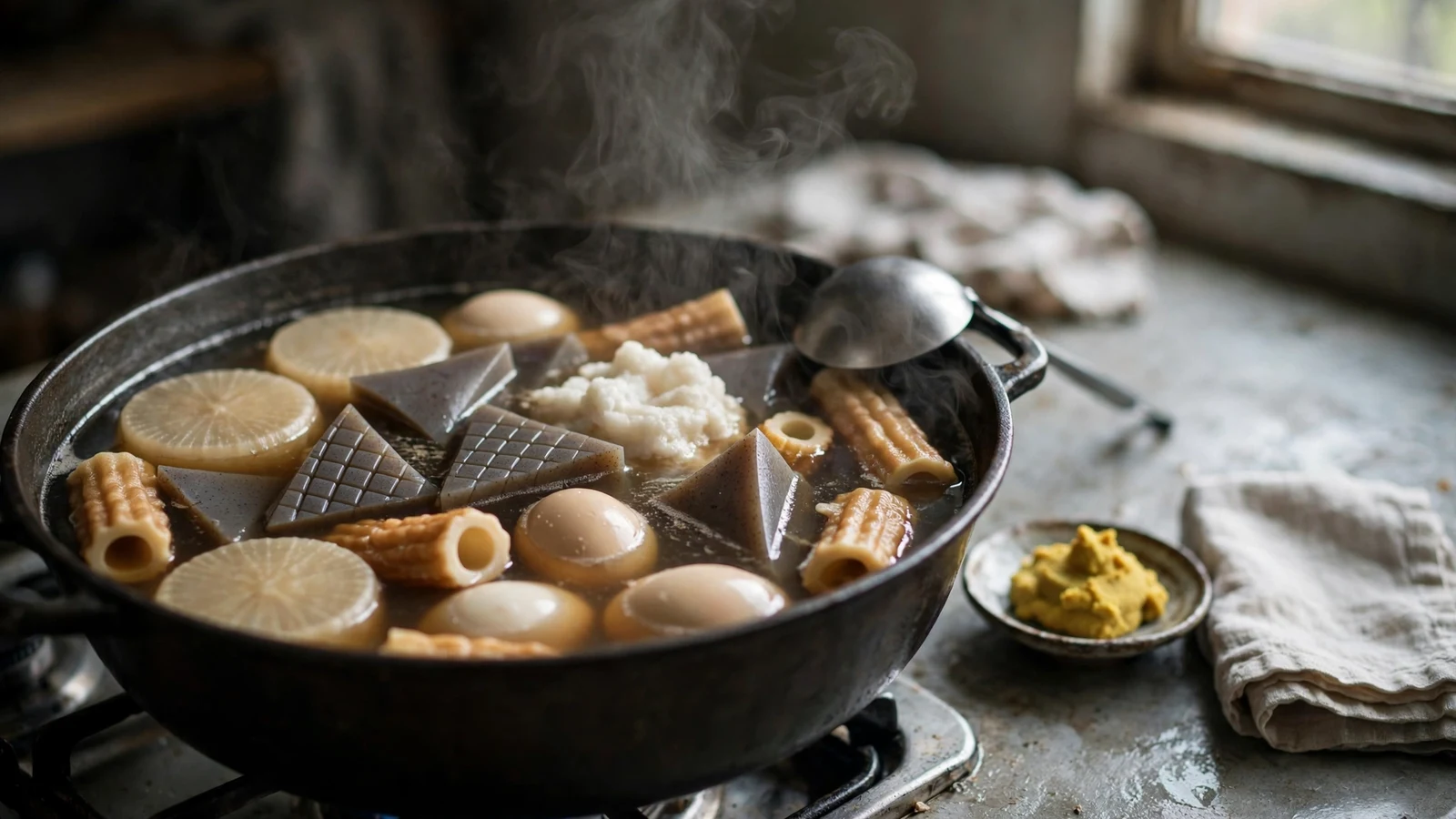
Ingredients
Method
- Peel the daikon, cut into rounds about 1 inch thick, and trim the sharp edge off each round. Cover with cold water in a pot, boil for 20 minutes, then drain. Score a shallow X on the flat face of each round.
- While the daikon boils, hard-boil the eggs for 10 minutes, cool under cold water, and peel. Rinse the konnyaku, score both faces with shallow diagonal cuts in a crisscross, cut into triangles, and boil for 3 minutes, then drain. Cut the atsuage into triangles, the satsuma-age into quarters, the chikuwa in half on a diagonal, and the hanpen into quarters. Soak the kombu strips for 5 minutes until soft, then tie each in a loose knot.
- Put the dashi, soy sauce, mirin, sake, and salt in a large, heavy pot and bring to a bare simmer, just a few bubbles breaking the surface.
- Add the drained daikon, konnyaku, and kombu knots, and simmer gently for 30 minutes. Keep the heat low, never let the pot reach a rolling boil.
- Add the atsuage, satsuma-age, chikuwa, and eggs, and simmer 15 minutes more.
- Add the hanpen last and simmer only 5 minutes, until it puffs up and turns soft. Turn off the heat, let the pot sit for 30 minutes, then serve hot in bowls with karashi mustard on the side.
Notes
Note 1: Parboil the daikon for a full 20 minutes in plain water and trim the edges first. A daikon that goes straight into the broth stays bitter in the middle, and sharp edges break off and cloud the broth.
Note 2: Blanch the konnyaku for 3 minutes before it goes in the pot. An unblanched block keeps a sharp smell that the broth cannot cover, and scoring it in a crisscross lets the broth soak in.
Note 3: Keep the pot at a bare simmer, a few bubbles breaking the surface, for the whole cook. A rolling boil clouds the broth, splits the eggs, and shrinks the fish cakes.
Note 4: Add the pieces in order, daikon and konnyaku first for 30 minutes, then the fried tofu, fish cakes, and eggs for 15, then the hanpen for the last 5 minutes only. Hanpen simmered for the full hour dissolves into the broth.
Note 5: Let the pot rest off the heat for 30 minutes before serving, or overnight in the fridge. The daikon keeps drinking in broth as it sits, and a pot eaten the next day tastes deeper than one served straight off the stove.
Note 6: If the broth tastes too salty after a long simmer, add hot dashi or water a half cup at a time and taste as you go. The broth concentrates as it reduces, so top it up with dashi rather than plain water to keep the flavor.