
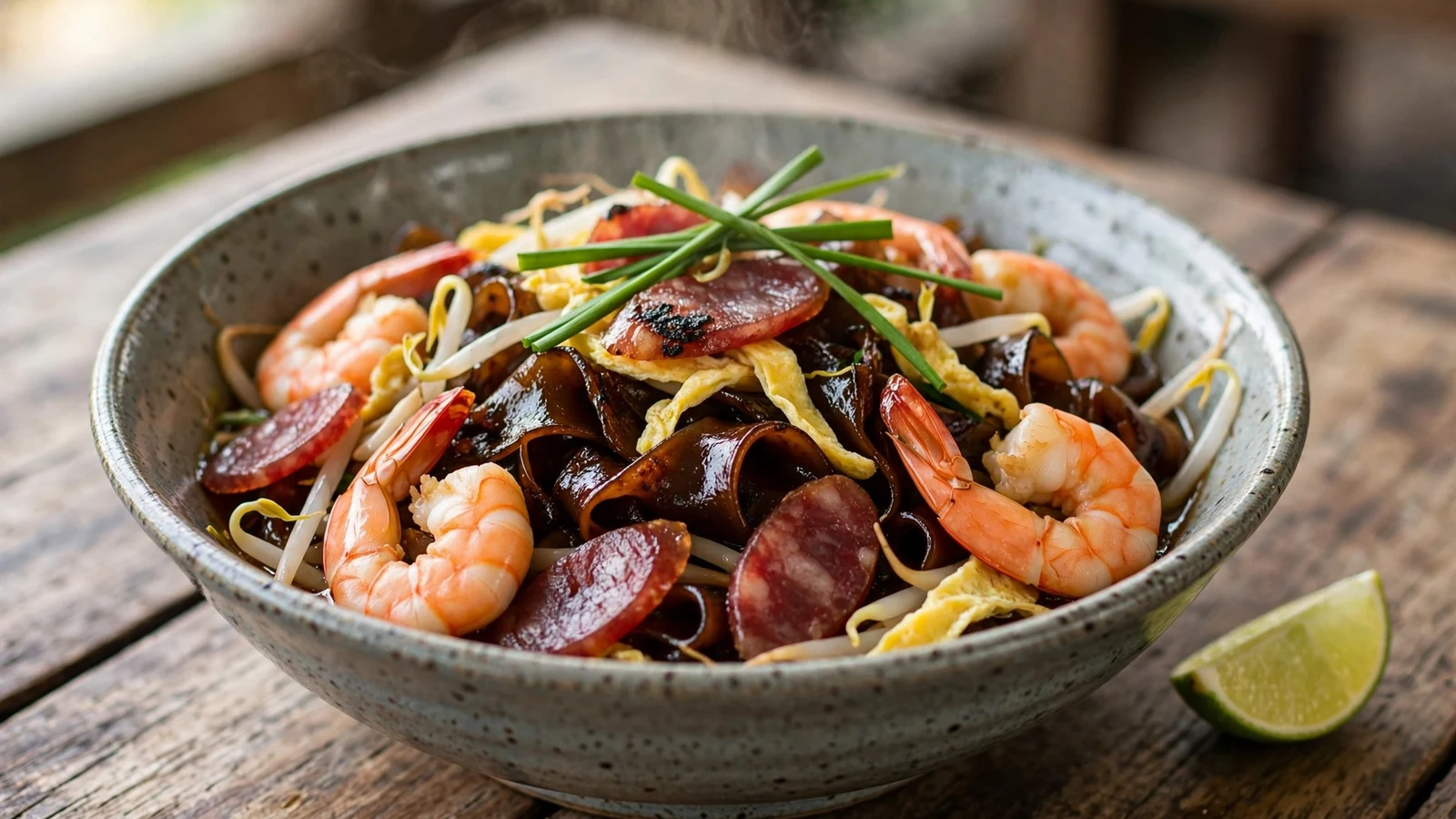
Smoky, Glossy, and Cooked Hot and Fast
Char kuey teow — also spelled char kway teow — is Malaysia's famous flat-noodle stir-fry, built around wide rice noodles seared in a screaming-hot wok until the edges char a little and the sauce turns glossy and dark. Shrimp, Chinese sausage, crisp bean sprouts, garlic chives, and ribbons of egg all cook in minutes, so the whole plate hinges on heat and timing rather than a long simmer. The flavor is smoky first, then sweet-savory, with chili heat tucked underneath.
This version is the Malaysian hawker style: a soy-based sauce with a little sugar for caramelization, sambal or fresh chilies for heat, and sprouts and chives added at the very end so they stay crisp. Cook it in two batches if your wok is small — crowded noodles steam and go soft instead of charring. That breath of the wok is the point here, and What Is Wok Hei and How to Get It at Home explains how to coax it out of a home burner.
It sits in good company with other Southeast Asian noodle plates. Mee Goreng: Malay Stir-Fried Noodles uses yellow wheat noodles and a sweeter, tomato-kissed sauce, while Pad See Ew: Thai Soy Sauce Noodles leans on Chinese broccoli and a lighter soy profile. Char kuey teow is the smokier, richer cousin — flat rice noodles, sausage, and sprouts in every bite.
The Sauce and the Noodles Matter Most
Two choices decide whether this tastes like char kuey teow or just another noodle stir-fry: the noodle itself and the dark, slightly sweet sauce that coats it.
| Element | What to use | Why it matters |
|---|---|---|
| Flat rice noodles (kway teow) | Fresh wide rice noodles if you can find them; otherwise dried flat rice noodles soaked until pliable | Wide noodles char at the edges and carry the sauce without breaking into bits |
| Dark soy sauce | A thick dark soy for color, plus light soy for salt | Dark soy gives the deep mahogany gloss; light soy alone leaves the plate pale |
| Chinese sausage (lap cheong) | Sweet cured sausage, sliced thin on a diagonal | Its rendered fat and sweetness are signature hawker flavor; a little goes a long way |
| Garlic chives | Cut into 1 1/2-inch pieces; scallion greens in a pinch | Chives wilt in seconds and add a mild garlicky bite that scallions only partly match |
Fresh rice noodles are sold in refrigerated sheets or pre-cut ribbons at many Asian markets. They should feel soft and pliable — if a block feels hard, warm it briefly so the ribbons separate without snapping. For dried noodles, soak in warm water until flexible but still firm; they finish cooking in the wok. The Soy Sauce Guide: Light vs Dark vs Tamari breaks down why the two soy sauces here are not interchangeable.
A note on the sausage and the heat: lap cheong is sweet and firm, closer to a cured salami than a fresh sausage, and it renders quickly, so add it after the shrimp have a head start. For the chili element, sambal oelek spreads heat evenly through the sauce, while sliced fresh red chilies land in brighter, sharper bites. Either works — pick the kind of heat you like at the table, and set out Chili Oil 101: Make It at Home for anyone who wants more.
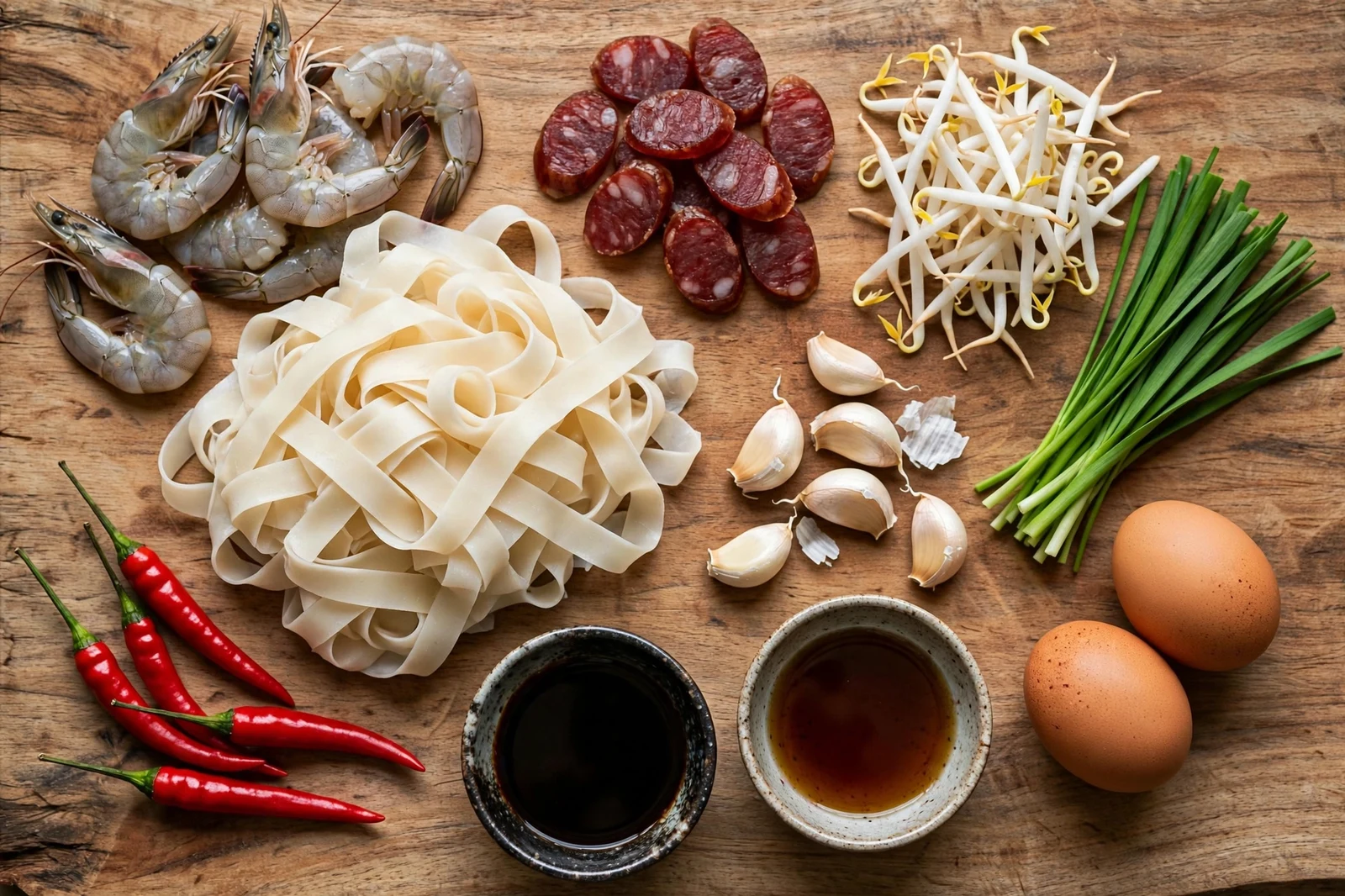
Ingredients
- 14 oz (400 g) fresh flat rice noodles (kway teow), ribbons separated, or 8 oz (225 g) dried flat rice noodles, soaked in warm water until pliable and drained
- 3 tablespoons neutral oil with a high smoke point (avocado, grapeseed, or peanut), divided
- 8 oz (225 g) medium shrimp, peeled, deveined, and patted dry
- 2 links (about 3 oz / 85 g) Chinese sausage (lap cheong), sliced thin on a diagonal
- 3 cloves garlic, finely minced
- 1 to 2 tablespoons sambal oelek, or 2 fresh red chilies, thinly sliced
- 2 large eggs, lightly beaten
- 3 cups (about 200 g) bean sprouts, rinsed and well drained
- 1 cup garlic chives (about 60 g), cut into 1 1/2-inch pieces, or 4 scallions, greens cut the same way
- Lime wedges, for serving
For the sauce:
- 2 tablespoons light soy sauce
- 1 tablespoon dark soy sauce
- 1 tablespoon kecap manis, or 2 teaspoons dark brown sugar
- 1 teaspoon fish sauce (optional, for extra depth)
- 1/2 teaspoon ground white pepper
- 2 tablespoons water
Prep: 20 minutes. Cook: 10 minutes. Total: 30 minutes. Serves 4.
How to Make It, Step by Step
1. Mix the sauce and prep everything. Stir the light soy sauce, dark soy sauce, kecap manis, fish sauce (if using), white pepper, and water together in a small bowl. Char kuey teow cooks in about 5 minutes of wok time, so have the shrimp, sausage, garlic, eggs, sprouts, and chives measured and within reach before the pan heats up.
2. Sear the shrimp. Heat a wok or a large, heavy skillet over high heat until it just starts to smoke. Add 1 tablespoon of the oil and swirl. Add the shrimp in a single layer and sear for 1 minute per side, just until pink at the edges. Move them to a plate — they finish later, and a second full cook turns them rubbery.
3. Render the sausage and build the base. Add another tablespoon of oil. Add the sliced Chinese sausage and stir-fry for 1 minute until the edges curl and some sweet fat renders into the pan. Add the garlic and sambal or chilies and stir for 20 to 30 seconds, just until fragrant. Do not let the garlic brown past pale gold or it turns bitter.
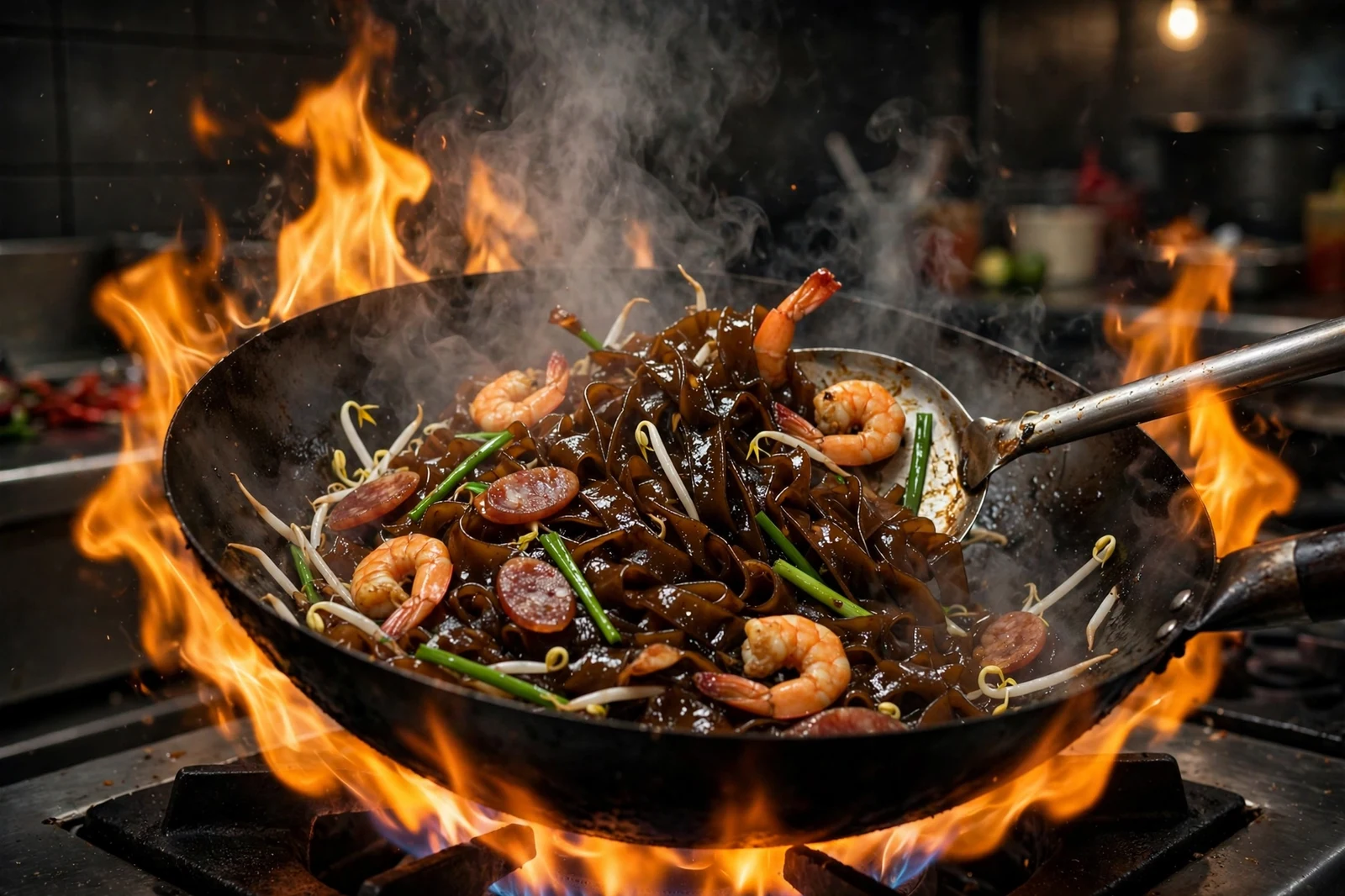
4. Char the noodles. Add the remaining tablespoon of oil, then the noodles. Spread them out, leave them alone for 45 to 60 seconds so the bottom layer chars lightly, then toss. Pour the sauce around the edge of the wok so it sizzles on contact, and toss for 1 to 2 minutes until every ribbon looks glossy and evenly dark, with a few crisped edges. If the noodles feel stiff, sprinkle in a tablespoon of water and toss again.
5. Add the egg. Push the noodles to one side, pour the beaten eggs into the empty space, and let them set for 20 seconds. Scramble them into soft ribbons with your spatula, then fold them through the noodles.
6. Finish with sprouts and chives. Return the shrimp and any juices to the wok. Add the bean sprouts and garlic chives and toss for 30 to 45 seconds — just until the sprouts lose their raw edge but stay crisp and the chives wilt. Taste and adjust: a pinch of sugar if it reads flat, a splash of light soy if it needs salt. Serve right away on warm plates with lime wedges.
Getting the Char Right
The noodles came out soft and pale: the wok was not hot enough, or too many noodles went in at once. Cook in two batches if needed, let the noodles sit undisturbed to char, and keep the sprouts dry — wet sprouts drop the pan temperature fast.
The noodles broke into short bits: they were over-soaked, or tossed too roughly before they softened in the sauce. Soak dried noodles only until pliable, and lift and fold with a wide spatula instead of stirring hard for the first minute.
It tastes sweet and one-note: balance it at the end. A squeeze of lime, extra white pepper, or a spoonful of chili oil sharpens the plate. If you used kecap manis and your bottle runs very sweet, cut it to 2 teaspoons next time and add a pinch of salt with the sauce.
The shrimp are tough: they cooked twice for too long. Sear them only until pink at the edges in step 2, then give them the final 30 seconds with the sprouts. Small shrimp need even less time.
Variations Worth Knowing
- With cockles, hawker style: add 1 cup shucked blood cockles (or small clams) with the shrimp in the final toss, cooking just until heated through. This is the old-school Penang and Singapore hawker touch.
- Vegetarian char kuey teow: skip the shrimp, sausage, and fish sauce. Use pressed extra-firm tofu slices seared golden first, add a handful of shredded cabbage with the noodles, and season the sauce with an extra teaspoon of light soy sauce. See the tofu textures in our guide if you are choosing a block.
- Chicken char kuey teow: swap the shrimp for 8 oz thinly sliced chicken thigh, seared the same way in step 2 until just cooked through at the edges.
- Extra smoky, egg-forward: use 3 eggs instead of 2 and let bigger, softer curds form before folding them through. Serve with extra garlic chives raw on top for a fresh bite against the smoke.
- With a side of greens: a plate of Sambal Kangkong: Water Spinach with Chili next to the noodles is a classic hawker-center pairing — something green and fiery beside the rich, dark noodles.
Serving and Leftovers
Serve char kuey teow straight from the wok while the noodles are glossy and the sprouts still snap. It waits for no one — the noodles keep absorbing sauce as they sit, so plate it in the kitchen and bring the lime and extra chili to the table. A cold cucumber salad or a simple clear soup makes a clean side if you want one.
Leftovers keep in a covered container in the refrigerator for up to 2 days. Reheat in a wok or wide skillet over high heat with a teaspoon of oil and a splash of water, tossing for 2 to 3 minutes until the noodles loosen and gloss again. The sprouts will soften — that is expected — and a fresh handful of chives stirred in at the end helps. Cooked shrimp in the leftovers should be reheated until steaming hot throughout.
Do not freeze the finished dish. The rice noodles turn brittle and the sprouts go limp on thawing, so this is a cook-it-fresh plate. The sauce, though, keeps for a week in the fridge — mix a double batch and the next round of noodles comes together even faster.
Recipe Card Summary
Malaysian char kuey teow: wide flat rice noodles wok-charred with shrimp, Chinese sausage, bean sprouts, garlic chives, and egg in a dark, slightly sweet soy sauce with sambal heat. Prep 20 minutes, cook 10 minutes. Serves 4.
Malaysian Char Kuey Teow
Ingredients
Method
- Mix the sauce and prep everything: stir the light soy sauce, dark soy sauce, kecap manis, fish sauce (if using), white pepper, and water together in a small bowl. Have the shrimp, sausage, garlic, eggs, sprouts, and chives measured and within reach before the pan heats up.
- Sear the shrimp: heat a wok or large heavy skillet over high heat until it just starts to smoke. Add 1 tablespoon of the oil and swirl. Add the shrimp in a single layer and sear for 1 minute per side, just until pink at the edges. Move them to a plate.
- Render the sausage and build the base: add another tablespoon of oil. Add the sliced Chinese sausage and stir-fry for 1 minute until the edges curl and some sweet fat renders. Add the garlic and sambal or chilies and stir for 20 to 30 seconds, just until fragrant.
- Char the noodles: add the remaining tablespoon of oil, then the noodles. Spread them out, leave them alone for 45 to 60 seconds so the bottom layer chars lightly, then toss. Pour the sauce around the edge of the wok so it sizzles on contact, and toss for 1 to 2 minutes until every ribbon looks glossy and evenly dark, with a few crisped edges. If the noodles feel stiff, sprinkle in a tablespoon of water and toss again.
- Add the egg: push the noodles to one side, pour the beaten eggs into the empty space, and let them set for 20 seconds. Scramble them into soft ribbons, then fold them through the noodles.
- Finish with sprouts and chives: return the shrimp and any juices to the wok. Add the bean sprouts and garlic chives and toss for 30 to 45 seconds, just until the sprouts lose their raw edge but stay crisp and the chives wilt. Taste and adjust, then serve right away on warm plates with lime wedges.