
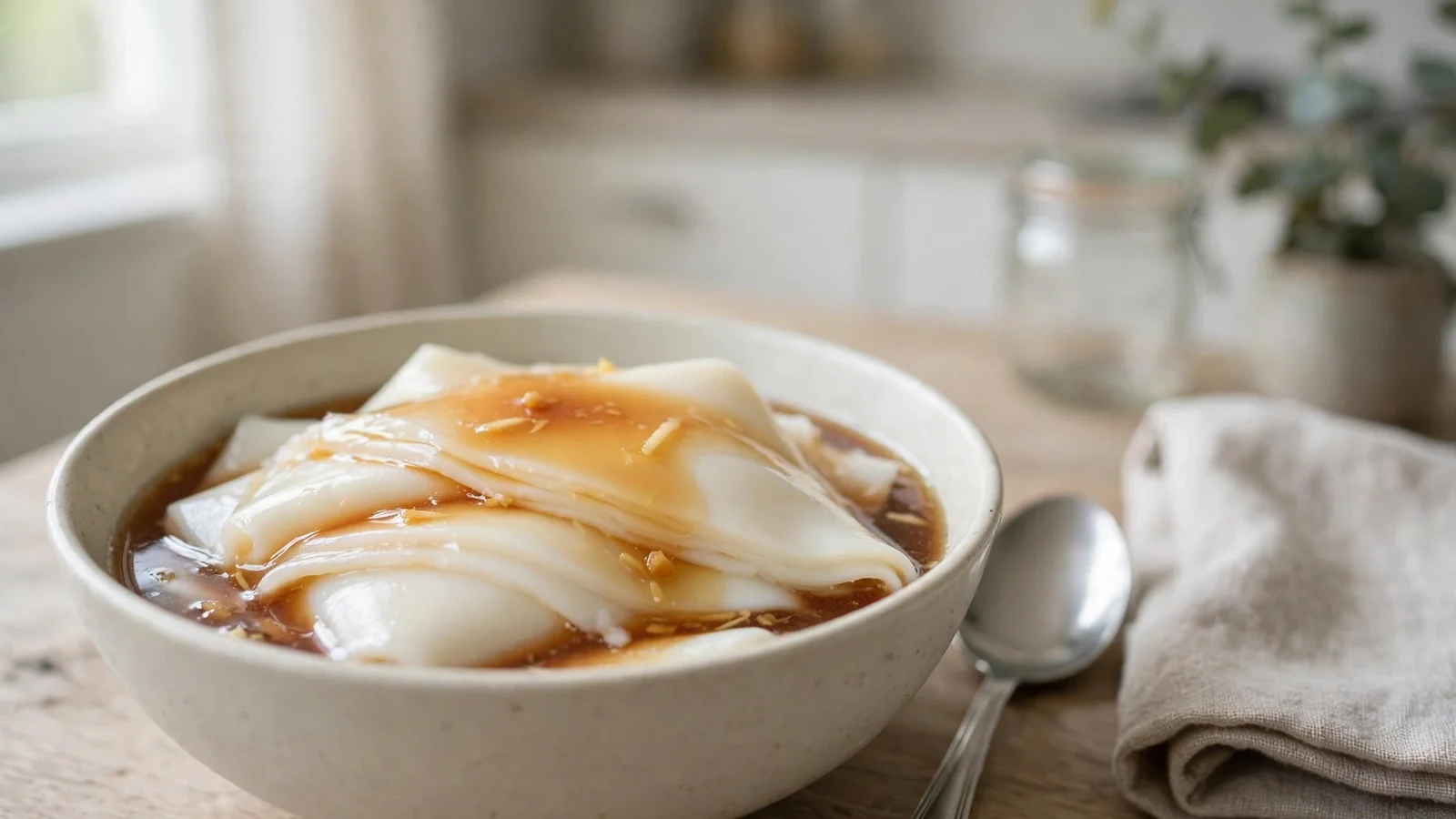
Tau fu fah is a Malaysian soy beancurd dessert: barely set soy milk, scooped into thin layers and served warm with ginger and palm sugar syrup. The numbers are measured: 1 litre of plain unsweetened soy drink, 1/2 teaspoon of GDL (2.5 grams) with 1 tablespoon of cornstarch, the milk heated to 98C, and 30 minutes of still setting time. The syrup is 1/2 cup of palm sugar with 3/4 cup of water and 25 grams of sliced ginger, simmered 10 minutes. The recipe makes 4 bowls, and each one turns out soft, wobbly, and just sweet enough that the ginger shows through.
What is tau fu fah?
Tau fu fah is the Malaysian name for douhua, the Chinese soy beancurd dessert sold warm from street stalls and dessert shops across Malaysia and Singapore. Hot soy milk is set with a coagulant into a curd so soft it barely holds together, then scooped into bowls in thin layers with a wide flat spoon and covered with syrup. The usual syrup is ginger and sugar, and in Malaysia it is often palm sugar, gula melaka, which gives the syrup a dark caramel note. The texture is the point: it should wobble on the spoon and melt on the tongue, closer to a custard than to tofu. Our Mango Sago: Creamy Mango Dessert is the chilled dessert to make when you want something cold from the same shelf, and our Sago Gula Melaka: Malaysian Sago Pudding uses the same palm sugar syrup over sago pearls.
Ingredients
For the beancurd
- 1 litre plain unsweetened soy drink
- 1/2 teaspoon GDL (glucono delta-lactone), about 2.5 grams
- 1 tablespoon cornstarch
- 3 tablespoons cold water
For the ginger palm sugar syrup
- 3/4 cup water
- 1/2 cup palm sugar (gula melaka), chopped
- 25 grams fresh ginger, peeled and sliced
- 1 pandan leaf, knotted, optional
How to make it
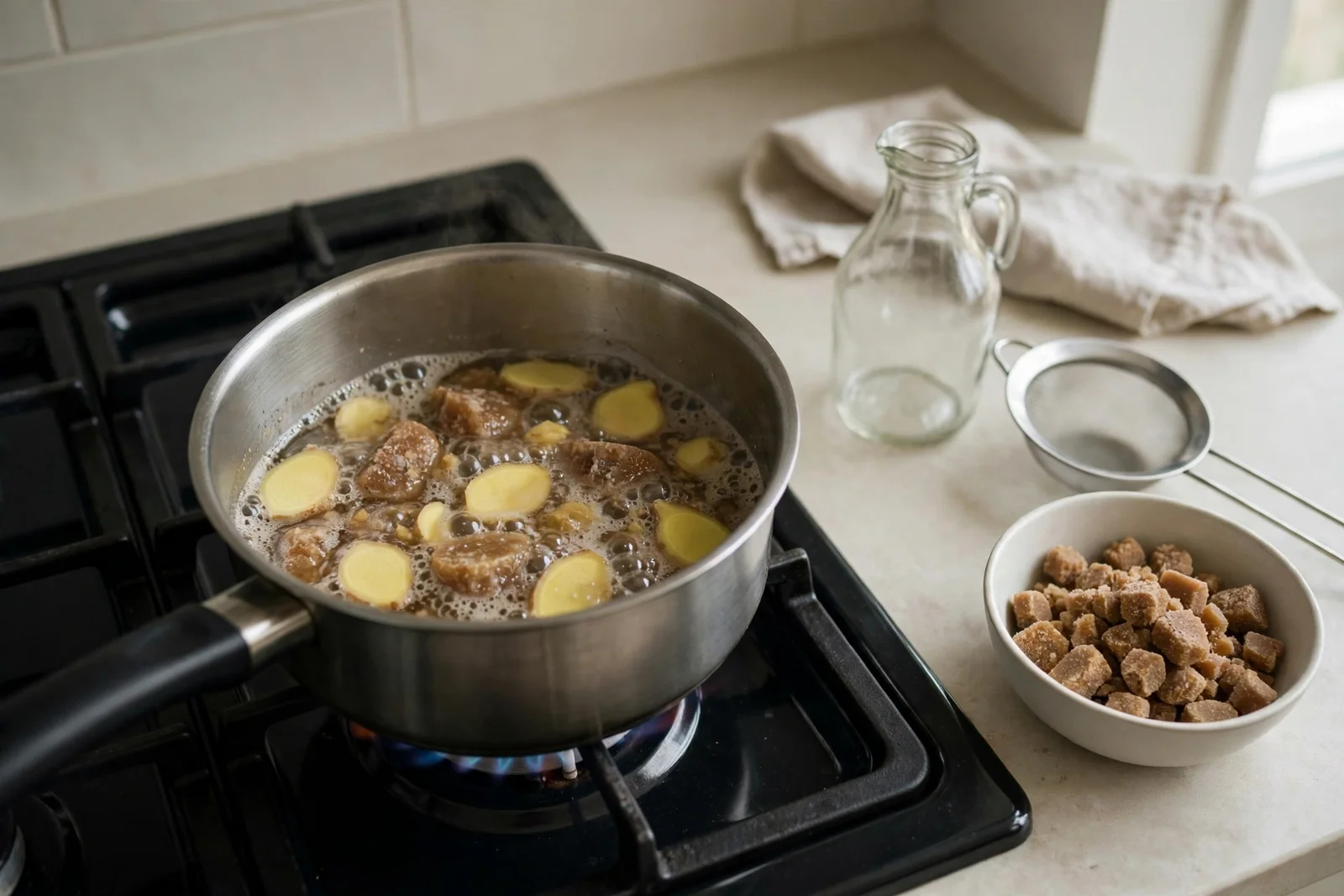
Make the syrup first. Put the water, palm sugar, ginger, and pandan leaf in a small saucepan over medium heat and simmer for 10 minutes, until the sugar has dissolved and the syrup has thickened a little. Strain it into a jug and keep it warm. The syrup should coat the back of a spoon in a thin layer, not run like water and not pour like honey. If you use brown sugar instead of palm sugar, use the same amount and add the ginger the same way.
Pour the soy drink into a large saucepan and heat it over medium heat, stirring now and then, until it reaches 98C and is steaming hard with small bubbles around the edge. Do not let it boil over, and skim off any skin that forms on top. While the milk heats, stir the GDL and cornstarch into the cold water in a wide heatproof bowl until smooth, then swirl the mixture around the bowl so it coats the sides. The soy drink must be plain, with soybeans and water as the only ingredients on the label. Cartons sold as coffee substitutes, with added oil and stabilizers, do not set, and neither do soy powders.
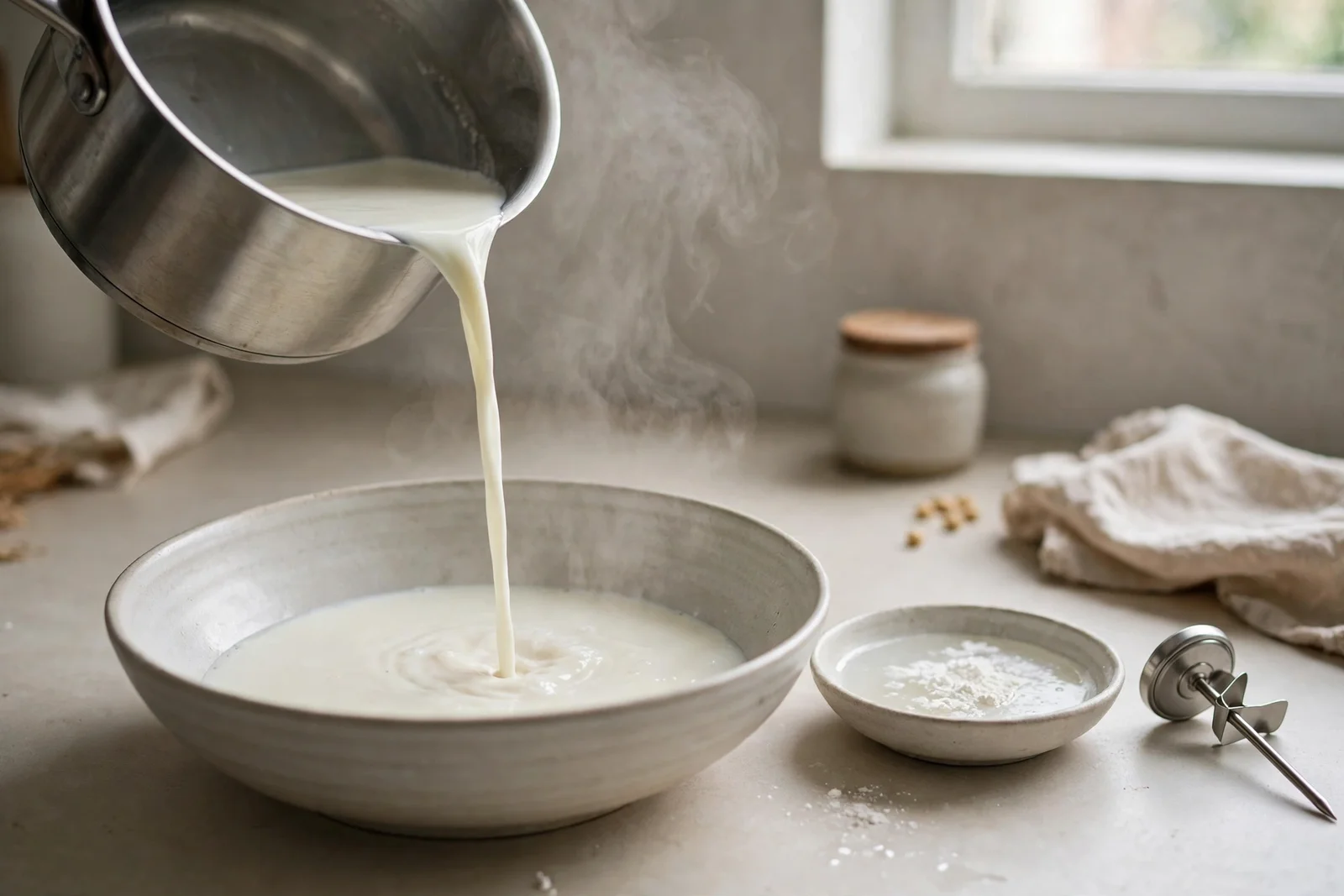
As soon as the milk reaches 98C, pour it into the GDL bowl in one steady stream from a little height, give it one gentle stir, and skim off any bubbles on the surface. Cover the bowl with a lid or a plate and leave it completely still for 30 minutes. Do not move it, tilt it, or peek under the lid: any jolt while the curd is forming breaks it into grainy bits. After 30 minutes the surface should be smooth and the curd should tremble when you tap the side of the bowl. If the room is cold, give it 10 minutes more.
Scoop the beancurd into bowls with a wide spoon, sliding the spoon in at a shallow angle so each serving comes out in thin silky layers instead of a single lump. Ladle the warm syrup over the top, a few spoonfuls per bowl, and serve right away while it is still warm. Leftover beancurd keeps in the fridge for up to 2 days in its bowl, covered; the syrup keeps in a jar for a week. Serve the cold leftovers with cold syrup, or warm a bowl gently in a water bath, never in a microwave on high, which turns the curd rubbery.

Troubleshooting: Fix My Tau Fu Fah
Most tau fu fah problems come from the soy drink, the GDL, or the heat. Pick the problem that matches your bowl below for a practical next step.
HERB & LIME · KITCHEN HELP
Fix My Tau Fu Fah
Choose what went wrong to see a practical next step.
Possible cause
What to try next
For next time
From Paul's kitchen. Results vary with soy drink brand, GDL freshness, and stove heat, adjust timing to your setup.
Quick reference (also works without JavaScript)
It stayed liquid and never set
Cause: The soy drink was too thin or the wrong kind, or the milk was not hot enough for the GDL to work.
Try: Warm the liquid again to 98C, stir a fresh 1/2 teaspoon of GDL dissolved in 3 tablespoons of cold water into a clean bowl, pour the hot milk in, cover, and leave it still for 30 minutes.
Prevent: Use plain soy drink with soybeans and water as the only ingredients, and heat it to 90 to 98C before pouring.
It tastes sour
Cause: Too much GDL was used, so excess acid stayed in the curd.
Try: Serve it with extra warm syrup in each bowl to soften the sour edge, the sourness itself cannot be removed.
Prevent: Measure the GDL level, 1/2 teaspoon (2.5 grams) per litre of soy drink, never a heaped spoon.
It came out grainy, split into curds and whey
Cause: The forming curd was stirred or jolted while it set, which breaks the gel into small grains.
Try: Scoop it gently and serve with plenty of syrup, the texture will not smooth out, but the flavor is still fine.
Prevent: Pour in one steady stream, stir once only, then leave the bowl completely still for the full 30 minutes.
The top is full of bubbles and the surface is rough
Cause: Foam from the pour was left on the surface before the bowl was covered.
Try: Spoon off the bubbly top layer before serving, the curd underneath is smooth.
Prevent: Pour from a little height in a steady stream, skim the bubbles off right after pouring, then cover.
It set too firm, like jelly, not silky
Cause: Agar agar was used instead of GDL, or too much cornstarch went in, so the set is firm rather than spoonable.
Try: Serve it chilled with cold syrup as a firm jelly dessert, it still tastes good, just different.
Prevent: Use GDL for the soft spoonable set, and keep the cornstarch to 1 tablespoon per litre.
Tau Fu Fah: Malaysian Soy Beancurd Dessert
Ingredients
Method
- Make the syrup first. Put the water, palm sugar, ginger, and pandan leaf in a small saucepan over medium heat and simmer for 10 minutes, until the sugar has dissolved and the syrup has thickened a little. Strain it into a jug and keep it warm.
- Pour the soy drink into a large saucepan and heat it over medium heat, stirring now and then, until it reaches 98C and is steaming hard with small bubbles around the edge. Skim off any skin that forms on top. While the milk heats, stir the GDL and cornstarch into the cold water in a wide heatproof bowl until smooth, then swirl the mixture around the bowl so it coats the sides.
- As soon as the milk reaches 98C, pour it into the GDL bowl in one steady stream from a little height, give it one gentle stir, and skim off any bubbles on the surface. Cover the bowl with a lid or a plate.
- Leave the bowl completely still for 30 minutes. Do not move it, tilt it, or peek under the lid. After 30 minutes the surface should be smooth and the curd should tremble when you tap the side of the bowl. If the room is cold, give it 10 minutes more.
- Scoop the beancurd into bowls with a wide spoon, sliding the spoon in at a shallow angle so each serving comes out in thin silky layers instead of a single lump. Ladle the warm syrup over the top and serve right away while it is still warm.
Notes
More Malaysian recipes
Four more from the same shelf: Sago Gula Melaka: Malaysian Sago Pudding is the palm sugar dessert to make when you want the same syrup over chewy sago pearls; Nasi Lemak with Coconut Rice and Sambal is the coconut rice plate to cook when you want a full Malaysian meal; Roti Canai: Malaysian Flaky Flatbread is the griddle bread to make when you want something to tear and dip; and Laksa Sarawak: Malaysian Spicy Noodle Soup is the spicy noodle soup to cook when you want heat instead of dessert.
From the garden
The ginger in the syrup comes from a pot by the back door, and fresh ginger makes a real difference here: the slices stay firm enough to strain out cleanly, and the syrup tastes bright instead of flat. Our guide to growing ginger in pots covers how to start a piece with two or three eyes and when to dig it up.
From Paul’s kitchen.