
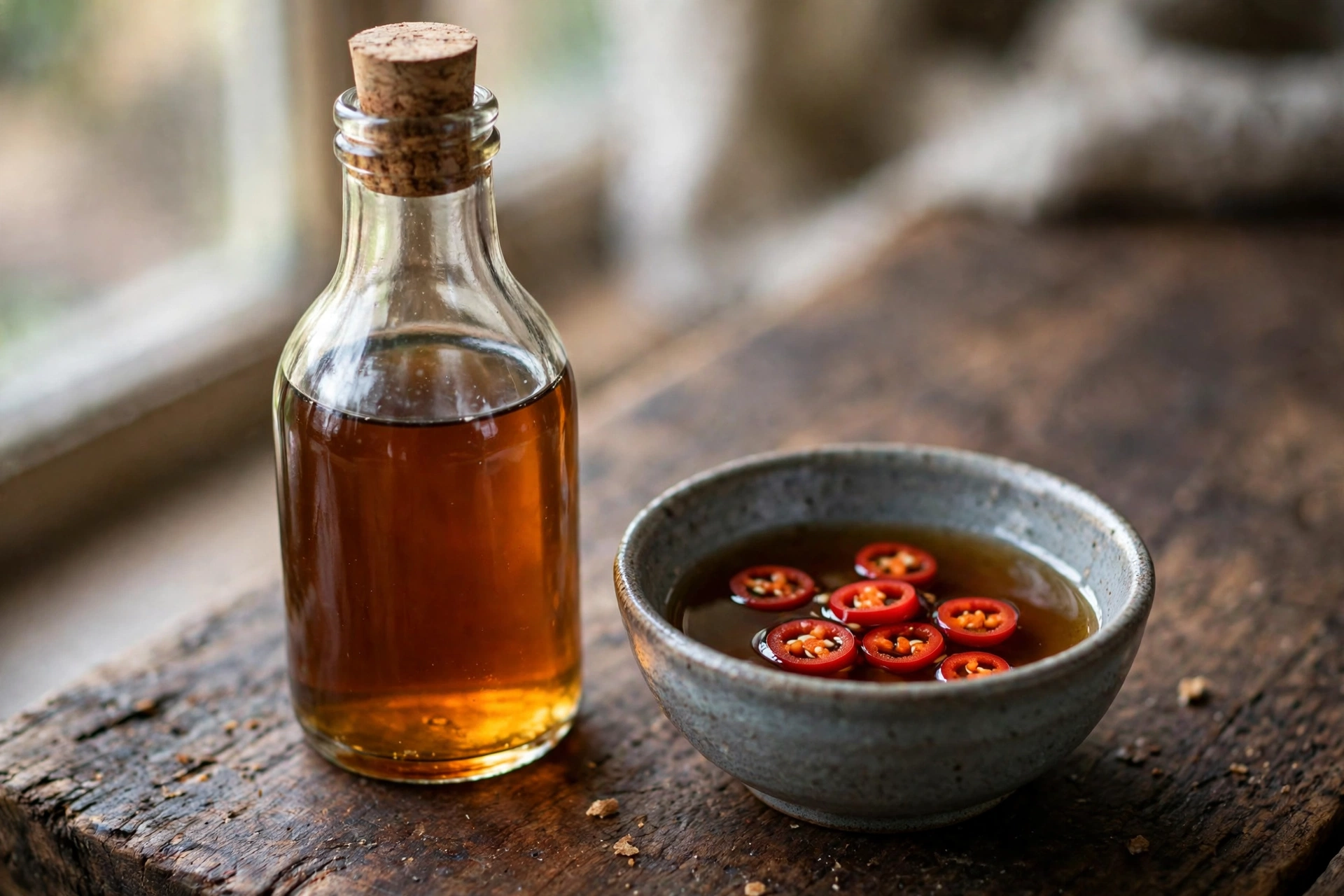
Identity — what it is
Fish sauce is a fermented condiment made by layering small fish — most often anchovies — with salt and leaving them to break down over many months into a clear amber liquid. Known as nước mắm in Vietnam, nam pla in Thailand, and patis in the Philippines, it is the backbone seasoning of much of Southeast Asian cooking.
Taste — flavor profile
Straight from the bottle, fish sauce is intensely salty with a pungent, almost funky aroma that can catch newcomers off guard. In the pan, that funk melts away into deep, rounded umami: a meaty, savory depth with a faint caramel sweetness underneath. A good bottle tastes layered — salt first, then a long savory finish — rather than harsh or one-dimensionally fishy.
In the Kitchen — how it's used in pan-Asian cooking
Fish sauce seasons the way salt does, but with an extra dimension of savoriness. Vietnamese cooks use it to caramelize clay-pot braises like cá kho tộ and to build the dipping sauce that turns bánh xèo into a full meal. It forms the savory backbone of the mì Quảng broth and gives the dressing for Vietnamese green papaya salad its tangy, funky edge. It also seasons the marinade for bò lúc lắc, where a little goes a long way.
One note on quantity: fish sauce is extremely salty. A tablespoon typically contains more than 1,400 mg of sodium depending on the brand, so think of it as a seasoning measured in teaspoons and dashes rather than glugs.
Buying — how to choose at the store
Read the ingredient list first. The best fish sauces contain just fish and salt, and the label will often show a nitrogen degree (°N) — a marking of protein concentration built up during fermentation. Bottles at 30°N and above tend to be richer and more complex; cheaper bottles that list added water, sugar, or flavorings usually taste thin and sharp by comparison. Look for a clear amber color and avoid anything cloudy.
Storage
Unopened, fish sauce keeps for years in a cool, dark cupboard. After opening, it can stay right on the shelf — the salt concentration preserves it. Over time the color darkens and the flavor deepens slightly, which is normal. Refrigeration is not necessary, though a very old opened bottle may gradually lose its brightest aromas.
Substitutes — 2-3 substitutes with brief context each
- Soy sauce — the closest easy swap for saltiness, though it lacks the funky depth. A squeeze of lime in a dipping sauce helps mimic the tang of a fish-sauce-based nước chấm.
- Anchovy paste — a small amount dissolved in warm water approximates the fishy-salty core in cooked dishes like braises and soups.
- Coconut aminos — milder and slightly sweeter, a good option in dressings and marinades when you want umami without the intense salt hit.
Where to Buy
- Asian grocery stores
- Well-stocked supermarkets
- Online retailers
What to look for
Look for a short ingredient list — anchovies (or fish), salt, and sometimes a little sugar. Bottles marked first-press or "extra virgin" style are simply the first extraction; any traditionally made fish sauce works.
What to avoid
Skip bottles where hydrolyzed vegetable protein or caramel color lead the ingredient list instead of fish.