
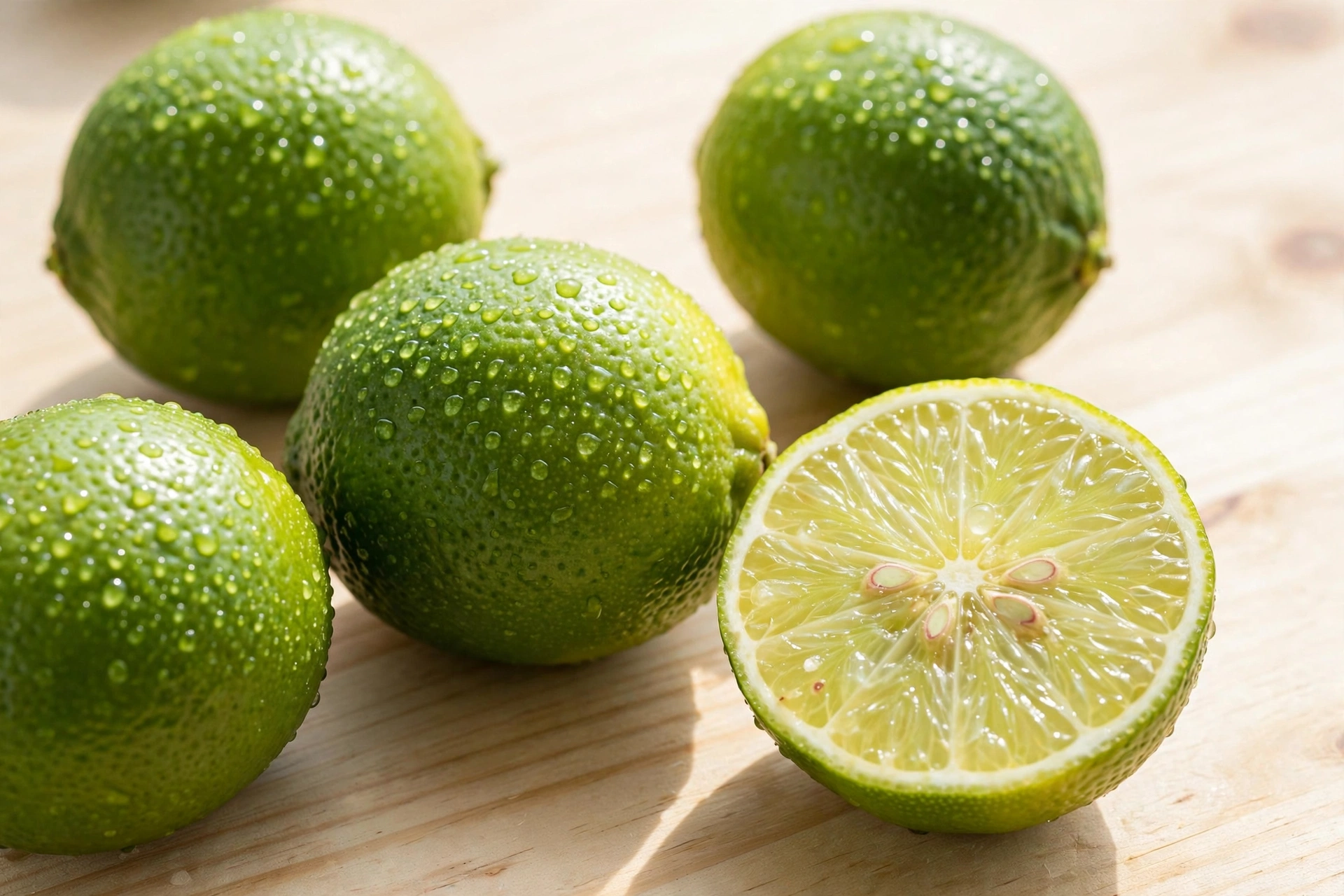
Identity — what it is (1-2 sentences)
Lime is a small, green citrus fruit whose juice and zest both do heavy lifting in the kitchen. The Persian (Tahitian) lime is the one you'll see in nearly every US grocery store, while the smaller, more acidic Key lime shows up mostly in desserts and specialty markets.
Taste — flavor profile
Lime tastes sharper and more aromatic than lemon — bright, tart, and distinctly floral, with a bitter-green edge from its zest oils. A squeeze of it doesn't just add sourness; it wakes up everything around it, which is why so many Southeast Asian dishes taste flat without it. The juice is intensely acidic, so it's used as an accent rather than a main event.
In the Kitchen — how it's used in pan-Asian cooking
In Vietnamese cooking, lime juice is one of the core seasonings of nước chấm, the sweet-salty-tart dipping sauce that shows up beside nearly everything, and it's the classic dip for our Bò Lúc Lắc — the shaken beef is served with a small bowl of lime juice stirred with salt and black pepper, and diners dip each cube as they eat. A wedge of lime squeezed over a steaming bowl of Phở Gà right before eating is practically non-negotiable: the acid cuts through the rich chicken broth and sharpens the herbs. Lime is also the souring agent in the dressing for Vietnamese Green Papaya Salad, where it balances fish sauce and sugar into that bright, mouth-watering flavor.
Across Thai cooking, lime plays the same role — it's the "sour" in the sweet-sour-salty-hot balance of dishes like tom yum and larb. The zest, with its concentrated aromatic oils, goes into marinades, dressings, and drinks. And squeezed over anything grilled, from skewers to whole fish, a lime wedge is the simplest finishing touch there is.
Buying — how to choose at the store
Pick limes that are glossy and light to deep green, with thin, smooth skin, and feel heavy for their size — heaviness means juice. A good lime gives a little when you squeeze it gently. Avoid limes with yellowish skin, large blemishes or soft spots, and any that feel hard, shriveled, or have coarse, thick skin — those are usually dry inside. Peak season runs roughly June through August, but limes are widely available year-round. Rinse limes under water before cutting, even if you're only after the juice, and roll them firmly on the counter before squeezing to release more juice.
Storage
Whole limes keep at room temperature, out of direct sun, for about a week — but the refrigerator is the better bet for longer storage, where they'll last up to four weeks. A plastic bag in the crisper drawer helps them hold onto moisture. Once cut, wrap the exposed half tightly and use it within a few days. Lime juice can be frozen in an ice cube tray for easy portioning into future dressings and sauces.
Substitutes — 2-3 substitutes with brief context each
- Lemon juice: The closest one-to-one swap in most dressings and dipping sauces. It’s a touch less aromatic and floral than lime, but the acidity works the same way.
- Rice vinegar: For dressings like the green papaya salad dressing, a splash of unseasoned rice vinegar plus a little grated citrus zest can approximate lime’s bright tartness when you have none on hand.
- Calamansi juice: A tiny Southeast Asian citrus that’s even more aromatic than lime — common in Filipino cooking. If you spot calamansi at an Asian market, it makes a wonderful stand-in, though it’s usually pricier and seasonal.
Where to Buy
- Well-stocked supermarkets
- Farmers markets
What to look for
Choose limes that feel heavy for their size with glossy, thin skin — heavy means juicy. A gentle squeeze should give slightly.
What to avoid
Avoid hard, light limes with dull, thick skin; they are usually dry inside.