
Identity — what it is
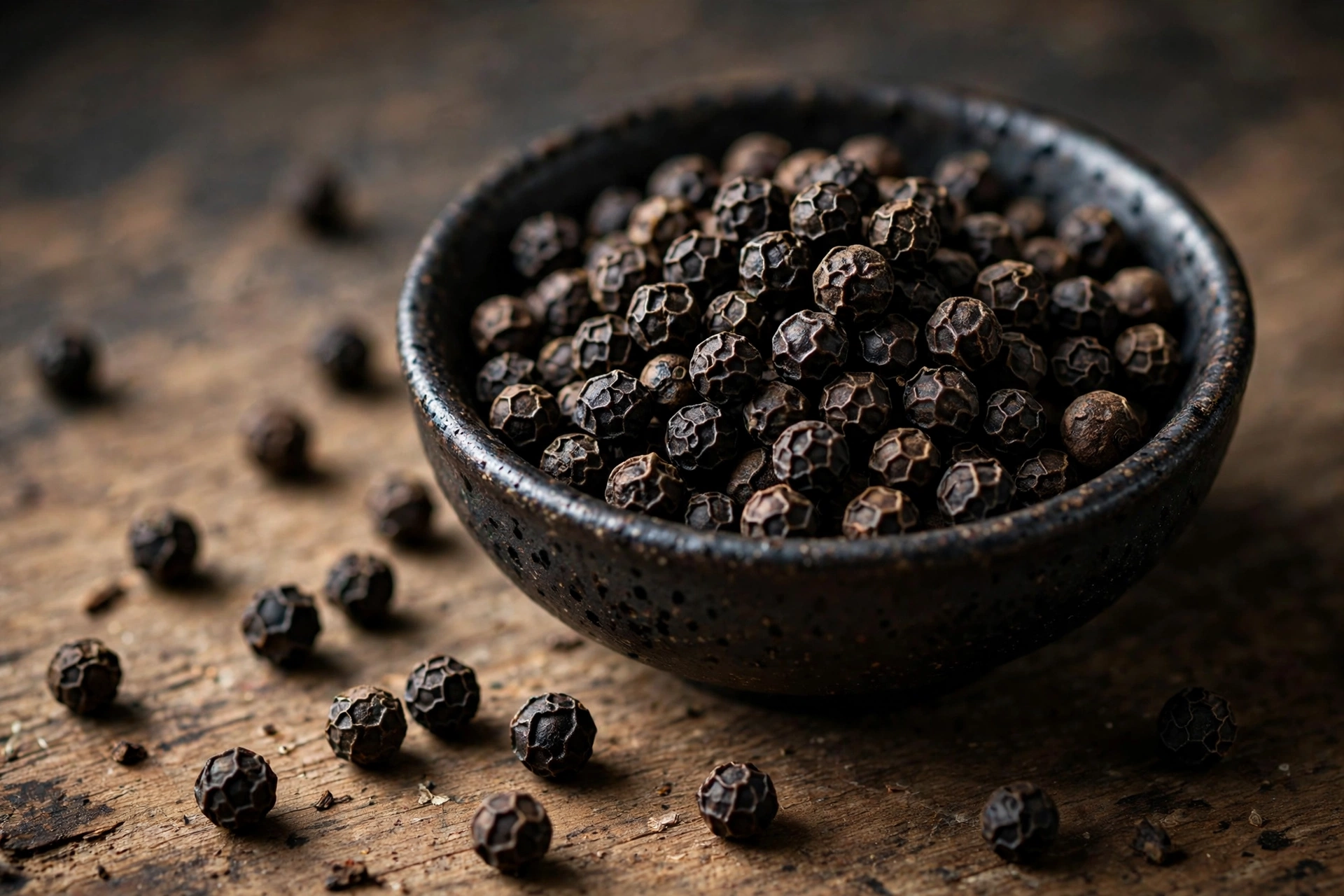
Black pepper is the dried berry of the Piper nigrum vine, picked unripe and dried until the skin wrinkles black around the seed. It is called tiêu or hồ tiêu in Vietnam, where the central highlands grow some of the world’s most pungent peppercorns. Sold whole as peppercorns or pre-ground, it is the most widely used spice on earth — and in Vietnamese cooking, it is a defining flavor rather than background seasoning.
Taste — flavor profile
Black pepper tastes warm, biting, and woody, with piney and citrusy notes underneath the heat. Its bite is completely different from chili heat: it blooms in the nose and the back of the throat rather than burning the tongue. Freshly cracked pepper is dramatically more aromatic than pre-ground — the volatile oils that carry its fragrance start fading the moment the berry is broken, which is why a pepper mill earns its counter space.
In the Kitchen — how it’s used in pan-Asian cooking
Vietnamese cooking treats black pepper as a co-star. The classic table dip for bò lúc lắc is simply lime juice stirred with salt and a heavy hand of cracked black pepper — cubes of seared beef get dragged through it bite by bite, and the pepper’s bite cuts the richness of the meat. It seasons marinades for grilled pork and beef, goes into clay-pot braises, and finishes clear soups, where the dark flecks are part of the look as much as the flavor.
Buying — how to choose at the store
Buy whole peppercorns and a grinder — that single change matters more than any brand or origin. Look for berries that are uniform in size, heavy, and deeply wrinkled; light, dusty, or broken pieces have lost their oils. Pre-ground pepper is fine for baking or large-batch marinades, but expect it to taste flatter.
Storage
Whole peppercorns keep for years in an airtight container away from heat and light — they are one of the most shelf-stable spices you can own. Ground pepper is a different story: it starts losing its punch within a few months, so grind only what you need or buy small containers. Keep the mill away from the steaming pot; moisture clumps the grind and dulls the mechanism.
Substitutes — 2-3 substitutes with brief context each
- White pepper — the sharper, more fermented-tasting cousin (the same berry with the skin removed). It is the authentic pick for clear Vietnamese soups where black flecks would show, and for Chinese hot-and-sour soup.
- Sichuan peppercorns — not a flavor match, but they supply a warm tingle; useful when a stir-fry needs heat of a different kind. They numb more than they bite.
- Cayenne or chili flakes — a last-resort swap for heat only. They bring fire without pepper’s woody aroma, so the dish will taste hot but not peppery.