
Identity — what it is
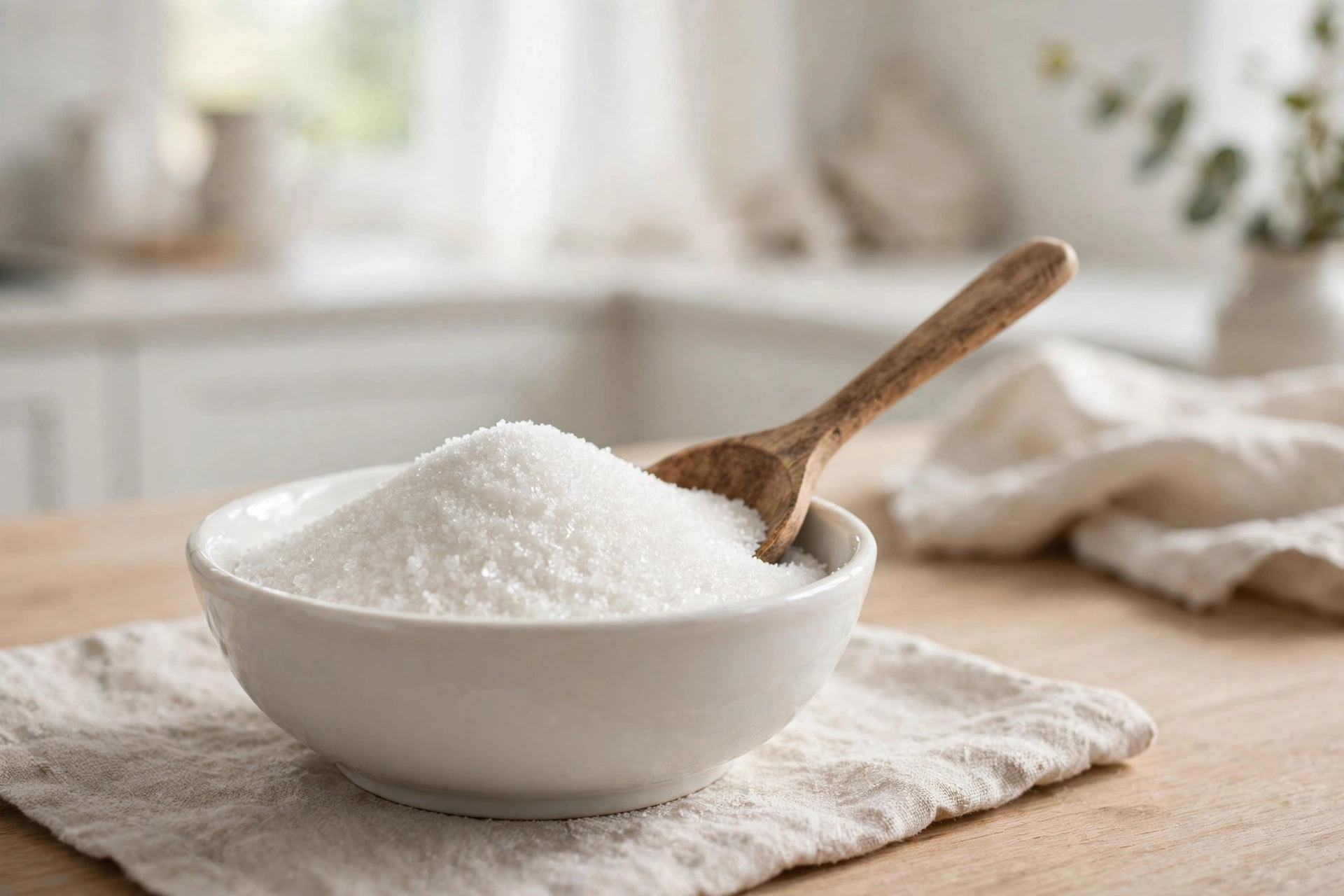
Sugar — plain granulated white sugar, đường cát in Vietnam — is the quiet balancer of pan-Asian cooking. It rarely makes a dish taste sweet; instead, small amounts round out sourness, tame saltiness, and soften chili heat so the other flavors read clearly. From dipping sauces to clay-pot caramel, it does structural work that you notice only when it is missing.
Taste — flavor profile
Granulated sugar tastes clean and neutrally sweet, without the molasses notes of brown sugar or the caramel depth of palm sugar. That neutrality is exactly why it is the default: it adjusts a dish’s balance without steering its flavor. Heated past the melting point, it transforms — dry sugar caramelizes into the dark, bittersweet syrup that gives Vietnamese braises their signature color and depth.
In the Kitchen — how it’s used in pan-Asian cooking
Sugar’s most important job is in the sweet-salty-sour balance. The dressing for Vietnamese green papaya salad is built on fish sauce, lime, garlic, chili — and sugar, which knits the sharp edges together into something mouth-watering rather than harsh. In cá kho tộ, sugar is cooked down to a dark caramel before the fish ever goes in; that caramel is what turns the braising liquid glossy, mahogany, and faintly bittersweet. It seasons dipping sauces, marinades, and pickling brines across the region, always in service of balance rather than dessert.
When a savory dish tastes “almost right” — too sharp, too salty, too flat — a pinch of sugar is often the missing piece. Add it in small increments and taste; overshooting is the one mistake, since you cannot easily undo sweetness.
Buying — how to choose at the store
Plain granulated white sugar is all you need for everyday pan-Asian cooking; there is no reason to buy anything fancy for the stove. Keep a bag of palm sugar separately if you cook a lot of Vietnamese or Thai food — its caramel notes are wonderful in braises, but it is a different ingredient, not a better version of the same one. Brown sugar works in a pinch but brings molasses flavor that does not belong in clean-tasting dressings.
Storage
Sugar keeps essentially forever if it stays dry — store it in a sealed container or a tightly closed bag, away from humidity that turns it into a brick. The main enemy is ants: a truly airtight container matters more than any particular storage spot.
Substitutes — 2-3 substitutes with brief context each
- Palm sugar — the best swap for Vietnamese and Thai cooking, with natural caramel notes that deepen braises and dipping sauces. Shave or chop the hard cakes before measuring.
- Brown sugar — works in cooked dishes like braises and marinades; its molasses edge is noticeable, so avoid it in delicate dressings.
- Honey — a workable pinch-swap in dressings and marinades, but it is liquid and floral — reduce other liquids slightly and expect a different character.