
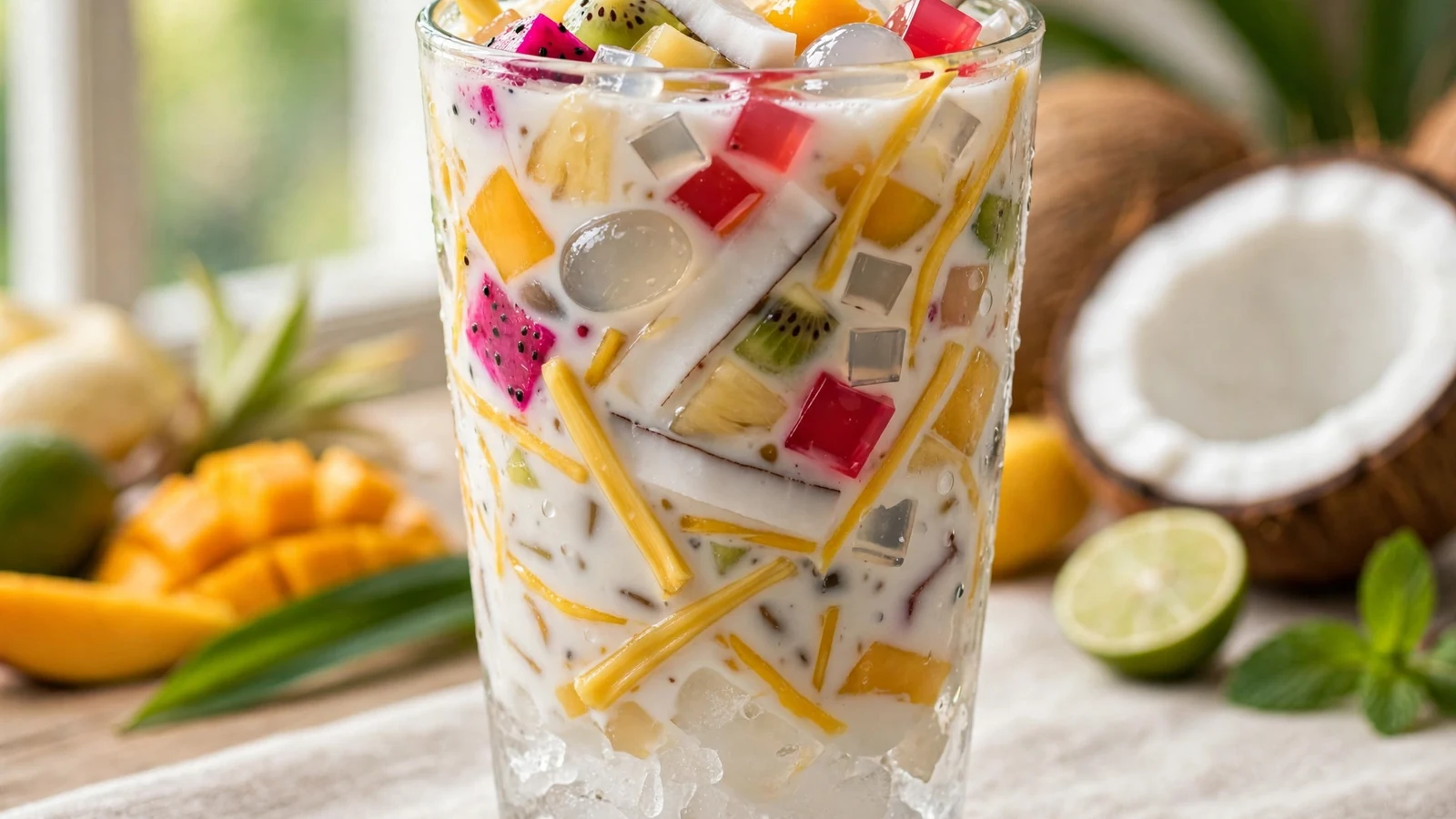
The Dessert You'll Finish Before You Mean To
Chè — Vietnam's sweet soups and puddings — has a no-cook crowd-pleaser: chè Thái, a tall glass of colorful tropical fruit, chewy coconut jellies, palm seeds, and young coconut meat, all swimming in sweetened coconut milk over crushed ice.
The name means "Thai sweet soup," and the dish is exactly what it sounds like — Vietnam's take on Thailand's fruit-and-coconut-milk desserts, adopted the way Vietnamese home cooks adopt most good ideas: completely, with an extra layer of coconut milk. What makes it Vietnamese is the particular lineup of mix-ins and the way the coconut milk gets gently sweetened and salted to taste more like itself.
This is a no-cook recipe in the best sense: your only real job is sourcing good ingredients and assembling them in the right proportions. Fifteen minutes of work, an hour of chilling, and you get a dessert that looks like it took all afternoon.
What Goes in Chè Thái
A proper chè Thái is about variety — soft, chewy, and crunchy textures in one cold, creamy bath. Here's the classic lineup:
Ingredients
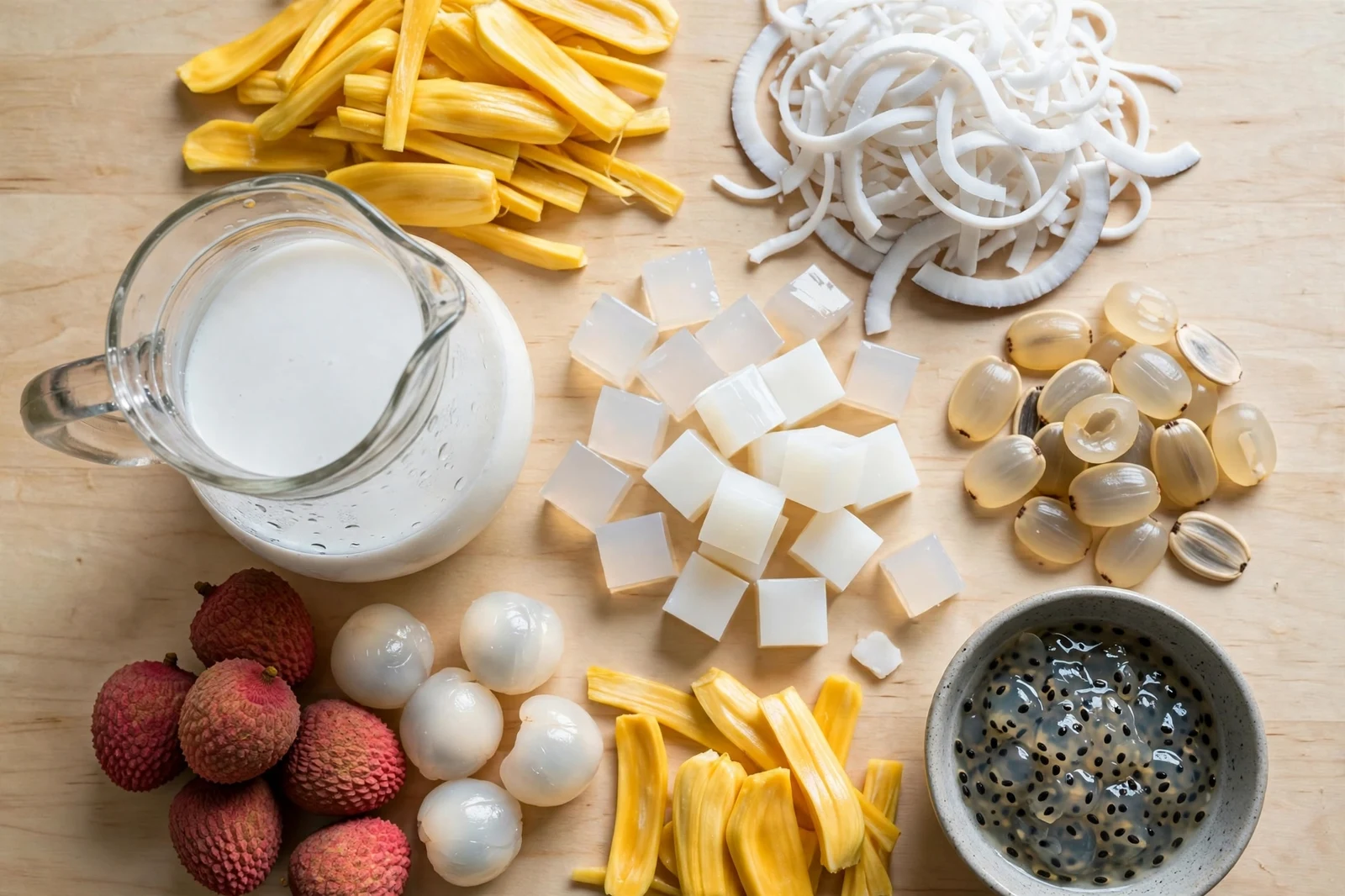
For the sweetened coconut milk:
- 1 can (13.5 oz / 400 ml) full-fat coconut milk
- 1 cup whole milk or half-and-half
- 1/2 cup granulated sugar
- 1/4 teaspoon fine sea salt
For the fruit and mix-ins:
- 1 cup fresh or canned jackfruit (drained if canned), cut into thin strips
- 1 cup young coconut meat strips (fresh, frozen and thawed, or canned and drained)
- 1 can (8 oz) palm seeds (attap chee), drained
- 1/2 cup nata de coco, drained
- 1 can (15 oz) tropical fruit cocktail or lychees, drained
- 1 tablespoon basil seeds, soaked in 1/3 cup water for 10 minutes (optional)
- 1/2 cup red rubies, cooked according to package directions (optional)
- 3 cups crushed ice
To serve:
- 6 tall glasses or dessert bowls
How to Make Chè Thái
1. Mix the coconut milk. Combine the coconut milk, whole milk, sugar, and salt in a large bowl or pitcher. Stir (don't boil — a gentle warm-up in a saucepan is fine if the sugar resists) until the sugar is completely dissolved. Taste it: it should be clearly sweet with a faint salty edge that makes the coconut flavor pop. Add a spoonful more sugar if your fruit is tart. Cover and refrigerate at least 1 hour, until thoroughly chilled.
2. Prep the fruit. While the coconut milk chills, cut the jackfruit into thin strips (about 1/4 inch wide and 1 1/2 inches long) and the young coconut meat into similar ribbons. Drain the palm seeds, nata de coco, and canned fruit completely — pooled syrup dilutes everything and makes the dessert watery.
3. Soak the basil seeds. If using, stir them into cold water and let them sit 10 minutes — they'll swell into clear beads with black centers. Drain any excess water.
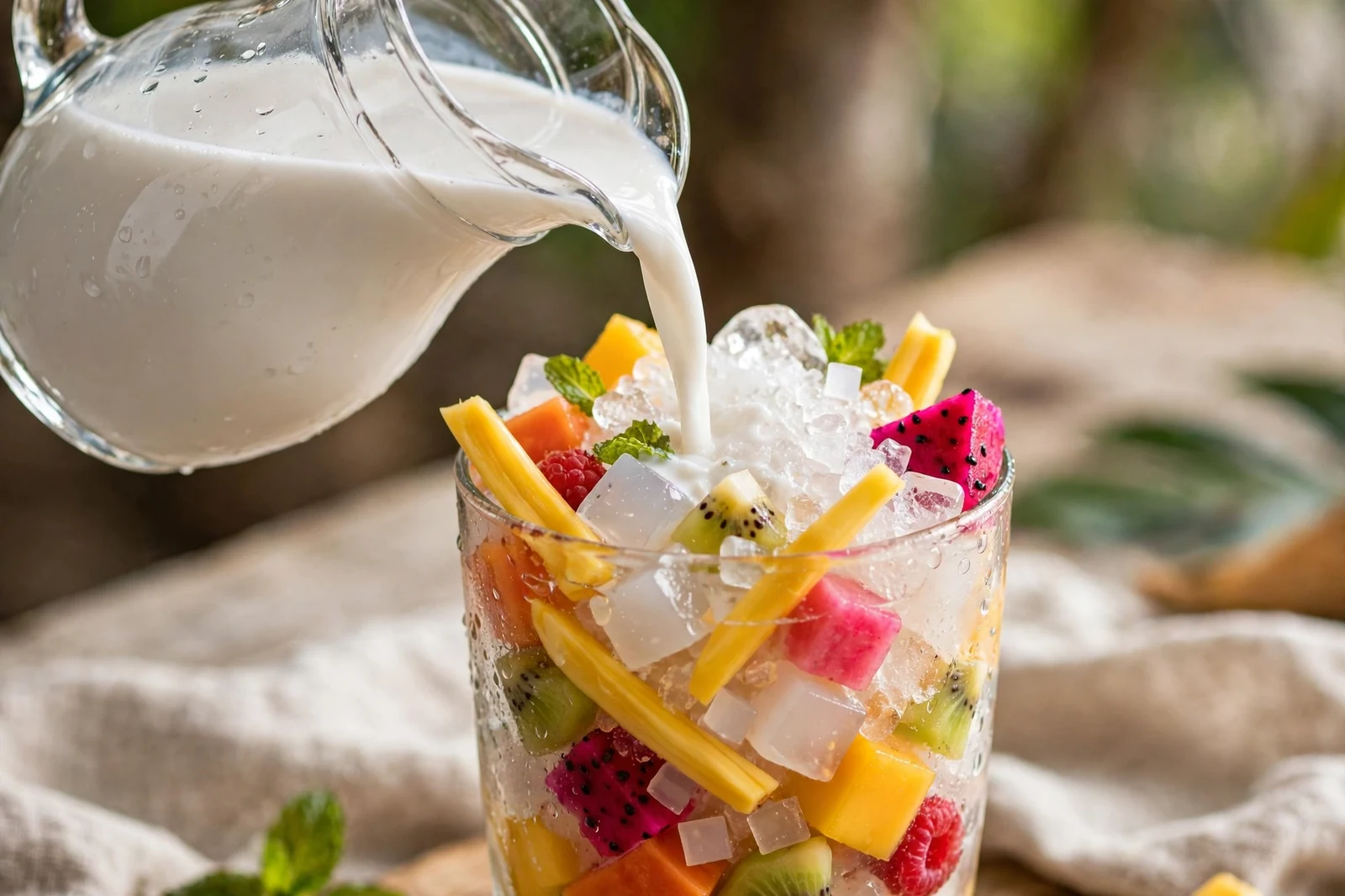
4. Assemble. Divide the crushed ice among six tall glasses. Layer in the jackfruit, coconut meat, palm seeds, nata de coco, and fruit cocktail — a handful of each per glass. Pour the cold sweetened coconut milk over everything, filling to about 3/4 of the glass. Top with basil seeds and red rubies if using.
5. Serve immediately. Hand each glass a long spoon and a wide straw, and stir once or twice before eating so the ice, milk, and fruit mix together. That's it — the whole dessert is cold, creamy, and ready.
Tips for the Best Chè Thái
Variations
Where to Find the Ingredients
Almost everything for chè Thái comes from an Asian grocery store, and most of it keeps in the pantry until opened. Look for: canned jackfruit in syrup, canned palm seeds (sometimes labeled "attap chee" or "sugar palm seed"), nata de coco, basil seeds, red rubies (frozen section), frozen young coconut meat, and coconut milk. Fresh jackfruit shows up in Southeast Asian markets in spring and summer — buy it when the fragrance hits you from across the store.
More Vietnamese Sweet Treats
Chè Thái is the perfect introduction to Vietnamese desserts, but it has excellent company. For another Thai-inspired sweet drink, try thai iced tea — the spiced, creamy classic that goes with any tropical meal. And the bright crunch of green papaya salad makes a great contrast on the same table.
Storage
Store the components separately. The sweetened coconut milk keeps in a sealed container in the fridge for up to 3 days — stir before using, since the fat can separate. Drained fruit and jellies keep in their own covered containers for up to 2 days. Assembled glasses don't keep: eat within 30 minutes of pouring, before the ice melts into the milk.
Frequently Asked Questions
Can I use light coconut milk?
You can, but the dessert loses its signature richness. A good compromise is half full-fat coconut milk and half whole milk, which is what the recipe above does. If you go all light coconut milk, expect a thinner, less creamy result.
Where do I buy palm seeds (attap chee)?
Canned palm seeds are sold in Asian grocery stores, usually in the canned fruit or dessert section near the nata de coco and lychees. Look for clear, translucent seeds in syrup — avoid cans where the liquid looks cloudy or the seeds are browned.
Ingredients
Method
- Mix the coconut milk: combine coconut milk, whole milk, sugar, and salt in a large bowl or pitcher; stir until sugar dissolves. Taste and add sugar if needed. Cover and refrigerate at least 1 hour until thoroughly chilled.
- Prep the fruit: cut jackfruit into thin strips and young coconut meat into similar ribbons. Drain palm seeds, nata de coco, and canned fruit completely.
- Soak the basil seeds (if using): stir into cold water, rest 10 minutes until they swell into clear beads, then drain.
- Assemble: divide crushed ice among six tall glasses. Layer in jackfruit, coconut meat, palm seeds, nata de coco, and fruit cocktail — a handful of each per glass. Pour cold sweetened coconut milk over, filling to about 3/4 of each glass. Top with basil seeds and red rubies if using.
- Serve immediately with long spoons and wide straws, stirring once or twice before eating.