
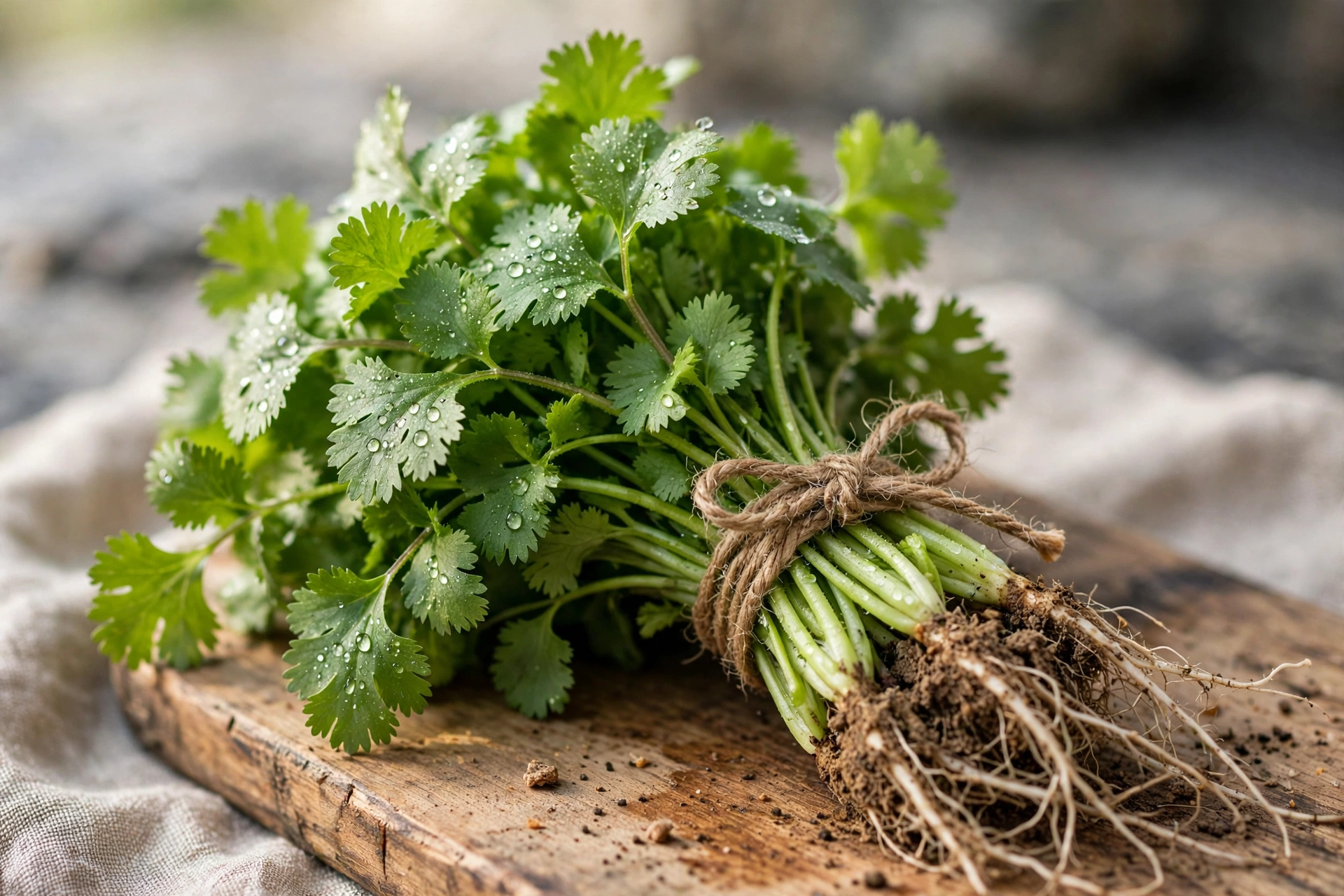
Identity — what it is (1-2 sentences)
Cilantro is the fresh leaf of the coriander plant — the same plant that produces coriander seeds, though the leaves taste entirely different. It's called rau mùi or ngò in Vietnamese, pak chee in Thai, and coriander leaf in much of the English-speaking world outside North America.
Taste — flavor profile
Cilantro tastes bright, citrusy, and slightly peppery, with a clean green freshness that lifts heavy or rich dishes. A well-known genetic quirk means a portion of people taste soap instead of freshness when they eat it — if that's you, it's not a matter of getting used to it, and substitutes below will serve you better. The leaves are the mildest part of the plant; in Thai cooking, the roots are also used, bringing a deeper, more pungent version of the same flavor to curry pastes and marinades.
In the Kitchen — how it's used in pan-Asian cooking
Cilantro is the finishing herb of Vietnamese cooking. Whole sprigs go into the herb plate served alongside Phở Gà — diners tear them into the hot broth at the table so the leaves stay fresh and fragrant. It tops Bánh Xèo, the crisp turmeric crepes, along with other herbs, and gets tossed through the herbs in Vietnamese Green Papaya Salad. In Thai cooking, cilantro roots are pounded into curry pastes and marinades, while the leaves garnish soups, salads, and stir-fries. Chinese kitchens use it as a fresh garnish on noodle soups and cold dishes, and the tender stems — which carry just as much flavor as the leaves — are fair game for chopping into anything.
The key rule: add cilantro at the very end. It loses its fresh flavor quickly when dried or exposed to heat, so it goes in after cooking, not during.
Buying — how to choose at the store
Choose bunches with crisp, deep-green leaves and no wilting or yellowing — limp, slimy, or yellow leaves are past their prime. The stems should look fresh and firm, not dried out or brown. Bunches sold with roots attached (common at Asian markets) stay fresher longer and give you the roots for Thai-style marinades. Wash cilantro just before using, not before storing, and blot the leaves dry — wet leaves stick to the knife and chop unevenly.
Storage
Cilantro is delicate but keeps well with the right treatment. The simplest method: wrap the unwashed bunch loosely in a damp paper towel, slip it into a plastic bag, and refrigerate — it should stay fresh for up to a week. An even better method for longer life is to trim the stem ends, stand the bunch in a jar of water like flowers, cover loosely with a plastic bag, and refrigerate, changing the water every couple of days; kept this way, cilantro can last two to three weeks. Freezing works for cooked dishes, but the texture won't suit fresh garnishes.
Substitutes — 2-3 substitutes with brief context each
- Flat-leaf parsley: The closest visual and textural swap, with a mild green flavor. It lacks cilantro’s citrusy brightness, so add a tiny squeeze of lime juice to compensate in salads and garnishes.
- Vietnamese coriander (rau răm): A different herb with a peppery, slightly lemony bite. Common in Vietnamese salads and with balut; it works in Vietnamese dishes but reads as a distinct flavor, not a match.
- Mint: In the herb-plate context of phở and bánh xèo, mint is already a natural companion and can carry the “fresh herb” role on its own — it just steers the dish in a cooler, sweeter direction.
Where to Buy
- Well-stocked supermarkets
- Farmers markets
- Grow your own
What to look for
Look for bright, perky leaves with no yellowing. The bunch should smell fresh and citrusy, not musty.
What to avoid
Avoid slimy stems or blackened leaves — cilantro declines quickly once it starts to go. Buy only what you will use within a few days.