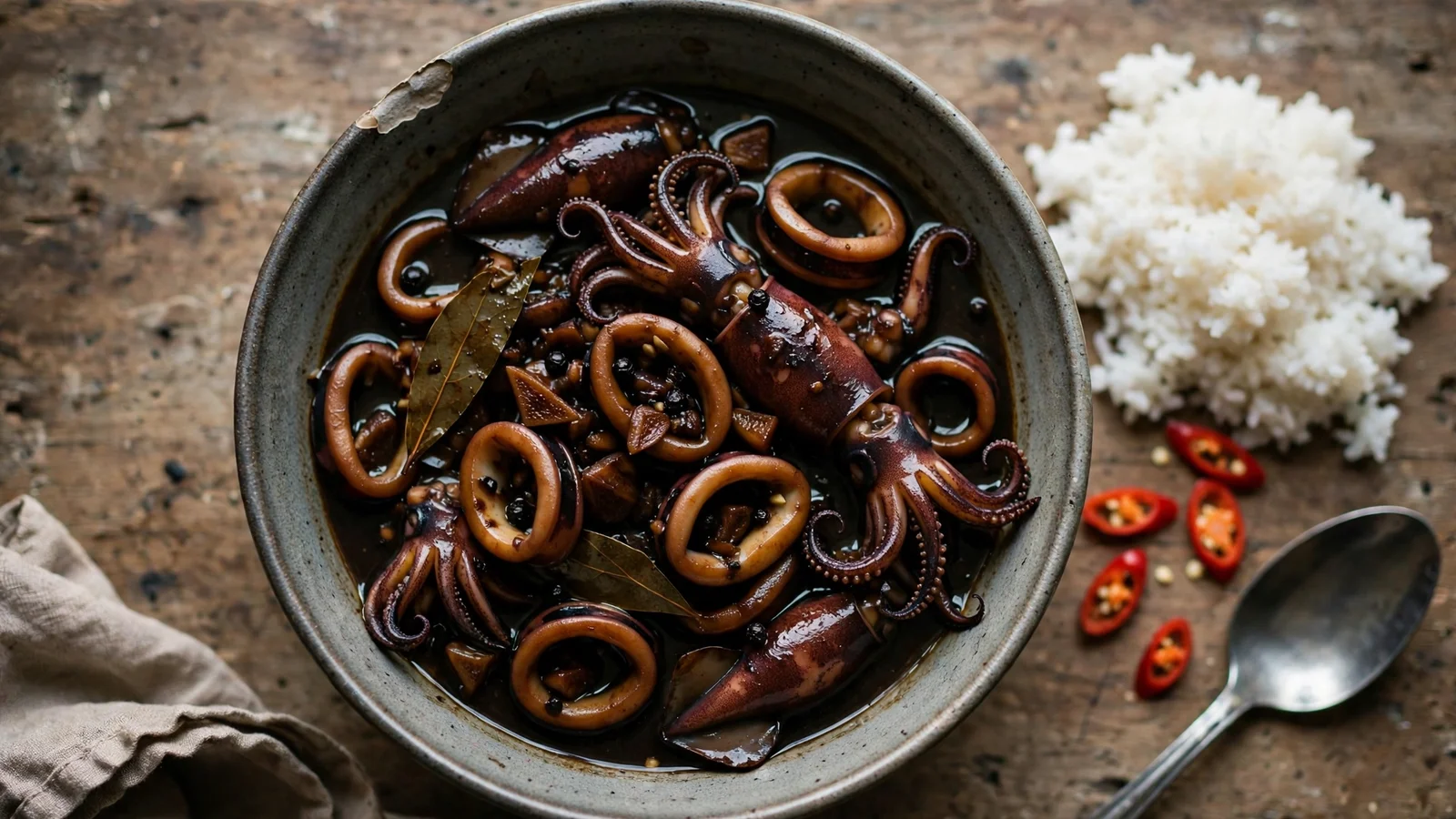
Ingredients
Method
- Clean the squid if it is not already cleaned. Hold the body in one hand and pull the head and tentacles away from the body in one motion. Set the ink sacs aside if you want the ink. Cut the tentacles off just below the eyes and squeeze out the small hard beak at the center. Pull the clear quill out of the body, peel off the spotty skin, and rinse the body and tentacles under cold water. Pat everything dry with a towel and cut the bodies into 1/2-inch rings.
- Heat the oil in a wide pan over medium heat. Add the garlic and onion and cook for 1 minute, until the garlic smells fragrant and the onion starts to soften. Do not let the garlic brown.
- Add the squid rings and tentacles and toss for 1 minute. The edges of the rings will turn opaque and start to curl.
- Pour in the vinegar and soy sauce, then add the sugar, bay leaves, peppercorns, and chilies. Bring the sauce to a boil and let it boil for 1 minute without stirring.
- Stir once, then add the strained ink if you are using it. Simmer for 2 to 3 minutes, until the squid is just tender and the sauce has thickened enough to coat the rings.
- Taste the sauce and adjust: a pinch more sugar if too sharp, a splash of water if too salty. If the sauce is thin, lift the squid out with tongs, boil the sauce for 1 to 2 minutes until it thickens, then return the squid to the pan. Serve at once over steamed rice, scattered with scallions.
Notes
Note 1: Count 5 minutes of heat for the squid: about 1 minute of tossing, then 2 to 3 minutes of simmering. Past that window the squid turns rubbery.
Note 2: Let the vinegar boil for 1 minute without stirring after you pour it in. Stirring too early keeps its raw, sharp edge in the sauce.
Note 3: Strain the ink through a fine sieve before adding it, and use about 2 tablespoons. Unstrained ink turns gritty, and too much ink tastes muddy.
Note 4: Clean the squid fully: pull the quill, squeeze out the beak, and rinse away the innards. Leftover innards and a torn ink sac make the dish bitter.
Note 5: If the sauce is thin, lift the squid out and boil the sauce for 1 to 2 minutes until it thickens, then return the squid. Reducing with the squid still in the pan overcooks it.
Note 6: Pat the squid dry before it hits the pan. Wet squid releases water into the sauce and thins it, and it steams instead of searing in the first minute.