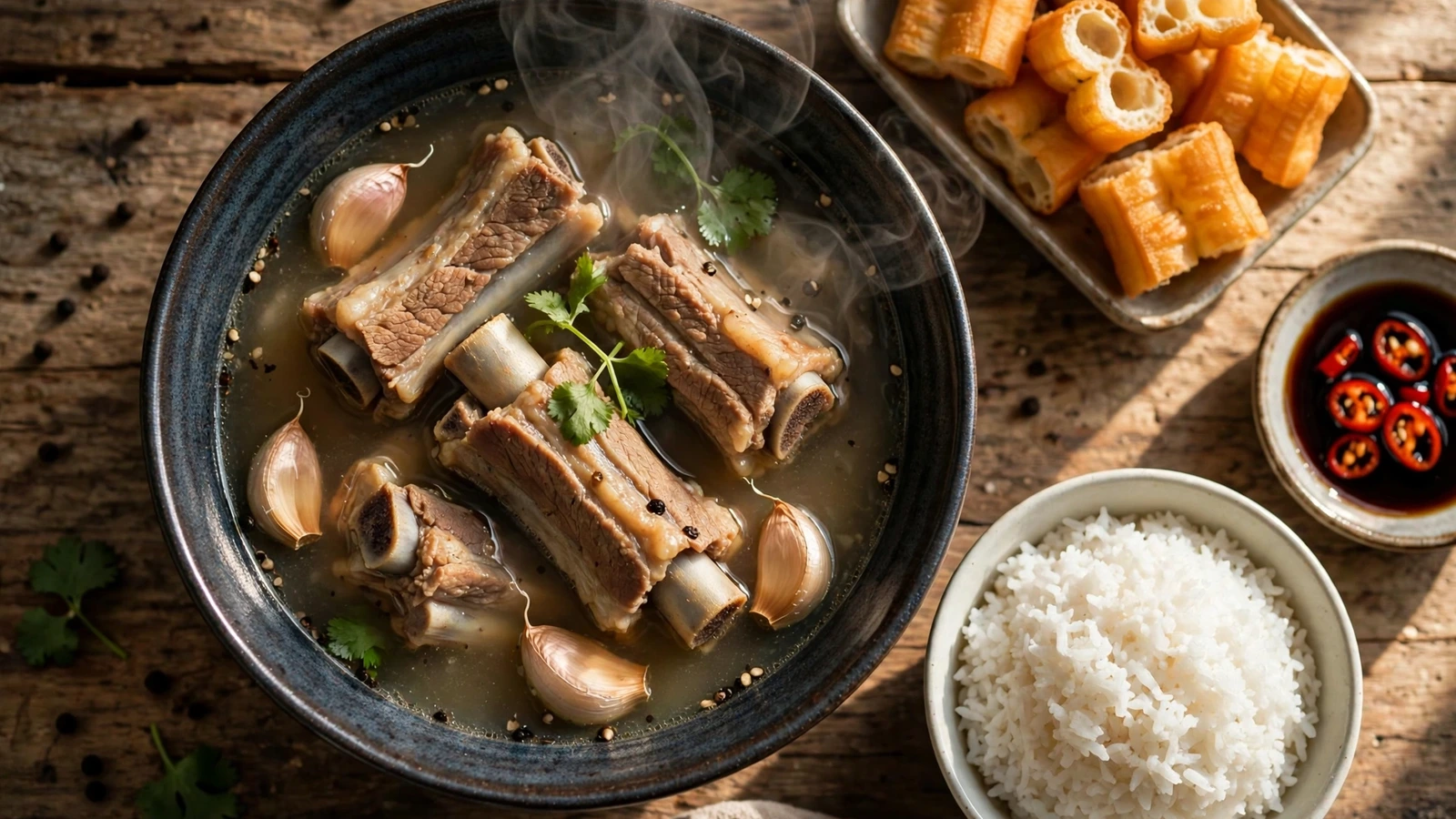
Ingredients
Method
- Blanch the ribs. Bring a large pot of plain water to a boil, add the ribs, and boil 5 minutes. Lift the ribs out, discard the water, and rinse the ribs well under running water. Rinse the pot out too.
- Toast and bag the spices. In a dry skillet over medium heat, toast the white peppercorns 2–3 minutes until aromatic. Add the star anise, cloves, cinnamon, and fennel; toast 1 minute more. Crush the peppercorns coarsely and tie all the spices in a muslin bag.
- Pre-infuse. In the rinsed pot, bring 2.5 L of fresh water to a boil. Add the spice bag and the whole bruised garlic bulb, reduce to a simmer, and let the spices infuse alone for 15 minutes.
- Simmer the ribs. Add the blanched ribs, bring back to a bare simmer, and cook partially covered for 90 minutes — a gentle ripple on the surface, never a rolling boil. Skim foam and fat as needed in the first 20 minutes.
- Season at the end. Fish out the spice bag. Stir in the salt, light soy, dark soy, and sugar. Taste and adjust — the broth should read savory and garlicky first, peppery second, seasoned rather than salty.
- Make the dipping sauce and toast the youtiao. Combine the light soy, dark soy, sliced chili, and minced garlic in a small dish. Toast the youtiao until crisp (a hot oven or dry skillet, a few minutes) and cut into pieces.
- Serve. Ladle ribs and broth into bowls. Serve with steamed jasmine rice, the toasted youtiao for dunking, and the chili-soy dipping sauce alongside.
Notes
Note 1: Blanch the ribs a full 5 minutes and rinse them (and the pot) before they go into the soup. The scum that rises in those first minutes is blood proteins — skip the blanch and the broth stays grey and murky no matter what you do after.
Note 2: Toast and crack your own white peppercorns, 2–3 minutes in a dry pan until aromatic, then a coarse crush. Pre-ground white pepper fades fast; whole berries cracked right before cooking give the broth its pepper backbone. Crush finer for more heat.
Note 3: Count your cloves — 10 is plenty. Clove is the one spice here that turns on you; a handful makes the whole pot bitter, and bitterness is the one flaw you can't fully undo.
Note 4: Keep the pot at a bare simmer, never a boil, for the full 90 minutes. A hard boil churns fat into an emulsion and the broth never clears; a gentle ripple lets the collagen dissolve slowly and gives the broth its faint silkiness.
Note 5: The garlic goes in unpeeled on purpose — the skin keeps the cloves from disintegrating over the long simmer. Salt and soy go in only at the very end, after reduction; seasoning early means seasoning blind.
Note 6: Leftover broth gels in the fridge from the rib collagen — that's a good sign. Reheat gently and pour it over rice, or use it as the liquid for a weeknight noodle soup.