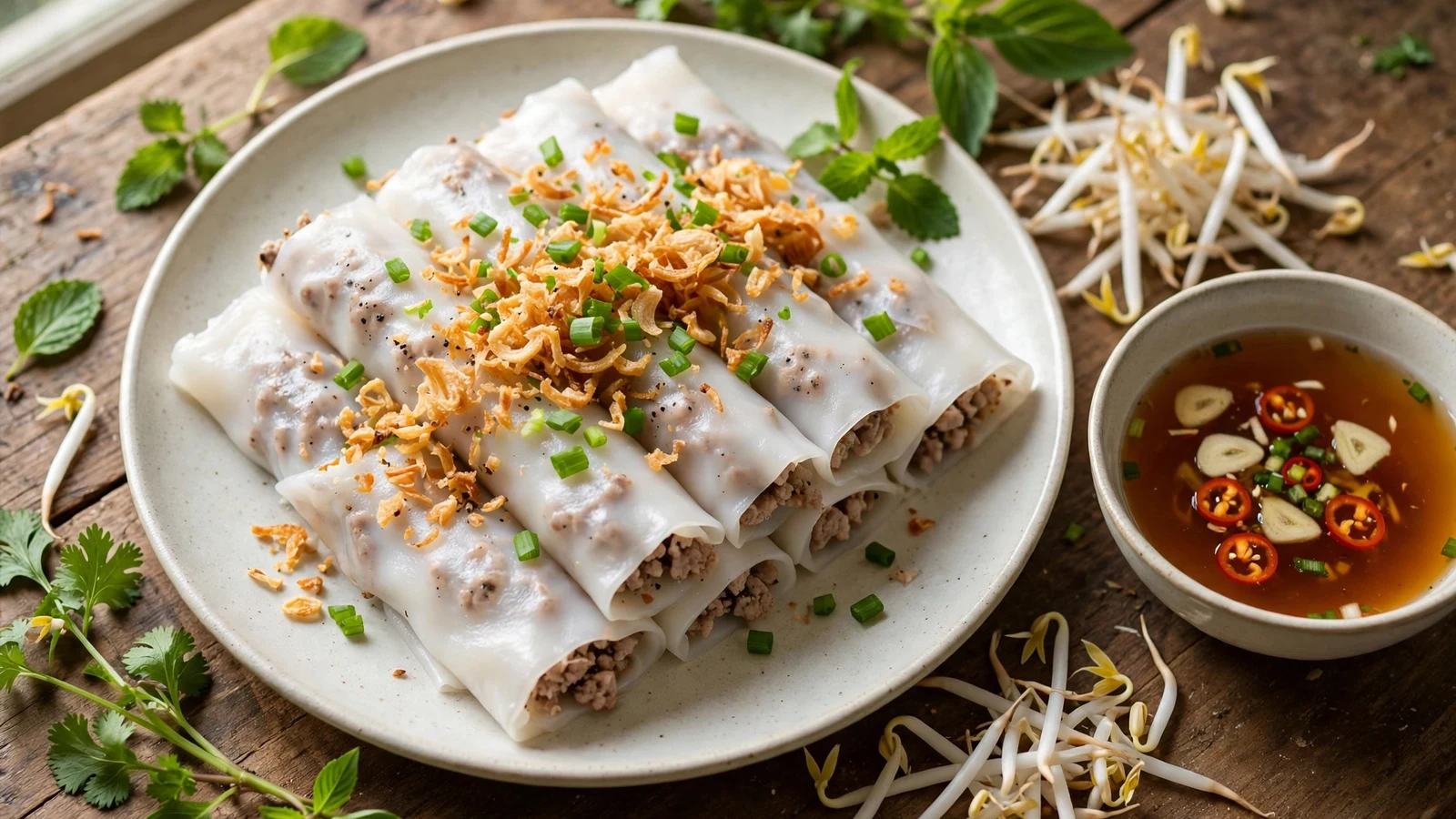
Ingredients
Method
- Mix and rest the batter. Whisk the rice flour, tapioca starch, salt, and water until completely smooth, then whisk in the oil. Let rest 30 minutes at room temperature.
- Make the filling. Soak the wood ear mushrooms in hot water 15 minutes, drain, and mince fine. Cook the pork in a skillet over medium-high heat, breaking it into small pieces, until the liquid reduces. Add the shallots, wood ear mushrooms, fish sauce, sugar, and pepper; cook 3–4 minutes more until fragrant. Set aside.
- Make the scallion oil. Heat the oil until shimmering, pour over the sliced green onions and salt in a heatproof bowl, and stir until it sizzles and stays bright green.
- Set up the steamer. Stretch clean cotton cloth tightly over a wide pot of boiling water and secure it (or heat a large nonstick pan with a lid over medium heat). Lightly oil the cloth or pan and have an oiled plate or tray ready.
- Steam the sheets. Stir the batter, ladle 60 ml (1/4 cup) onto the cloth, and spread thin in a circle. Cover and steam 60–90 seconds, until fully translucent and the edges start to lift. Lift the sheet onto the oiled plate with a flat wooden spatula or chopsticks.
- Fill and roll. Spoon about 1 tablespoon of filling in a line across the lower third of the hot sheet, fold the sides in, and roll snugly. Keep finished rolls on the oiled tray, touching but not stacked, covered loosely with a damp cloth.
- Dress and serve. Arrange 4–5 rolls per plate, drizzle with scallion oil, and scatter the fried shallots over the top. Add bean sprouts, cucumber, and herbs on the side; serve with nuoc cham for dipping.
Notes
Note 1: Use plain rice flour, not glutinous (sweet) rice flour. Glutinous rice flour makes the sheets gummy and sticky instead of silky — the bags look nearly identical, so read the label.
Note 2: Rest the batter a full 30 minutes and stir before every ladle. The flour settles to the bottom fast; an unstirred ladle pulls mostly water and tears on the cloth.
Note 3: One ladle is 60 ml (1/4 cup) per sheet, no more. A heavier pour makes thick, doughy crepes that taste raw in the middle.
Note 4: Keep the water at a rolling boil the whole time. Weak steam sets the batter slowly and the sheet welds itself to the cloth; a full simmer flashes it set in about a minute.
Note 5: Oil every landing surface, not just the cloth. A sheet that steamed perfectly still tears on a dry plate — brush the tray lightly before the first sheet goes down.
Note 6: Roll while the sheet is hot. Once a sheet cools on the tray it stiffens and cracks at the fold; fill and roll each one right after it comes off the cloth.