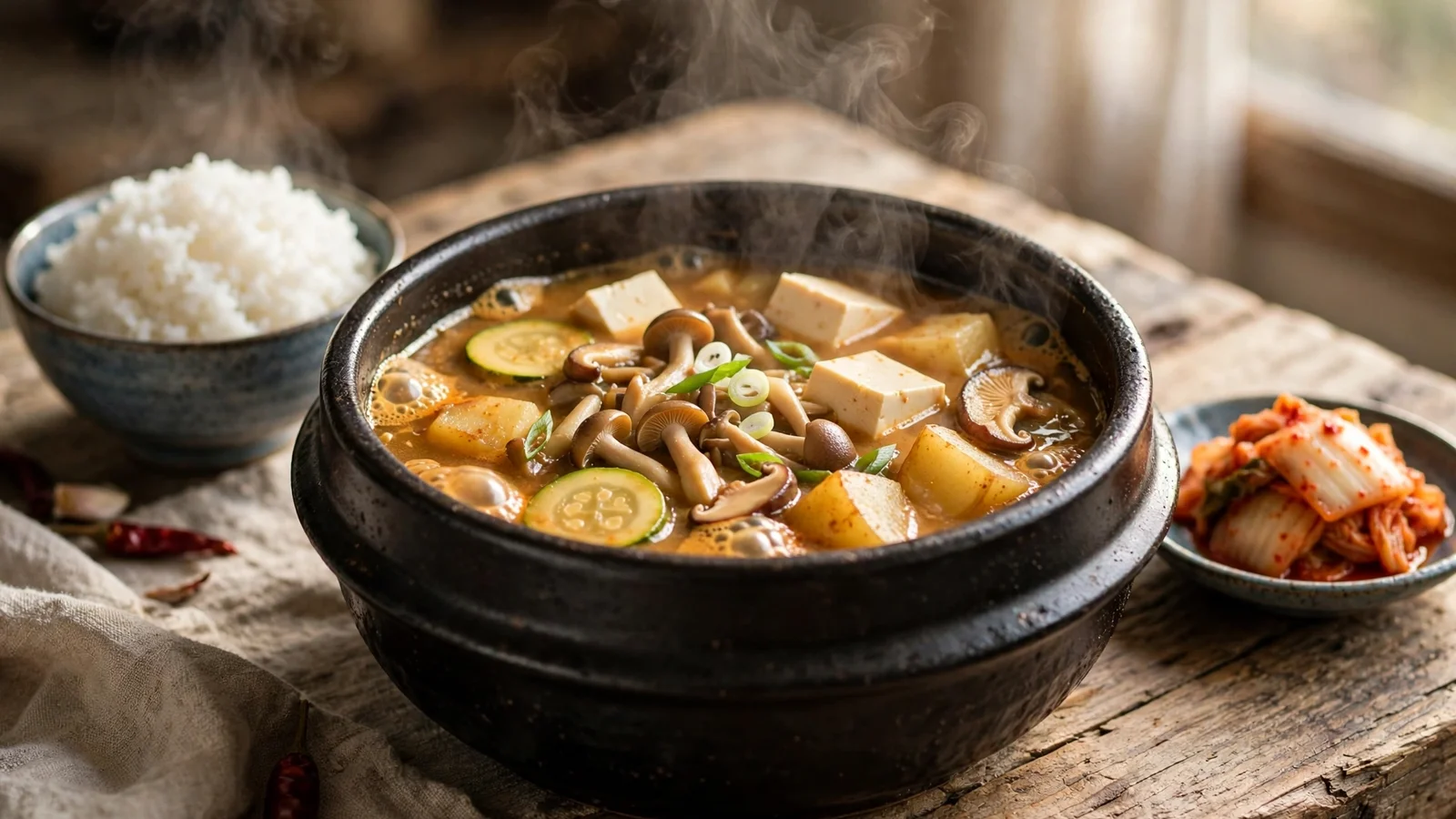
Ingredients
Method
- Make the broth: combine the water, anchovies, and kelp in a medium pot and bring to a boil over medium-high heat. As soon as it boils, remove the kelp. Lower the heat and simmer the anchovies 8 to 10 minutes more, then strain and discard the solids.
- Return the broth to the pot. Set a small strainer over the surface, add the doenjang, and whisk it through so it dissolves without lumps. Stir in the garlic and gochugaru, if using.
- Add the potato and onion and simmer about 5 minutes, until the potato is just starting to soften at the edges.
- Add the zucchini and mushrooms and simmer 4 to 5 minutes more, until nearly tender.
- Gently add the tofu, scallions, and chili, if using. Simmer 3 to 5 minutes, just until the tofu is heated through; avoid a hard boil so the tofu keeps its shape.
- Taste the broth: whisk in more doenjang for depth, or add a splash of water if it is too salty. It should be bold and savory.
- Serve bubbling, straight from the pot, with steamed rice.
Notes
Doenjang brands vary widely in saltiness; start with 1/4 cup, taste, and add more in small spoonfuls rather than seasoning with salt at the end. Keep the finished stew at a gentle simmer, not a rolling boil, and skim any foam that rises in the first few minutes after the paste goes in.