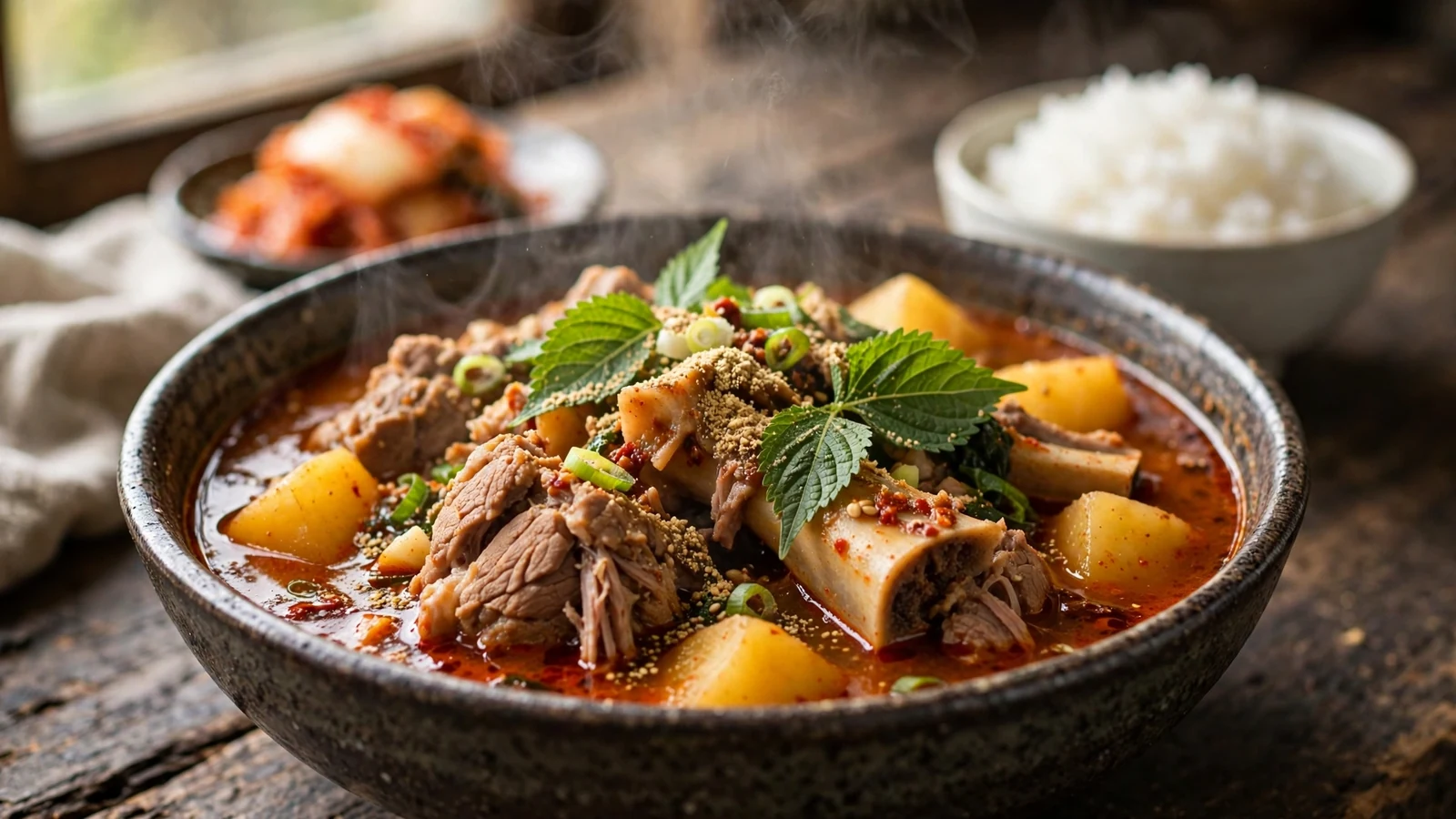
Ingredients
Method
- Put the pork neck bones in a large pot, cover with cold water, and bring to a rolling boil. Boil 10 minutes, then drain, rinse the bones under cold water, and wash out the pot.
- Return the bones to the pot with 12 cups fresh water, the quartered onion, smashed garlic, and sliced ginger. Bring to a boil, then reduce to a gentle simmer, partially covered, for 2 hours, until the meat is nearly falling off the bones. Skim foam during the first 30 minutes.
- Fish out the onion and ginger. Stir the gochugaru, gochujang, fish sauce, doenjang, sesame oil, minced garlic, sugar, and black pepper into a paste in a small bowl, then whisk it into the pot.
- Add the potato chunks and simmer 20 to 25 minutes, until they yield easily when pierced with a fork.
- Stir in the perilla seed powder, then the perilla leaves and scallions. Simmer 5 more minutes, until the leaves wilt.
- Taste the broth and add fish sauce or salt if it tastes flat. Ladle into deep bowls and serve with steamed rice and extra perilla seed powder at the table.
Notes
Note 1: Boil the parboil water a full 10 minutes, not 5. At 5 minutes, pink bits still cling to the bones and leach back into the soup; at 10 they are gone. Past 15 minutes you start dissolving the gelatin you actually want, so rinse promptly.
Note 2: Keep the simmer gentle — lazy bubbles, not a rolling boil. A hard boil emulsifies fat straight into the broth and turns it greasy-cloudy even after a good parboil.
Note 3: Gochugaru heat varies hugely by brand. My ratio: 3 tablespoons in this volume of broth lands at a solid medium heat. Drop to 2 for mild; push to 4 for a burn that builds.
Note 4: Add the perilla leaves in the last 5 minutes. They wilt fast and turn dull and bitter if they sit in boiling broth.
Note 5: No perilla leaves? Fresh shiso works (same family). In a pinch, use 1 cup torn spinach plus a drizzle of toasted sesame oil — you will miss the minty edge, but the soup still sings.
Note 6: Leftovers keep 4 days refrigerated and freeze well for 3 months. The potatoes soak up seasoning overnight, so the day-two bowl is arguably the best one.