Ingredients
Method
- Start the rice. Combine the rinsed rice, coconut milk, water, salt, and knotted pandan leaves in a heavy-bottomed pot. Bring to a boil over medium-high heat, stir once, cover with a tight lid, and reduce to the lowest heat. Cook 12 minutes without lifting the lid, then remove from the heat and rest 10 minutes, lid still on. Remove the pandan, fluff with a fork.
- Blend the sambal base. Drain the soaked chilies. Blend chilies, shallots, garlic, and toasted belacan with 2–3 tablespoons of the soaking water until you have a coarse paste. A little texture is good.
- Cook the sambal. Heat the 1/3 cup oil in a wok or deep skillet over medium heat. Add the paste and cook, stirring regularly, for 15 to 20 minutes. It will darken from bright red to deep brick-red; you are done when the oil visibly separates and pools on the surface (pecah minyak). Stir in the tamarind liquid, palm sugar, and salt; cook 2 minutes more. Taste on a spoonful of rice and adjust salt and sugar.
- Fry the ikan bilis. While the sambal cooks, heat the frying oil to 175°C (350°F). Fry the patted-dry anchovies in two batches, 3 to 4 minutes per batch, until deep golden and audibly crisp. Drain on a rack or paper towels and salt immediately.
- Fry the peanuts. In the same oil, fry the peanuts 4 to 5 minutes until golden, a shade lighter than your target color — they darken as they cool. Drain and salt lightly.
- Boil the eggs. Lower the eggs into boiling water: 6 1/2 minutes for jammy yolks, 10 for fully set. Chill in ice water, peel, halve.
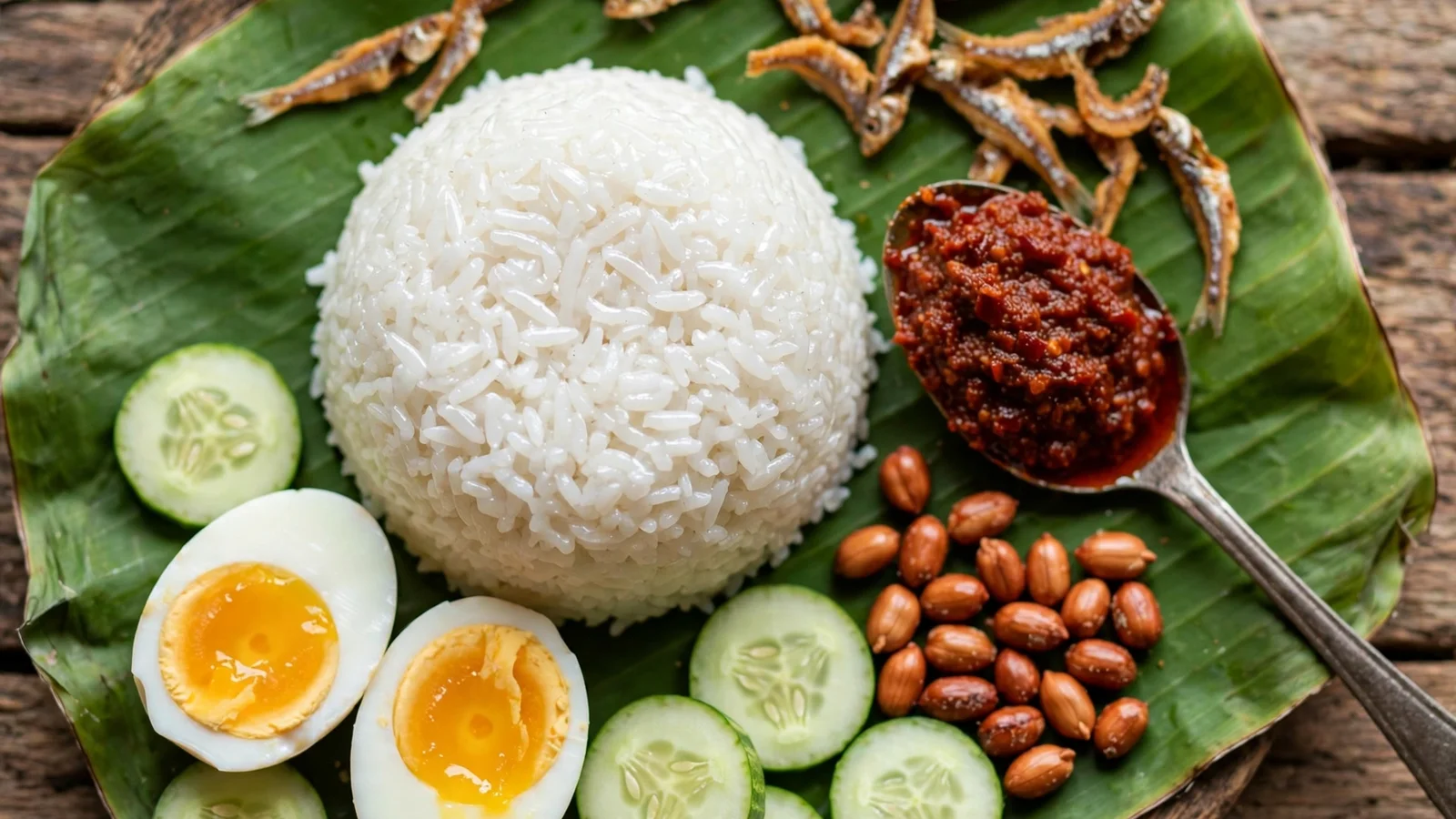
- Assemble. Mound the coconut rice on each plate (banana leaf if you have it), spoon sambal alongside, and arrange the anchovies, peanuts, egg halves, and cucumber. Serve warm.
Notes
Note 1: Keep total liquid at exactly 1:1 with the rice by volume — 2 cups jasmine rice to 2 cups total liquid (1 1/2 cups coconut milk plus 1/2 cup water). Coconut milk's fat coats the grains and slows absorption, so extra liquid that would be fine with water alone turns the rice mushy. The line is sharp.
Note 2: Do not lift the lid during the 12-minute cook, and knot the pandan leaves rather than laying them in whole. Knotting bruises the leaves and releases noticeably more aroma — you can taste the difference in the finished rice.
Note 3: The sambal is done only when the oil visibly separates and pools on the surface (pecah minyak) and the paste darkens to deep brick-red — plan on 15 to 20 minutes over medium-low heat. A bright-red paste that tastes sharp and harsh is simply undercooked.
Note 4: Toast the belacan in foil until the edges brown and it smells savory rather than funky. Untoasted belacan tastes raw and aggressively fishy; toasted, it melts into the sambal as pure umami depth.
Note 5: The ikan bilis must go into the oil genuinely dry — rinse, then pat bone dry with paper towels. A damp anchovy steams instead of frying and turns leathery. Salt them the moment they come out, while the surface is still glistening.
Note 6: Pull the peanuts a shade lighter than your target color — they keep darkening off the heat. Full-fat canned coconut milk only; the 'light' kind is mostly water and the rice comes out bland.