Ingredients
Method
- Boil the pork. Put the pork belly in a pot and cover with cold water by 2 inches. Add the Shaoxing wine, ginger slices, scallions, and salt. Bring to a boil, then lower to a gentle simmer and cook 25 to 30 minutes, until a chopstick slides into the thickest part with slight resistance.
- Cool and slice. Transfer to an ice bath for 10 minutes, then pat dry. Slice into pieces about 4 to 5 millimeters thick, roughly 1/4 inch.
- Sear. Heat a wok over high heat with the oil until it shimmers. Add the pork slices in a single layer and sear 3 to 4 minutes, turning once, until golden at the edges and some fat has rendered.
- Bloom the paste. Push the pork to the sides, drop the heat to medium, and add the doubanjiang and douchi. Fry about 30 seconds, stirring, until the oil turns red and smells toasty.
- Sweeten. Stir in the tianmianjiang, sugar, and dark soy sauce until the pork is coated.
- Add the vegetables. Add the garlic, ginger, leeks, and bell pepper. Stir-fry 2 to 3 minutes until the leeks soften at the edges but still hold their shape.
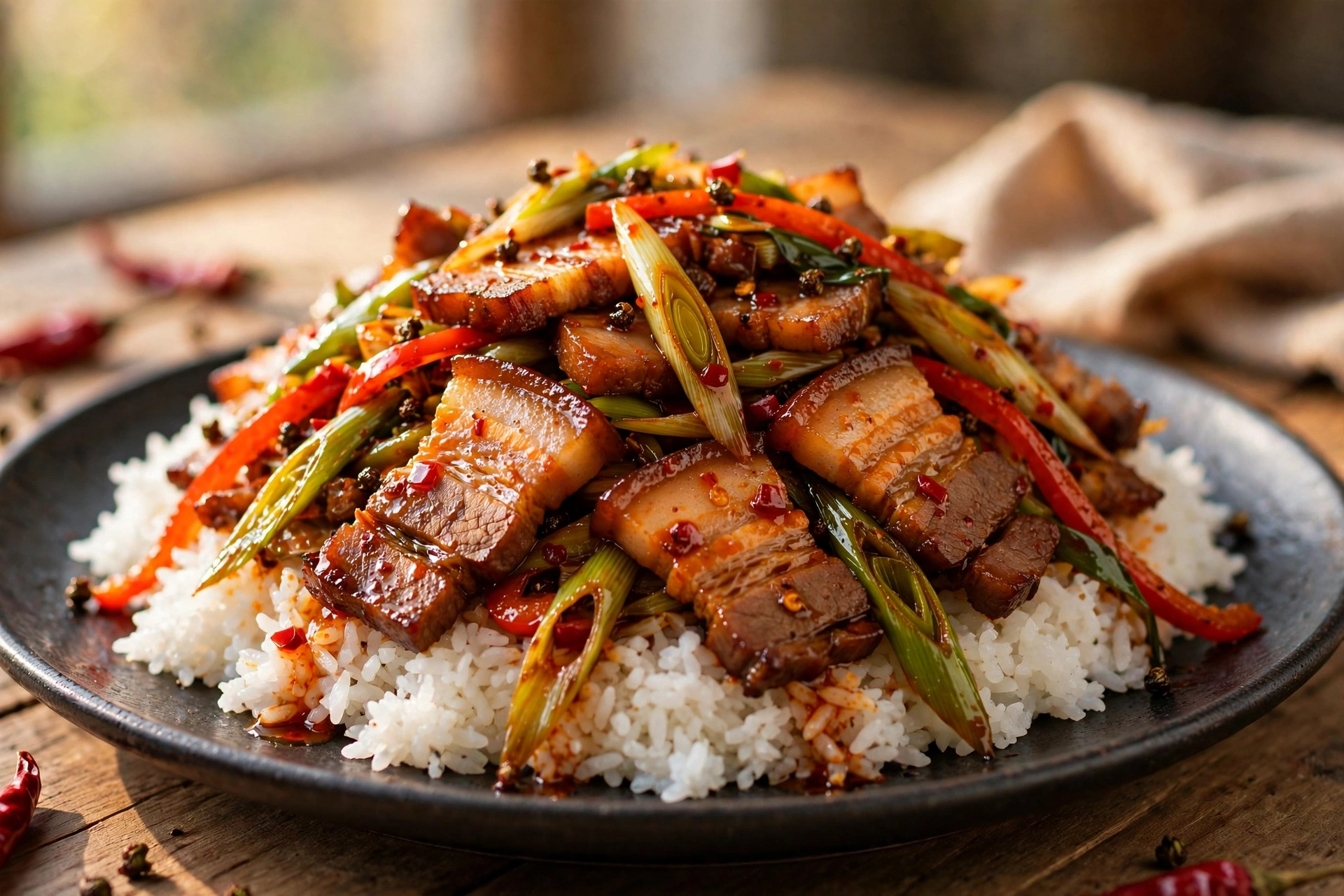
- Serve. Slide onto a warm platter and serve immediately with steamed white rice.
Notes
Note 1: The boil is the recipe. Test with a chopstick at 25 minutes: it should slide into the thickest part with slight resistance. Under-boiled pork is the most common reason this dish comes out chewy.
Note 2: Cool the pork before slicing. Ten minutes in an ice bath firms the belly enough to cut clean 4-millimeter slices; slicing warm gives torn, uneven pieces that cook at different speeds.
Note 3: Fry the doubanjiang about 30 seconds on medium heat, until the oil turns red and smells toasty. Longer and the paste scorches and turns bitter; shorter and it tastes raw and flat.
Note 4: Do not skip the sweet. Doubanjiang is salty and funky, and the tianmianjiang plus the pinch of sugar is what rounds it into something you want a second bowl of rice for. A teaspoon of hoisin works if you have no tianmianjiang.
Note 5: Leftovers keep 3 days refrigerated. Reheat in a hot wok, not the microwave, so the slices crisp again; the pork absorbs the sauce overnight, so the second-day bowl tastes deeper.