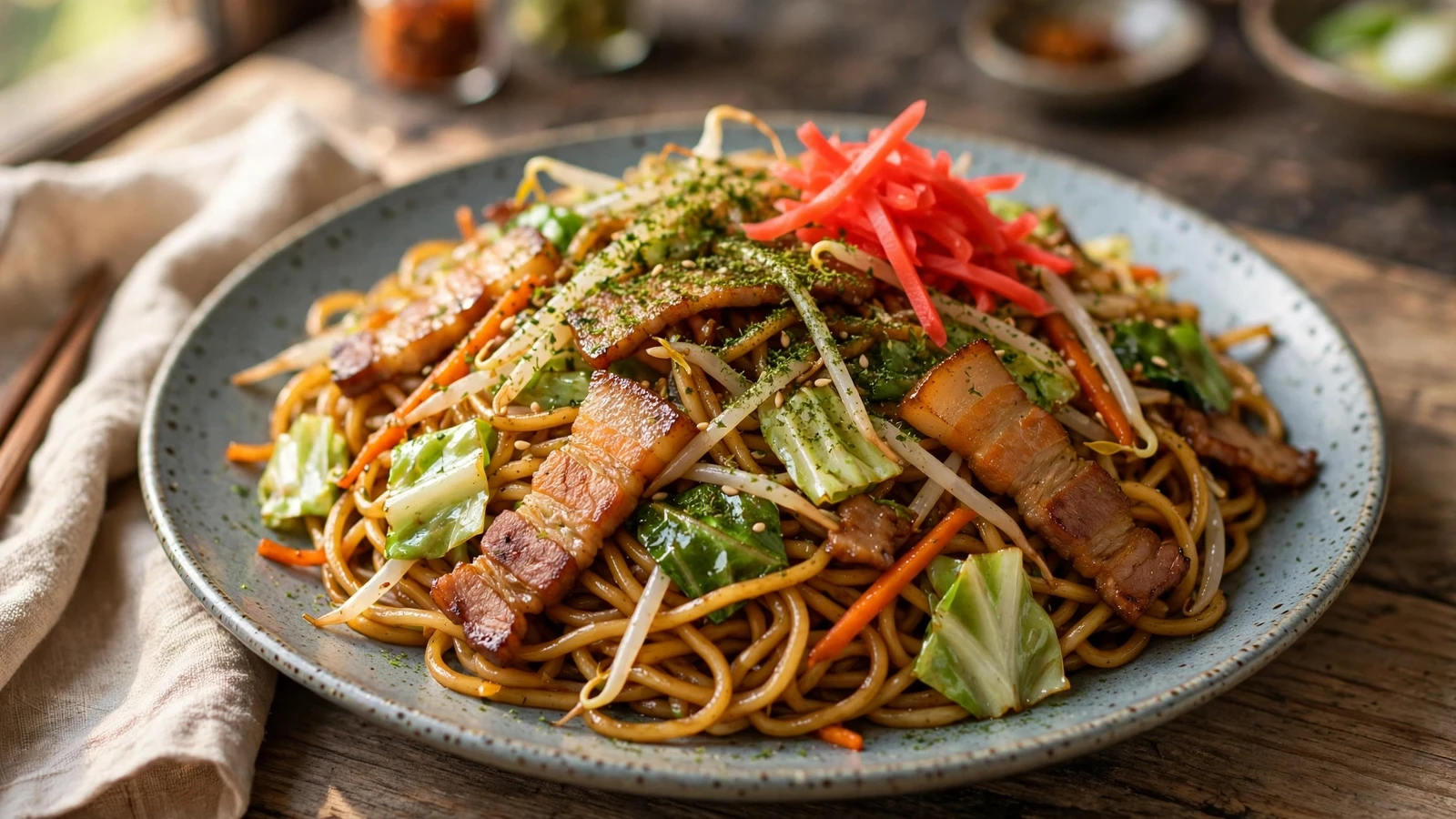
Ingredients
Method
- Mix the sauce. In a small bowl, whisk the tonkatsu sauce, Worcestershire sauce, oyster sauce, sugar, and sake until the sugar dissolves. Set it by the stove — everything moves fast from here.
- Separate the noodles. Loosen the yakisoba noodles with your hands so no clumps remain. Cold noodles straight from the fridge go in as a brick and cook unevenly; separated noodles sear instead of steam.
- Sear the pork. Heat the oil in a large wok or skillet over high heat until it shimmers. Add the pork, salt, and pepper and stir-fry 2–3 minutes until the edges turn golden and the fat starts rendering. Push the pork to the side of the pan.
- The 90-second char. Add the noodles to the empty side of the pan and spread them flat. Leave them alone for a full 90 seconds — no tossing. You want golden, slightly crisped spots. Add a tablespoon of water if the noodles look dry; it steams off almost instantly.
- Add the vegetables. Toss in the cabbage, carrot, and onion and stir-fry 2 minutes, until the cabbage just starts to wilt at the edges but keeps its crunch. Stir in the bean sprouts last — they need only about 30 seconds.
- Sauce, last. Pour the sauce over everything in the final 60 seconds and toss to coat. Taste: it should be sweet-tangy with a glossy sheen and no sauce pooling at the bottom of the pan.
- Plate and top. Slide onto plates, then scatter the aonori over the top and pile on the beni shoga. A zigzag of Kewpie mayonnaise is the Osaka-stall move. Serve immediately, while the noodles are still glossy.
Notes
Note 1: Separate the noodles by hand before they touch the pan. Cold noodles from the fridge go in as a brick and fuse into one clump; separated strands sear and char instead.
Note 2: Get the pan genuinely hot before the noodles go in — you want an audible sizzle on contact. A lukewarm pan steams the par-cooked noodles and they turn limp.
Note 3: Add the sauce in the final 60 seconds only. The sugar in it burns on high heat, so sauce added early chars before it has a chance to coat the noodles.
Note 4: Pork goes in before the vegetables. Thin pork strips need 2–3 minutes to render and brown; cabbage needs barely 2 minutes — added together, the pork steams and the cabbage overcooks.
Note 5: Cut the cabbage chunky, not shredded. Shredded cabbage collapses in a minute; bite-size pieces stay crisp through the whole stir-fry.