
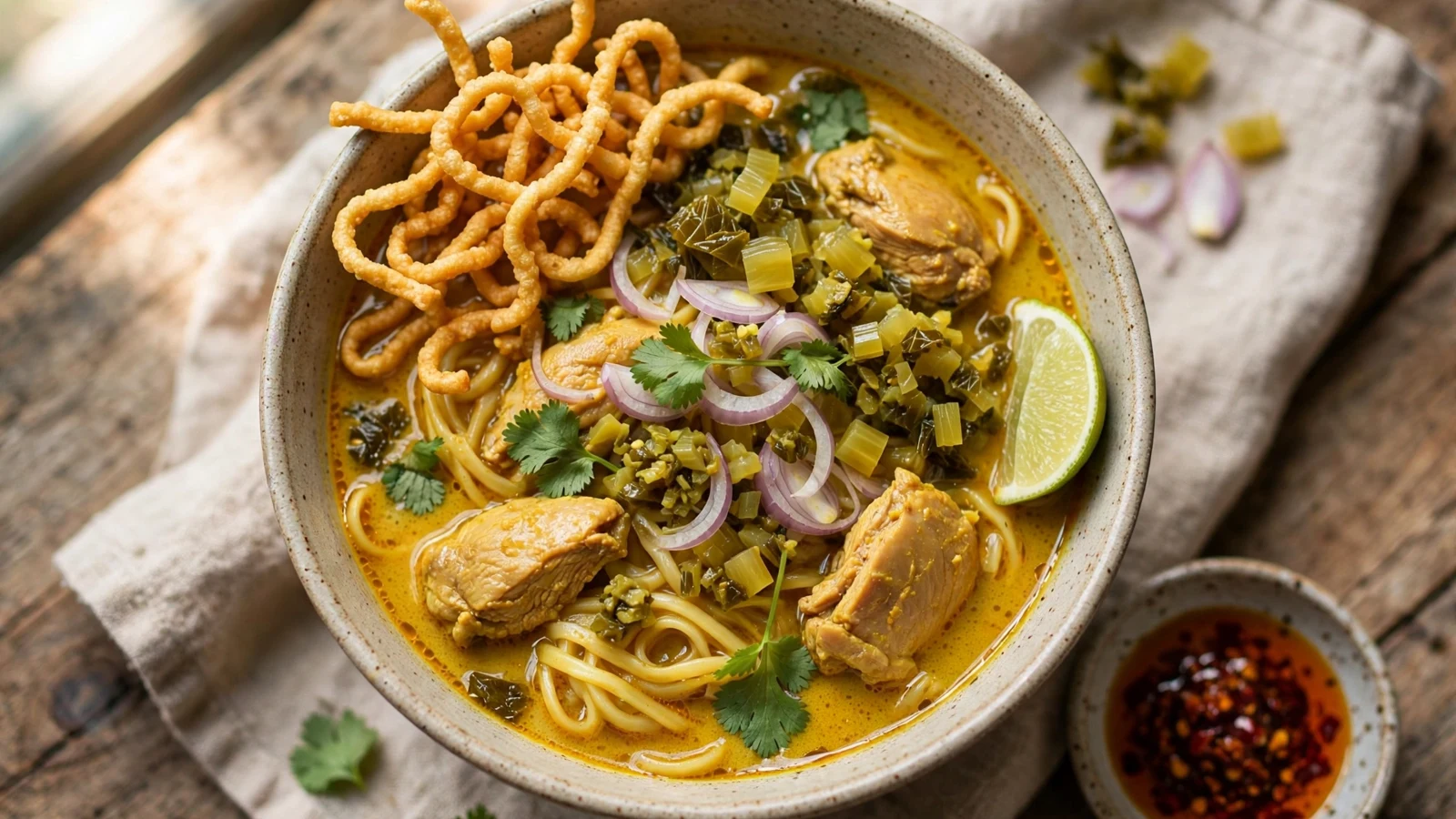
Khao soi is the noodle soup Chiang Mai is known for. The broth is a deep golden curry, the noodles come two ways in the same bowl, soft underneath and crisp on top, and the table toppings are part of the recipe, not garnish: pickled mustard greens, raw shallot, lime, and chili oil.
The dish carries a long trade-route history, shaped by Chinese Muslim (Haw) traders moving through northern Thailand and by Burmese and Shan cooking across the border. That mix explains what sets khao soi apart: egg noodles, a turmeric-heavy paste, warm spices like cumin and coriander, and pickled greens.
What Makes Khao Soi Different
Plenty of coconut curry noodle soups exist across Southeast Asia. The fastest way to place khao soi is next to its closest cousin on this site, Laksa: Coconut Curry Noodle Soup. Both build on coconut milk and a paste fried in oil, but they eat quite differently.
| Detail | Khao Soi | Laksa |
|---|---|---|
| Home base | Chiang Mai, northern Thailand | Malaysia and Singapore hawker stalls |
| Noodles | Egg noodles, boiled soft plus a fried crispy handful | Rice vermicelli or thick round rice noodles |
| Broth base | Turmeric-forward curry paste, coconut milk, chicken stock | Rempah spice paste with shrimp paste, coconut milk, stock |
| Signature toppings | Crispy noodles, pickled mustard greens, shallots, lime, chili oil | Tofu puffs, bean sprouts, egg, cucumber, fresh herbs |
| Heat at the table | Chili oil | Sambal oelek |
The short verdict: pick khao soi when you want a warmer, turmeric-and-spice-driven bowl with crunch in every bite. Pick laksa for the brighter, seafood-leaning bowl with more raw freshness on top. Khao soi concentrates its richness in the broth and fried noodles; laksa spreads it across toppings.
The Broth Ratio That Keeps It Balanced
The broth works on a simple ratio worth memorizing: 3 tablespoons of curry paste to 1 can (14 oz) of coconut milk to 2 cups of stock. That keeps the broth pourable rather than thick like a curry, which matters because half of it gets drunk from the bowl.
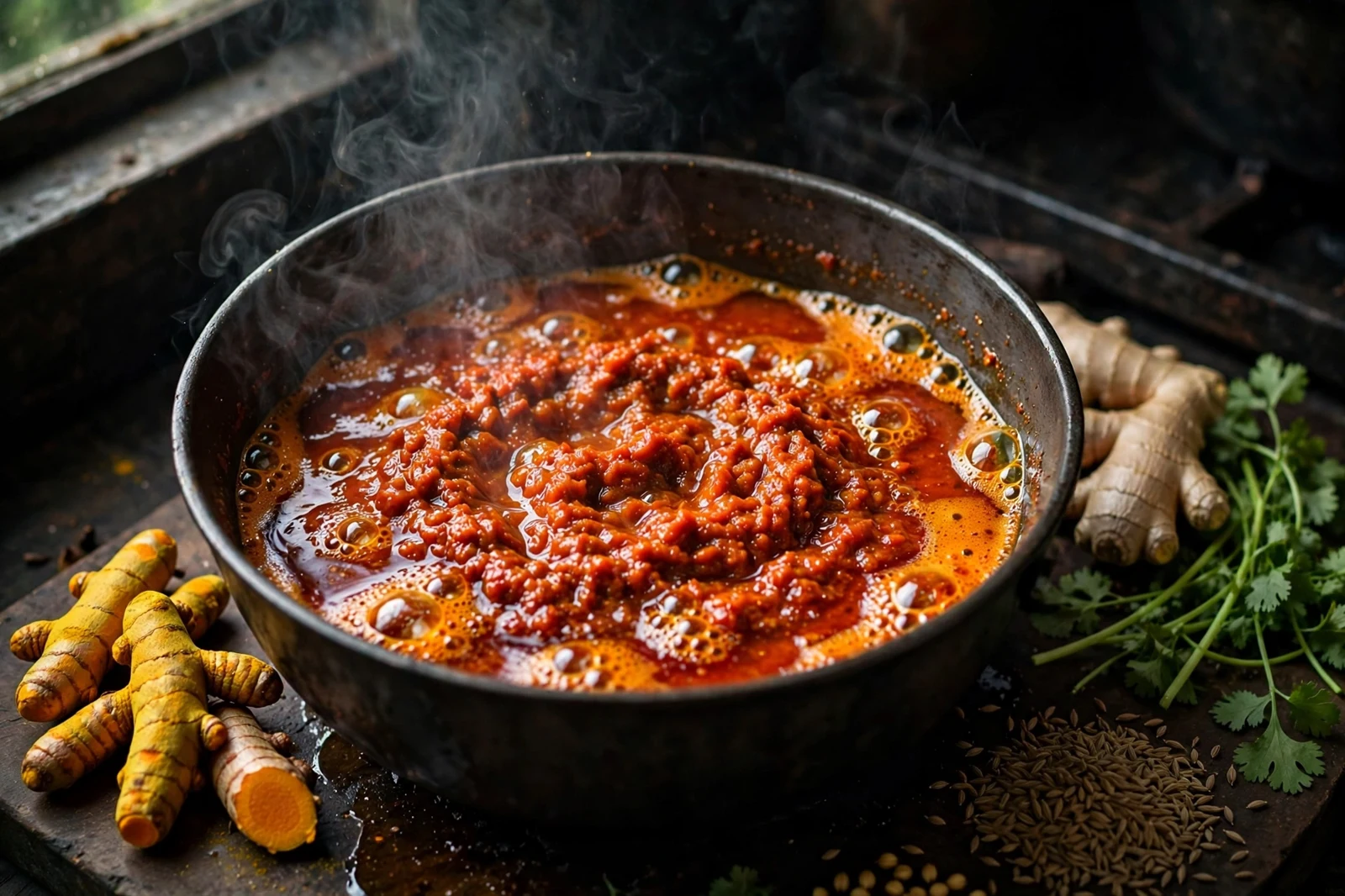
The paste matters more than the brand. Dedicated khao soi paste exists, but red curry paste plus fresh boosts gets a home pot very close: grated ginger, turmeric, coriander, and cumin stirred in as the paste fries. Those warm spices are the northern signature, and they are what red curry paste alone is missing. Fry the paste in oil for a full 2 to 3 minutes, until it darkens and the raw chile smell cooks off, the same lesson that applies to Thai Green Curry with Chicken.
Coconut milk goes in after the paste blooms, and the broth should simmer rather than boil from that point on. A hard boil can split it into oil and thin liquid. The color tells you where you stand: a saturated golden orange, never pale yellow.
Khao Soi: Thai Coconut Curry Noodles
Soft egg noodles and chicken in a turmeric coconut curry broth, topped with crispy fried noodles, pickled mustard greens, shallots, lime, and chili oil.
Ingredients
- 12 oz (340 g) flat egg noodles (fresh wonton noodles or dried), divided
- 1 cup (240 ml) neutral oil, for frying, plus 2 tablespoons for the broth
- 1 lb (450 g) boneless, skinless chicken thighs, cut into bite-size pieces
- 3 tablespoons khao soi curry paste or red curry paste
- 1 tablespoon grated fresh ginger
- 1 teaspoon ground turmeric
- 1 teaspoon ground coriander
- 1/2 teaspoon ground cumin
- 1 can (14 oz / 400 ml) full-fat coconut milk
- 2 cups (475 ml) chicken stock
- 2 tablespoons fish sauce, plus more to taste
- 1 tablespoon palm sugar or light brown sugar
- 1 teaspoon soy sauce
- Kosher salt, to taste
- 1 cup pickled mustard greens, rinsed and chopped
- 2 shallots or 1/2 small red onion, thinly sliced
- 1/2 cup fresh cilantro leaves
- 1 lime, cut into wedges
- Chili oil, for serving
Instructions
- Set aside about 2 oz (a loose handful) of noodles for frying. Heat the 1 cup of oil in a wok or small pot over medium-high heat. Fry the reserved noodles in small batches for 30 to 60 seconds, until puffed, golden, and crisp. Drain on paper towels. They burn fast, so pull them a shade early.
- Boil the remaining noodles until just tender with a little chew left, 2 to 4 minutes for fresh or according to the package for dried. Drain, rinse briefly, and toss with a teaspoon of the frying oil so the strands do not glue together.
- Keep 2 tablespoons of the frying oil in the pot (or use fresh oil in a Dutch oven) over medium heat. Add the curry paste, ginger, turmeric, coriander, and cumin. Fry, stirring constantly, for 2 to 3 minutes, until the paste darkens and smells deeply fragrant.
- Pour in the coconut milk and stir until smooth. Simmer gently 3 to 4 minutes, until beads of orange oil show at the edges. Add the stock and bring back to a bare simmer.
- Add the chicken and simmer 15 to 20 minutes, until tender and cooked through. Keep the broth at a lazy simmer; do not let it reach a rolling boil.
- Stir in the fish sauce, palm sugar, and soy sauce. Taste and adjust: savory first, then warm and rich, with the sugar only rounding the edges. Add salt or more fish sauce if flat.
- Divide the boiled noodles among four warm bowls. Ladle the broth and chicken over the top. Finish each bowl with a mound of crispy noodles, pickled mustard greens, shallot, and cilantro. Serve with lime wedges and chili oil.
Notes
- The fried noodles are not optional decoration. The crunch against the soft noodles and silky broth is the whole point of the dish.
- Pickled mustard greens come in vacuum packs at Asian markets, sometimes labeled sour pickled mustard. Rinse them well; the brine is assertive. Chopped dill pickles are a workable substitute.
- Warm the bowls. A rinse under hot water keeps the broth from cooling on contact.
The Crispy Noodle Topping, Up Close
Two details decide whether you get lacy, shattering strands or a greasy clump. First, the oil has to be properly hot: a strand dropped in should puff and turn golden within seconds. If it sits there soaking, the oil is too cool and the noodles drink it up. Second, work in small batches and spread the strands with chopsticks as they fry, so they crisp as a loose nest, not a solid brick.
Fresh wonton noodles crisp the most dramatically, but dried flat egg noodles work well too and fry straight from the package. Fry the topping before building the broth; the same oil carries toasted flavor into the paste.
Toppings Are a Checklist, Not a Garnish
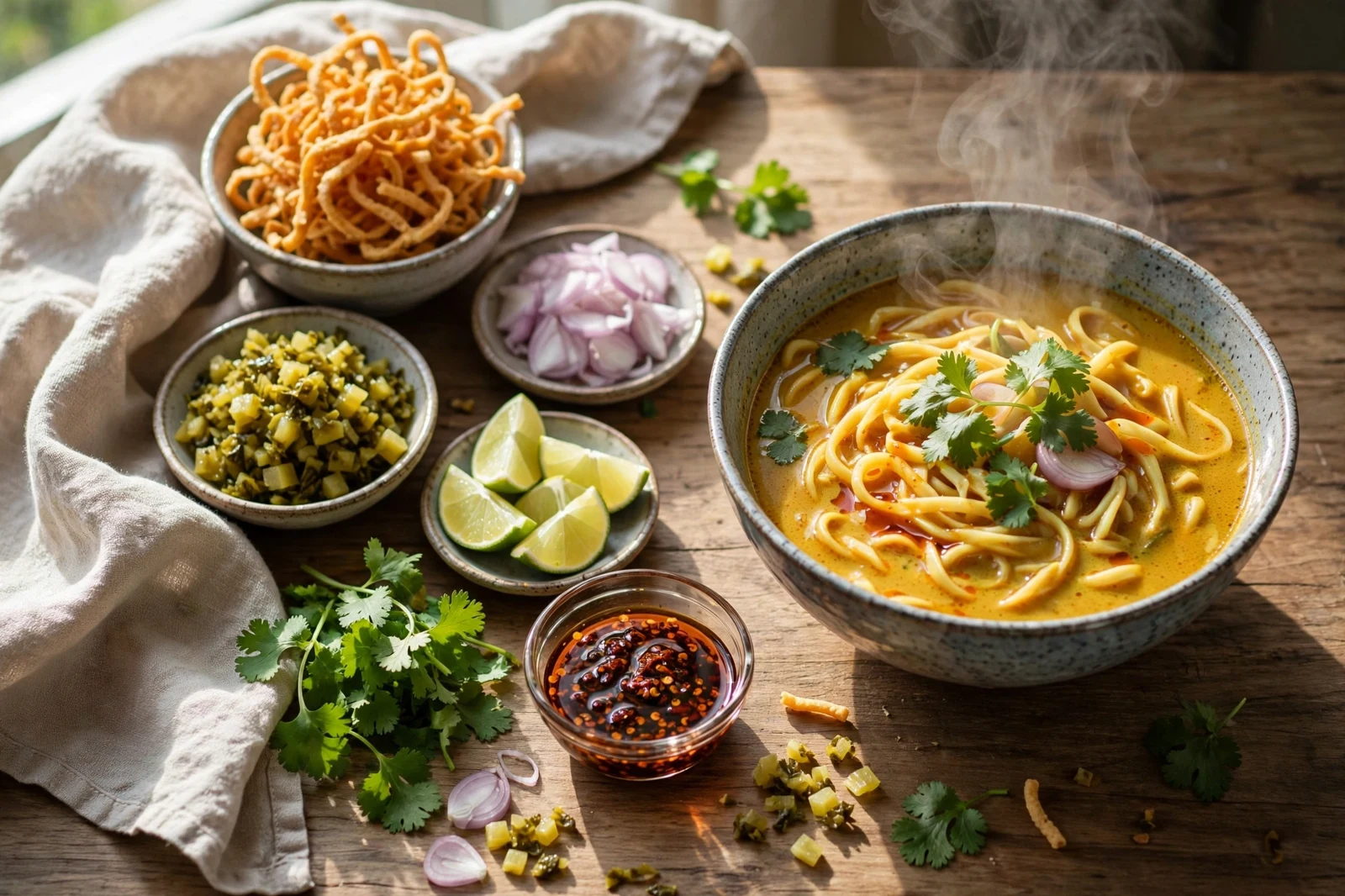
Every khao soi topping does a job, and the bowl tastes incomplete when one goes missing. Pickled mustard greens bring sour crunch. Raw shallot adds a sharp bite that softens in the hot soup. Lime, squeezed in at the table and never cooked, brightens the bowl last second. Cilantro cools things down. And the chili oil, ideally a spoon of your own Homemade Chili Oil, lays heat across the top.
Set the toppings out in small piles and let people build their own balance. The broth should land at a comfortable medium, and each eater pushes it from there.
Variations Worth Trying
- Beef khao soi (khao soi nuea): Swap the chicken for 1 lb of beef chuck in 1-inch cubes. Simmer 60 to 75 minutes, until fork-tender.
- Vegetarian khao soi: Use vegetable stock, swap the fish sauce for soy sauce plus salt, and use extra-firm tofu and mushrooms in the last 8 minutes. Pick a paste without shrimp paste.
- Extra heat: Stir 1 to 2 teaspoons of chili flakes or chili oil sediment into the paste as it fries, then pass more chili oil at the table.
- Weeknight shortcut: Use rotisserie chicken. Build the broth as written, simmer 10 minutes, then add shredded chicken for 3 minutes.
Serving and Storing
Serve khao soi the moment the bowls are built. The crispy noodles soften on contact with the broth, and their crunch is best in the first few minutes. The soft noodles keep drinking broth as they sit, so a waiting bowl eats thicker.
The broth keeps for up to 3 days in the fridge and freezes for up to a month. Store broth, boiled noodles, and crispy noodles separately. To serve again, reheat the broth to a simmer, refresh the noodles, fry fresh crispy noodles, and rebuild with shallot, lime, and herbs.
Khao Soi: Thai Coconut Curry Noodles
Ingredients
Method
- Set aside about 2 oz (a loose handful) of noodles for frying. Heat the 1 cup of oil in a wok or small pot over medium-high heat. Fry the reserved noodles in small batches for 30 to 60 seconds, until puffed, golden, and crisp. Drain on paper towels. They burn fast, so pull them a shade early.
- Boil the remaining noodles until just tender with a little chew left, 2 to 4 minutes for fresh or according to the package for dried. Drain, rinse briefly, and toss with a teaspoon of the frying oil so the strands do not glue together.
- Keep 2 tablespoons of the frying oil in the pot (or use fresh oil in a Dutch oven) over medium heat. Add the curry paste, ginger, turmeric, coriander, and cumin. Fry, stirring constantly, for 2 to 3 minutes, until the paste darkens and smells deeply fragrant.
- Pour in the coconut milk and stir until smooth. Simmer gently 3 to 4 minutes, until beads of orange oil show at the edges. Add the stock and bring back to a bare simmer.
- Add the chicken and simmer 15 to 20 minutes, until tender and cooked through. Keep the broth at a lazy simmer; do not let it reach a rolling boil.
- Stir in the fish sauce, palm sugar, and soy sauce. Taste and adjust: savory first, then warm and rich, with the sugar only rounding the edges. Add salt or more fish sauce if flat.
- Divide the boiled noodles among four warm bowls. Ladle the broth and chicken over the top. Finish each bowl with a mound of crispy noodles, pickled mustard greens, shallot, and cilantro. Serve with lime wedges and chili oil.