
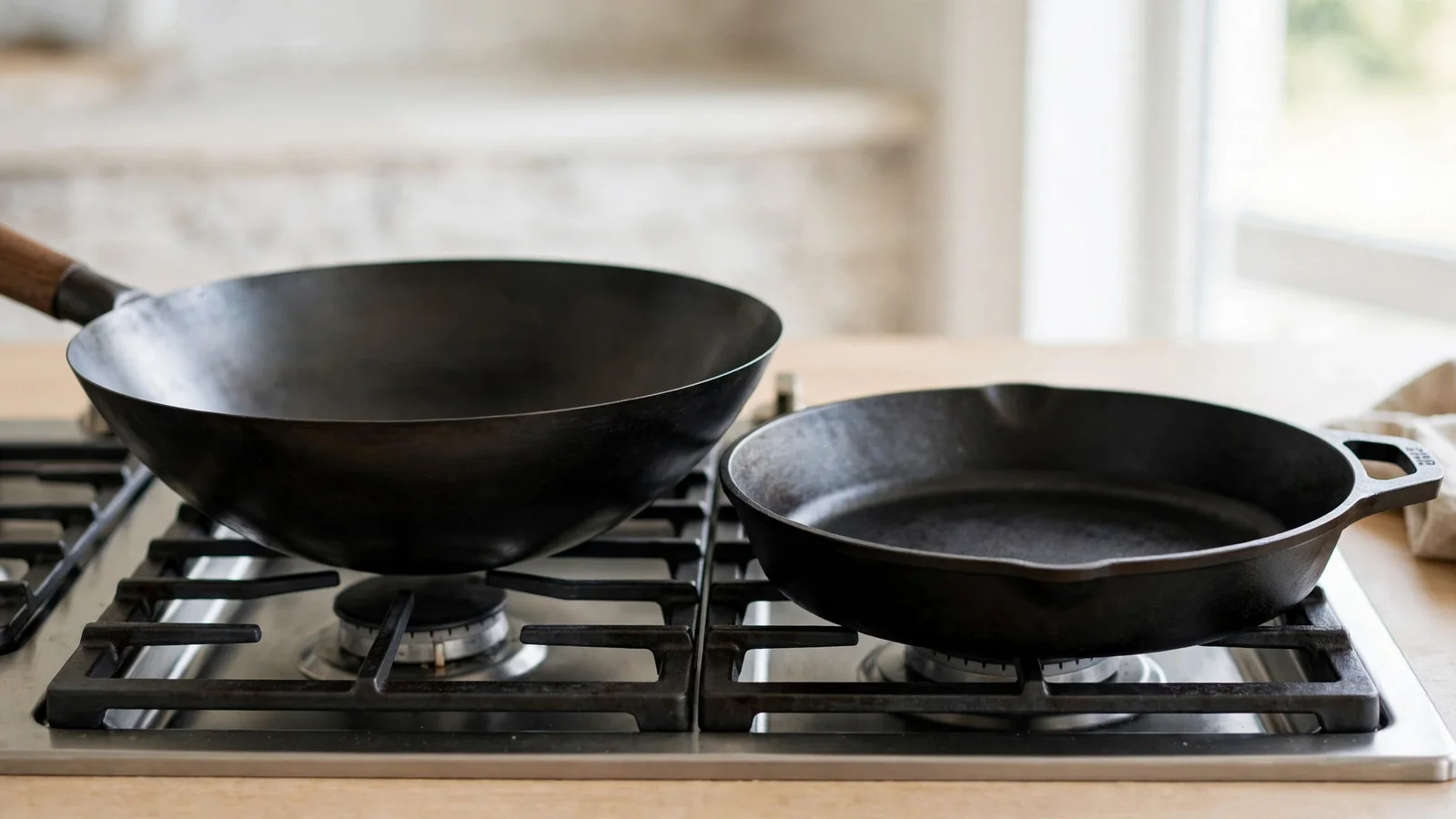
Most home cooks already own one of these pans and wonder if they need the other. A carbon steel wok is light, sloped, and built for movement. A cast-iron skillet is heavy, flat, and built for contact. Both can turn out an excellent stir-fry, but they get there in opposite ways — and the better choice depends less on the recipe than on your stove, your batch size, and whether you like to toss food or let it sit and sear.
This comparison lays the two pans side by side: how each one handles heat, which dishes each one flatters, what each one asks for in care and storage, and how to choose if you can only keep one. If the smoky flavor part is what draws you to a wok, our guide to what wok hei is and how to get it at home covers that piece in full.
The Quick Verdict
- Reach for the wok when you cook on strong gas heat, make fried rice or noodle stir-fries often, or like to keep food moving. The sloped walls give you a hot base and cooler sides in the same pan, and the light weight makes tossing easy on the wrist.
- Reach for the cast-iron skillet when your stove is electric or induction, when you want a hard sear on meat or tofu, or when you cook saucier stir-fries that benefit from steady, even heat. The flat floor holds more food in direct contact at once.
- If you only keep one, let the stove decide. A powerful gas burner rewards a wok. A modest electric or induction cooktop usually rewards cast iron, because the skillet stores heat the burner cannot replace quickly. Plenty of good stir-fries have come out of both pans; the wrong match is a thin wok on a weak burner, crowded until everything steams.
Our walkthrough of how to season a carbon steel wok covers the first-seasoning steps if you go the wok route. Cast iron needs the same basic habit — dry it well, keep a thin coat of seasoning — with a heavier pan to lift.
Wok vs Cast-Iron Skillet at a Glance
| Detail | Carbon steel wok | Cast-iron skillet |
|---|---|---|
| Typical size | 12 to 14 inches across the top | 10 to 12 inches across the floor |
| Shape | Deep bowl, sloped walls, small flat or round base | Shallow, flat floor, low straight walls |
| Weight | Light for its size; easy to lift and toss one-handed | Heavy; usually a two-hand lift when full |
| Heat behavior | Heats and cools fast; temperature follows the burner | Heats slowly, then holds heat through a full batch |
| Best heat sources | Strong gas first; flat-bottom styles work on electric and induction | Gas, electric, and induction all work well |
| Food movement | Tossing and scooping up the walls | Spatula turns; food mostly stays on the floor |
| Searing | Excellent in small batches over very high heat | Excellent across a wide flat area, even in larger batches |
| Sauces | Small amounts coat tossed food well; large volumes pool in the base | Reduces evenly across the flat floor |
| Care | Season, dry promptly, light oil; avoid long soaks | Season, dry promptly, light oil; avoid long soaks |
| Storage | Bulky in a cabinet; often lives on the stove or a hook | Flat and stackable, but heavy in a low drawer |
The one-line version: a wok is a heat-and-motion pan, and a skillet is a heat-and-contact pan. Stir-frying rewards both qualities, just in different dishes.
How Each Pan Handles Heat
Heat is where the two pans part ways, and it explains almost every other difference.
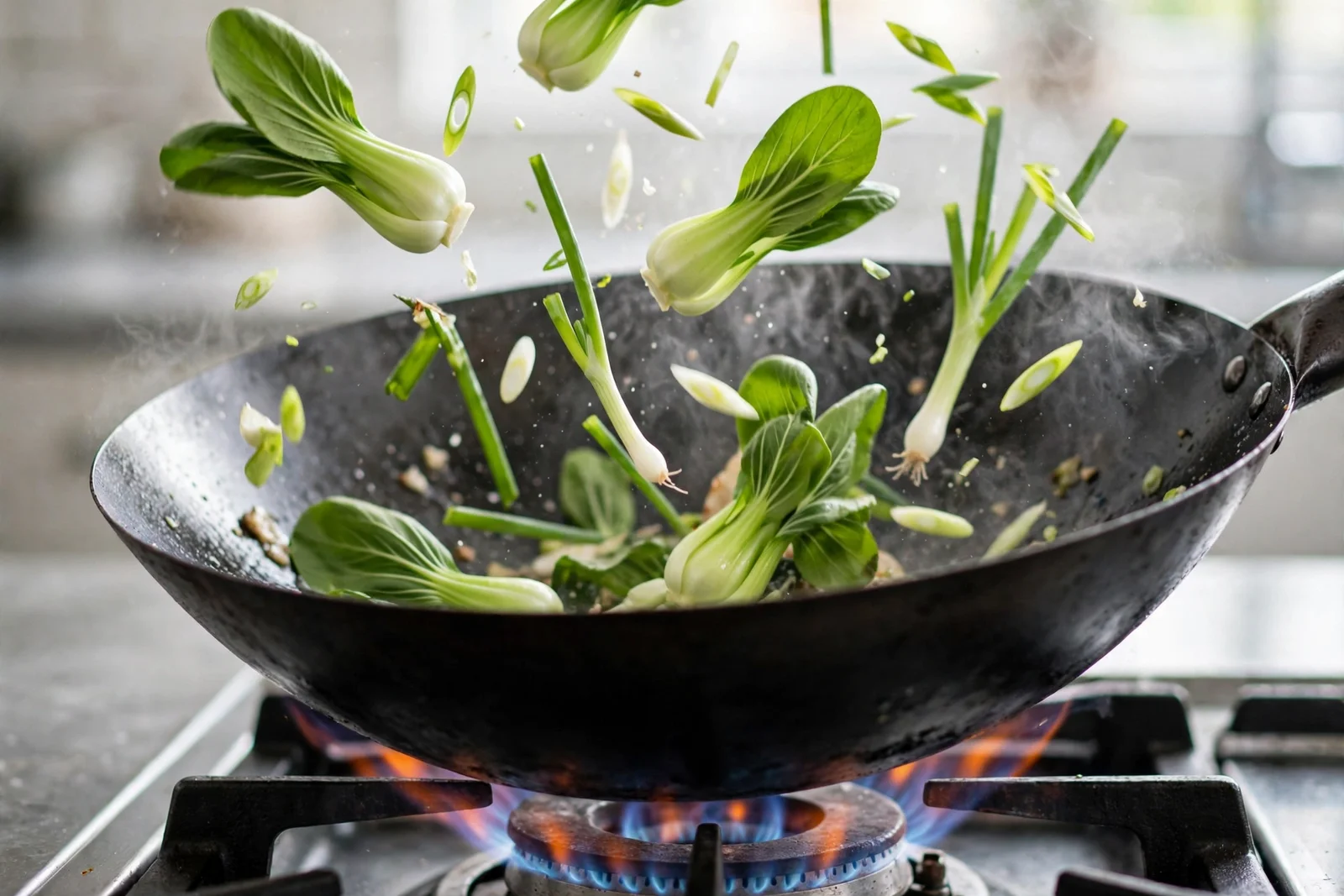
A wok's thin carbon steel responds to the burner almost immediately. Turn the flame up and the base is ready in seconds. Add cold vegetables and the base cools just as fast, which is why wok cooking is built around small batches and constant motion: food sears in the hot center, then rides up the cooler walls while the next handful hits the heat. On a strong gas burner this cycle is the whole pleasure of the pan. On a weak electric burner the same thin steel can struggle, because the burner cannot pour heat back in as fast as the food pulls it out. The stir-fry then steams in its own juices instead of searing.
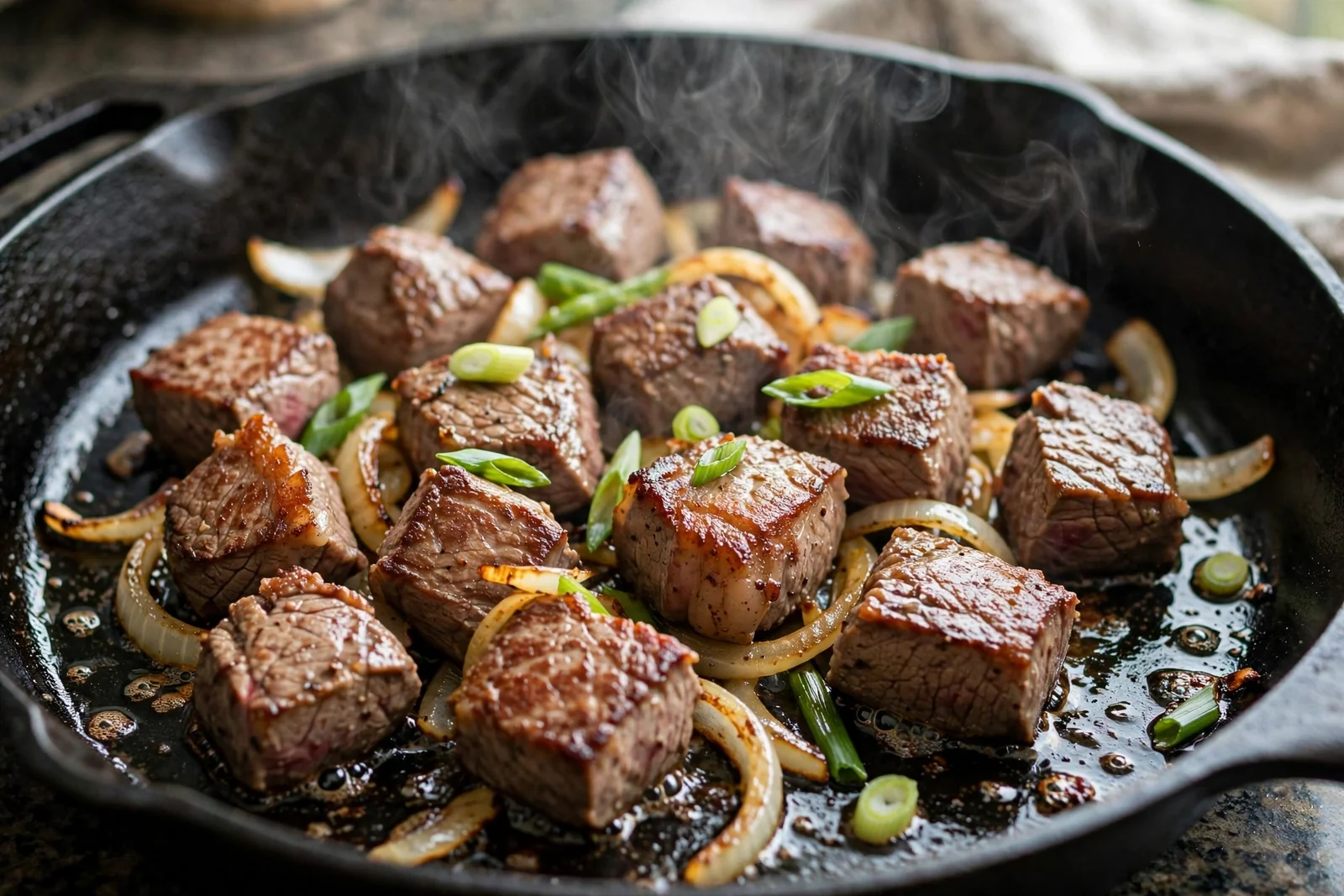
A cast-iron skillet does the opposite. The thick iron takes several minutes to heat through, then barely notices when food lands. That stored heat is a real advantage on home stoves: sliced beef, chicken, or tofu keeps searing instead of cooling the pan. The trade is control. If the skillet gets too hot, it stays too hot for a while, so garlic and dried chilies need a cooler corner or a quick lift off the burner. You also lose the wok's built-in temperature zones — the skillet floor is one temperature all the way across.
Technique adjusts to the pan either way. Velveted chicken, the starch-coated slices described in how to velvet chicken for stir-fry, stays tender in both pans, but the wok version moves constantly while the skillet version benefits from a brief undisturbed sear before the first turn.
Which Pan for Which Dish?
| Dish or job | Better first pick | Why |
|---|---|---|
| Fried rice | Wok | Grains need room to tumble and dry; the walls keep a big batch in the pan |
| Flat noodle stir-fries like Pad See Ew | Either | Wok for tossing char at the edges; skillet for wide, flat noodle contact with the heat |
| Leafy greens like water spinach or bok choy | Wok | A large pile wilts down fast and the walls contain it while it shrinks |
| Shaking beef and other seared-meat stir-fries | Cast-iron skillet | Wide flat contact gives an even crust on cubed meat |
| Tofu that should crisp before it sauces | Cast-iron skillet | Steady heat and a flat floor crisp more pieces at once |
| Small-batch vegetable stir-fry for two | Either | Wok on gas, skillet on electric; match the pan to the burner |
| Stir-fry with a generous sauce | Cast-iron skillet | The flat floor reduces sauce evenly instead of pooling it |
| Eggs, fried rice with egg ribbons, and scallion pancakes | Cast-iron skillet | Even, stored heat sets eggs gently without hot spots |
The pattern is consistent: choose the wok when the dish needs movement and volume, and choose the skillet when the dish needs contact and a crust. Noodle dishes sit in the middle. A wok tosses them with less breakage, while a skillet gives flat rice noodles more of the blistered, soy-darkened edges many cooks chase.
Tossing, Batch Size, and Splatter
A wok invites you to move food with a flick of the wrist or a scoop of the spatula, and that motion is more than show. Tossing exposes every piece to the hottest part of the pan in turn, and it keeps sugary sauces from sitting in one spot long enough to scorch. The high walls also contain oil splatter better than a shallow skillet, which matters with watery vegetables.
What a wok does not forgive is crowding. The searing zone is only the small base, so a double batch of beef will steam unless it goes in two rounds. A 12-inch skillet fits more food in the sear zone at once, which makes it the calmer pan for a family-size portion cooked in a single pass. The wok catches up on total volume — a 14-inch wok holds a mountain of greens — but volume and searing area are different things, and stir-fries care about the second one.
Wrist strength counts, too. A loaded cast-iron skillet is a two-hand job, and shaking the pan to toss is not realistic for most cooks. If you like to keep food moving, the wok's weight is a genuine daily advantage. If you prefer to lay food down and leave it alone for a minute, the skillet's weight never enters the picture.
Stove Fit: Gas, Electric, and Induction
- Strong gas burner: the wok's home ground. A round-bottom wok on a ring, or a flat-bottom wok set straight on the grate, gets the fierce, fast heat the shape was designed for. Cast iron also works beautifully on gas, with a slower, steadier character.
- Electric coil or glass-top: a flat-bottom wok is the only wok option, and it performs best in small batches. A cast-iron skillet is usually the stronger choice here, since its stored heat covers for the burner's slow response. Preheating the skillet fully matters more than any other step.
- Induction: cast iron is induction-ready by nature and responds fast on it. A wok needs a flat base and magnetic steel to work at all, and the small contact patch limits how much heat transfers. Many induction cooks keep the skillet for stir-fries and use the wok on a portable gas burner for fried rice nights.
None of this makes one pan wrong. It means the same wok that sings on a friend's gas range can feel sluggish on an electric stove at home, through no fault of the cook.
Care, Cost, and How Long They Last
Both pans are buy-it-for-life tools at modest prices, and both ask for the same basic care: wash with hot water, dry on a warm burner, and rub in the thinnest film of oil while the pan is still warm. Long soaks and harsh scrubbing strip seasoning on either one.
The differences are practical. A carbon steel wok needs an initial seasoning session before its first stir-fry, and its surface darkens in patches as the seasoning builds — that mottled look is normal and has no effect on cooking. A cast-iron skillet often arrives pre-seasoned and improves quietly with use. The wok is awkward in a small cabinet and tends to live on the stovetop. The skillet stores flat but punishes a high shelf every time you reach for it.
On price, plain versions of both pans sit in the same affordable range, and neither needs replacing when the seasoning wears. A worn pan gets re-seasoned, not retired. Spend the real money on size instead: a 14-inch wok for family batches, or a 12-inch skillet if four portions are your usual.
The Bottom Line
Wok vs cast-iron skillet is motion against contact. Pick the wok if your stove runs strong and gas-fired, if fried rice and leafy greens are weekly dishes, and if you enjoy keeping food moving. Pick the skillet if your cooktop is electric or induction, if a hard sear on meat and tofu matters more than tossing, and if you would rather let stored heat do the work. If there is room for both, they stop competing: the wok takes the noodle and fried-rice nights, the skillet takes the seared-beef and crisp-tofu nights, and weeknight stir-fries get easier in both directions.