
Tomato egg stir-fry is one of the most common home dishes across China, and it looks simpler than it is. The ingredients are short — eggs, tomatoes, scallions, a little sugar and salt — but the dish lives or dies on two textures arriving at the same moment: eggs that stay soft and custardy, and tomatoes that have cooked down just enough to turn jammy and release a glossy sauce. Cook the eggs too long and they go rubbery. Rush the tomatoes and you get warm, watery chunks floating in thin juice.
The fix is sequencing, not more ingredients. The eggs are scrambled first, barely set, and taken out while still glossy. The tomatoes then cook alone in the same pan until their juices thicken, and the eggs return only for a final fold. Everything else in this recipe supports that one decision.
If soft-set eggs are the part you usually lose, the gentle-heat approach here is the same principle behind a proper Egg Drop Soup, where egg ribbons set in seconds and go silky instead of stringy when the pot is managed well.
The Order That Protects Both Textures
| Step | What happens | Why it matters |
|---|---|---|
| 1. Eggs first, 70% set | Scrambled in hot oil, removed while still glossy on top | Eggs finish cooking later in the tomato sauce; pulling them early keeps them soft |
| 2. Tomatoes alone | Cooked 4–6 minutes until edges slump and juices reduce | Tomatoes need time eggs cannot survive; the juice becomes the sauce |
| 3. Season in the pan | Sugar, salt, and ketchup (if using) go into the tomatoes | Sugar balances tomato acidity before the eggs return |
| 4. Eggs back, 30 seconds | Folded through off a lower heat | The eggs warm through and coat in sauce without cooking further |
That middle step is where most shortcuts fail. If the eggs sit in the pan while the tomatoes break down, they absorb the released water, tighten up, and weep it back out on the plate.
Ingredients
- 4 large eggs
- 3 medium ripe tomatoes (about 1 pound / 450 g), cored and cut into wedges
- 2 scallions, whites and greens separated, both thinly sliced
- 1 1/2 tablespoons neutral oil, divided
- 1 teaspoon sugar, plus more to taste
- 3/4 teaspoon fine salt, divided
- 1 tablespoon ketchup (optional, for sweeter, redder sauce)
- 1 teaspoon cornstarch mixed with 2 tablespoons water (optional, for a glossier sauce)
- 1/4 teaspoon white pepper (optional)
- Cooked rice, for serving
Prep: 10 minutes. Cook: 10 minutes. Total: 20 minutes. Serves 2 as a main dish over rice, or 3–4 as one dish in a larger meal.
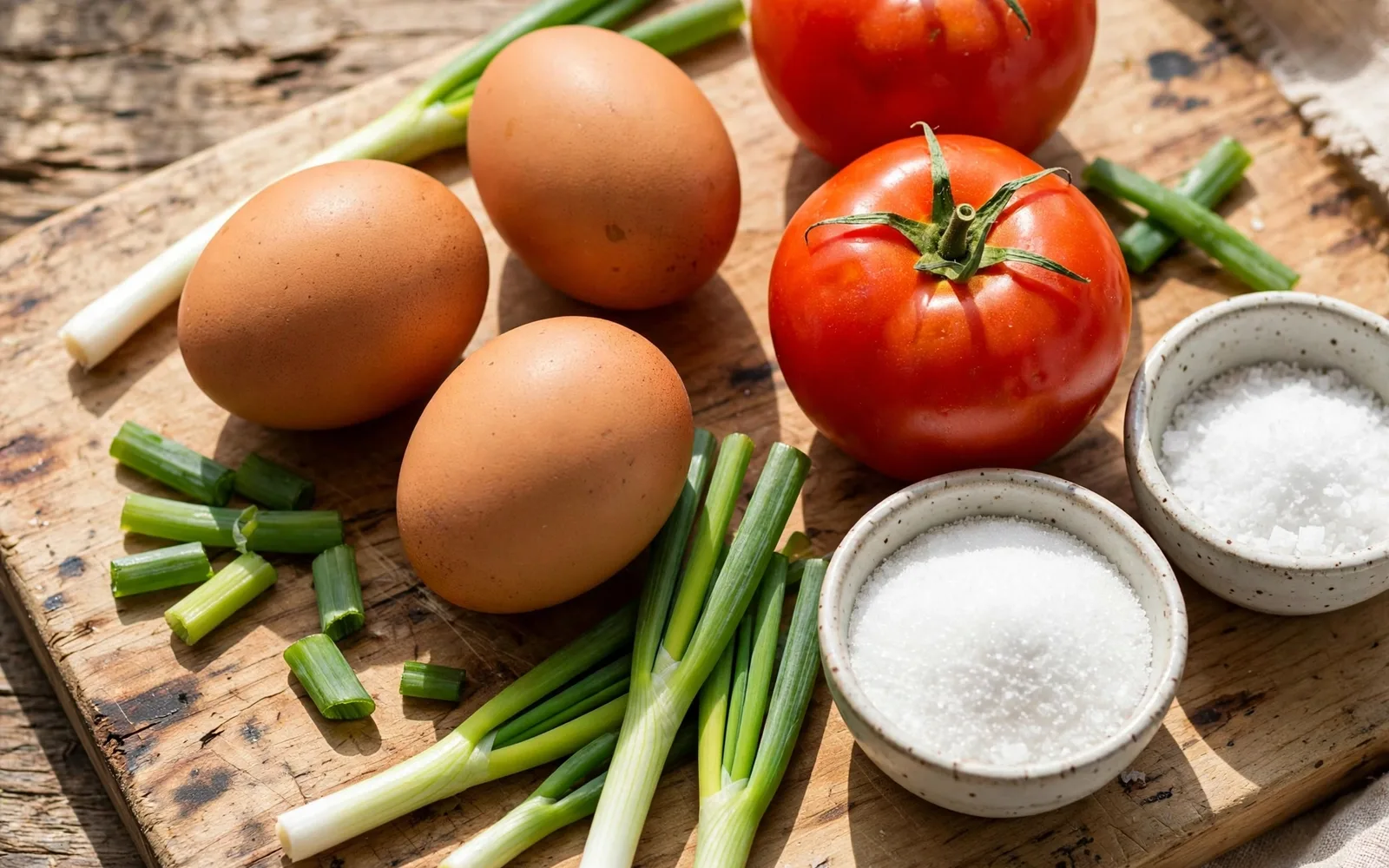
How to Make It, Step by Step
- Beat the eggs loose. Crack the eggs into a bowl with 1/4 teaspoon of the salt and beat until the yolks and whites are fully combined and slightly frothy, about 20 seconds. The mixture should fall off the fork in a thin, even stream.
- Scramble soft and set aside. Heat a wok or large skillet over medium-high heat until a drop of water flickers across the surface. Add 1 tablespoon of the oil, swirl, then pour in the eggs. Let them set for 5 seconds, then push gently with a spatula, folding large curds from the edges toward the center. At about 70% set — still glossy and slightly runny on top, roughly 1 minute total — slide the eggs onto a plate. They will finish cooking later.
- Cook the tomatoes down. Return the pan to medium-high heat with the remaining 1/2 tablespoon oil. Add the scallion whites and stir for 15 seconds, then add the tomato wedges and the remaining 1/2 teaspoon salt. Cook, stirring occasionally, until the skins loosen, the edges slump, and the juices in the pan look slightly thick rather than watery, 4 to 6 minutes. Press a few pieces with the spatula to help them break down.
- Season the sauce. Stir in the sugar and the ketchup if you are using it. Taste a spoonful of the juice: it should read sweet first, then tangy. Tomatoes vary, so add sugar in small pinches until the sharp edge rounds off. If the sauce seems thin and you want it to cling, stir in half the cornstarch slurry and let it bubble for 10 seconds; add more only if needed.
- Fold the eggs back in. Return the eggs and any juices on the plate to the pan. Lower the heat, add the scallion greens and white pepper if using, and fold everything together for 20 to 30 seconds, just until the eggs look set and coated. Turn off the heat while they still look moist — carryover heat finishes the job on the way to the table.
- Serve right away. Spoon over or alongside hot rice. A bowl of plain steamed rice is the classic plate here; the method in How to Cook Perfect Jasmine Rice Every Time gives you grains that stay separate under the sauce.
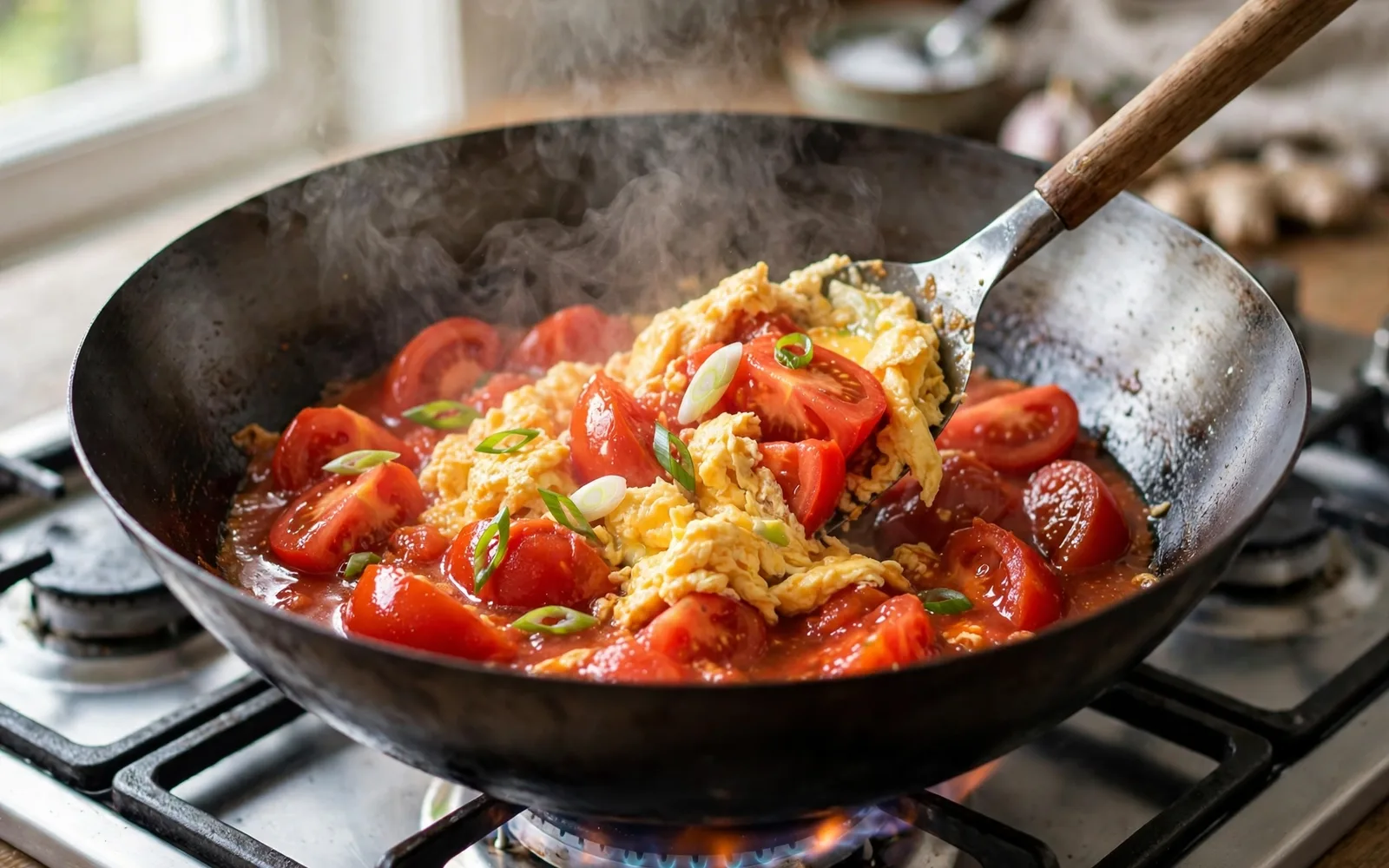
Getting the Heat Right
The eggs want a hot pan and a short stay; the tomatoes want a steady pan and patience. That contrast is small-scale heat management, the same skill that What Is Wok Hei and How to Get It at Home breaks down for higher-heat stir-fries — here you are just applying it in reverse, pulling food out before the pan wins.
- Oil shimmer, not smoke, for the eggs. Smoking oil makes the eggs tough and bitter at the edges. You want the oil to move easily and shimmer.
- Tomatoes should sizzle, then settle. A loud sizzle at the start means the pan is driving off surface water. As the juices release, the sound softens; that is when the sauce is forming.
- Restraint at the end. Every extra 30 seconds in the pan at the finish costs softness. Plate it while the eggs still look a little underdone by scrambled-egg standards.
Variations
- With garlic: Add 1 minced garlic clove with the scallion whites for a rounder base.
- Shanghai-style sweeter: Raise the sugar to 2 teaspoons and skip the white pepper. This version leans sweet and is often served with more sauce.
- With a little sesame: A few drops of toasted sesame oil folded in off the heat add aroma without changing the texture. Do not cook it in the pan.
- Add shrimp: Stir-fry 4 ounces (115 g) of small peeled shrimp right after the eggs come out, set them aside with the eggs, and fold both back at the end. Increase the salt slightly.
Serving and Leftovers
Serve the stir-fry the moment it is folded together, over plain rice, with something simple and green alongside if you want a second dish. The sauce is thin and bright, so it does not need rich sides competing with it.
Leftovers keep in a covered container in the refrigerator for up to 2 days. Reheat gently in a covered pan over low heat with a spoonful of water, just until warm. The eggs will firm up compared to fresh, which is expected; the microwave works too, but stop and stir halfway so the eggs heat evenly.
Recipe card summary: Tomato egg stir-fry — soft scrambled eggs folded into jammy, lightly sweetened tomatoes. Eggs scrambled first to 70% set, tomatoes cooked down alone 4–6 minutes into a glossy sauce, eggs returned for a final 30-second fold. Prep 10 minutes, cook 10 minutes, total 20 minutes. Serves 2 as a main over rice.
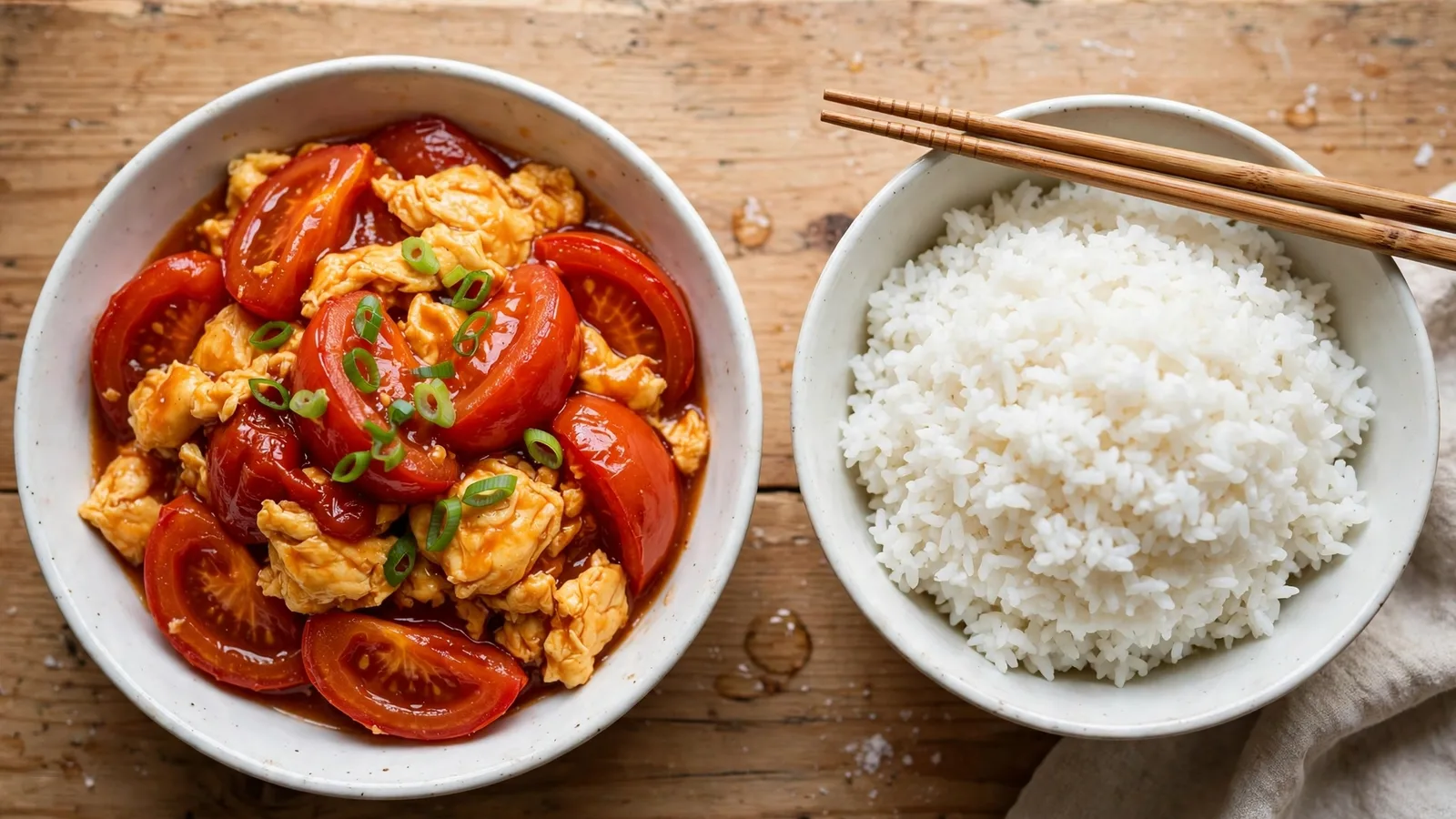
Tomato Egg Stir-Fry
Ingredients
Method
- Beat the eggs with 1/4 teaspoon of the salt until fully combined and slightly frothy, about 20 seconds.
- Heat a wok or large skillet over medium-high heat. Add 1 tablespoon oil, swirl, pour in the eggs. Fold large curds gently for about 1 minute, until 70% set and still glossy. Transfer to a plate.
- Return the pan to medium-high heat with the remaining oil. Add scallion whites for 15 seconds, then tomato wedges and remaining salt. Cook 4 to 6 minutes, stirring occasionally, until edges slump and juices look slightly thick.
- Stir in sugar and ketchup if using. Adjust sugar in small pinches until the acidity rounds off. For a glossier sauce, stir in half the cornstarch slurry and bubble 10 seconds.
- Return eggs and plate juices to the pan over low heat. Add scallion greens and white pepper. Fold 20 to 30 seconds until eggs are set and coated. Serve immediately over rice.