
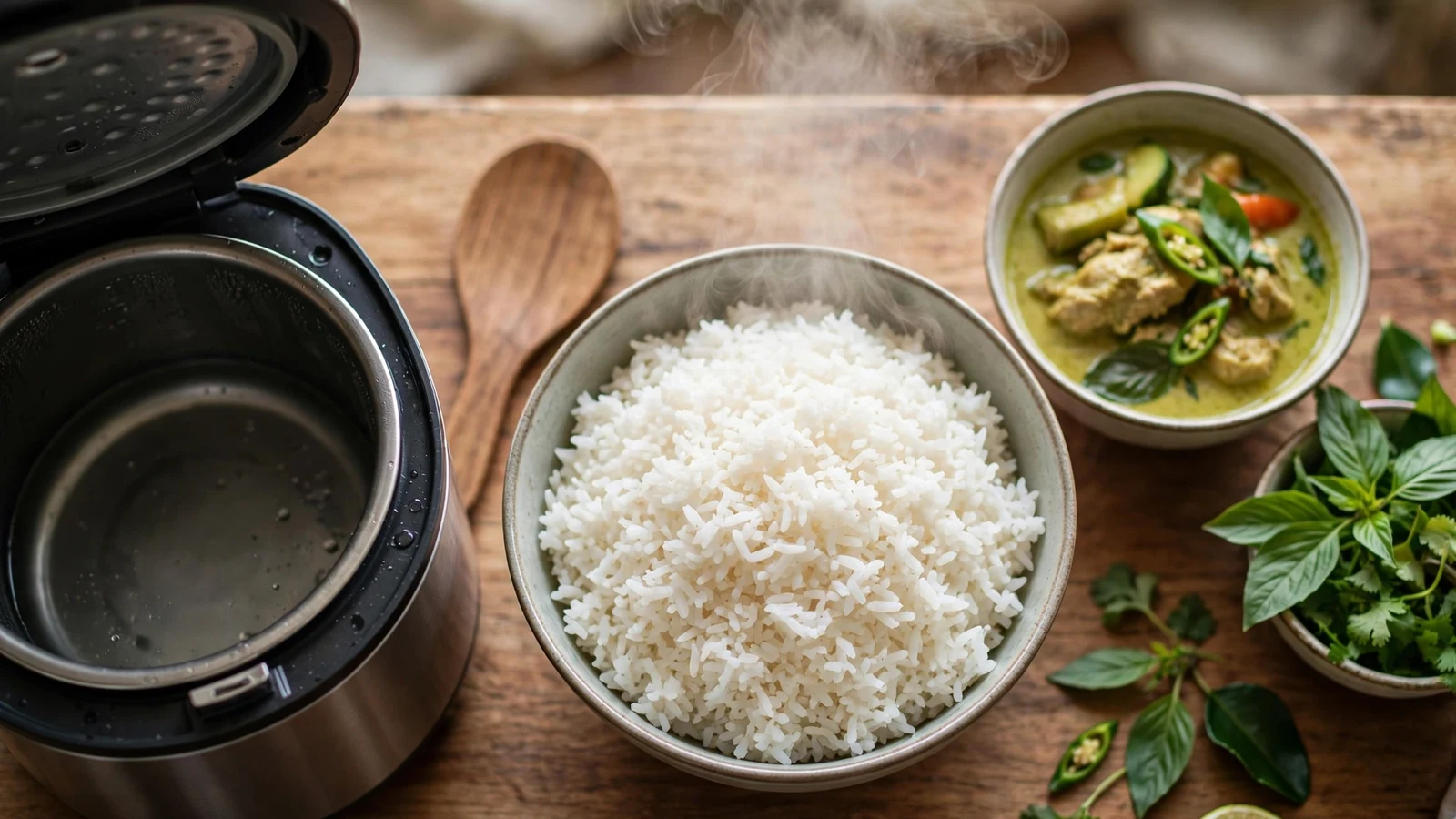
Jasmine rice looks forgiving. It is a soft, fragrant long-grain rice, and the bag makes it sound like all you do is add water and press a button. Then the lid comes off and you get one of two results: a gummy mat that clumps into a single slab, or firm, chalky grains that still have a hard snap in the middle. The rice itself is rarely the problem. Almost every disappointing batch comes down to three things: too much water, no rest at the end, or lifting the lid at the wrong moment.
This guide gives you one dependable method for a rice cooker and one for the stovetop, plus the small adjustments that keep the grains separate, tender, and glossy. Once the base pot is solid, it becomes the foundation for the meals you actually want to eat — a bowl under Thai green curry, a plate of com tam, or tomorrow’s garlic fried rice.
What Makes Jasmine Rice Different
Jasmine rice is a long-grain rice grown mainly in Thailand. The grains are slender, slightly translucent when raw, and naturally aromatic, with a faint floral scent that is strongest right after cooking. It sits in the middle of the rice world: softer and stickier than basmati, firmer and less sticky than short-grain sushi rice.
Two traits matter in the pot:
It needs less water than you think. Jasmine rice absorbs less water than many American long-grain rices. The 1 part rice to 2 parts water ratio printed on some bags is meant for older, sturdier rice. For jasmine, that much water almost always gives you mush.
It hates being stirred and rushed. The grains are tender once they absorb water. Stirring breaks them and releases starch, which turns the surface gluey. A short rest off the heat finishes the cooking gently with steam and keeps each grain whole.
If you are building a pantry from scratch, jasmine rice belongs on the short list in our essential Asian pantry guide for exactly this reason: it pairs with stir-fries, curries, soups, and fried rice without fighting the main dish.
The Water Ratio That Actually Works
Forget the 1:2 bag instruction. Use these starting points and adjust by a tablespoon at a time for your rice and your cooker.
- Rice cooker: 1 cup jasmine rice to 1 1/4 cups water
- Stovetop in a heavy pot with a tight lid: 1 cup jasmine rice to 1 1/3 cups water
- Older rice (open bag, been in the pantry for months): add 1 extra tablespoon of water per cup
- Brand-new crop rice (sometimes labeled new crop): use 1 cup rice to 1 1/8 cups water
Why the stovetop needs a splash more: a stovetop pot loses a little more steam around the lid than a sealed rice cooker. That small difference — two tablespoons per cup — is often the gap between fluffy and slightly dry.
A few practical notes on measuring:
Use the same cup for rice and water. A standard US measuring cup (240 ml) is fine as long as you use it for both. Rinse first, then measure the water after the rice goes into the pot, so rinse water clinging to the grains does not throw the ratio off.
Salt is optional. A pinch (about 1/4 teaspoon per cup of rice) brings out the natural aroma. Skip it if the rice will sit under a well-seasoned sauce like curry or a soy-based stir-fry.
To Rinse or Not to Rinse
Short answer: give it a quick rinse, but do not soak it and do not wash it until the water runs perfectly clear.
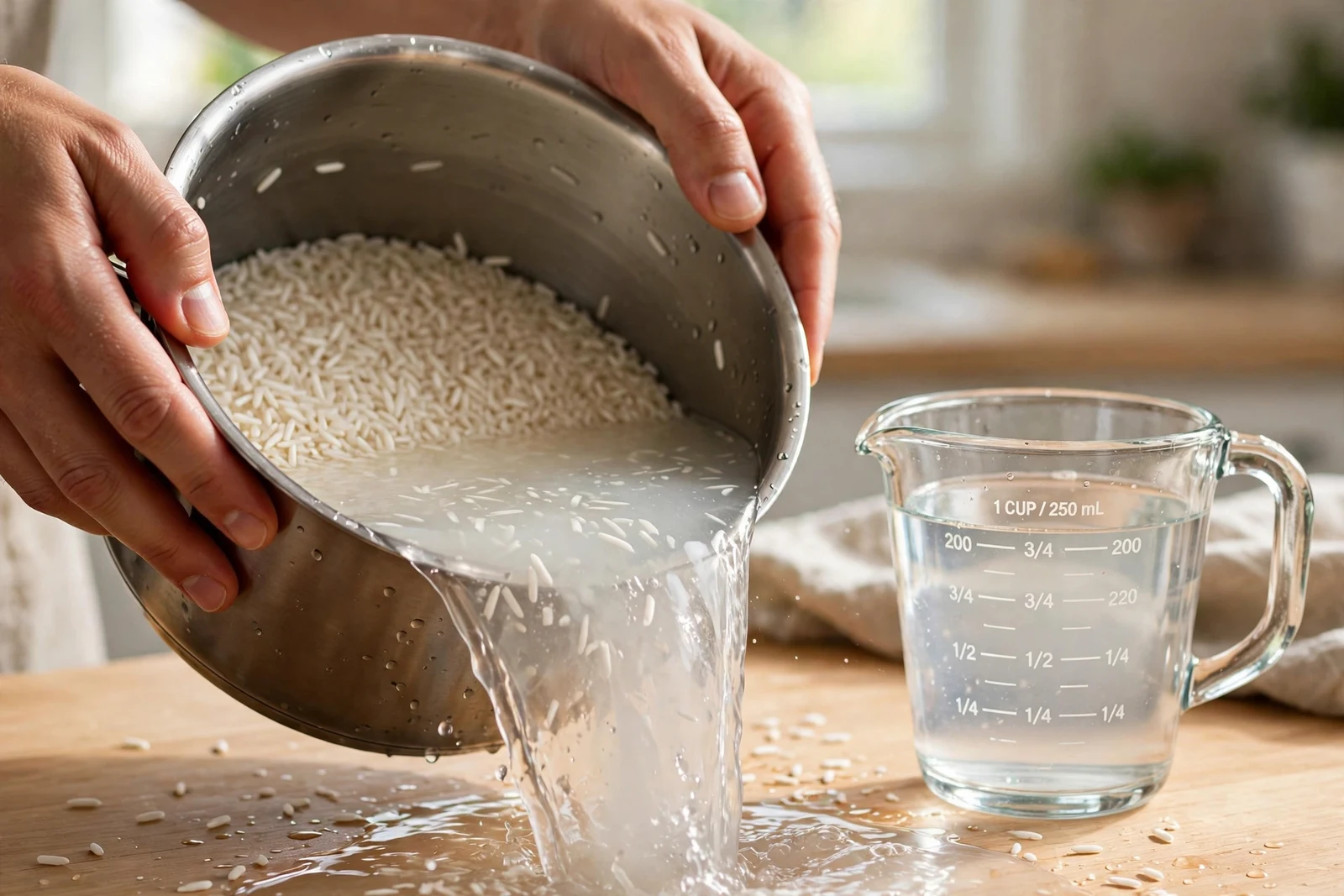
Rinsing removes loose surface starch and any dust from milling. That surface starch is the main culprit behind gummy, clumped rice. Two or three gentle rinses, swirling with your hand and pouring off the cloudy water, is enough. Aggressive washing or a long soak does the opposite of what you want: the grains start absorbing water unevenly before cooking even begins, and soaked jasmine grains break more easily.
How to do it:
- Put the rice in the cooking pot or a bowl and cover with cool water.
- Swirl gently with your fingers for a few seconds, then pour off most of the water.
- Repeat two more times. The water will still look a little hazy. That is fine.
- Drain well, then add your measured cooking water.
One exception: if you are making rice for fried rice the next day, rinsing still helps. Cook it, cool it, and refrigerate it uncovered for the first hour so the surface dries a bit.
Rice Cooker Method (Set It and Leave It Alone)
This is the most consistent method for most home kitchens.
- Rinse 1 cup jasmine rice as described above and add it to the cooker insert.
- Add 1 1/4 cups water and a pinch of salt if you like. Give it one gentle swirl so the rice sits in an even layer.
- Close the lid and start the regular white rice cycle. Do not open the lid to peek.
- When the cooker switches to warm, start a timer for 10 minutes and leave the lid closed. This rest is part of the cooking, not an extra. Steam evens out the moisture from bottom to top.
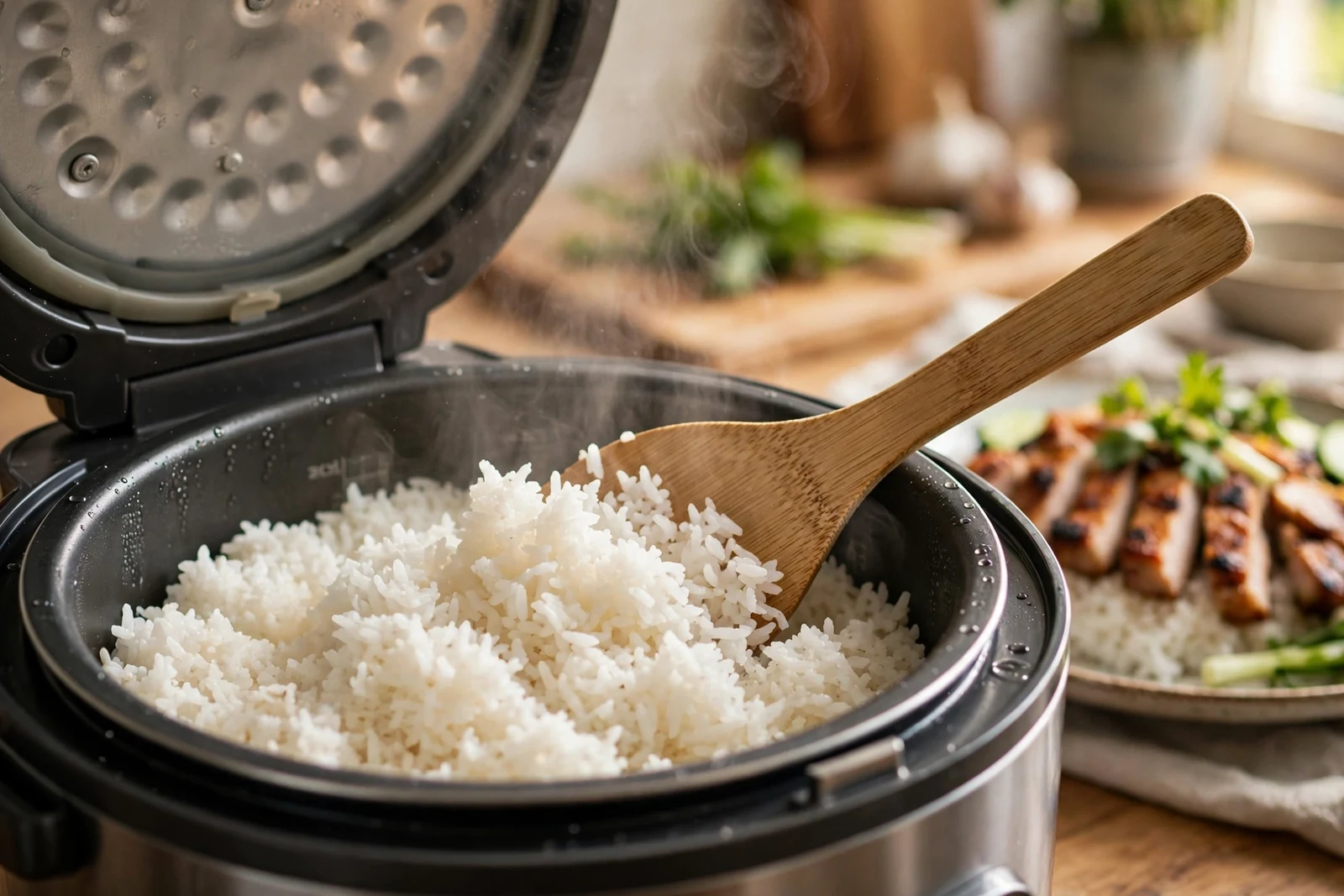
- Open the lid, let the burst of steam escape, and fluff with a rice paddle or fork. Use a slicing, lifting motion from the bottom instead of stirring in circles.
Scale it up freely: 2 cups rice to 2 1/2 cups water, 3 cups rice to 3 3/4 cups water. Keep the same 10-minute rest no matter the batch size.
Stovetop Method (No Cooker Needed)
A heavy pot with a tight-fitting lid works just as well. A thin pot with a loose lid loses too much steam and gives you uneven results.
- Add rinsed rice, 1 1/3 cups water per cup of rice, and a pinch of salt to the pot. Bring to a gentle boil over medium-high heat, uncovered.
- As soon as it boils, stir once — just once — to lift any grains stuck to the bottom. Put the lid on.
- Turn the heat to the lowest setting. Simmer for 12 minutes without lifting the lid.
- Take the pot off the heat, still covered, and rest for 10 minutes.
- Fluff gently and serve.
If your burner runs hot even on low, slide a heat diffuser under the pot or set the pot slightly off-center. Scorched bottom rice usually means the heat was too high during those 12 minutes, not that the ratio was wrong.
Microwave Method for a Single Serving
For one person or a dorm-style setup, the microwave handles a small batch fine.
Combine 1/2 cup rinsed rice with 2/3 cup water in a large microwave-safe bowl — the bowl should be at least three times the volume of the rice and water, because it bubbles up. Cover with a microwave-safe plate, leaving a small vent. Microwave on high for 5 minutes, then at 50% power for 8 minutes. Rest, covered, for 5 minutes before fluffing. The grains will be a touch softer than cooker rice, which works well under saucy dishes.
Troubleshooting: Read the Pot, Fix the Next Batch
Rice gives you clear feedback. Use it.
Mushy and clumped together: Too much water, or the rice was not rested and got stirred while wet. Next time, cut the water by 2 tablespoons per cup and keep your hands off the paddle until after the rest. Also check that you are rinsing lightly — that loose starch adds glue.
Firm or chalky in the center: Not enough water, or the lid was lifted during cooking and steam escaped. Add 2 tablespoons more water per cup next time. If this batch is already cooked, sprinkle 2 tablespoons of hot water over the top, cover, and rest 10 more minutes off the heat.
Burnt or crispy bottom, tender top: Heat too high on the stovetop, or the cooker insert is worn. Lower the heat, use a heavier pot, and make sure the bottom of the cooker insert is dry before you set it in — a wet insert can confuse the sensor on some models.
Wet, soupy surface after the cycle ends: The rest was skipped. A full 10-minute covered rest absorbs that surface moisture almost every time. If you rushed it, cover and wait another 5 minutes before fluffing.
Rice tastes flat: The rice is old, or it sat on warm for hours. Jasmine rice is best within an hour of cooking. The aroma fades fast. For holding, keep the window short, and refresh leftover rice with a sprinkle of water and a brief covered reheat.
How to Store and Reheat Leftovers
Cooked jasmine rice keeps well, and planned leftovers are the start of a great fried rice.
- Refrigerator: Cool the rice quickly, spread it in a shallow container, and refrigerate within an hour. It keeps for up to 4 days. The grains firm up in the cold, which is exactly what fried rice wants.
- Freezer: Portion into flat zip-top bags or small containers and freeze for up to 1 month. Thaw in the refrigerator or reheat from frozen.
- Reheating: Sprinkle 1 tablespoon of water per cup of rice over the top, cover, and microwave until steaming, or steam in a covered bowl over simmering water for a few minutes. The added water brings back the soft texture without turning it soggy.
Leftover rice is the right starting point for Hainanese chicken rice on a busy night — the poached chicken and ginger-scallion sauce do the heavy lifting while the rice simply needs to reheat well — and it is the base that makes sinangag crisp instead of clumpy.
Small Habits That Make the Biggest Difference
Perfect jasmine rice is not about a fancy cooker. It is about four habits done the same way every time:
- Measure rice and water with the same cup, and lean toward less water than the bag suggests.
- Rinse lightly — two or three gentle rinses, never a long soak.
- Never lift the lid while it cooks.
- Always rest 10 minutes off the heat before fluffing.
Do those four things and the rice takes care of itself: tender, separate grains with that soft floral aroma, ready for curry, stir-fry, grilled pork, or a fried egg and a spoonful of chili crisp. When a batch misses, change one variable by two tablespoons and cook again.
4 thoughts on “How to Cook Perfect Jasmine Rice Every Time”