
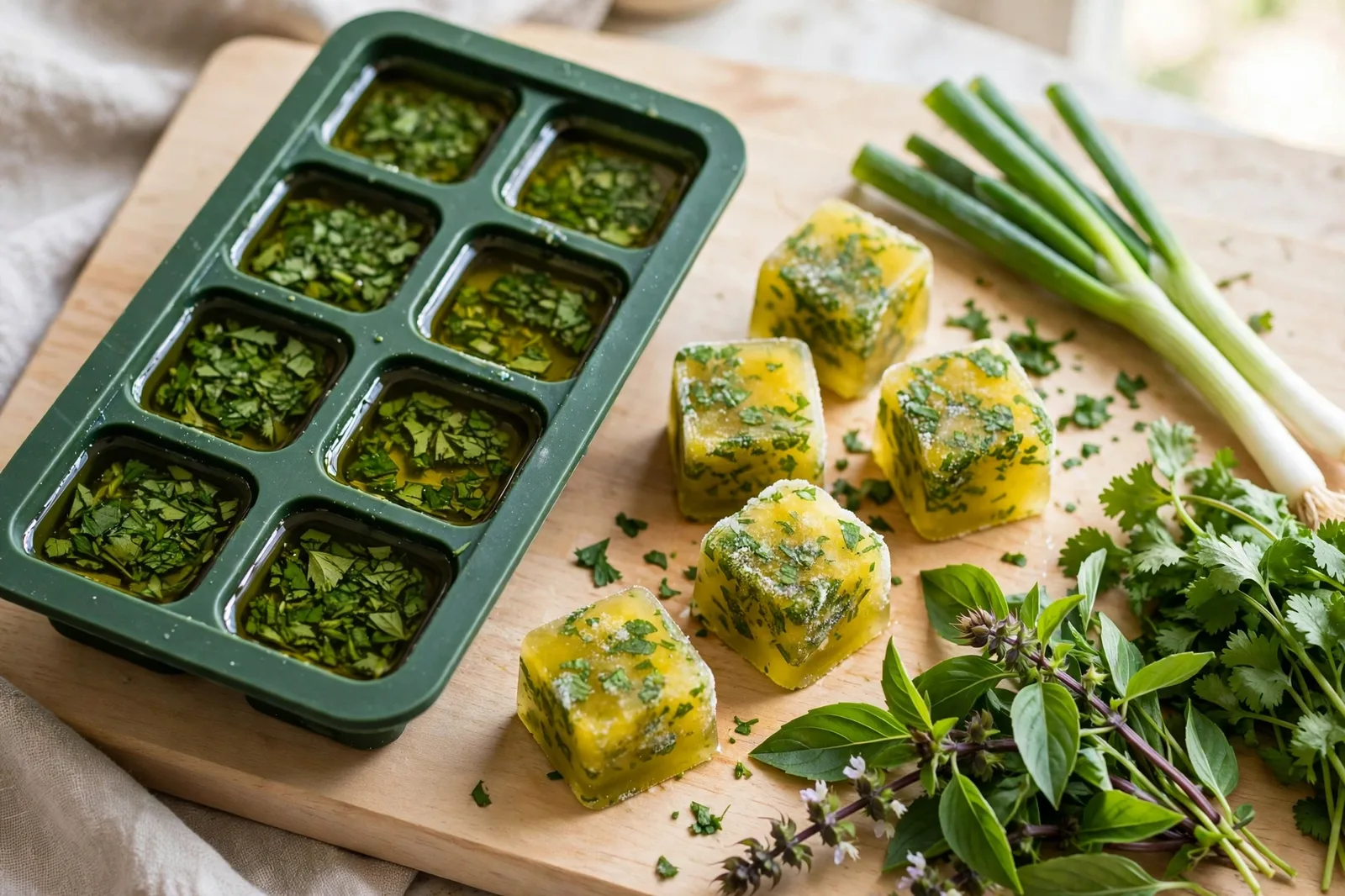
Why Freeze Herbs in Oil Instead of Just Freezing the Leaves
Fresh herbs go slimy fast. Cilantro lasts a few days in the fridge, Thai basil blackens if it gets cold and damp, and a big bunch of scallions is hard to use up before the tops wilt. Freezing chopped herbs in oil solves a different problem than fridge storage: it gives you a measured, ready-to-cook portion that drops straight into a hot pan.
Oil does three useful things here. It coats the leaves so freezer air reaches less of the surface, the cube holds the chopped herb together instead of scattering icy flecks, and the fat is already part of most stir-fries, curries, and soups you would use the herb in. For the fridge side of herb care — jars, wraps, and how long each bunch really keeps — see How to Store Fresh Herbs So They Last Longer.
This method is for cooked dishes. A thawed herb cube will not give you the bright, raw finish of fresh leaves scattered over a finished bowl, and it should not try to. Use fresh herbs for garnish and these cubes for the cooking base.
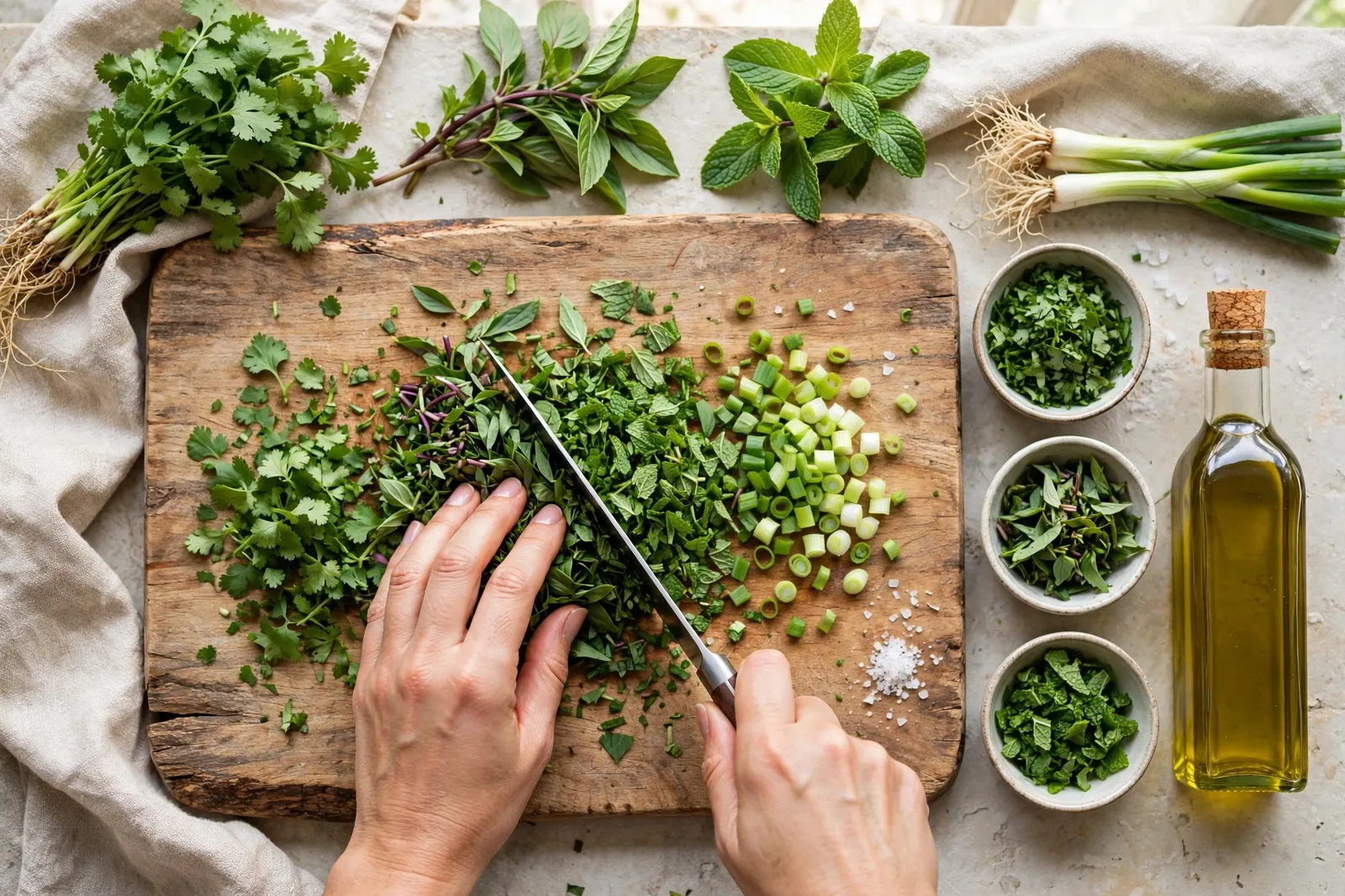
Which Herbs Freeze Well in Oil, and Which Do Not
Sturdy and strongly flavored herbs handle the freezer best. Tender leaves still work, but expect them to darken and soften.
| Herb | Freezes in oil | Best cooked use |
|---|---|---|
| Scallions / green onions | Excellent | Fried rice, noodle soups, egg dishes, stir-fries |
| Cilantro (leaves and tender stems) | Good | Curries, soups, braised dishes |
| Thai basil | Good | Curries, basil stir-fries, fried rice |
| Italian basil | Good | Tomato-based sauces, soups (add late) |
| Mint | Fair | Pea and potato soups, lamb dishes, teas after cooking |
| Garlic chives | Excellent | Dumpling fillings cooked through, pancakes, stir-fries |
| Culantro (ngo gai) | Good | Pho-style broths, soups, stews |
| Perilla / shiso | Fair | Soups and braised dishes; flavor fades fastest |
| Lemongrass (finely minced) | Excellent | Curry pastes, soups, marinades cooked into a dish |
Skip this method for herbs you mostly use raw: the soft leaves in a fresh herb plate, whole mint sprigs for drinks, or delicate garnish leaves. Those are better used fresh within a few days.
A useful pairing: freeze a mixed cube of scallion, cilantro stems, and minced lemongrass for a fast soup base, and keep plain single-herb cubes for nights when only one flavor belongs in the pan. If you grow your own, the Essential Asian Pantry guide is a good companion for deciding which herbs you reach for often enough to freeze in quantity.
What You Need
- Fresh herbs, washed and dried very well
- Neutral oil with a clean flavor, such as light olive oil, grapeseed, or sunflower oil (about 1 tablespoon per cube)
- A standard ice cube tray, or a silicone tray with a lid if you have one
- A sharp knife or kitchen scissors
- Freezer bags or a lidded freezer container, plus a marker for labels
Dry herbs matter more than any other step. Water left on the leaves forms ice crystals, dilutes the cube, and makes the oil sputter when the cube hits a hot pan. Spin dry, then pat with a clean towel and let the chopped herbs sit on the towel for 10 minutes if they still look damp.
The Basic Ratio
For a standard ice cube tray, plan on:
- About 2 tablespoons finely chopped packed herb per cube
- About 1 tablespoon oil per cube, just enough to cover
That ratio gives you a cube that is mostly herb, not an oil puck with flecks in it. A 14- to 16-cube tray takes roughly 2 loosely packed cups of chopped herbs and about 1 cup of oil. Herb-specific notes:
- Scallions: slice thin, greens and whites together or in separate cubes. No need to pack hard.
- Basil (Thai or Italian): chop coarse, pack gently. Basil darkens in the freezer; the flavor holds better than the color.
- Cilantro: include the tender upper stems, they carry a lot of flavor and freeze well.
- Lemongrass: use only the tender lower stalk, minced very fine, and consider freezing it in a smaller amount, about 1 tablespoon per cube, because it is strong.
Step by Step: Freezing Herbs in Oil Cubes
1. Wash and dry thoroughly. Wash the herbs, spin or shake off water, then pat completely dry. Chop only once the leaves feel dry to the touch.
2. Chop for cooking, not for garnish. Aim for a fine to medium chop, roughly 1/4-inch pieces. Very large pieces freeze into stiff shards that thaw unevenly in the pan.
3. Fill each well about two-thirds full with chopped herb. Press down lightly with the back of a spoon so there are no big air pockets, but do not crush the leaves into a paste.
4. Pour oil over just to cover. Pour slowly so the oil settles around the leaves. Leave a little headroom at the top of each well; oil expands slightly as it freezes, and a brim-full tray is messy to move.
5. Freeze flat until solid, at least 4 hours or overnight. Keep the tray level. A silicone tray with a lid stacks neatly and keeps freezer smells off the cubes.
6. Pop out and bag right away. Move the frozen cubes into a freezer bag, press out as much air as you can, and label with the herb and the date. Back in the freezer within a few minutes; the cubes soften fast at room temperature.
7. Store up to 3 months for best flavor. The cubes stay safe longer than that in a cold freezer, but basil and perilla lose brightness after about 2 months, while scallion, garlic chive, and lemongrass cubes hold closer to the full 3 months.
How to Cook With Herb-Oil Cubes
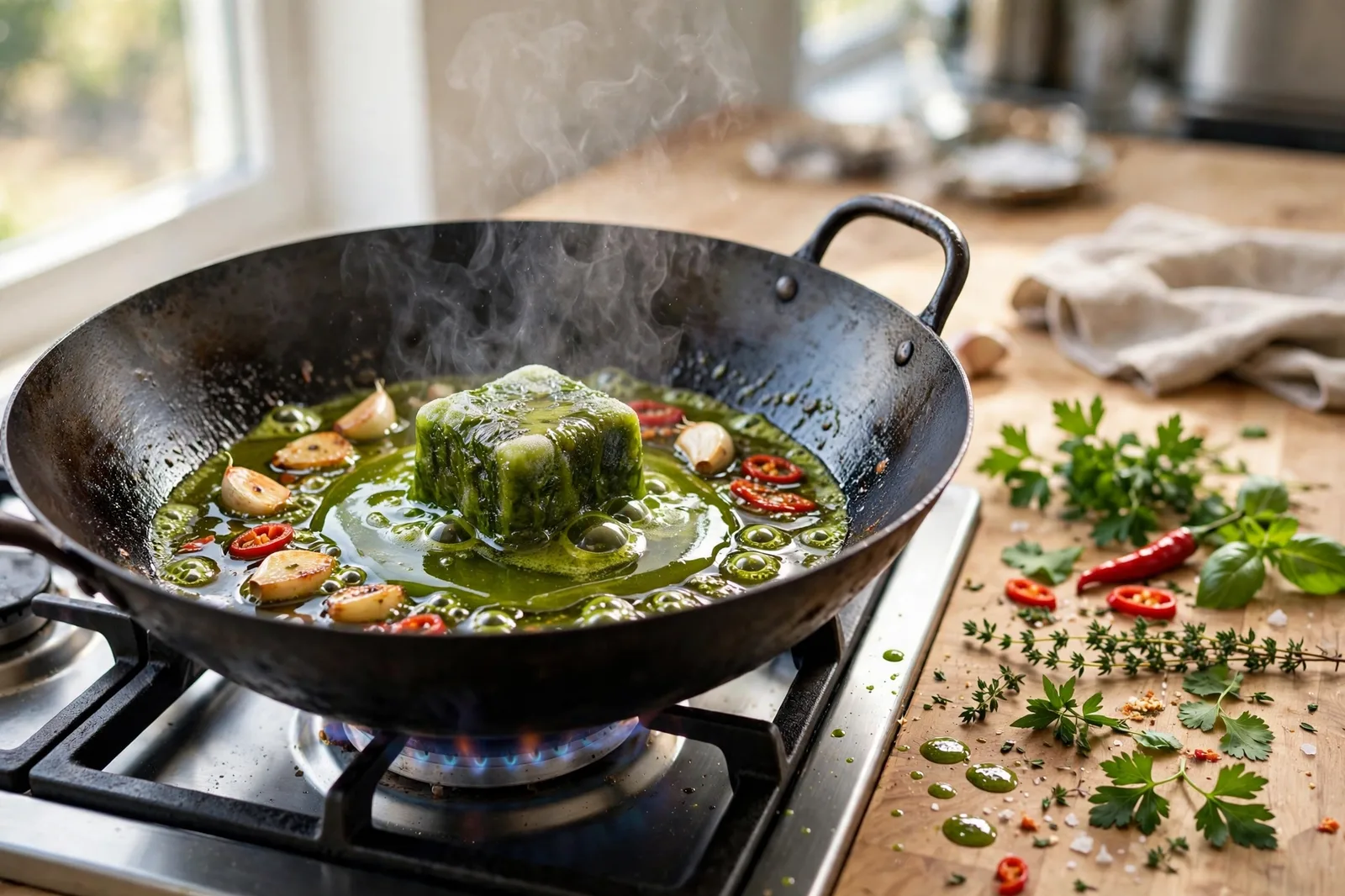
Drop the cube straight into the pan from frozen. No thawing, no draining.
- Stir-fries: melt one scallion or garlic chive cube in the wok first, then add your protein and vegetables. The oil in the cube counts toward the oil the recipe calls for, so hold back about a tablespoon of the usual amount.
- Curries: a Thai basil or cilantro cube goes in near the end of simmering, off a hard boil, so the herb flavor stays present. This is a handy shortcut on a Thai Green Curry with Chicken night when the basil bunch is already in the freezer.
- Soups and broths: scallion, culantro, and lemongrass cubes can go in early; they season the broth as it simmers.
- Fried rice: start with a scallion cube in the hot wok before the rice goes in. The seasoned oil coats the grains from the first toss.
- Eggs and pancakes: garlic chive cubes thaw in seconds in a warm pan and fold cleanly into beaten eggs.
One caution: the oil in the cube will sputter a little if the pan is ripping hot and the cube still carries surface ice. Let the cube melt over medium heat for 20 to 30 seconds before cranking the heat up.
Oil Choices, and When Not to Use Oil at All
Light olive oil is the most useful default: mild, easy to pour, and at home in most dishes. A neutral grapeseed or sunflower oil keeps the herb flavor cleanest for Southeast Asian cooking. Save strongly flavored extra-virgin olive oil for basil cubes headed for Italian dishes, where that flavor belongs.
Skip the oil and freeze in water instead when the herb is headed for a dish where added fat does not belong: mint for tea, or herbs destined for a clear broth where an oil slick is unwelcome. Water cubes are also the better choice for a small amount of lemon or lime zest. For a hot-oil finish instead of a freezer cube, Chili Oil 101: Make It at Home covers the infused-oil route that lives in the pantry, not the freezer.
Mistakes That Make Herb Cubes Disappointing
- Freezing wet herbs. Surface water becomes ice, dulls flavor, and sputters in the pan. Dry first, every time.
- Using too much oil. A cube that is half oil waters down your control of the dish. Two tablespoons herb to one tablespoon oil is the ceiling, not the floor.
- Expecting garnish quality. Thawed leaves are soft and dark. Plan cubes for cooked dishes and keep fresh herbs for finishing.
- Leaving cubes in the tray. An uncovered tray picks up freezer odors within days. Bag and label the same day you freeze.
- Freezing whole large leaves. Big basil or perilla leaves freeze stiff and break into uneven pieces. Chop first.
- No label, no date. Frozen green cubes all look alike by week three. A strip of tape and a marker save real guessing.
A Simple Freezer Plan for a Bunch-Heavy Week
When you bring home more herbs than the week needs, sort them on day one. Keep enough fresh for two to three days of garnishes and salads in the fridge. Chop and freeze the rest that night, while the leaves are still perky, instead of waiting until they are already wilting and freezing a problem you already have. One tray of scallion, one of cilantro, and a half tray of Thai basil covers most stir-fry, curry, and soup cooking for a household for several weeks, and it turns the end-of-bunch waste into the fastest flavor base in the freezer.