
Halfway through prepping dinner, you reach for the doubanjiang and the jar is empty. Or your nearest Asian grocery is a 40-minute drive and you are not making that trip tonight. Either way, the meal is not ruined. Several pantry pastes can stand in for doubanjiang if you pick the right one for the dish and fix the ratio. Below is the swap for every situation, with the honest trade-offs spelled out.

What doubanjiang brings to a dish
Doubanjiang is a Sichuan paste of fermented broad beans, chilies, and salt. The prized Pixian kind ferments anywhere from one to eight years, and that long ferment is what gives the paste its deep, funky savor. No substitute copies that part perfectly, so be honest with yourself about what you are giving up.
It is also one of the saltiest pastes in the pantry. A tablespoon carries about 1,200 mg of sodium on a typical label, roughly a third more than the same spoon of miso. Whatever you swap in, pull back on the soy sauce and salt in the recipe, or the dish will overshoot.
The quick answer
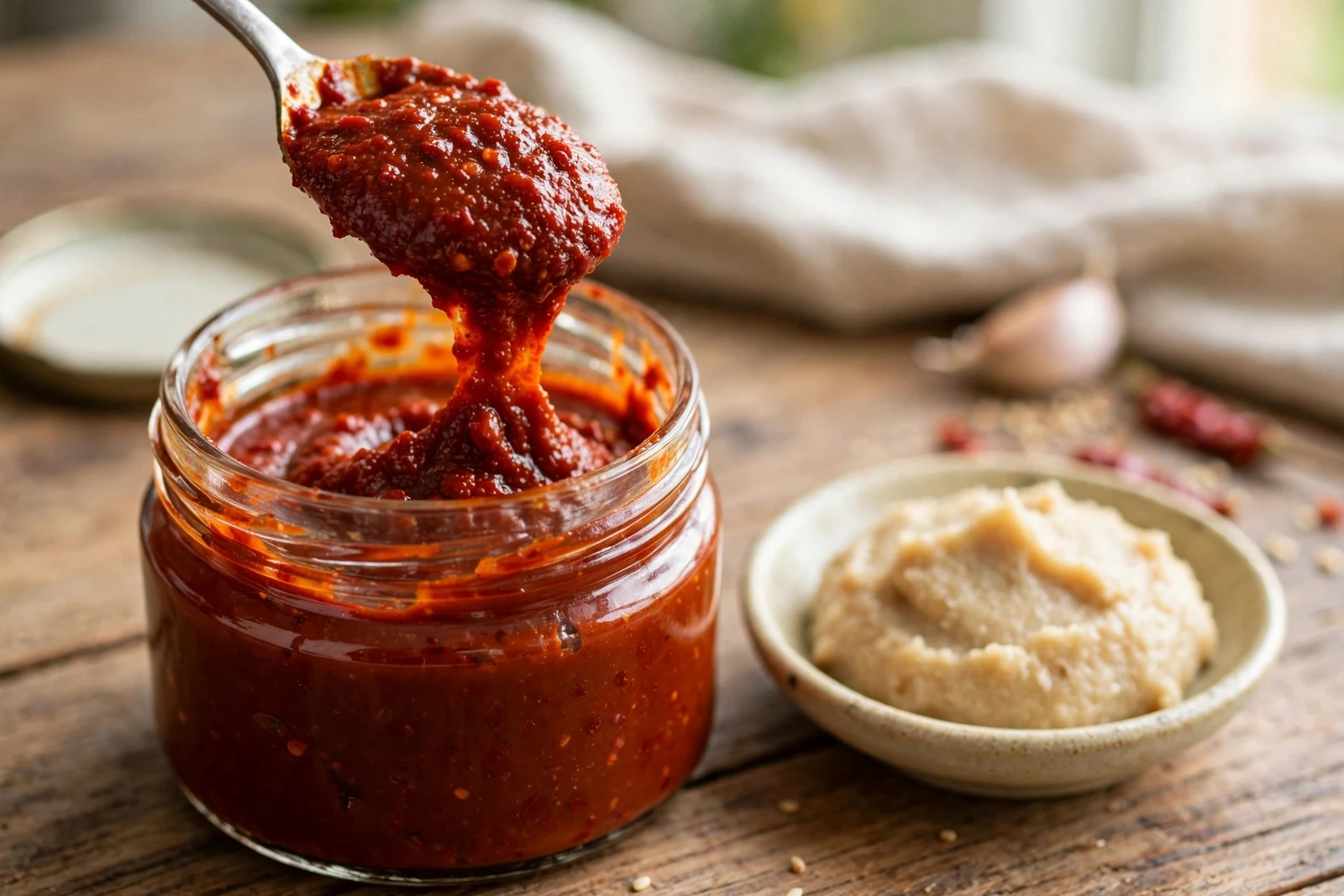
If you buy one backup: stir 2 parts gochujang with 1 part white miso. Gochujang brings fermented chili heat and body, miso brings the bean-paste depth, and together they land closer to doubanjiang than either paste alone. For every tablespoon of doubanjiang in a recipe, use 2 teaspoons gochujang plus 1 teaspoon white miso, then add a small splash of soy sauce, because gochujang runs sweeter and less salty. If you are unsure which miso to grab, my guide to white miso vs red miso walks through the differences.
Situation 1: You are making mapo tofu or a Sichuan braise
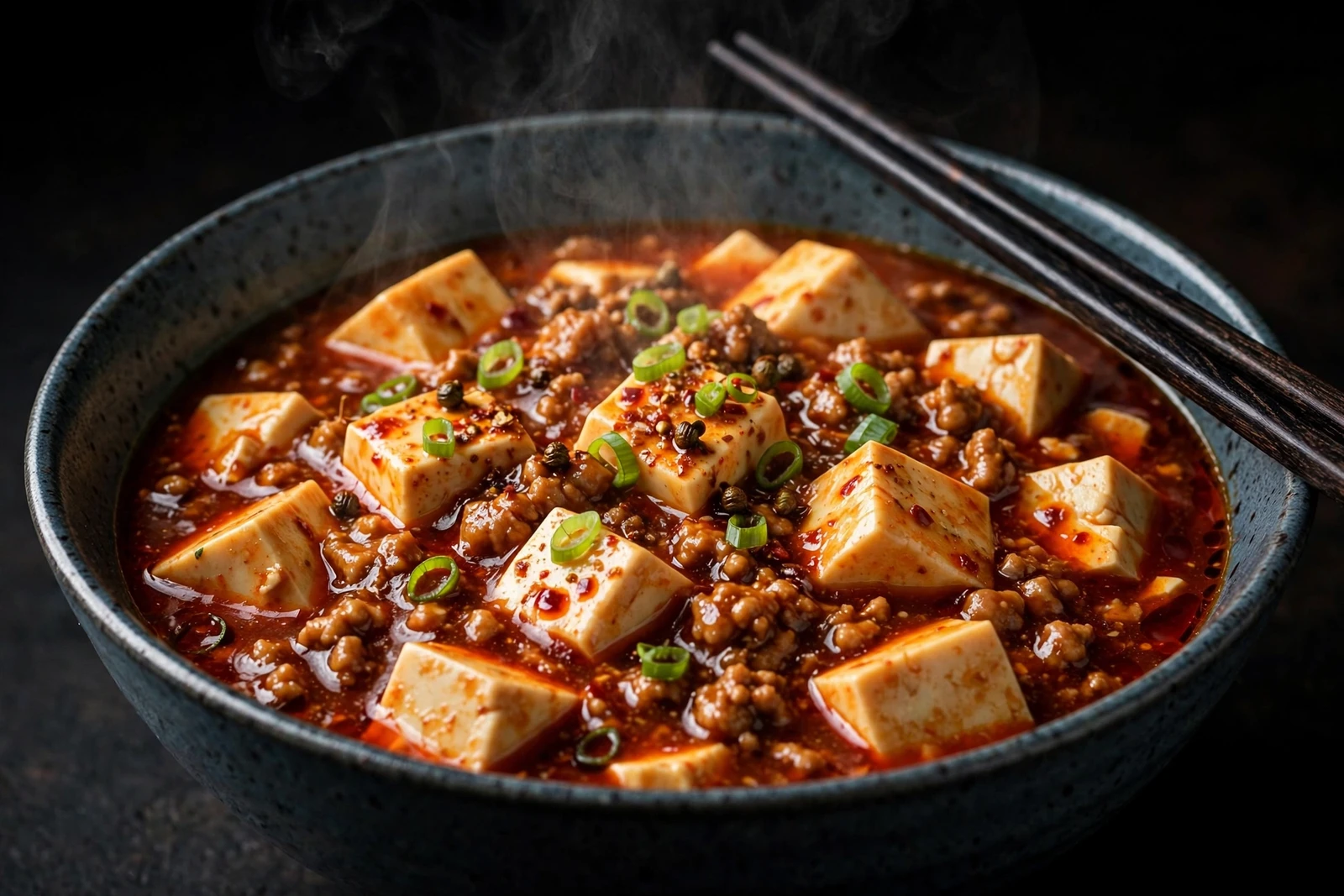
Use the gochujang and miso blend above. In saucy, long-simmered dishes like my mapo tofu recipe, the swap has room to melt in and the other seasonings (Sichuan pepper, garlic, scallion) carry the Sichuan character. Bloom the blend in hot oil for 30 seconds before anything else goes in, the same way you would treat real doubanjiang. That short fry in oil mellows any raw edge and lets the paste stain the oil red.
Situation 2: You are dry-frying green beans or eggplant
Dry-fried dishes need the chunky bean texture and they cook over fierce heat, so a smooth paste alone falls flat. Your best move is a milder chili bean sauce, like Lee Kum Kee’s toban djan, used 1:1. It is literally the same family of paste, just less fiery, and it behaves the same in the wok.
No chili bean sauce either? Mince fermented black beans (douchi) and mix them 1:1 with chili oil. The black beans supply the fermented funk, the oil supplies the heat and the sheen. This is the swap I reach for in my Sichuan dry-fried green beans when the doubanjiang jar runs dry, and the dish still gets that wrinkled, savory coating.
Situation 3: All you have is miso
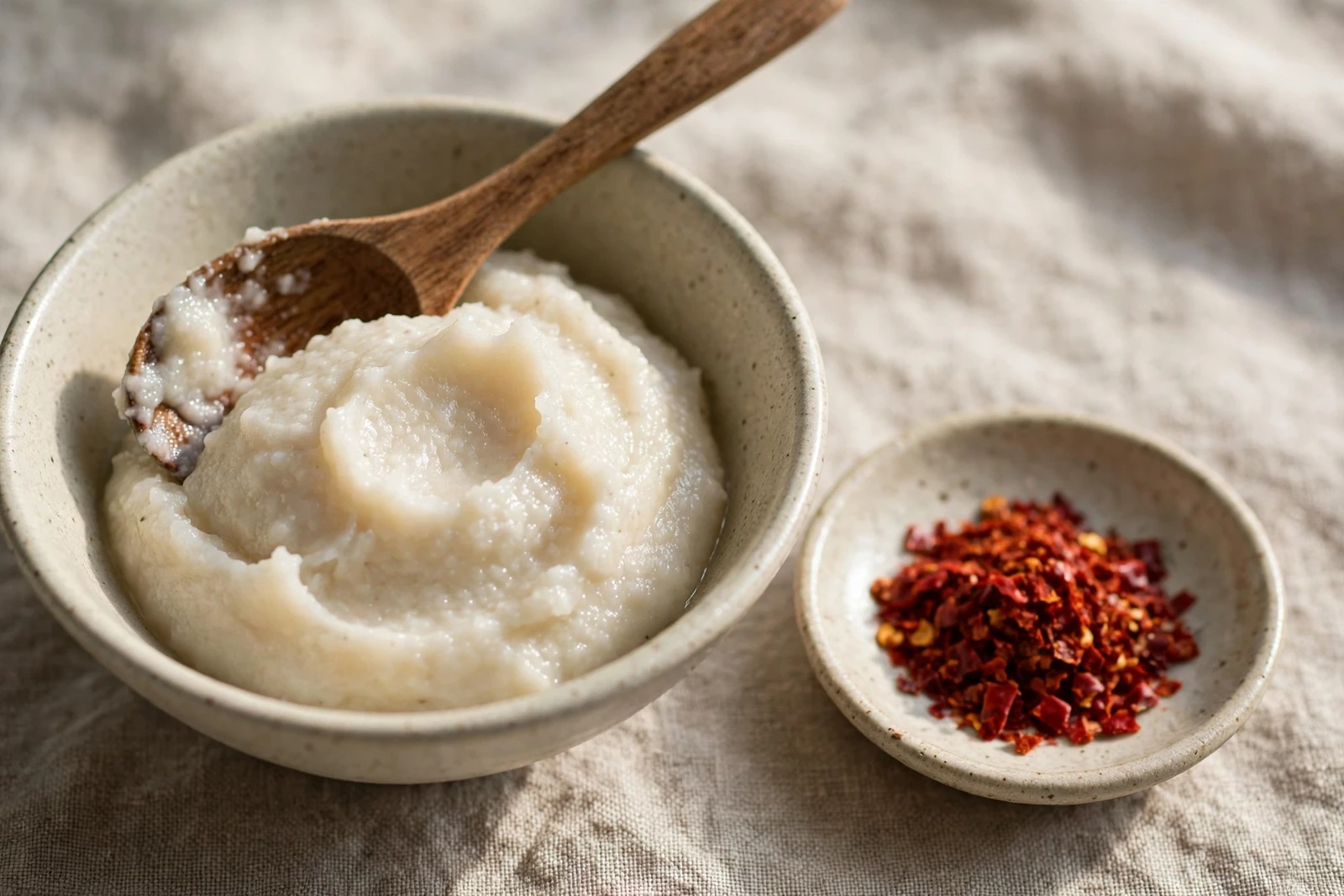
Miso plus chili flakes works, with two adjustments. First, miso is milder and less salty than doubanjiang, so use about a third more: for 1 tablespoon doubanjiang, stir 1 tablespoon plus 1 teaspoon of miso with 1 teaspoon of chili flakes. Second, miso loses its aroma with long cooking, so stir it in during the last few minutes instead of blooming it at the start. Red miso gets you closer on depth; white miso keeps things gentler.
Situation 4: You just need heat and salt
Sambal oelek or sriracha mixed with soy sauce will do it. Use 3/4 tablespoon of sambal or sriracha plus 1 teaspoon of soy sauce for every tablespoon of doubanjiang. Be clear about the trade: you get the heat and the salt, not the fermented broad-bean funk. In a busy stir-fry with lots of other flavors, like dan dan noodles, nobody will miss it. In a dish where the paste is the whole point, they will.

Situation 5: Someone at the table cannot handle spice
Skip the heat entirely and use white miso 1:1, with a pinch of sugar to round it out. The dish changes character, so do not pretend otherwise: you are making a savory Japanese-leaning cousin of the original, closer to the miso-based mapo tofu you find in Tokyo than the Chengdu original. For a mild weeknight dinner, that is a fair trade.
Situation 6: Your pantry leans Korean
Doenjang plus gochugaru splits the job the way doubanjiang does it in one jar. The doenjang brings deep fermented funk, the gochugaru brings clean chili heat. For 1 tablespoon of doubanjiang, use 1 tablespoon of doenjang with 1 to 2 teaspoons of gochugaru, tasting as you go. The result reads slightly Korean, which suits stews and braises better than it suits a Sichuan dry-fry.
How to cook with any substitute
Three habits make every swap above work harder. First, fry the paste in oil before adding liquids. Doubanjiang and its stand-ins all taste better bloomed, and raw paste can turn bitter. Second, cut the recipe’s soy sauce or salt by about a quarter, then taste at the end. Every substitute here lands at a different salt level, and the only safe move is to season last. Third, keep miso-based swaps away from long simmers. Add them near the end so their aroma survives to the table.
When to just buy the jar
Some dishes are the paste. Twice-cooked pork without real doubanjiang is a different dish wearing its clothes, and no blend on this list will fool anyone who knows the original. If you cook Sichuan food more than a couple of times a month, buy the jar. Pixian doubanjiang costs a few dollars, keeps about a year in the fridge after opening, and one jar covers dozens of meals. The substitutes are for tonight. The jar is for the habit.
More Sichuan recipes
- Mapo Tofu: the Sichuan classic that made this paste famous
- Twice-Cooked Pork (Hui Guo Rou): where the real paste earns its keep
- Sichuan Dry-Fried Green Beans: blistered and savory, built for the wok
- Dan Dan Noodles: a busy bowl that forgives a swap
Dinner is saved. Pick the situation that matches your night, measure the swap, and bloom it in oil before anything else touches the pan.