
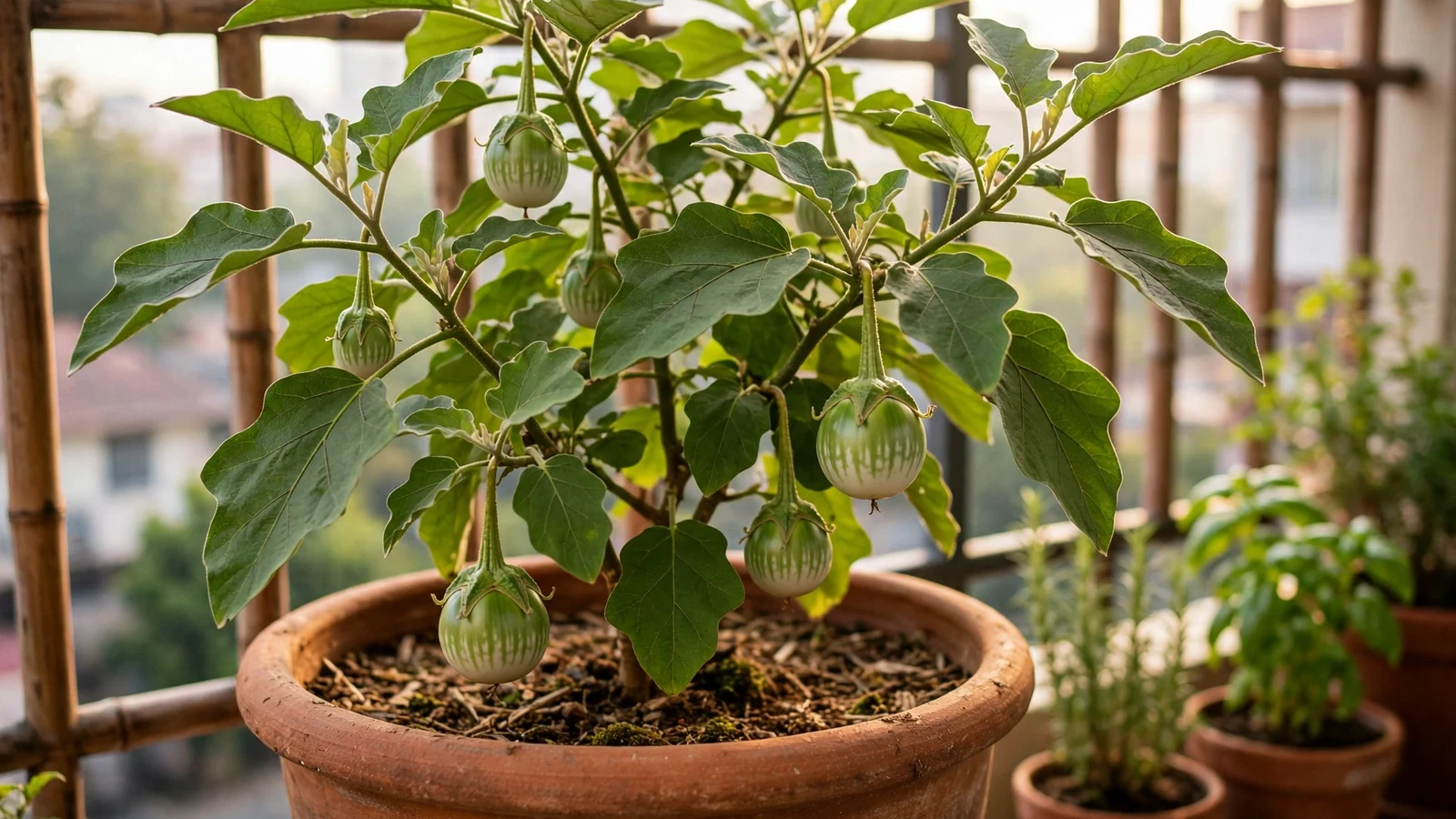
Thai eggplant (makhua) is the small round fruit you have seen bobbing in bowls of green curry and served raw next to bowls of chili dip. It is not the long purple eggplant from the supermarket. Thai varieties grow as small golf-ball-sized fruits, usually pale green with white stripes, and they taste best picked young: crisp, mild, and slightly sweet. The ones sold in stores are often picked too late, which is why they can taste bitter and seedy.
The good news is that Thai eggplant grows well in a container. One plant in a large pot can keep a household supplied through the warm months, and it asks for the same things most summer vegetables want: heat, sun, steady water, and regular feeding. This guide covers starting from seed or seedling, the pot setup that works, daily care, and exactly when to pick.
Seeds or seedlings: how to start
You have two good options. Starting from seed gives you the widest choice of varieties, including the striped green makhua pro used in curries and the tiny pea eggplant (makhua phuang) used in some Thai dishes. Buying seedlings skips the fussy germination stage entirely.
If you start seeds, begin indoors 8 to 10 weeks before your last frost date. Thai eggplant seed germinates slowly in cool soil: at 75 to 85°F it sprouts in 7 to 14 days, but at 65°F it can sit for a month. A heat mat under the tray is the single most useful tool here. Sow the seeds a quarter inch deep in small cells, keep the mix damp but not wet, and move the seedlings under strong light as soon as they emerge so they do not stretch. Do not start seeds earlier than 10 weeks out; oversized seedlings transplant poorly and stall.
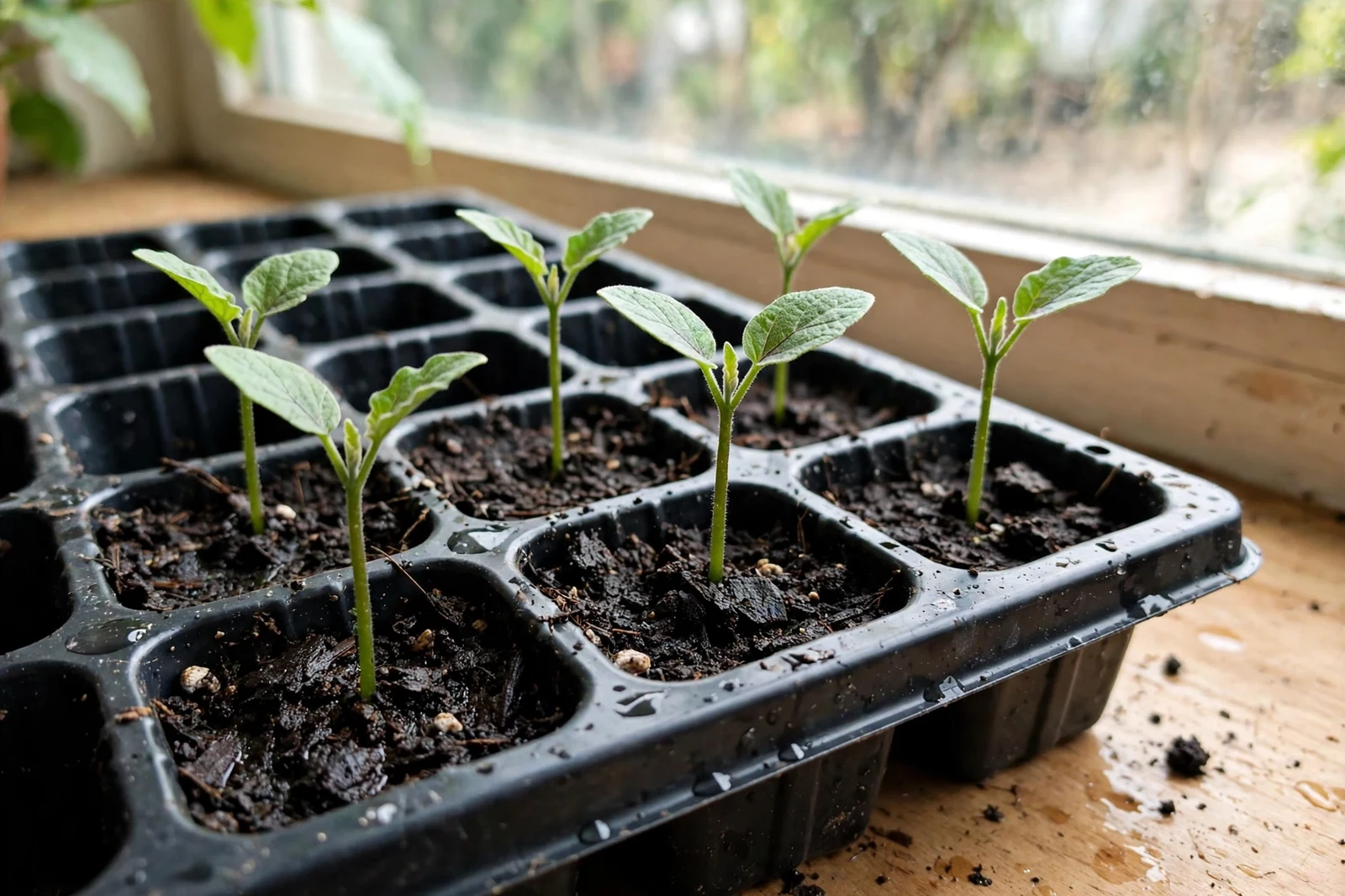
If you buy seedlings, wait until nights stay reliably above 50°F before planting them out. A seedling set out into a cold snap will sit and sulk for weeks, and you will not get that time back.
The pot and the soil

Thai eggplant grows into a bushy plant 2 to 3 feet tall and wide, and it needs root room to match. Give each plant its own pot of at least 5 gallons (about 12 inches across); a 7- to 10-gallon pot is better and dries out more slowly in summer heat. One plant per pot is the rule. Two plants crowded into one container compete all season and neither one fruits well. Drainage holes are required: eggplant roots rot in standing water.
Fill the pot with a fertile, free-draining potting mix, not garden soil, which compacts in containers. A mix that works well is 2 parts bagged potting mix, 1 part compost, and 1 part perlite. Aim for a slightly acidic mix, roughly pH 5.5 to 6.5, which is where most potting mixes land. Fill to about 2 inches below the rim so there is room to water without overflow, and add a 1- to 2-inch layer of straw or shredded bark mulch after transplanting to slow evaporation.
This plant is a close cousin of the long purple types, so if you have grown those, the routine will feel familiar. The main difference is fruit size and harvest timing, which Japanese eggplant growers will find refreshingly forgiving: Thai types stay productive even when you pick a little late.
Sun, water, and feeding
Sun: full sun, 6 to 8 hours a day. Thai eggplant is a heat lover and fruits best when days run 75 to 90°F. A south- or west-facing balcony is ideal.
Water: keep the soil evenly moist. Containers dry fast, so in summer heat expect to water daily, sometimes twice for a 5-gallon pot in a heat wave. Water at the base of the plant, not over the leaves, and check by pushing a finger an inch into the mix: dry at that depth means water now. Inconsistent watering is the main cause of blossom drop, where flowers fall without setting fruit.
Feeding: eggplant is a heavy feeder. Mix a slow-release balanced fertilizer into the potting mix at planting, then feed with a liquid balanced fertilizer every 2 to 3 weeks once flowers appear. Pale lower leaves that yellow from the bottom up are the classic sign the plant wants more nitrogen. A side-dress of compost mid-season helps too.

Support, pruning, and pollination
Stake the plant early. A fruit-laden Thai eggplant gets top-heavy, and one windy afternoon can snap a branch clean off. A single sturdy bamboo stake tied loosely to the main stem, or a small tomato cage slipped over the plant while it is young, is enough.
Prune lightly for airflow: remove the lowest leaves that touch the soil and any damaged foliage. You do not need to prune suckers the way tomato growers do; a bushy plant simply means more fruiting sites.
The flowers pollinate themselves, but on a still balcony with no breeze, fruit set can lag. Mid-morning, give the plant a gentle shake or tap the stake a few times to knock pollen loose. It takes five seconds and noticeably improves the set on sheltered plants. If flowers keep dropping in extreme heat above about 95°F, rig some afternoon shade with shade cloth until the wave passes; the plant will resume setting fruit when nights cool.
When and how to harvest

Pick Thai eggplant young. For the common round green types, harvest when fruits are about the size of a golf ball to 1.5 inches across: firm, glossy, and heavy for their size. Cut the fruit with scissors or pruners, leaving a short piece of stem attached. Do not pull, which tears the branch.
Harvest often, every 2 to 3 days at the peak. Frequent picking is what keeps the plant producing; fruits left on the vine signal the plant to slow down, and they turn dull, seedy, and bitter with age. In my experience the first flush of the season is the sweetest, and any fruit that sits through a long hot spell picks up a harsher edge, so eat the early ones fresh and cook the later ones.
In the kitchen, young Thai eggplant goes straight into Thai green curry with chicken, where it soaks up the coconut sauce, or into a stir-fry like Thai basil eggplant. The crispest young fruits are also good raw, sliced thin and served with a chili dip the way Thai cooks do.
Problems to watch for
Flea beetles chew tiny holes in seedling leaves. They rarely kill an established plant, but on young transplants a lightweight row cover for the first few weeks keeps them off. Aphids cluster on new growth and flower buds; a strong blast of water knocks most of them off, and neem oil handles the rest. Spider mites show up in hot, dry weather as stippled, dusty-looking leaves; keep the plant well watered and rinse the foliage occasionally to discourage them. Hornworms are hard to miss and easy to handpick.
The most common non-pest problem is blossom drop from heat or uneven watering, covered above. The second is a plant that grows leaves but no fruit in too much shade; if your plant is lush and flowerless, it probably wants more sun.
More Thai recipes to use your harvest
Once the plant starts producing, you will have more Thai eggplant than one curry night can handle. Try it in Thai basil eggplant, a fast weeknight stir-fry; Thai green curry with chicken, the classic home for this vegetable; or Thai basil fried rice alongside. And if you are planning the whole warm-season lineup, Thai chili peppers want almost exactly the same sun and water as this plant, so they make easy pot neighbors on the same balcony.