
Japanese eggplant is almost designed for container growing. The fruit grows long and slender instead of squat and heavy, the plants stay more compact than the big Italian types, and a single healthy plant will keep setting fruit for months if you pick it often. You do not need a raised bed or a big backyard. A sunny balcony, a patio corner, or the bright end of a driveway is enough, as long as the pot is big enough and the plant never has to beg for water.
This guide walks through the whole setup: which varieties behave well in pots, the container and soil that give the roots room, how to plant and feed, and how to spot the handful of problems that actually show up. If you're planning a small-space setup, our balcony wok garden plan for small spaces shows how eggplant fits alongside the herbs and chilies you'd grow next to it.
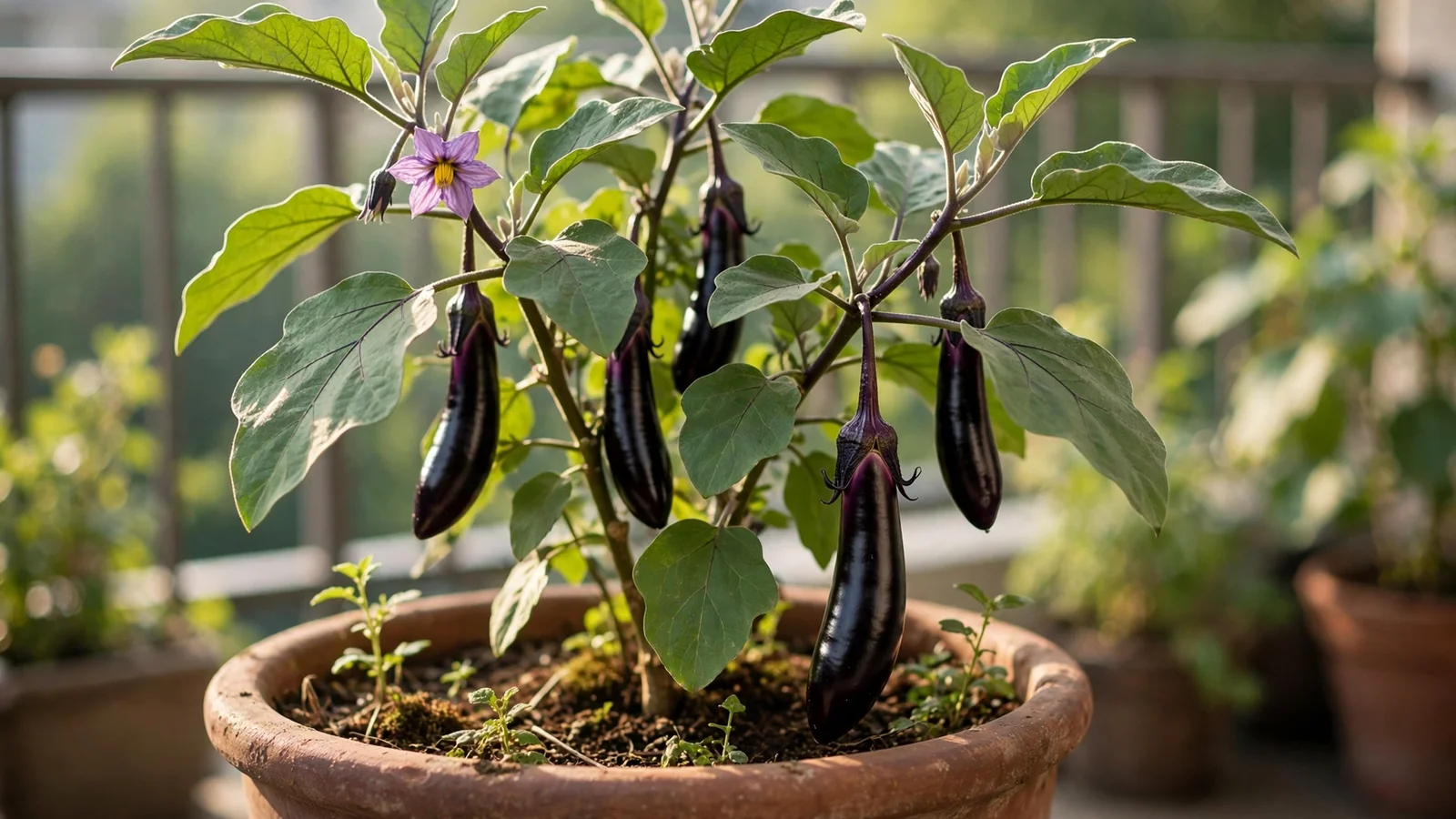
Why Japanese Eggplant Suits Pot Life
Eggplant wants three things above everything else: heat, steady moisture, and food. Pots actually help with the first one. Soil in a container warms up faster in spring than garden soil does, and a dark pot in full sun keeps roots in the warm range eggplant loves. The trade-off is that pots also dry out faster, so the whole game is choosing a container big enough that you are not watering twice a day by July.
Japanese varieties have two more advantages for home cooks. The skin is thin, so you never have to peel it, and the flesh has fewer seeds and a milder, less bitter bite than globe eggplant. Picked young and glossy, it's the eggplant you'd use for dishes like nasu dengaku, the miso-glazed Japanese eggplant, where the flesh goes silky under a sweet-savory glaze.
Pick a Variety That Behaves in a Pot
Not every eggplant is happy in a container. Look for varieties described as compact, early, or heavy-setting, and match the fruit length to how you cook. These four are reliable starting points:
| Variety | Fruit shape | Days to harvest (from transplant) | Good to know |
|---|---|---|---|
| Ichiban | Long and slender, 10–12 inches | About 60–70 days | Very productive; the classic choice for pots |
| Orient Express | Slim, 8–10 inches | About 58–65 days | One of the earliest; sets fruit in cooler weather than most |
| Nagasaki Long | Very long and thin, up to 14 inches | About 65–75 days | Heirloom type; pick on the smaller side for the tenderest skin |
| Shikou | Semi-long, 6–8 inches | About 70–80 days | Sturdy plants; a good pick where summers run hot |
Days to harvest counts from the day you set out a seedling, not from sowing seed. If your summer is short, Orient Express buys you a week or two at the front end of the season.
The Container and Soil Setup
Size is the decision that matters most. A 5-gallon pot is the minimum for one plant; a 7- to 10-gallon pot is better and noticeably more forgiving in hot weather. Bigger soil volume means the roots stay cooler and moisture swings are gentler. Whatever you choose, it needs drainage holes — eggplant roots rot fast in standing water.
For soil, start with a quality bagged potting mix rather than garden soil, which compacts in a pot and drains poorly. A mix that works well:
- About two-thirds potting mix as the base
- About one-third compost for slow nutrition and water holding
- A few handfuls of perlite if your mix feels dense, to keep air in the root zone
Eggplant prefers soil that's slightly acidic to neutral, around pH 5.8 to 6.5, and most fresh potting mixes land in that range without any adjustment. One plant per pot, always — two seedlings crammed into a 5-gallon pot will both underperform.
Planting, Step by Step
Eggplant is a warm-season crop, and cold soil is the most common reason young plants just sit there. Transplant outdoors only after nighttime temperatures stay reliably above 55°F (13°C) and all frost risk has passed. If you're starting from seed, sow indoors 8 to 10 weeks before your last frost date, on a heat mat if you have one — the seed germinates best in soil around 75–90°F (24–32°C) and can take two weeks to sprout.
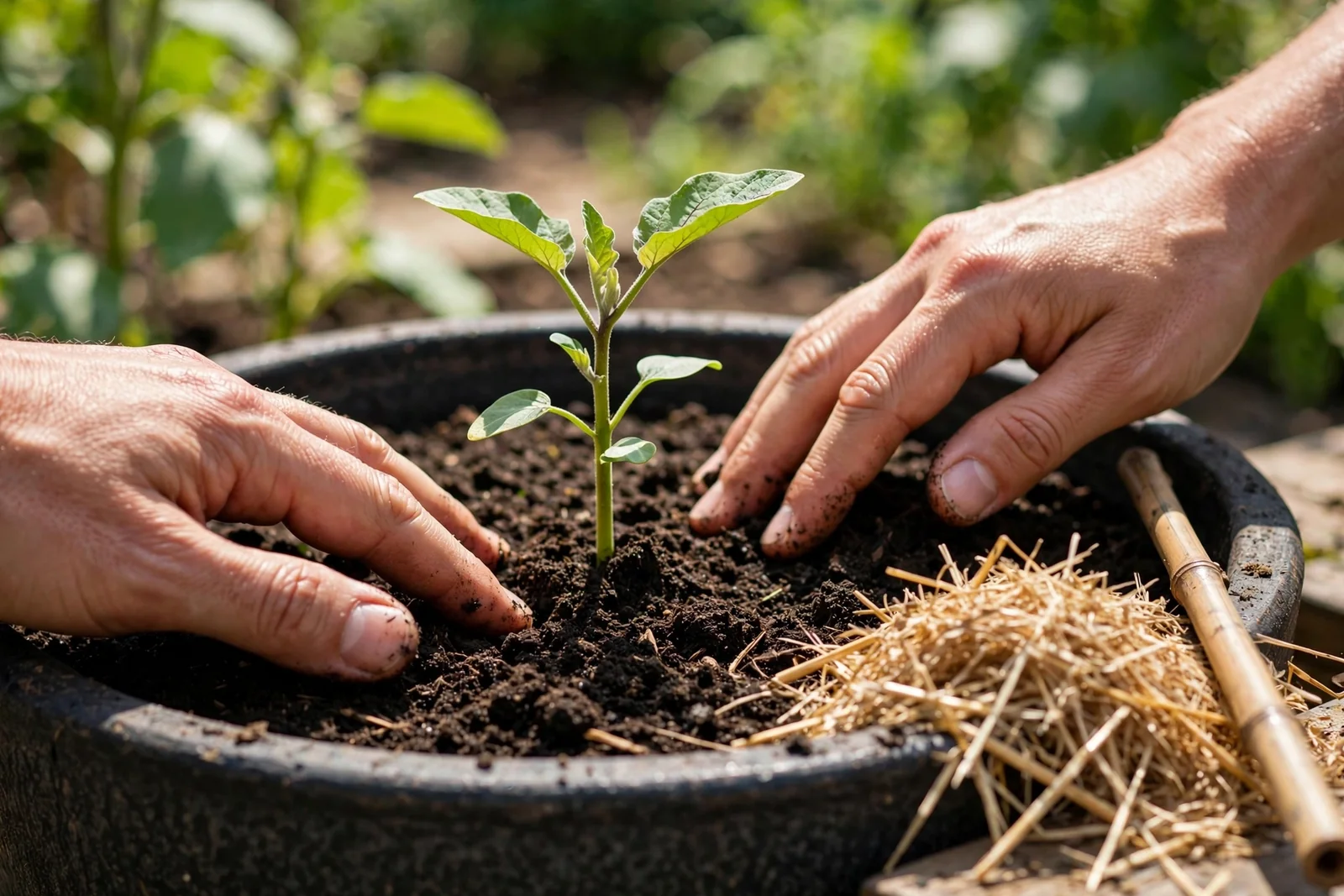
1. Fill the pot with moistened mix to about 2 inches below the rim, so watering doesn't overflow the edge.
2. Set the seedling at the same depth it grew in its nursery pot. Eggplant doesn't root along a buried stem the way tomatoes do, so don't plant it deep.
3. Water deeply until you see it run from the drainage holes. This settles the mix around the roots.
4. Add 2 inches of mulch on top — straw, shredded bark, or even a layer of finished compost. Mulch is what turns daily watering into every-other-day watering.
5. Put the stake or small cage in now, while the roots are small. Adding support later almost always means spearing roots.
Sun, Water, and Feeding
Sun. Give the plant at least 6 to 8 hours of direct sun. More is better. A leggy plant with long gaps between leaves is telling you it wants more light.
Water. Eggplant drinks heavily once it's fruiting, and pots dry from the top down and the sides in. Water deeply and less often rather than a little every day: soak until water runs from the bottom, then let the top inch of mix dry before watering again. Inconsistent moisture — bone dry one day, flooded the next — is what leads to misshapen fruit and blossom drop.
Feeding. Container plants can't forage, so you are the entire nutrient supply. A steady, moderate routine beats occasional heavy doses:
- At planting: mix a balanced fertilizer (something near 5-5-5 or 10-10-10) into the top few inches of soil, following the label rate for containers.
- While the plant is growing leaves: feed every 2 to 3 weeks with the same balanced fertilizer, or water weekly with a half-strength liquid feed.
- Once flowers appear: ease off the nitrogen. Switch to a lower-nitrogen, higher-phosphorus feed (something near 5-10-10) so the plant puts energy into fruit instead of more foliage.
Pale leaves across the whole plant usually mean hunger. Dark green leaves with lots of growth and no fruit usually mean too much nitrogen.
Support, Pruning, and Getting Fruit to Set
A fruiting eggplant gets top-heavy. Tie the main stem loosely to its stake every 8 to 10 inches of new growth with soft ties or strips of cloth, and let the plant lean on a small tomato cage if it wants to. That's really all the structure it needs.
Pruning should be light. Pinch out the small suckers below the first flower cluster to improve airflow, and remove any leaf that yellows at the base. Pinching off the very first one or two flowers when the plant is still small — under about a foot tall — feels wrong, but it pays off: the plant builds roots and branches first, then fruits on a frame that can actually support the load.
The purple star-shaped flowers are self-fertile, so you don't need a second plant. Bees and even a breeze vibrating the blooms usually handle pollination. If flowers are dropping without setting fruit, it's almost always temperature: blossom drop is common when nights fall below 55°F or when days push past 95°F (35°C) for a stretch. A gentle shake of the plant at midday on calm, windless days helps pollen move on plants that are flowering but not setting.
Problems You're Most Likely to Meet
Most container eggplant problems are visible early and fixable without a chemistry set:
| What you see | Likely cause | What to do |
|---|---|---|
| Tiny shot-holes in the leaves | Flea beetles | Cover young plants with row cover until flowering; the damage is mostly cosmetic on established plants |
| Curled leaves with sticky residue | Aphids | Blast them off with a strong jet of water every few days; check the undersides of leaves |
| Fine webbing and speckled, dusty-looking leaves | Spider mites in hot, dry weather | Hose down the undersides of leaves; keep up consistent watering |
| Flowers dropping, no fruit | Cold nights, extreme heat, or dry soil | Wait out the weather swing; steady the watering; shake blooms at midday |
| Pale, dwarfed new growth | Underfeeding or a pot that's too small | Resume the regular feeding schedule; consider potting up |
| Glossy fruit turning dull with brown seeds inside | Fruit left on the plant too long | Harvest earlier and more often (see below) |
One habit prevents a lot of trouble: use fresh potting mix each season rather than reusing last year's eggplant soil. Soil-borne wilts build up in old mix, and a fresh bag is cheap insurance. Eggplant also shares a family with tomatoes, peppers, and potatoes, so if you're growing in beds too, don't follow any of them in the same spot year after year.
Harvest: Glossy Means Ready
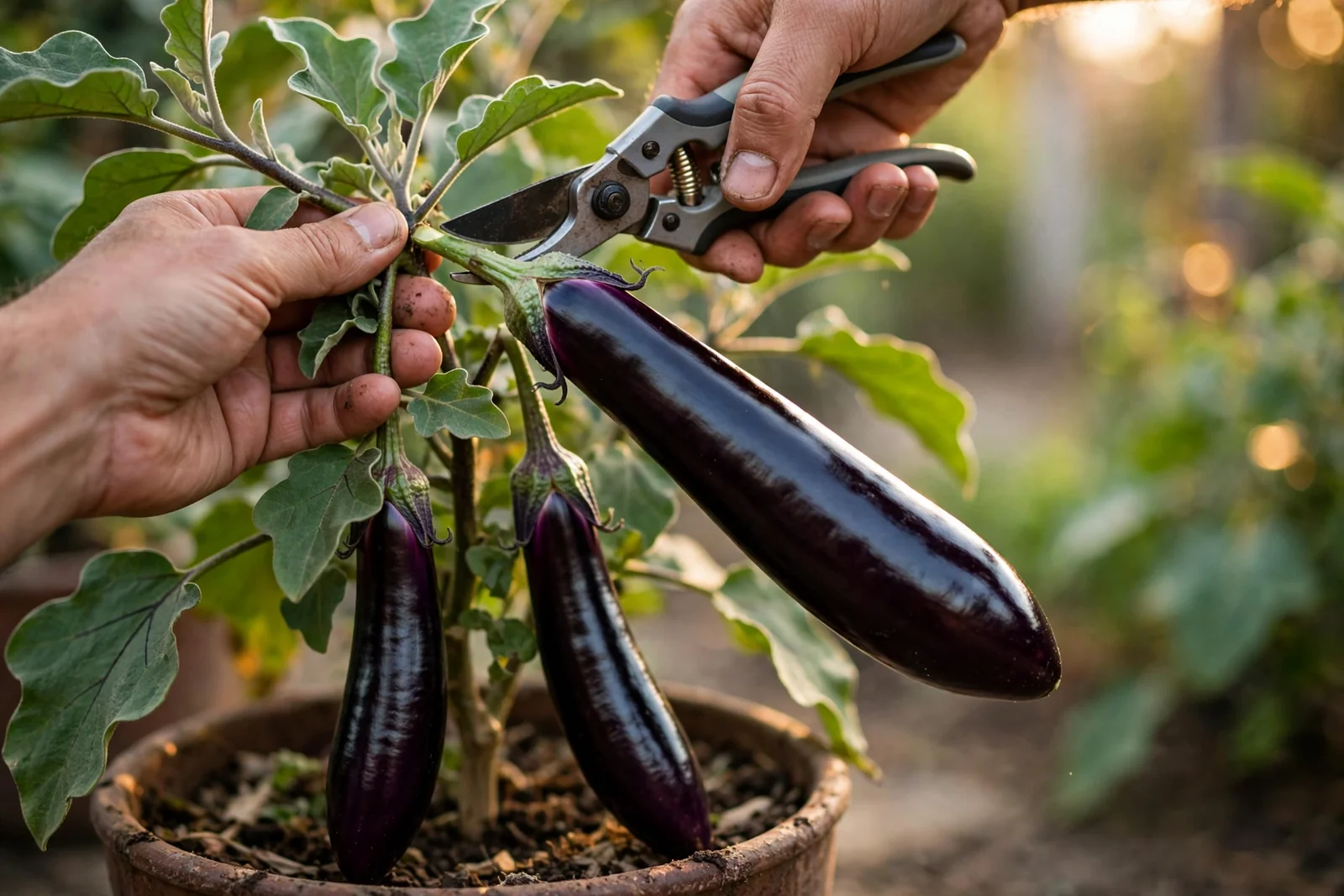
For the long Japanese types, start checking fruit when it's about 6 to 8 inches long — a bit earlier than you might guess. The skin should look glossy, almost lacquered, and the fruit should feel firm with a little spring when you squeeze it gently. Dull skin is the sign you've waited too long: the seeds inside will have turned brown and the flesh gets spongy.
Clip the fruit off with pruners or scissors, leaving the green calyx and a short stub of stem attached. Never pull or twist a fruit off — the stems are tough and you'll tear the branch. Through the warmest part of the season, check the plant every two or three days. Picking frequently is not just about quality; every fruit you remove tells the plant to make another one.
A healthy container plant in full sun will often give you a dozen or more fruit spread across the season, and they keep in the refrigerator for about a week in a loose bag. Beyond nasu dengaku, a glut of eggplant is a good problem to have: it grills beautifully with a tare-style glaze, and it anchors dishes like Chinese garlic eggplant, where the flesh soaks up a garlicky sauce. Eggplant also freezes well if you roast or grill it first — slice, cook until tender, cool, and freeze flat.
A Short Season Checklist
- Late winter: start seed indoors 8–10 weeks before your last frost, with warmth for germination.
- Spring, after frost: harden seedlings off for a week, then transplant into a 5-gallon (or larger) pot of rich mix once nights stay above 55°F.
- Early summer: mulch, stake, start the every-2-to-3-week feeding rhythm, and pinch the first flowers on small plants.
- Mid to late summer: water deeply and consistently, shift to a lower-nitrogen feed, shake blooms on still days, and harvest glossy fruit every few days.
- First frost: the season ends. Pull the plant, and start next year with fresh mix.
If you're growing other warm-season crops in pots alongside it, Thai chili peppers in pots want almost exactly the same sun and feeding schedule, which makes the two easy to care for side by side. Start with one good pot, one sturdy variety, and steady water — eggplant rewards that consistency more than almost any other vegetable you can grow on a balcony.