
Hong shao rou is the pork belly dish I make when dinner can take its time. The pork simmers for an hour and a half in a caramel-soy braise until the fat turns soft and the sauce coats each cube like a glaze. Two rules carry the whole dish: pat the pork dry after blanching so the caramel does not splatter, and keep the simmer low and long, since a hard boil tightens the meat instead of softening it. The ratio I use every time is 2 pounds of pork belly to 3 tablespoons of sugar for the caramel and 2 cups of water for the braise.

What is hong shao rou?
Hong shao rou, also called red-braised pork belly, is a home-style braise from eastern China, often linked with Shanghai and Jiangsu cooking. Pork belly cubes are first blanched, then coated in melted sugar caramel, then simmered with soy sauce, Shaoxing wine, star anise, cassia bark, ginger, and scallions until tender. The name comes from the color: the caramel and dark soy sauce turn the braise a deep reddish brown, and the finished sauce is glossy rather than thin.
Expect pork that is sweet and savory in equal measure, with warm spice in the background and a sauce made for rice. The fat should yield under a spoon, the lean meat should pull apart without drying out, and the sauce should cling to the cubes instead of pooling like soup. If you know the Taiwanese version, our lu rou fan minces the pork and spoons it over rice; hong shao rou keeps the belly in whole cubes and braises it longer, so the texture is softer and the sauce is darker.
Ingredients
For the pork:
- 2 pounds skin-on pork belly, cut into 1 1/2-inch cubes
- 2 tablespoons neutral oil
- 3 tablespoons granulated sugar
For the braise:
- 2 tablespoons light soy sauce
- 1 tablespoon dark soy sauce
- 3 tablespoons Shaoxing wine
- 2 cups water
- 2 star anise
- 1 small cassia bark stick, or a cinnamon stick
- 3 slices fresh ginger
- 2 scallions, tied into knots
To serve:
- Steamed jasmine rice
- 1 pound baby bok choy, blanched
- Sliced scallions
How to make hong shao rou
Blanch the pork first. Put the pork belly cubes in a pot, cover with cold water, and bring to a boil over medium-high heat. Boil for 3 minutes, skimming off the gray foam that rises, then drain, rinse under cold water, and pat the cubes dry with paper towels. Dry cubes matter: wet pork splatters when it hits hot caramel, and it also cools the sugar so the color turns uneven.
Make the caramel. Heat the oil in a heavy pot or wok over medium heat, add the sugar, and stir until it melts into an amber caramel, about 3 to 4 minutes. Watch it closely and pull the pot off the heat for a few seconds if the color races past amber toward dark brown, since burnt sugar turns the whole braise bitter. Add the pork cubes and toss for 2 to 3 minutes until each cube is coated in caramel.

Braise low and slow. Pour in the light and dark soy sauces, Shaoxing wine, and water, then add the star anise, cassia bark, ginger, and scallion knots. Bring the pot to a bare simmer, with just a few bubbles breaking the surface, cover, and cook on low for 90 minutes, turning the cubes once halfway through. If the liquid drops below the pork, add a splash of hot water. A similar low simmer carries our char siu, though that pork roasts instead of braising.

Reduce to a glaze. Lift the lid and cook uncovered over medium heat for 15 minutes, stirring now and then, until the sauce thickens enough to coat a spoon and cling to the cubes. Fish out the star anise, cassia bark, ginger, and scallion knots, and skim any fat pooling on the surface. Rest the pot off the heat for 10 minutes before serving; the sauce thickens a little more as it cools, and the fat is easier to skim after the rest.
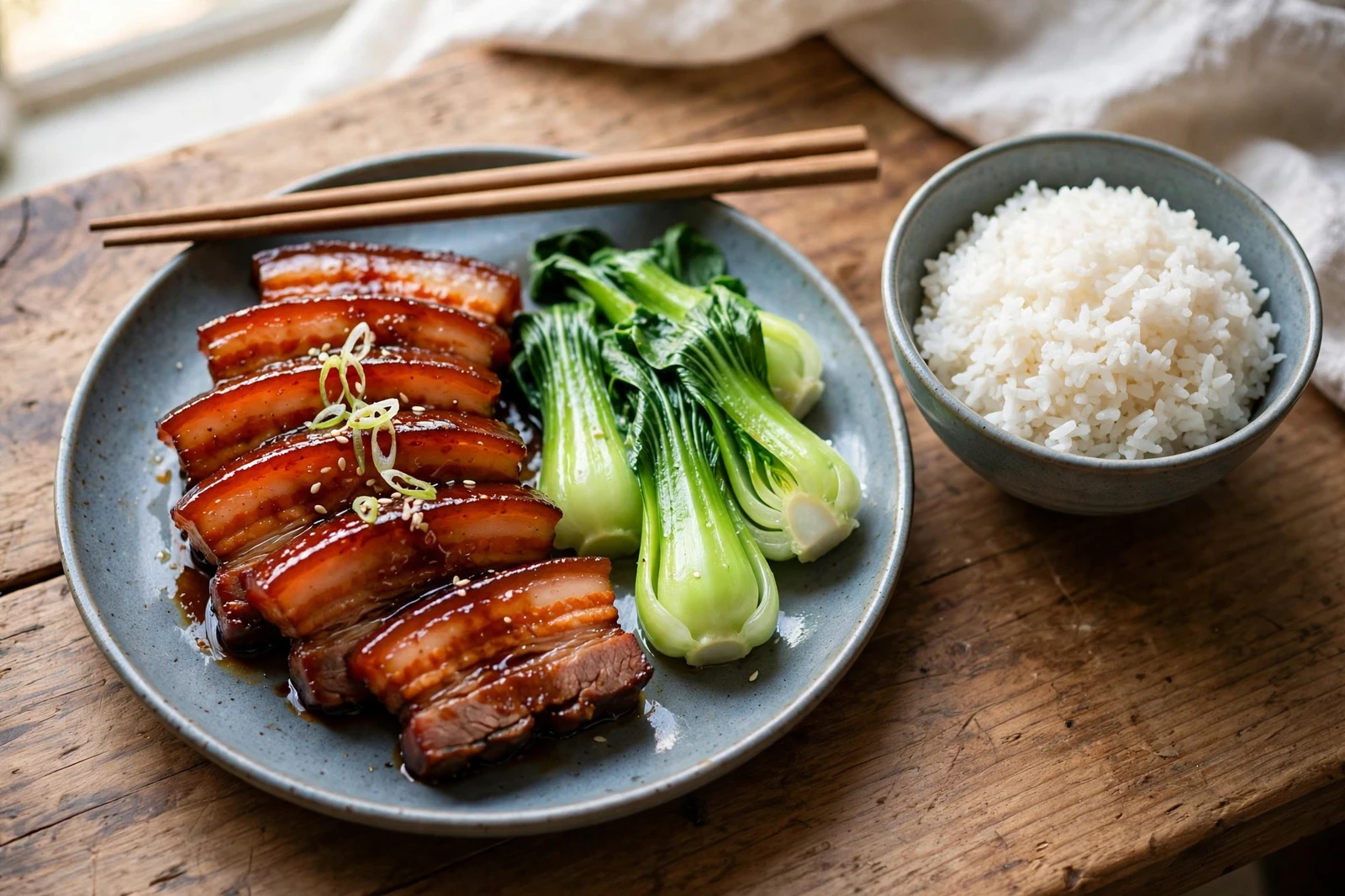
Serve the pork spooned over steamed jasmine rice with blanched baby bok choy on the side, and scatter sliced scallions over the top. For a platter instead of bowls, slice the cubes into thick pieces and fan them out next to the bok choy, spooning the glaze over both. Our jasmine rice guide covers the 1 to 1.25 water ratio that keeps the rice firm enough to hold the sauce without turning soft.
Tips and variations
If the sauce tastes flat, it usually needs salt before it needs more sugar. Add light soy sauce a teaspoon at a time and taste after each addition. If it tastes too sweet, a splash of Shaoxing wine and a little more water will pull it back faster than extra soy sauce will.
For a classic addition, add 4 peeled hard-boiled eggs to the pot for the last 30 minutes of braising, turning them once so they color evenly. The whites pick up the caramel color and the yolks stay firm. For a milder spice profile, leave out one star anise; for a warmer one, add a small piece of dried tangerine peel with the aromatics.
Leftovers keep in the fridge for 4 days in a sealed container, and the sauce thickens when cold, so reheat gently over low heat with a splash of water. The pork also freezes well for up to 3 months; thaw overnight in the fridge before reheating. Skim the fat after chilling, since it sets into a solid layer that lifts off cleanly.
Troubleshooting: Fix My Hong Shao Rou
If your first pot comes out tough, bitter, greasy, thin, or too salty, the cause is usually in the simmer time, the caramel, or the fat. The section below covers the most common problems and how to fix each one.
HERB & LIME · KITCHEN HELP
Fix My Hong Shao Rou
Choose what went wrong to see a practical next step.
Possible cause
What to try next
For next time
From Paul's kitchen. Results vary with pork cut, stove heat, and pot size, adjust timing to your setup.
Quick reference (also works without JavaScript)
The pork is still tough
Cause: The braise was too short or too hot for the connective tissue to soften.
Try: Return the pot to a low simmer and cook 20 to 30 minutes longer, checking every 10 minutes until a fork slides in easily.
Prevent: Simmer covered on low for the full 90 minutes and keep the heat at a bare simmer, never a hard boil.
The sauce tastes bitter
Cause: The sugar caramel went past amber to dark brown or black before the pork went in.
Try: Start the caramel again with fresh sugar, since bitter caramel cannot be balanced out by adding water or soy sauce.
Prevent: Stir constantly over medium heat and pull the pot off the heat for a few seconds as soon as the sugar turns amber.
The dish is too greasy
Cause: Pork belly renders a lot of fat during a long braise, and it pools in the sauce.
Try: Skim the fat from the surface with a spoon, or chill the pot overnight and lift off the solidified fat before reheating.
Prevent: Skim during the braise and again after the 10 minute rest, when the fat rises to the surface.
The sauce is too thin
Cause: The pot stayed covered for the whole cook, so the braising liquid never reduced.
Try: Cook uncovered over medium heat for 10 to 15 minutes, stirring, until the sauce coats a spoon.
Prevent: Plan the final 15 minutes uncovered as part of the cook, and stir often so the bottom does not catch.
The sauce is too salty
Cause: Light and dark soy sauce both add salt, and reducing the sauce concentrates it.
Try: Stir in a splash of water and a pinch of sugar, tasting after each addition, until the salt sits behind the sweetness.
Prevent: Measure the soy sauce instead of pouring freely, and taste before the final reduction, not after.
Hong Shao Rou: Chinese Braised Pork Belly
Ingredients
Method
- Blanch the pork: put the pork belly cubes in a pot, cover with cold water, and bring to a boil over medium-high heat. Boil for 3 minutes, skimming off the gray foam, then drain, rinse under cold water, and pat the cubes dry with paper towels.
- Make the caramel: heat the oil in a heavy pot or wok over medium heat, add the sugar, and stir until it melts into an amber caramel, about 3 to 4 minutes. Pull the pot off the heat for a few seconds if the color races past amber. Add the pork cubes and toss for 2 to 3 minutes until each cube is coated in caramel.
- Braise low and slow: pour in the light and dark soy sauces, Shaoxing wine, and water, then add the star anise, cassia bark, ginger, and scallion knots. Bring to a bare simmer, cover, and cook on low for 90 minutes, turning the cubes once halfway through. Add a splash of hot water if the liquid drops below the pork.
- Reduce to a glaze: uncover and cook over medium heat for 15 minutes, stirring now and then, until the sauce thickens enough to coat a spoon and cling to the cubes. Fish out the star anise, cassia bark, ginger, and scallion knots, and skim any fat pooling on the surface.
- Rest: take the pot off the heat and rest for 10 minutes before serving. The sauce thickens a little more as it cools, and the fat is easier to skim after the rest.
- Serve: spoon the pork over steamed jasmine rice with blanched baby bok choy on the side, and scatter sliced scallions over the top. For a platter, slice the cubes into thick pieces and fan them out next to the bok choy, spooning the glaze over both.
Notes
More Chinese recipes
Char siu, mapo tofu, twice-cooked pork, and Chinese steamed pork buns, four Chinese plates that share this pork-first, sauce-for-rice pattern.
From the garden
The ginger in this braise is the same ginger our growing ginger in pots guide follows from planting to harvest. A thumb-size knob, sliced fresh, gives the braise a cleaner heat than ground ginger, and it is the easiest way to use a pot-grown knob the week it is dug.