
Roti jala looks like a trick and cooks like a pancake. A thin coconut milk batter goes through a multi-hole cup or a squeeze bottle onto a hot pan in crisscross lines, and in about a minute it sets into a soft yellow net that folds into a roll. The net soaks up curry the way a plain flatbread cannot, because the sauce sits in the gaps instead of sliding off the top. Serve a stack of rolls next to a bowl of chicken curry and let people tear and dip.

What is roti jala?
Roti jala is a Malay net crepe made from flour, egg, coconut milk, water, and turmeric. The name joins the Malay words for bread and net, and the shape is the point: batter drizzled in overlapping lines forms a lace pattern that stays soft enough to fold. It is a common sight in Malaysia, Singapore, and parts of Indonesia, where it shows up at festive meals and family gatherings with a curry on the side.
The crepes cook on one side only and never brown the way a pancake does. The bottom stays pale gold, the top dries, and the finished piece folds or rolls without cracking. Expect a mild coconut taste, a soft bite, and a yellow tint from the turmeric. The curry does most of the flavor work, so the crepe itself stays plain on purpose. My kari ayam is the bowl I reach for first, since its coconut milk sauce matches the crepe, but any saucy curry works.
Mix a batter that flows like single cream
The batter ratio that works in my kitchen is 2 cups of flour to 2 cups of liquid: 1 cup of canned coconut milk and 1 cup of water, plus 1 large egg, 1/2 teaspoon of ground turmeric, and 1/2 teaspoon of salt. Shake the coconut milk can well before measuring, since the cream settles at the top and an unshaken can throws the ratio off. Blend or whisk everything until smooth, then strain it. A single lump can clog a dispenser hole halfway through a piece and break the pattern.
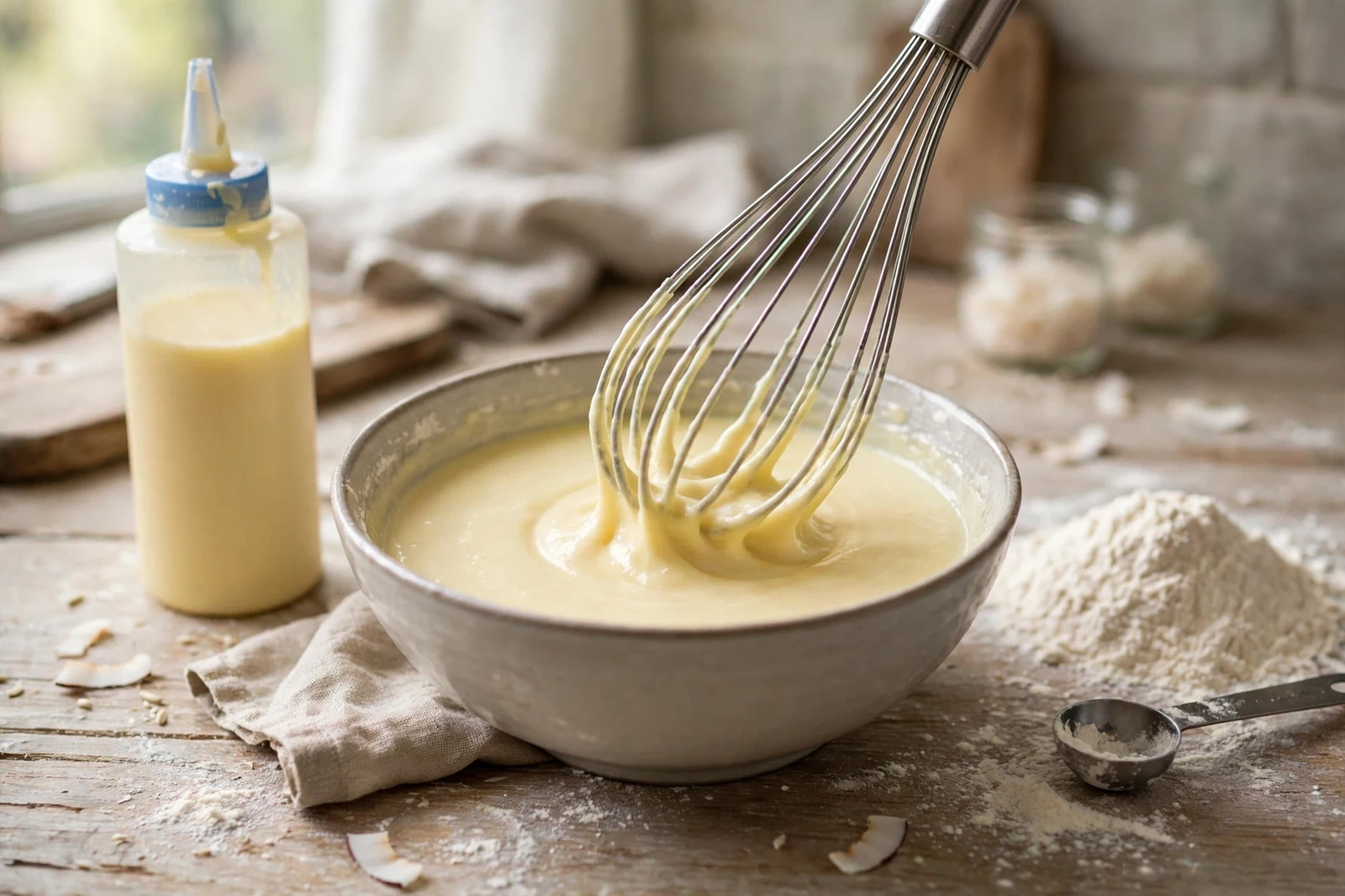
Rest the batter for 20 minutes before cooking. The rest lets the flour hydrate and the batter relax, and skipping it is the usual reason a batch turns rubbery. After the rest, stir once and cook one test piece before the rest of the batch. The test piece is the control step: if the batter will not flow through the holes, whisk in water a tablespoon at a time; if the lines melt together into a sheet, whisk in flour a tablespoon at a time and strain again. Adjusting after one piece saves the whole bowl.
Pipe the net and cook one side only
Use a nonstick pan, about 9 inches across, over medium-low heat. A pan that runs hot sets the batter before you finish the pattern, so keep the heat low enough that you can draw the full net before the lines dry. Wipe the pan with a thin film of oil and wipe most of it back off. A greasy pan makes the lines slide instead of holding their shape.

Pour the batter into a roti jala cup, a squeeze bottle, or a sturdy zip bag with a small corner snipped off. Hold the dispenser a few inches above the pan and move in quick circles, then cross the lines back the other way. Work fast and do not stop mid-pattern. The lines should overlap enough to hold together when lifted, but stay thin enough that the net stays open. Cook for 60 to 90 seconds, without flipping, until the top looks dry and the edges lift slightly from the pan. Slide a thin spatula under one edge and lift the whole piece out. Fold the sides to the middle and roll it into a cylinder, or fold it into a triangle. Stack the rolls under a clean towel so the edges stay soft while you cook the rest. This recipe makes about 12 crepes, which serves 4 people with 3 rolls each.
Serve it with curry
Put the rolls on a platter next to a bowl of curry and serve at once, or hold them at room temperature for up to an hour under a towel. The net is made for dipping, so a saucy curry beats a dry one here. Besides kari ayam, my ayam masak merah gives a tomato-red alternative with the same dipping job. If you want a second bread on the table, my roti canai is the flaky, chewy cousin to this soft net, and the contrast between the two is worth the extra pan time.

Troubleshooting: Fix My Roti Jala
If a batch comes out wrong, the cause is usually one of five things: batter too thick or too thin, a net that breaks when lifted, a rubbery bite, a pan that sticks, or heat that browns the crepe before the pattern is done. Work through them one at a time and the next batch lands closer.
HERB & LIME · KITCHEN HELP
Fix My Roti Jala
Choose what went wrong to see a practical next step.
Possible cause
What to try next
For next time
From Paul's kitchen. Results vary with flour, coconut milk, and stove heat, adjust timing to your setup.
Quick reference (also works without JavaScript)
The batter will not flow through the dispenser
Cause: The batter is too thick, or a lump is blocking a dispenser hole.
Try: Whisk in water a tablespoon at a time, strain the batter again, and cook one test piece before continuing.
Prevent: Strain the batter after mixing and test one piece first, so the whole batch is not cooked at the wrong thickness.
The net melts together into a sheet
Cause: The batter is too thin, so the lines run together instead of holding their shape.
Try: Whisk in flour a tablespoon at a time, strain again, and cook a test piece to check the pattern.
Prevent: Measure the coconut milk after shaking the can well, and keep the 2 cups flour to 2 cups liquid ratio.
The crepe breaks when I lift it
Cause: It is undercooked, the pattern was drizzled too thin, or it was left until it dried out.
Try: Leave the next piece until the top looks dry and the edges lift on their own, then slide a thin spatula under one edge.
Prevent: Keep the heat at medium-low and drizzle lines that overlap enough to hold together when lifted.
The crepes taste rubbery
Cause: The batter was not rested, or the crepe was undercooked.
Try: Rest the remaining batter for 20 minutes, then cook the next piece until the top is fully dry before lifting.
Prevent: Always rest the batter for 20 minutes after mixing, since the rest lets the flour hydrate and the batter relax.
The net sticks and tears in the pan
Cause: The pan is not nonstick, it was not greased, or the heat is too high.
Try: Switch to a nonstick pan, wipe it with a thin film of oil, and lower the heat to medium-low.
Prevent: Use a nonstick pan with just a film of oil wiped on, and wipe most of it back off so the lines hold their shape.
Tips and variations
The batter keeps in the fridge for up to 12 hours. Bring it back to room temperature and stir well before cooking, since cold batter flows slowly and sets unevenly. For a plain version, leave the turmeric out and the crepes turn pale instead of yellow, with the same texture. Doubling the recipe works without changes, but strain the larger batch twice, since lumps hide more easily in a big bowl.
Leftovers keep in the fridge for up to 2 days in a covered container. Warm them for a few seconds in a dry pan over low heat, or wrap the stack in foil and warm it in a low oven. Do not reheat them in a wet pan, since steam turns the net soggy.
More Malaysian recipes
- Roti Canai: Malaysian Flaky Flatbread
- Kari Ayam: Indonesian Chicken Curry
- Ayam Masak Merah: Malaysian Red Chicken Curry
- Nasi Lemak with Coconut Rice and Sambal
Roti Jala: Malaysian Net Crepes with Curry
Ingredients
Method
- Whisk or blend the flour, coconut milk, water, egg, turmeric, and salt until smooth, then strain the batter through a fine sieve into a bowl or jug.
- Rest the batter for 20 minutes, then stir once. Cook one test piece and adjust: whisk in water a tablespoon at a time if the batter will not flow, or flour a tablespoon at a time, then strain again, if the lines melt together.
- Heat a 9-inch nonstick pan over medium-low heat. Wipe the pan with a thin film of oil and wipe most of it back off.
- Pour the batter into a roti jala cup, squeeze bottle, or zip bag with a small corner snipped off. Drizzle quick overlapping circles and cross lines onto the pan to form a net.
- Cook for 60 to 90 seconds on one side only, without flipping, until the top looks dry and the edges lift slightly. Slide a thin spatula under one edge and lift the piece out.
- Fold the sides to the middle and roll into a cylinder, or fold into a triangle. Stack under a clean towel and repeat with the rest of the batter. Serve with chicken curry.