
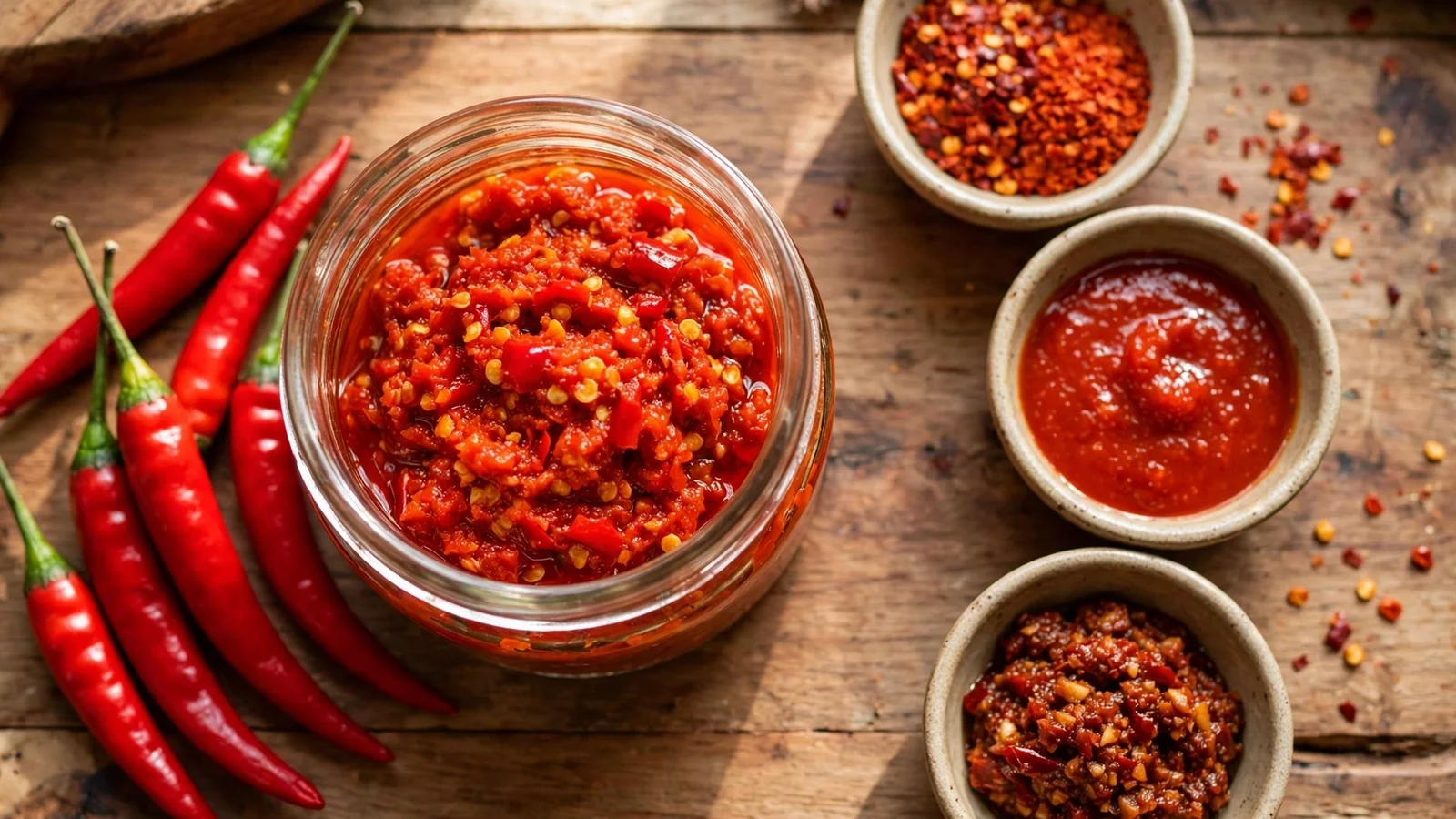
Sambal oelek is a plain Indonesian chili paste: fresh red chilies ground with salt and a little vinegar, nothing else doing much work. That plainness is why it fits so many dishes. It adds heat and a little body without adding garlic, sugar, or a fermented flavor on top. The right substitute depends on which of those two jobs you need. A soup that takes the paste raw at the table needs a different swap from a stir-fry where the paste fries in oil, and a marinade that sits overnight needs a different swap again. Pick by the job first, then by what is in your pantry.
Quick picker: match the substitute to the job
| Substitute | Start with, for 1 Tbsp sambal oelek | Best for | Watch out for |
|---|---|---|---|
| Sriracha | 1 Tbsp | Soups, dipping sauces, marinades | Adds garlic, sugar, and vinegar |
| Chili garlic sauce | 1 Tbsp | Stir-fries and noodles | Garlic flavor comes forward |
| Fresh red chilies, minced | 1 medium chili, minced, plus a pinch of salt | Raw sauces and salads | Heat varies from chili to chili |
| Red pepper flakes | 1 tsp flakes plus 1 tsp water, rested 10 minutes | Soups, stews, and long simmers | Stays gritty if it is not soaked first |
| Cayenne pepper | 1/4 tsp, then taste | Soups and sauces when only heat is needed | No body, and it is easy to overdo |
| Gochujang | 1 Tbsp, thinned with a little water | Marinades and glazes | Sweet and fermented, not plain heat |
| Quick homemade chili paste | 1 Tbsp | Every job, when you have fresh chilies | Needs a blender and a few minutes |
| Chili crisp or chili oil | 2 tsp, drained of most oil for a paste job | Dipping and finishing | Adds oil and crunch, not paste body |
How to use any chili swap
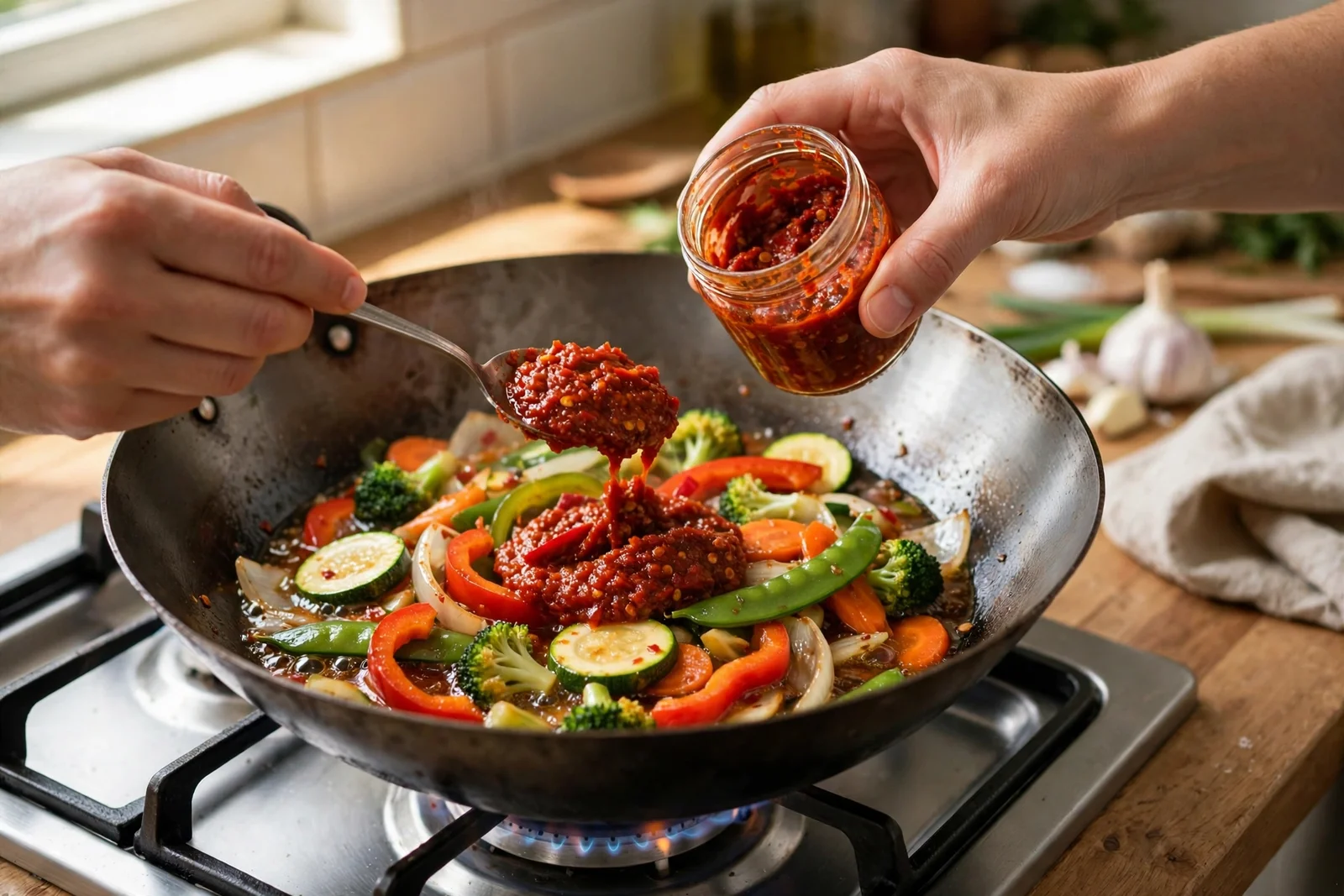
Chili heat is hard to take back once it is in the pot, so add half the swap first, stir, taste, and wait a minute before adding the rest. That half-dose rule matters most with cayenne and chili flakes, where the heat keeps building after the first taste. For a soup or a sauce, stir the swap in at the end, off a hard boil, so the fresh chili flavor stays bright. For a stir-fry, fry the paste in oil for 30 to 60 seconds before the other ingredients go in, which softens the raw edge of fresh chili. For a marinade, mix the swap with the salty and sour parts first, then coat the meat, so the heat spreads evenly instead of sitting in one spot.
The eight substitutes, one by one
1. Sriracha: the easiest bottle swap
Sriracha swaps 1:1 with sambal oelek, and it is the bottle most kitchens already have. It is thinner and smoother, and it brings garlic, sugar, and vinegar with it, so a dish that should taste plain and hot will taste a little sweeter and sharper. Cut back a pinch of sugar elsewhere in the dish when you use it, and skip it when the recipe needs the paste to fry into a thick coating, where its thin texture does not hold up. For the head-to-head on these two bottles, Sambal Oelek vs Sriracha: Which Chili Sauce Should You Buy? compares them side by side.
2. Chili garlic sauce: the closest texture swap
Chili garlic sauce swaps 1:1 with sambal oelek and is the closest match in texture, a coarse paste rather than a smooth sauce. Garlic is the difference. In a stir-fry or a noodle dish, that garlic usually fits right in. In a dish where garlic would take over, like a light fish soup, use half chili garlic sauce and half plain minced fresh chili, which keeps the body while pulling the garlic back.
3. Fresh red chilies, minced: the raw-use swap
One medium fresh red chili, minced fine with a pinch of salt and a few drops of vinegar, stands in for about 1 tablespoon of sambal oelek. This is the swap to reach for in a raw sauce or a salad, where a jarred paste would taste flat. Mince the chili as fine as you can, seeds and all for full heat, or with the seeds scraped out for a gentler version. Taste one piece of the chili first. One batch can run mild and the next can run hot, and the only fix for a chili that is hotter than planned is to use less of it.
4. Red pepper flakes: the pantry swap that needs a soak
For 1 tablespoon of sambal oelek, use 1 teaspoon of red pepper flakes mixed with 1 teaspoon of water, then let the mix sit for 10 minutes. That soak is the whole trick. Flakes stirred straight into a cold sauce stay gritty and the heat stays in separate sharp bits. After 10 minutes in water, the flakes soften into a rough paste and the heat spreads evenly. In a long simmer, the soak matters less, since the pot does the softening, but for a dipping sauce or a dressing, do not skip it. My Sambal Kangkong: Water Spinach with Chili shows how a chili paste should coat greens instead of sitting on them in dry bits, and the same rule holds for a flake swap.
5. Cayenne pepper: the heat-only swap
Cayenne gives heat and nothing else, no body and no fresh chili flavor, so use it when heat is the only job. Start with 1/4 teaspoon for each tablespoon of sambal oelek, stir, taste, and wait a minute before adding more. Cayenne is ground fine, so it spreads fast and its heat builds after the first taste. To make it act more like a paste, stir the cayenne into a teaspoon of water with a few drops of vinegar before it goes into the dish. Skip cayenne in a dish where the paste itself is the sauce, since a dust of pepper cannot coat food the way a paste does.
6. Gochujang: the marinade swap
Gochujang swaps 1:1 with sambal oelek by amount, but it changes the flavor more than any other swap on this list. It is sweet, thick, and fermented, so a soup that should taste clean and hot will taste rounder and sweeter. Thin it with a little water and a few drops of vinegar, and use it where that sweetness helps, in a marinade, a glaze, or a grilled meat dish. For the full swap guide on this paste, Gochujang Substitutes covers what to use when gochujang itself runs out, and the same per-job thinking applies in reverse.
7. Quick homemade chili paste: the exact-match swap
When you have fresh red chilies, the closest swap is to make the paste yourself. Blend 4 to 5 fresh red chilies with 1/4 teaspoon of salt and 1 teaspoon of vinegar until the mix turns coarse, not smooth. That amount makes about 1/4 cup, roughly 4 tablespoons, and it keeps in a sealed jar in the fridge for about a week. Use it 1:1 for sambal oelek in any dish. It takes two minutes, it costs less than a jar, and it is the only swap that keeps both the plain flavor and the coarse texture of the original.
8. Chili crisp or chili oil: the finishing swap
Chili crisp and chili oil give heat plus crunch or oil, not paste body. For a dipping sauce or a finishing drizzle, use 2 teaspoons where a tablespoon of paste would go, and drain off most of the oil first if the dish should not turn greasy. For a stir-fry, spoon the crisp bits in at the end so they stay crisp, rather than frying them from the start, which softens them. Skip chili crisp in a marinade, where the oil coats the meat and blocks the salty and sour parts from getting in.
For soups and sauces
For a soup or a sauce, sriracha, chili garlic sauce, and the soaked flake mix are the closest matches, since all three stir in cleanly at the end. Add the swap off a hard boil and taste after a minute, since heat from flakes and cayenne keeps building. Cayenne works here too, when only heat is needed, but it leaves the soup thinner than a paste would. My Nasi Lemak: Coconut Rice with Sambal and Anchovies shows a sambal served beside the dish rather than cooked into it, and a soup takes the same approach: the chili goes in last, so its flavor stays in front.

For stir-fries and marinades
For a stir-fry, chili garlic sauce and the homemade paste are the strongest swaps, since both fry in oil into a coating that clings to the food. Fry the paste for 30 to 60 seconds before the vegetables or meat go in, which takes the raw edge off fresh chili. For a marinade, gochujang and sriracha are the strongest swaps, since their sugar and vinegar help the marinade cling and brown. My Ayam Penyet: Indonesian Smashed Fried Chicken serves its sambal on the side, and that split is a good model: a paste that fries well in the pan and a paste that stays bright on the side are two different jobs, and a swap that suits one may not suit the other.

When to skip a swap
Skip sriracha when the dish needs a thick paste coating, skip gochujang in a clean-tasting soup where its sweetness would show, skip cayenne when the paste itself is the sauce, and skip chili crisp in a marinade where its oil would block the other flavors. A dish that will be frozen favors the soaked flake mix over sriracha, since a vinegar-based sauce can turn sharp after thawing. When a recipe calls for sambal oelek as the main flavor, as in a sambal served on the side, a 1:1 swap with a flavored sauce changes the dish, so make the quick homemade paste instead and start with half the batch if you are trying a new chili in that kind of recipe.
More pantry guides to try
Four more from the same shelf: Cornstarch Substitutes for Every Situation covers the thickener that runs dry just as often; Potato Starch Substitutes for Every Situation covers the swap in the coating direction; Fish Sauce Substitutes for Every Situation covers the other bottle that runs dry just as often; and Chili Crisp vs Chili Oil: What’s the Difference? compares the two finishing swaps head to head.