
What is che ba mau?
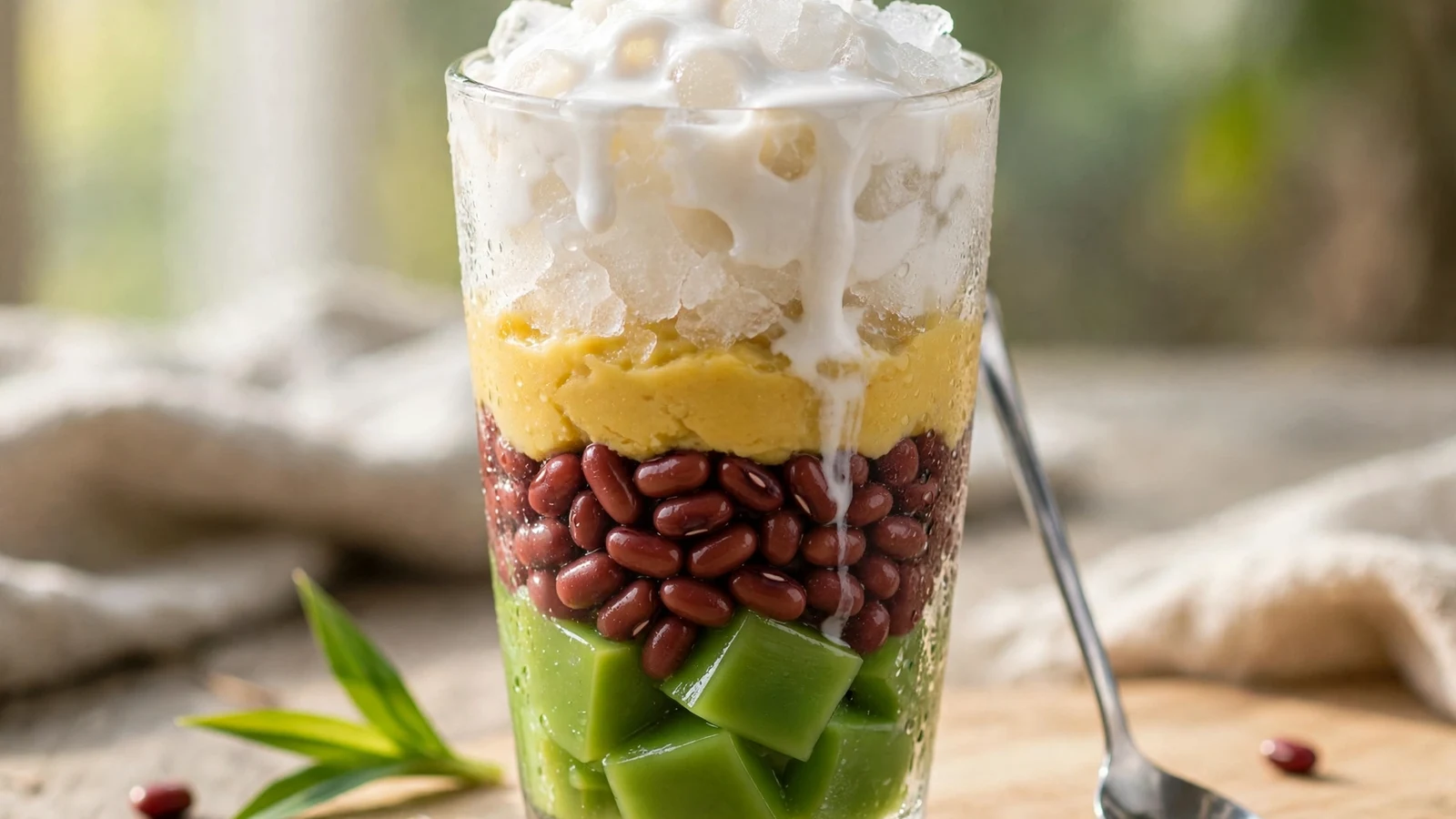
Che ba mau means “three-color dessert” in Vietnamese, and the name tells you most of what you need to know. A tall glass holds three sweet layers, crushed ice, and chilled coconut milk poured over the top. You stir it all together at the table and eat it with a long spoon.
The three colors are red, yellow, and green. The red layer is sweet adzuki beans. The yellow layer is mashed mung bean paste. The green layer is pandan jelly cut into cubes. Each layer is cooked and sweetened on its own, then chilled before assembly, so every spoonful gives you soft beans, smooth paste, firm jelly, and cold coconut milk at once.
This dessert comes from the same family of iced Vietnamese sweets as che thai, but it leans on beans and jelly instead of fruit. It is a common sight at Vietnamese dessert shops and family gatherings in hot weather, and it is easy to make at home once you know the layer order and the cooking times for the beans.
The three layers, in order
Order matters here, because the layers have different weights and the glass is the presentation. Paul builds each glass from the bottom up: red beans first, mung bean paste second, and pandan jelly third. Crushed ice goes on top of the jelly, and the coconut milk is poured last so it runs down through the ice and settles around the layers.
For one tall glass, use about 3 tablespoons of sweet red beans, 3 tablespoons of mung bean paste, and 1/3 cup of pandan jelly cubes. Add crushed ice to near the top, then pour 1/2 cup of chilled coconut milk slowly over the back of a spoon. That slow pour keeps the layers visible for a few seconds before you stir, which is half the pleasure of the dessert.
Ingredients
For the red beans:
- 1 cup dried adzuki beans
- Water for soaking and cooking
- 1/3 cup granulated sugar
- 1 pinch fine sea salt
For the mung bean paste:
- 1 cup split mung beans
- 1/4 cup granulated sugar
- 2 tablespoons coconut milk
- 1 pinch fine sea salt
For the pandan jelly:
- 1 tablespoon agar-agar powder
- 2 cups water
- 1/2 cup pandan juice (from 8 to 10 pandan leaves blended with 1/2 cup water, then strained)
- 3 tablespoons granulated sugar
For the coconut milk:
- 1 can (13.5 oz / 400 ml) full-fat coconut milk
- 1/2 cup whole milk
- 1/4 cup granulated sugar
- 1/4 teaspoon fine sea salt
To serve:
- 3 cups crushed ice
How to make che ba mau
- Soak the beans. Rinse the adzuki beans and the mung beans separately. Soak the adzuki beans in plenty of cool water for 8 hours or overnight. Soak the mung beans for 4 hours. Drain both before cooking.
- Cook the red beans. Put the drained adzuki beans in a pot with 4 cups of fresh water. Bring to a boil, then lower the heat and simmer for 45 to 60 minutes, until the beans are tender but still hold their shape. Stir in the sugar and the pinch of salt during the last 10 minutes only. Beans salted at the start stay firm longer, so hold the salt back. Let the beans cool in their syrup.

- Steam and mash the mung beans. Steam the drained mung beans for 25 minutes, until they crush easily between your fingers. Mash them while warm with the sugar, the 2 tablespoons of coconut milk, and the pinch of salt. The paste should be soft enough to spread and firm enough to mound on a spoon. If it looks dry, add coconut milk one tablespoon at a time.
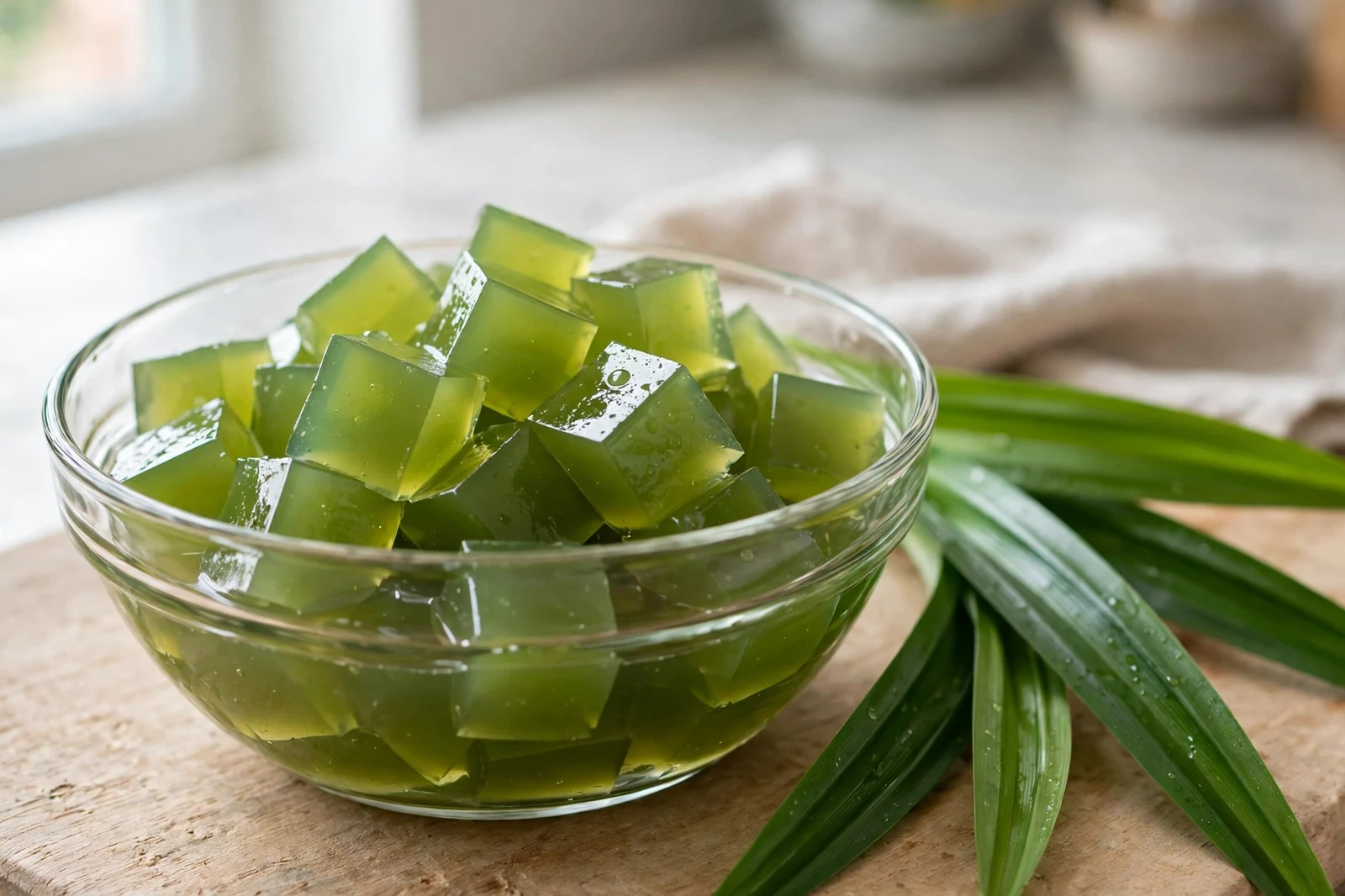
- Make the pandan jelly. Whisk the agar-agar powder into the 2 cups of water in a saucepan. Bring to a boil and boil for 2 minutes, stirring, until the powder has fully dissolved. Take the pan off the heat and stir in the pandan juice and sugar. Pour into a shallow dish and let it set at room temperature for 30 minutes, then chill until firm. Cut into 1/2-inch cubes.
- Mix the coconut milk. Whisk the coconut milk, whole milk, sugar, and salt together until the sugar has dissolved. Taste it: it should read as sweet with a faint salty edge, and it should taste like coconut first. Chill for at least 30 minutes. Cold coconut milk melts the ice more slowly, which keeps the dessert cold without watering it down.
- Assemble the glasses. For each glass, spoon in 3 tablespoons of red beans, then 3 tablespoons of mung bean paste, then 1/3 cup of pandan jelly cubes. Fill to near the top with crushed ice. Pour 1/2 cup of chilled coconut milk slowly over the back of a spoon so it runs down the sides of the glass.

- Serve at once. Hand out long spoons and tell everyone to stir before eating. The layers are meant to mix in the glass, not stay separate on the spoon.
Tips and variations
Cook the beans and the jelly a day ahead when you can. All three layers keep in covered containers in the fridge for up to 3 days, and the coconut milk keeps for 3 days as well. Assemble only the glasses you plan to serve right away, since the ice melts and the jelly softens once the dessert is built.
Use crushed ice, not cubes. Cubes leave gaps and melt unevenly, while crushed ice packs around the layers and chills each spoonful. If you only have cubes, pulse them briefly in a blender.
If fresh pandan leaves are hard to find, use 1/2 teaspoon of pandan extract instead of the fresh juice and use 2 1/2 cups of water for the jelly. The color will be a little less green and the flavor a little less grassy, but the jelly will still set the same way.
For a red bean swap, red kidney beans work in place of adzuki beans. Cook them the same way, and check them at 45 minutes, since canned or older dried beans soften at different rates. Drain canned beans well and rinse them before sweetening, or the canning liquid will dull the flavor.
Mango fans can add 1/2 cup of diced ripe mango on top of the jelly before the ice goes in. The mango brings a honeyed note that sits well with the beans, and it pairs with the coconut milk the same way it does in mango sticky rice. On a hot afternoon, serve che ba mau after a light meal with a glass of ca phe sua da for the adults at the table.
From the garden
Pandan grows well in a pot in warm weather, and a single plant gives you enough leaves for jelly all summer. See how to grow pandan in pots to start one of your own. Snip the outer leaves first and leave the center of the plant alone, so it keeps growing. Fresh leaves freeze well in a sealed bag, so freeze a batch when the plant is full and use them straight from the freezer for juice.
Troubleshooting: Fix My Che Ba Mau
Che ba mau is a forgiving dessert, but the beans and the jelly each have a point where they can go wrong. If your beans stayed hard, your jelly stayed soft, or your layers turned into a muddy glass, the fixes below cover the most common problems. Pick the problem that matches your glass and follow the fix.
HERB & LIME · KITCHEN HELP
Fix My Che Ba Mau
Choose what went wrong to see a practical next step.
Possible cause
What to try next
For next time
From Paul's kitchen. Results vary with bean age, agar brand, and stove heat, adjust timing to your setup.
Quick reference (also works without JavaScript)
The red beans stayed hard
Cause: The beans were old, under-soaked, or salted at the start of cooking, which keeps the skins firm.
Try: Keep simmering in fresh hot water and test every 15 minutes, then sweeten only once the beans crush easily.
Prevent: Soak adzuki beans for 8 hours or overnight, and hold back salt and sugar until the last 10 minutes of cooking.
The coconut milk tastes flat or thin
Cause: Light coconut milk was used, or the milk was never salted, so the coconut flavor stays muted.
Try: Stir in a pinch of salt and a spoonful of full-fat coconut milk, tasting after each addition.
Prevent: Use one can of full-fat coconut milk with 1/2 cup whole milk, and season with 1/4 teaspoon salt before chilling.
The pandan jelly did not set
Cause: The agar was under-measured or never reached a full boil, so it could not gel as it cooled.
Try: Return the liquid to a boil for 2 minutes with the measured agar, then pour and set it again.
Prevent: Measure 1 tablespoon of agar powder per 2 cups of water, and boil for a full 2 minutes while stirring.
The layers mixed into a muddy glass
Cause: Warm layers or fast pouring melted the ice and stirred the beans into the jelly before serving.
Try: Chill every layer first, rebuild the glass, and pour the coconut milk slowly over the back of a spoon.
Prevent: Chill all layers, layer beans, paste, then jelly, and add crushed ice before pouring the milk last.
The dessert came out too sweet
Cause: Sugar was added while the beans were still cooking, or canned beans in syrup were used without rinsing.
Try: Balance the glass with extra crushed ice and a pour of unsweetened coconut milk, then stir and taste.
Prevent: Sweeten beans only after they turn tender, rinse canned beans well, and taste the coconut milk before pouring.
Che Ba Mau: Vietnamese Three-Color Dessert
Ingredients
Method
- Soak the beans. Rinse the adzuki beans and the mung beans separately. Soak the adzuki beans in plenty of cool water for 8 hours or overnight. Soak the mung beans for 4 hours. Drain both before cooking.
- Cook the red beans. Put the drained adzuki beans in a pot with 4 cups of fresh water. Bring to a boil, then lower the heat and simmer for 45 to 60 minutes, until the beans are tender but still hold their shape. Stir in the sugar and the pinch of salt during the last 10 minutes only. Beans salted at the start stay firm longer, so hold the salt back. Let the beans cool in their syrup.
- Steam and mash the mung beans. Steam the drained mung beans for 25 minutes, until they crush easily between your fingers. Mash them while warm with the sugar, the 2 tablespoons of coconut milk, and the pinch of salt. The paste should be soft enough to spread and firm enough to mound on a spoon. If it looks dry, add coconut milk one tablespoon at a time.
- Make the pandan jelly. Whisk the agar-agar powder into the 2 cups of water in a saucepan. Bring to a boil and boil for 2 minutes, stirring, until the powder has fully dissolved. Take the pan off the heat and stir in the pandan juice and sugar. Pour into a shallow dish and let it set at room temperature for 30 minutes, then chill until firm. Cut into 1/2-inch cubes.
- Mix the coconut milk. Whisk the coconut milk, whole milk, sugar, and salt together until the sugar has dissolved. Taste it: it should read as sweet with a faint salty edge, and it should taste like coconut first. Chill for at least 30 minutes. Cold coconut milk melts the ice more slowly, which keeps the dessert cold without watering it down.
- Assemble the glasses. For each glass, spoon in 3 tablespoons of red beans, then 3 tablespoons of mung bean paste, then 1/3 cup of pandan jelly cubes. Fill to near the top with crushed ice. Pour 1/2 cup of chilled coconut milk slowly over the back of a spoon so it runs down the sides of the glass.
- Serve at once. Hand out long spoons and tell everyone to stir before eating. The layers are meant to mix in the glass, not stay separate on the spoon.
Notes
Storage
Store each layer on its own in the fridge for up to 3 days. The coconut milk keeps in a sealed container for up to 3 days as well; stir it before using, since the fat can separate. Assembled glasses do not keep. Eat them within 30 minutes of pouring, before the ice melts into the milk.
More Vietnamese recipes
If you like cold Vietnamese sweets, try che thai for a fruit and coconut milk version, mango sticky rice for warm sticky rice with coconut cream, sinh to bo for a thick avocado drink, or ca phe sua da for iced coffee with condensed milk.
1 thought on “Che Ba Mau: Vietnamese Three-Color Dessert”