
Mango sticky rice is the kind of dessert that needs no introduction to anyone who has been to a Thai restaurant. Glossy mounds of sweet rice soaked in coconut milk, fanned slices of ripe mango, and a spoonful of salted coconut cream poured over the top at the table — it is simple, tropical, and absolutely worth making at home. The flavors are clean and balanced: the rice is gently sweet, the coconut cream carries a whisper of salt, and the mango brings bright, floral fruitiness.
Known in Thailand as khao niao mamuang, this dish shows up whenever mangoes are in season, which in Thailand is roughly March through July. That is the window when the mangoes are at their best — honey-sweet, silky, and barely tart. But with good imported mangoes available year-round at most Asian grocery stores, there is no need to wait. The rice itself is what makes this recipe special: sweet glutinous rice, sometimes called sticky rice or sweet rice, steams up into plump, slightly translucent grains that drink in the warm coconut mixture without turning mushy.
The technique is straightforward. The rice soaks overnight, steams until tender, then gets folded with warm sweetened coconut milk while it is still hot so every grain absorbs the flavor. A separate salted coconut cream gets drizzled on top at serving. None of it is hard — the recipe mostly asks for a little planning ahead.
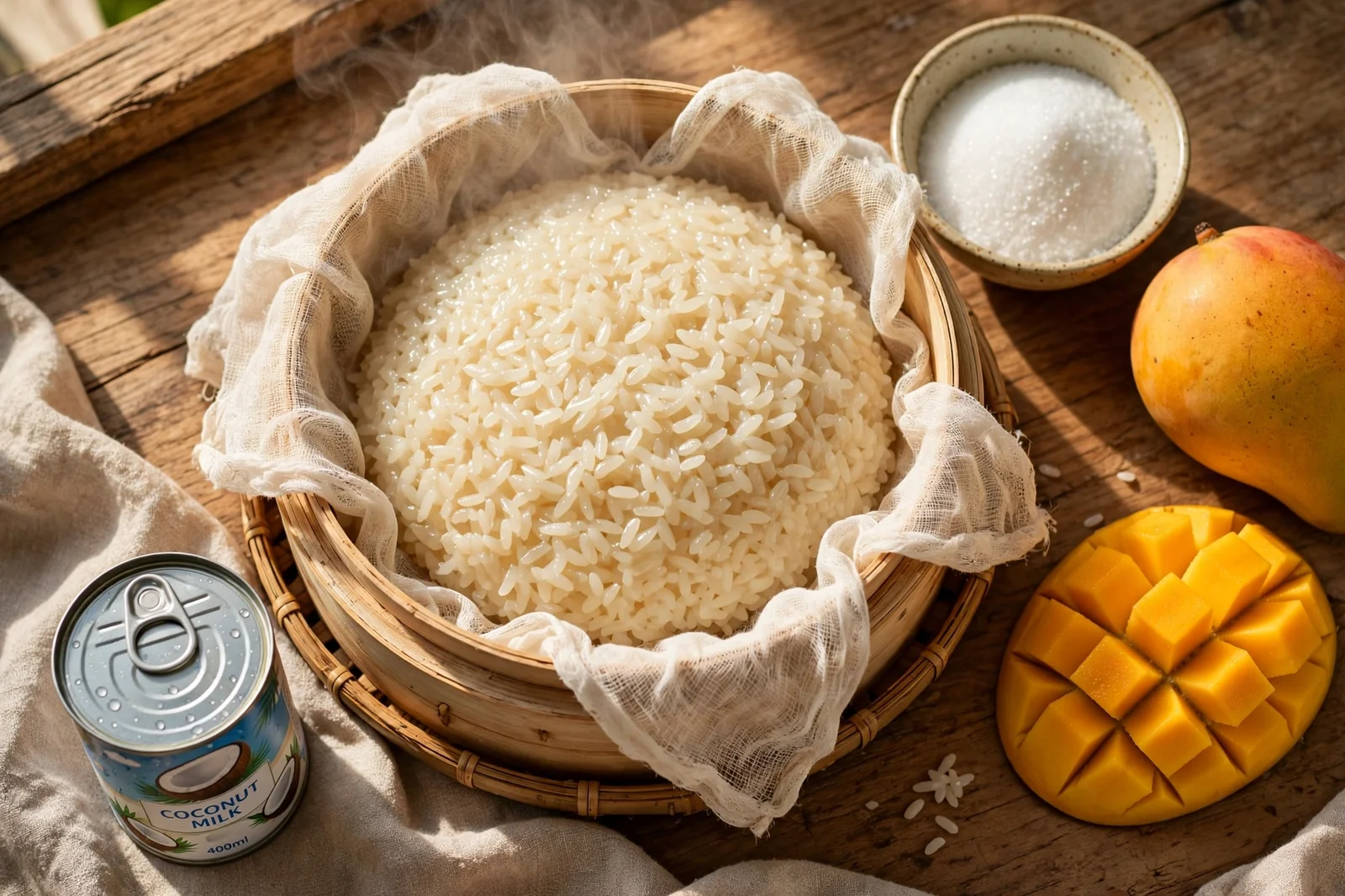
Ingredients
### For the Sweet Rice
### To Serve
Instructions
Step 1. Soak the rice. Rinse the glutinous rice under cold water, swishing it around until the water runs mostly clear. Cover with plenty of cold water and soak for at least 8 hours or overnight. The long soak is what lets the grains steam up evenly and turn plump and tender. Drain well when you are ready to cook.
Step 2. Steam the rice. Line a bamboo or metal steamer basket with cheesecloth or a damp kitchen towel. Spread the drained rice in an even layer, leaving some room for steam to circulate. Steam over boiling water for 20 to 25 minutes, flipping the rice once halfway through, until the grains are translucent, glossy, and chewy all the way through — no hard centers. Keep it covered and warm while you make the coconut mixture.
Step 3. Warm the coconut mixture. While the rice steams, pour 1 cup of the coconut milk into a small saucepan with the sugar, 1/2 teaspoon of the salt, and the pandan leaf if using. Warm over medium-low heat, stirring until the sugar and salt dissolve completely. It should be steaming hot but not boiling — boiling can make coconut milk split and turn grainy. Remove the pandan leaf.
Step 4. Fold the coconut into the rice. Transfer the hot steamed rice to a large bowl. Pour the warm coconut mixture over it and fold gently with a spatula, turning the rice from the bottom up so every grain gets coated. Cover and let it rest for 20 to 30 minutes. The rice will absorb the liquid as it sits and turn rich and glossy.
Step 5. Make the salted drizzle. In a small saucepan, warm the remaining coconut milk with the other 1/2 teaspoon of salt. If you like a thicker sauce, whisk in 1 teaspoon of rice flour or cornstarch dissolved in 1 tablespoon of cold water and simmer for a minute until it coats the back of a spoon. Keep warm.
Step 6. Slice the mangoes. Cut each mango into two cheeks, score the flesh in a crosshatch pattern without cutting through the skin, then press the skin from behind to fan the cubes up. Slice off the remaining flesh from the pit and cut it into neat pieces.
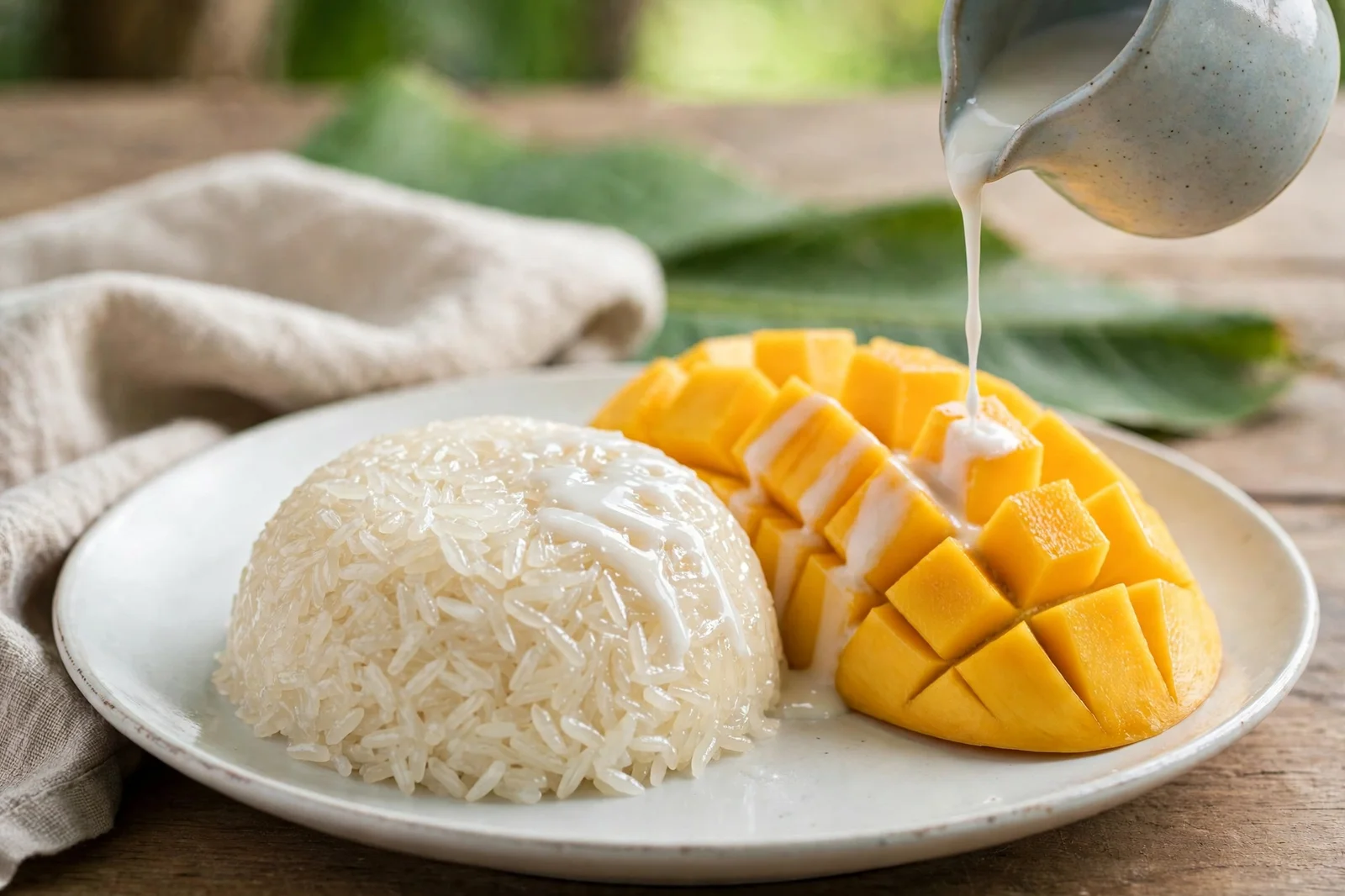
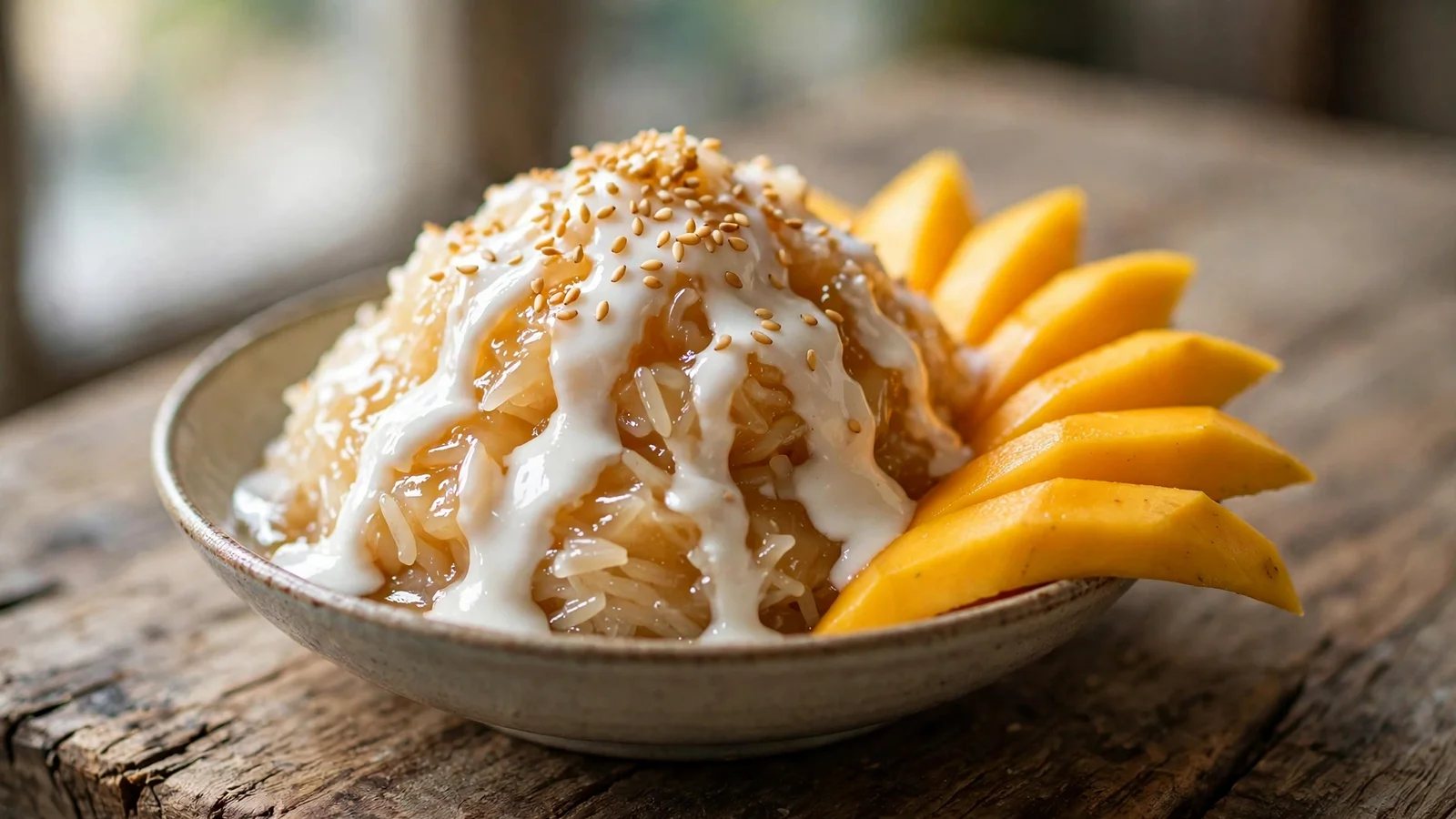
Step 7. Serve. Scoop warm sweet rice onto plates, arrange the mango slices alongside, and drizzle with the salted coconut cream. Sprinkle with toasted sesame seeds or mung beans if you like a little crunch.
Tips for Great Mango Sticky Rice
Pick the right mangoes. Ripe Thai honey mangoes are the traditional choice — they are silky, intensely sweet, and barely fibrous. Ataulfo or Champagne mangoes are the closest easy-to-find alternative in American grocery stores. Look for fruit that gives gently when pressed and smells sweet at the stem end. Underripe mango makes the whole dessert taste flat, no matter how good the rice is.
Use glutinous rice, not jasmine. They are different grains. Glutinous rice has almost no amylose, which is why it turns soft, sticky, and slightly translucent when steamed — that is exactly what you want here. Jasmine rice will not give you the right texture, no matter how you cook it.
Don't skip the soak. An overnight soak hydrates the grains evenly so they steam through without a chalky core. If you are short on time, 4 hours in warm water is the minimum, but overnight gives the best results.
Fold gently while the rice is hot. The hot rice is what draws the coconut mixture in. Stirring roughly breaks the grains and turns the dish gummy. Fold like you would a delicate batter: cut down, scoop up, turn over.
Salt matters. The tiny amount of salt in the rice and the bigger pinch in the drizzle are what make the coconut flavor pop. Taste the coconut mixture before pouring it over the rice — it should taste clearly sweet with a pleasant salty edge, not just sugary.
Serve it warm, not cold. Mango sticky rice is at its best when the rice is still warm and the mango is at room temperature. Leftover rice firms up in the fridge; warm it gently with a splash of coconut milk to loosen it back up.
This dessert sits comfortably alongside other Thai favorites — it makes a lovely finish to a meal of som tum or pad see ew, and pairs naturally with a tall glass of Thai iced tea.
Variations
Leftover rice keeps in the fridge for up to 2 days, but it firms up when cold. Warm it gently in a covered bowl with a splash of coconut milk before serving, and always slice the mangoes fresh.
Mango Sticky Rice
Ingredients
Method
- Rinse the glutinous rice under cold water until the water runs mostly clear. Cover with plenty of cold water and soak at least 8 hours or overnight, then drain well.
- Line a steamer basket with cheesecloth and spread the drained rice in an even layer. Steam over boiling water 20-25 minutes, flipping once halfway, until translucent and tender with no hard centers.
- While the rice steams, warm 1 cup coconut milk in a small saucepan with the sugar, 1/2 teaspoon salt, and pandan leaf until steaming (not boiling) and the sugar dissolves. Remove the pandan leaf.
- Transfer the hot rice to a large bowl. Pour over the warm coconut mixture and fold gently with a spatula. Cover and rest 20-30 minutes until the liquid is absorbed.
- Warm the remaining coconut milk with the other 1/2 teaspoon salt for the drizzle; thicken with a rice-flour slurry if you like. Keep warm.
- Cut the mangoes into cheeks, score in a crosshatch, and press the skin to fan the cubes up. Scoop warm rice onto plates, arrange mango alongside, and drizzle with the salted coconut cream. Sprinkle with sesame seeds if using.
1 thought on “Mango Sticky Rice”