
Aloo gobi is the kind of weeknight dish that looks simple on paper and turns mushy in practice. Potatoes and cauliflower do not cook at the same speed, and a pan full of water turns both of them soft before either one tastes seasoned. The version below fixes that with two small decisions: cut the potatoes smaller than the florets, and brown each vegetable on its own before they meet the masala. The result is a dry curry, not a saucy one, with potato cubes that hold their shape and cauliflower that still has some bite.
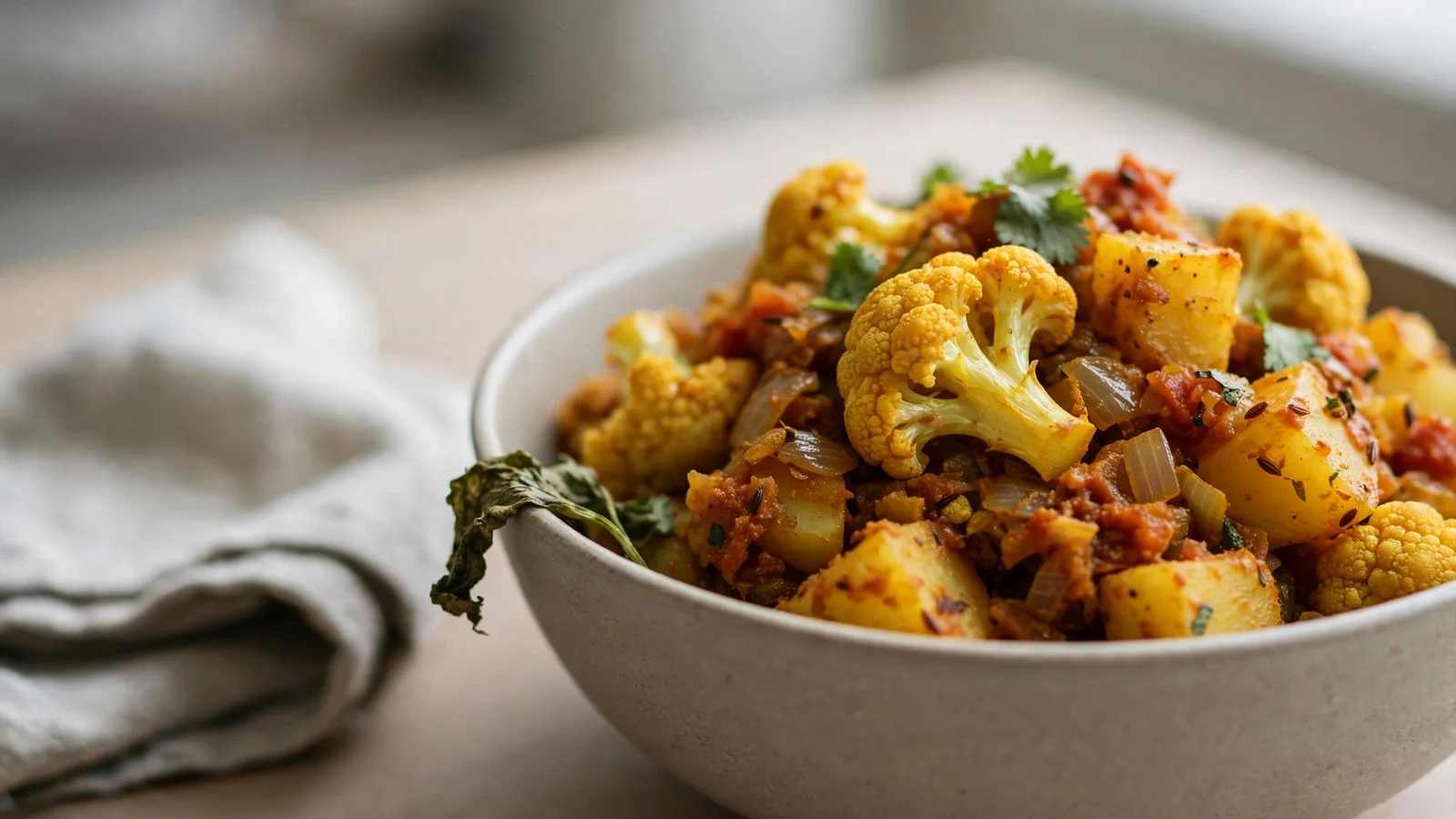
What is aloo gobi?
Aloo means potato and gobi means cauliflower in Hindi, and the dish is a North Indian home staple built from those two vegetables, onion, tomato, ginger, garlic, and a short list of ground spices. This version is the dry style, called a sabzi, where the masala clings to the vegetables instead of pooling as gravy. A wetter, curry-style version exists, with more tomato and water, but the dry style is the one most home cooks make for a weeknight plate with rice or flatbread.
If you have cooked chana masala, the spice base here will feel familiar: cumin seed in hot oil, onion cooked until soft, ginger and garlic, then tomato and ground spices. The difference is the vegetables. Chickpeas can sit in a sauce without losing their shape. Cauliflower cannot, so this recipe treats the vegetables as the part that needs care, and the sauce as the part that coats them.
Cutting the vegetables so they finish together
Cut 1 pound of Yukon Gold potatoes into 1-inch cubes and 1 medium cauliflower, about 2 pounds, into florets about 1.5 inches across. The size gap is deliberate. Potatoes take longer to cook through than cauliflower, so smaller potato cubes and larger florets bring both to tender at about the same time. Cut the florets too small and they fall apart while the potatoes are still hard in the middle.
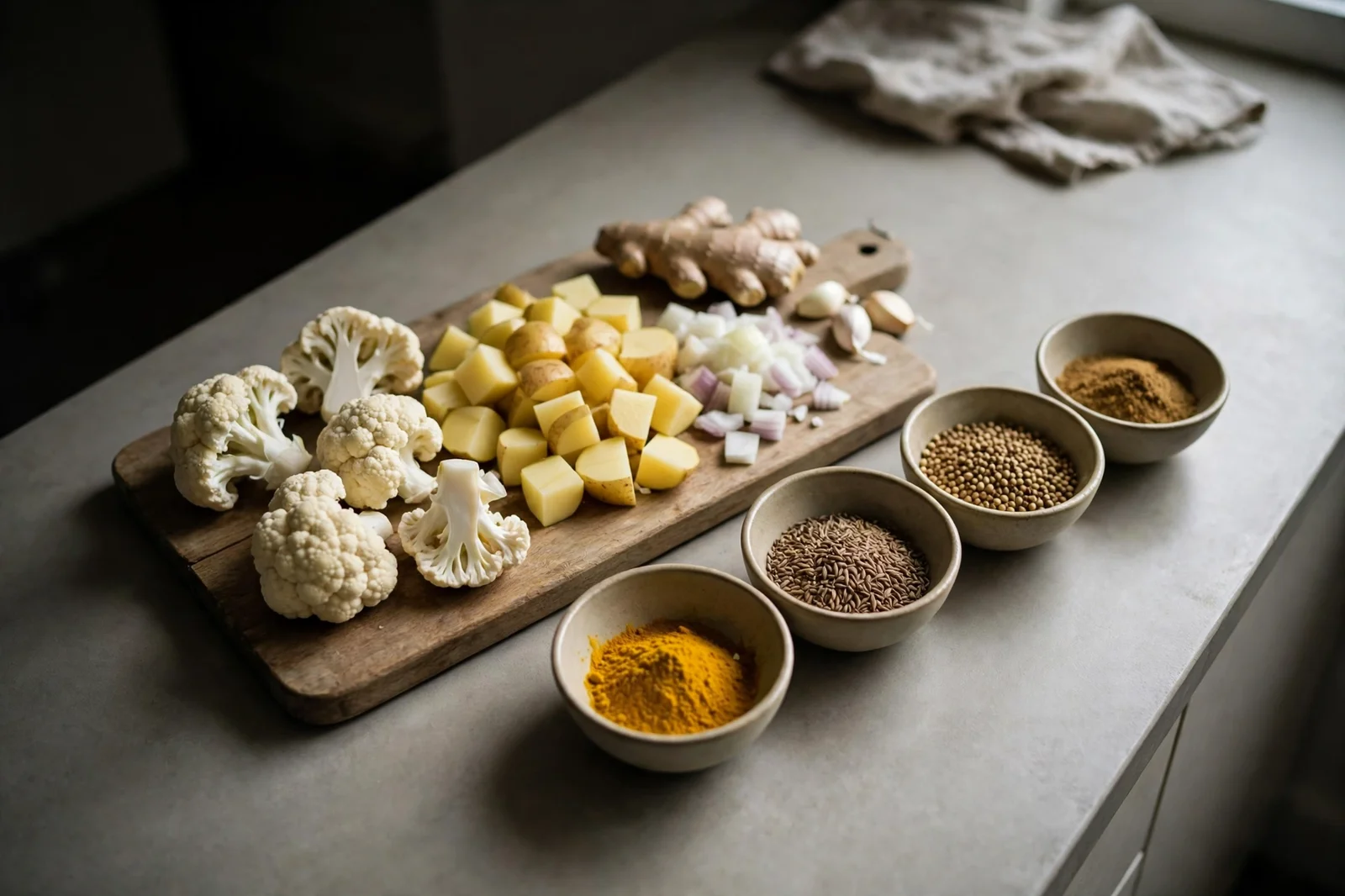
Pat the cauliflower dry after washing. Wet florets steam in the pan instead of browning, and that steam is one of the usual causes of a soft, pale batch. Yukon Golds are the potato to use here. They hold their shape after searing and simmering, while Russets tend to break into the masala. If Russets are all you have, cut them a little larger, stir less, and expect a softer result.
How to make aloo gobi
- Cut and dry the vegetables. Peel 1 pound of Yukon Gold potatoes and cut them into 1-inch cubes. Cut 1 medium cauliflower into florets about 1.5 inches across. Pat the florets dry with a towel.
- Brown the potatoes. Heat 2 tablespoons of neutral oil in a wide, heavy skillet over medium-high heat. Add the potato cubes in a single layer and cook, turning once or twice, until golden at the edges, about 7 minutes. Move them to a plate.
- Brown the cauliflower. Add the remaining 1 tablespoon of oil to the same skillet. Add the florets in a single layer and cook until lightly browned in spots, about 5 minutes. Move them to the plate with the potatoes. Work in two batches if the pan is crowded, since a crowded pan steams instead of browning.
- Cook the onion base. Lower the heat to medium. Add 1 teaspoon of cumin seeds and stir until they darken and smell toasted, about 30 seconds. Add 1 finely chopped onion and a pinch of salt, and cook until soft and starting to turn gold at the edges, about 6 minutes.
- Add ginger, garlic, and tomato. Stir in 1 tablespoon of grated ginger and 3 minced garlic cloves and cook for 30 seconds. Add 2 chopped medium tomatoes, 1 teaspoon of ground turmeric, 1 teaspoon of ground coriander, and 1/2 teaspoon of Kashmiri chili powder or sweet paprika. Cook, stirring, until the tomatoes soften and the oil starts to separate at the edges, about 5 minutes.
- Finish with the vegetables. Return the potatoes and cauliflower to the pan with 1/4 cup of water and 1 teaspoon of fine sea salt. Stir gently to coat, cover, and cook on medium-low for 10 to 12 minutes, until a knife slides into a potato cube with only slight resistance. Uncover, sprinkle over 1/2 teaspoon of garam masala and 1 tablespoon of lemon juice, and cook for 2 minutes more so the masala dries and clings. Taste and add salt if needed, then scatter chopped cilantro over the top.
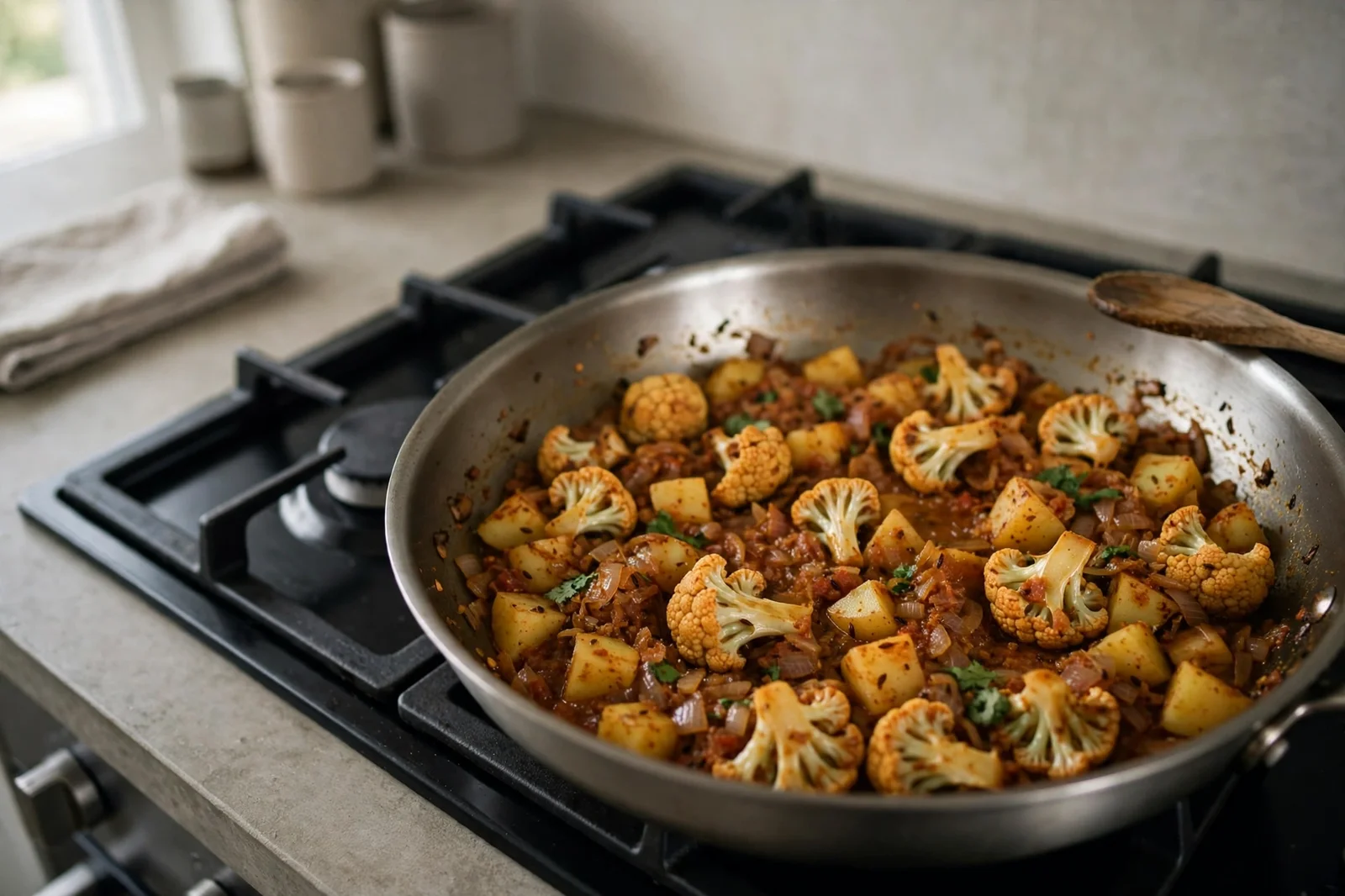
The water amount is a cap, not a starting point. Aloo gobi needs only enough liquid to finish cooking the vegetables and to keep the masala from catching. Add more than 1/4 cup and the pan turns into a steamer, which is how a dry sabzi ends up as mush. If the pan looks dry before the potatoes are done, add water 1 tablespoon at a time.
What to serve with aloo gobi
Serve it with jasmine rice cooked by the method in our guide to cooking jasmine rice, or with flatbread for scooping. A spoonful of plain yogurt on the side cools the chili heat, and a lemon wedge lets each person adjust the acidity at the table. The dish also works as part of a larger Indian plate next to chana masala, where the chickpeas and the dry vegetables give two different textures instead of two sauces.
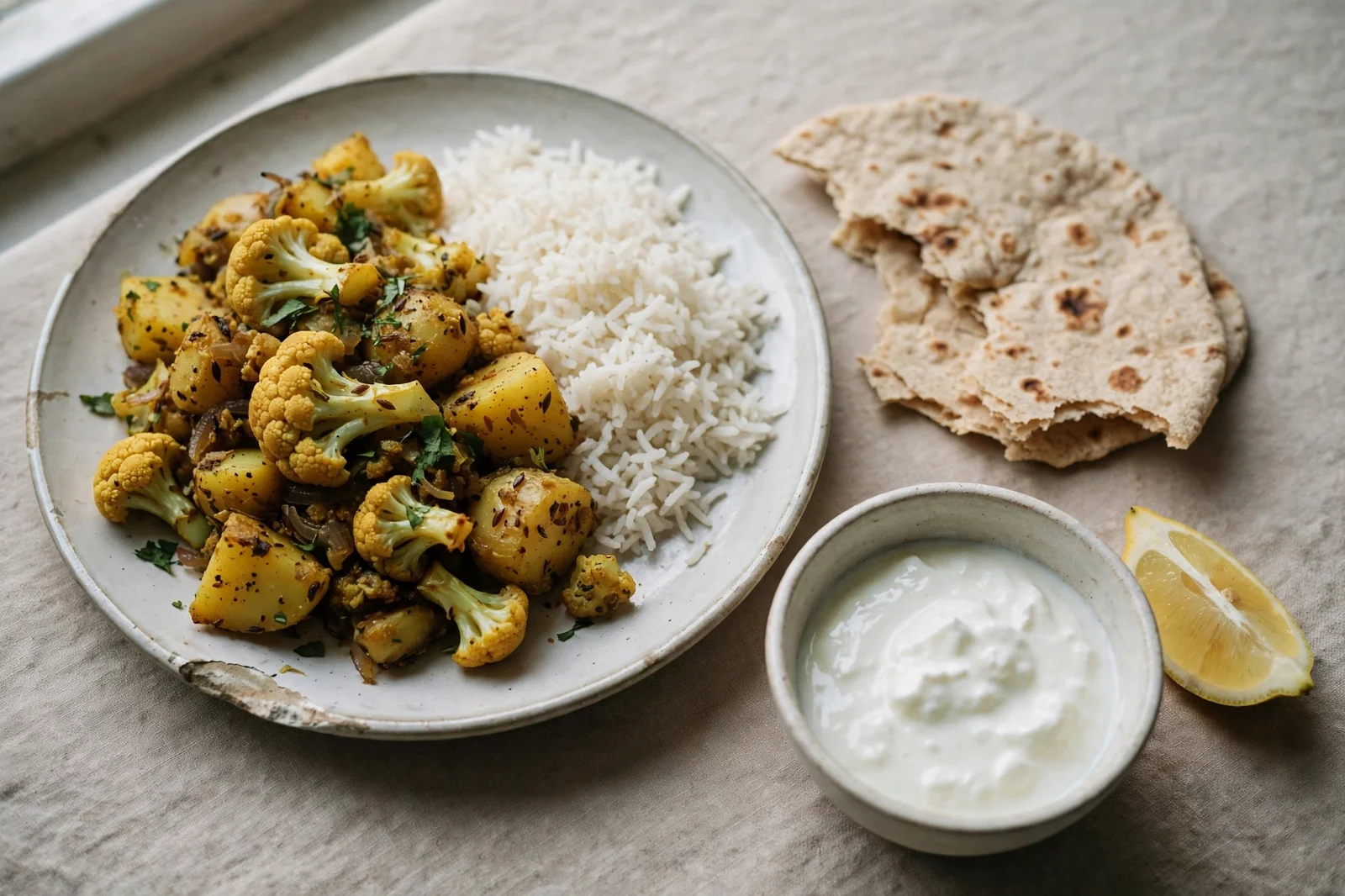
Leftovers keep in the fridge for up to 3 days in a sealed container. Reheat in a skillet over medium-low heat with a splash of oil, which brings back some of the browned edges. Microwaving works, but the cauliflower softens further, so use the skillet when you can.
Tips and variations
Keep the pan wide and the layers single. A small pan forces the vegetables to pile up, and piled vegetables steam. If your skillet cannot hold the potatoes in one layer, brown them in two batches. The extra five minutes is the difference between browned edges and a soft pile.
For a hotter version, add 1 chopped green chili with the onion, or raise the chili powder to 1 teaspoon. For a milder plate, use sweet paprika instead of chili powder and skip the green chili. A pinch of amchur, dried mango powder, stirred in with the garam masala, adds a sour note without extra liquid, and it suits the dry style well. Do not add coconut milk or cream here. They turn a dry sabzi into a different dish, and they dull the browned edges you just built.
Troubleshooting: Fix My Aloo Gobi
If a batch of aloo gobi comes out mushy, bland, or unevenly cooked, the cause is usually in the cutting, the water, or the spice timing. Pick what went wrong below for a practical next step.
HERB & LIME · KITCHEN HELP Choose what went wrong to see a practical next step. From Paul's kitchen. Results vary with cauliflower size, potato type, and stove heat, adjust timing to your setup. Quick reference (also works without JavaScript) Cause: Too much water in the pan, florets cut too small, or cooking too long let the cauliflower steam until it fell apart. Try: Serve the batch as a filling for flatbread or mixed into rice, where the soft texture works, and do not add more water. Prevent: Cut florets about 1.5 inches across, pat them dry, brown them separately, and cap added water at 1/4 cup. Cause: Potatoes take longer to cook than cauliflower, so equal-size pieces or adding both at once leaves the potatoes behind. Try: Lift the cauliflower out, keep cooking the potatoes in the masala until a knife slides in, then return the cauliflower to warm through. Prevent: Cut potatoes into 1-inch cubes, keep florets larger at 1.5 inches, and brown the potatoes first. Cause: The spices were not bloomed in oil, the spices were old, or the dish was under-salted, so the masala never developed. Try: Stir in 1/2 teaspoon of garam masala, 1 tablespoon of lemon juice, and salt a pinch at a time, tasting after each pinch. Prevent: Bloom cumin seeds in hot oil, cook ground spices with the tomato until the oil separates, and salt the masala, not just the vegetables. Cause: Ground spices sat in a dry, hot pan too long before any onion or tomato moisture reached them, so they scorched. Try: Stir in a chopped tomato and 2 tablespoons of water, lower the heat, and simmer gently, the batch will soften but may keep a bitter edge. Prevent: Add ground spices only after the onion is soft and the tomato is in the pan, and keep the heat at medium while they cook. Cause: A starchy potato type broke down under searing and simmering, and frequent stirring broke the cubes further. Try: Serve the batch as it is, it still tastes seasoned, and stir only gently if you reheat it. Prevent: Use Yukon Gold or another waxy potato that holds its shape, cut even 1-inch cubes, and stir gently and rarely.Fix My Aloo Gobi
Possible cause
What to try next
For next time
The cauliflower turned mushy
The potatoes are still hard while the cauliflower is done
The dish tastes bland
The spices turned bitter and burnt
The potatoes fell apart into the masala
Aloo Gobi: Indian Cauliflower and Potato Curry
Ingredients
Method
- Cut and dry the vegetables: peel 1 pound of Yukon Gold potatoes and cut them into 1-inch cubes. Cut 1 medium cauliflower into florets about 1.5 inches across. Pat the florets dry with a towel.
- Brown the potatoes: heat 2 tablespoons of neutral oil in a wide, heavy skillet over medium-high heat. Add the potato cubes in a single layer and cook, turning once or twice, until golden at the edges, about 7 minutes. Move them to a plate.
- Brown the cauliflower: add the remaining 1 tablespoon of oil to the same skillet. Add the florets in a single layer and cook until lightly browned in spots, about 5 minutes. Move them to the plate with the potatoes, working in two batches if the pan is crowded.
- Cook the onion base: lower the heat to medium. Add 1 teaspoon of cumin seeds and stir until they darken and smell toasted, about 30 seconds. Add 1 finely chopped onion and a pinch of salt, and cook until soft and starting to turn gold at the edges, about 6 minutes.
- Add ginger, garlic, and tomato: stir in 1 tablespoon of grated ginger and 3 minced garlic cloves and cook for 30 seconds. Add 2 chopped medium tomatoes, 1 teaspoon of ground turmeric, 1 teaspoon of ground coriander, and 1/2 teaspoon of Kashmiri chili powder or sweet paprika. Cook, stirring, until the tomatoes soften and the oil starts to separate at the edges, about 5 minutes.
- Finish with the vegetables: return the potatoes and cauliflower to the pan with 1/4 cup of water and 1 teaspoon of fine sea salt. Stir gently to coat, cover, and cook on medium-low for 10 to 12 minutes, until a knife slides into a potato cube with only slight resistance. Uncover, sprinkle over 1/2 teaspoon of garam masala and 1 tablespoon of lemon juice, and cook for 2 minutes more so the masala dries and clings. Taste and add salt if needed, then scatter chopped cilantro over the top.
Notes
More Indian recipes
If you liked this plate, try chana masala for an Indian chickpea curry in a tomato spice base, butter chicken for a saucy chicken curry that pairs well with the same rice and flatbread, or crispy vegetable samosas for a fried starter that uses similar spices in a different form.
Cook the vegetables in two stages, keep the water to 1/4 cup, and let the masala dry and cling at the end. Those three habits are what keep aloo gobi from turning into a soft, pale pile, and they carry over to any dry vegetable curry you cook next.