
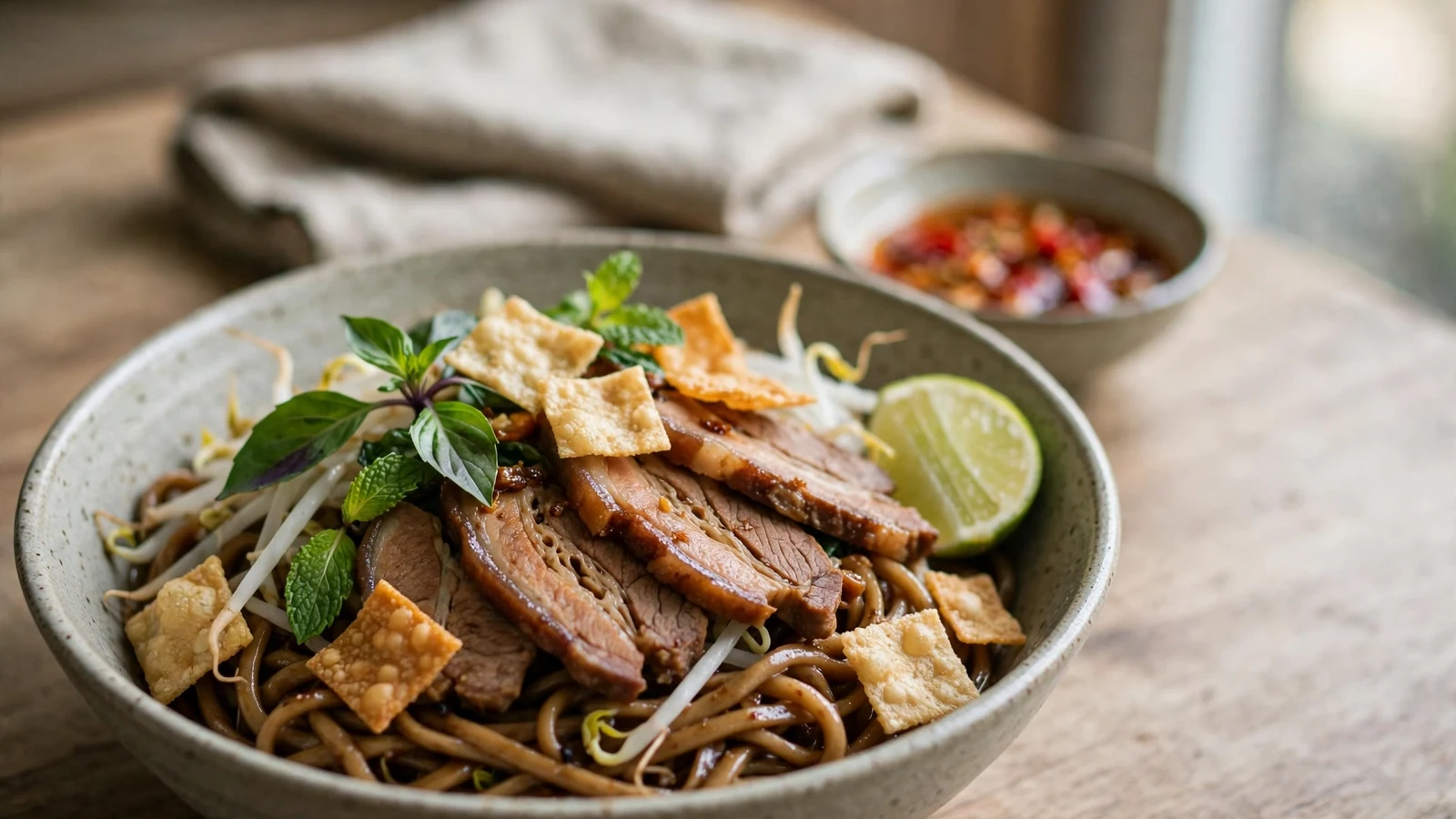
Cao lau is the noodle bowl from Hoi An that surprises first-timers: thick, chewy noodles, slices of five-spice braised pork, bean sprouts, and a pile of fresh herbs, with only a few spoonfuls of sauce to tie it together. It is not a soup. The sauce is measured, 2 to 3 tablespoons per bowl, and the bowl is eaten with chopsticks, not a spoon. The pork carries the flavor, so the marinade is measured too: 2 tablespoons of soy sauce, 1 tablespoon of fish sauce, and 1 teaspoon of five-spice powder per pound of pork, with a 30-minute rest before it hits the pan. The crackers on top are fried wonton squares, a stand-in for the crisp banh ram squares served in Hoi An, and they go on last, at the table.
What is cao lau?
Cao lau comes from Hoi An, the old trading port on the central coast of Vietnam. Its noodles are the reason the dish stays in Hoi An: they are made from rice flour soaked in lye water, an alkaline solution from wood ash, and mixed with water from the Ba Le well, an old Cham well in the old town. The lye gives the noodles their faint brown color and their firm, springy chew, and the noodles are steamed, not boiled, before they are cut into thick strands. Outside Hoi An, thick udon is the closest stand-in for that chew, and Japanese soba is the other common swap. The rest of the bowl is sliced pork braised with five-spice, bean sprouts, lettuce, Thai basil, mint, and cilantro, and banh ram, thin squares of the same noodle dough, deep-fried until they puff and turn crisp. Do not confuse it with hu tieu, the pork and seafood noodle soup, which arrives swimming in broth. The closest cousin on this site is mi quang, another central Vietnamese noodle bowl that also uses just a little liquid. Real cao lau noodles are hard to find outside Hoi An, and this version is honest about that: udon stands in, the pork and sauce do the work, and the bowl still eats the way it should, dry, chewy, and full of herbs.
Ingredients
For the pork and sauce
- 1 pound pork shoulder, cut into 2-inch chunks
- 2 tablespoons soy sauce
- 1 tablespoon fish sauce
- 1 teaspoon five-spice powder
- 1 tablespoon sugar
- 3 garlic cloves, minced
- 1 tablespoon neutral oil
- 1 cup water or low-sodium chicken stock
- 2 star anise
For the noodles and toppings
- 12 ounces thick udon noodles, fresh or dried
- 2 cups bean sprouts
- 1 cup mixed fresh herbs (Thai basil, mint, and cilantro leaves)
- 2 cups torn lettuce leaves
- 8 wonton wrappers, cut into 2-inch squares
- 1/4 cup neutral oil, for frying the crackers
- 1 lime, cut into wedges
- Chili sauce, to serve
How to make it
Start with the pork. Stir the soy sauce, fish sauce, five-spice powder, sugar, and garlic together in a bowl, add the pork chunks, and toss until every piece is coated. Leave it for 30 minutes on the counter. The marinade is short, but it does the seasoning for the whole bowl, so give it the full half hour. A similar five-spice marinade seasons the grilled pork in our bun cha, where the same ratio of soy to fish sauce shows up for the same reason: the pork has to taste seasoned on its own, since there is no big bowl of broth to fix it later.
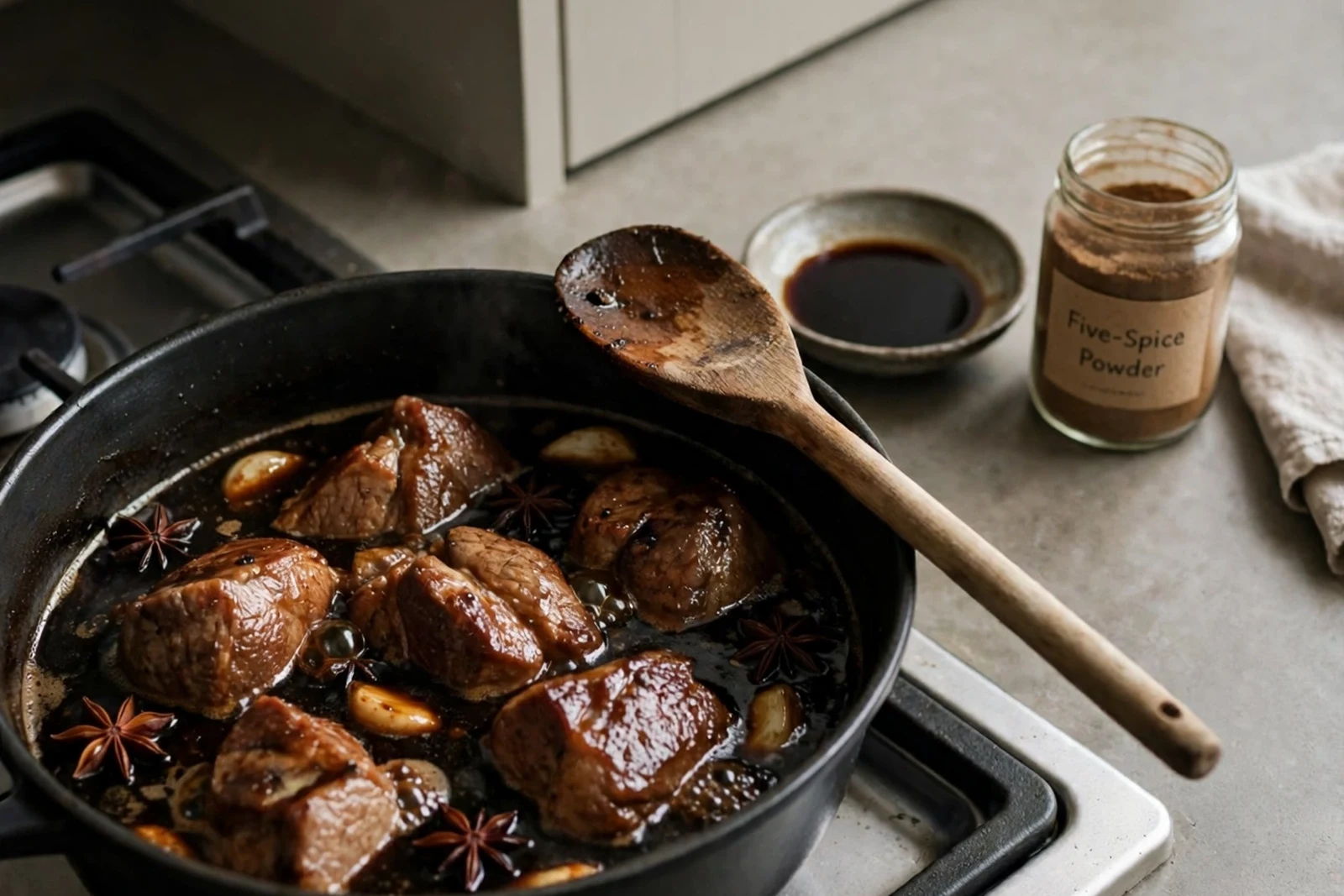
Heat the oil in a heavy pot over medium-high heat and sear the pork chunks on all sides until browned, about 2 minutes per side. Pour in the water or stock, add the star anise, and scrape up the browned bits from the bottom of the pot. Bring it to a simmer, cover, and turn the heat low. Braise 45 to 60 minutes, until a chunk yields easily when pressed with a fork. Lift the pork out and rest it 10 minutes, then slice it about 1/4 inch thick. Meanwhile, turn the heat up under the braising liquid and reduce it to about 1/2 cup of glossy sauce. Taste it before you serve: it should be salty and sweet in balance, and if it comes out too salty, thin it with a spoonful of water at a time. If the pork still feels tough at 45 minutes, give it 15 more minutes with a splash of water in the pot. Shoulder needs time for its connective tissue to soften, and there is no shortcut that keeps it tender.
While the pork rests, fry the crackers. Heat the 1/4 cup of oil in a small pan over medium-high heat until a test square sizzles at once, then fry the wonton squares in batches, 30 to 45 seconds per side, until puffed and golden. Drain them on a wire rack, not paper towels, so they stay crisp. Cook the udon by the package time in a big pot of water, then drain it at once and rinse it briefly under cold water to stop the cooking and wash off the surface starch. Toss the drained noodles with a teaspoon of oil so they do not clump while you build the bowls. Drop the bean sprouts into the same boiling water for 30 seconds, then drain them too.

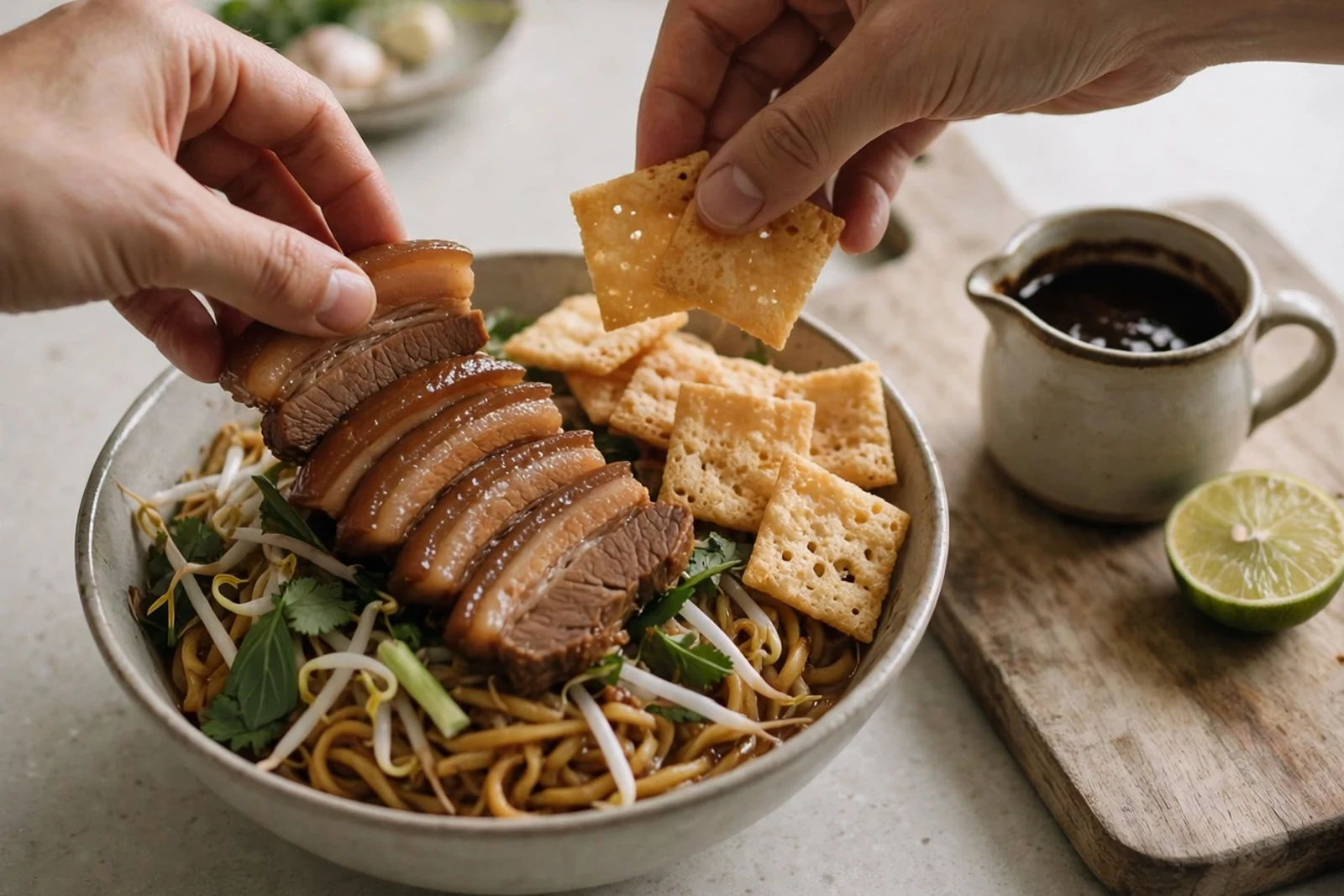
Build each bowl the same way. Divide the noodles among 4 bowls and toss each portion with 2 to 3 tablespoons of the warm sauce, just enough to coat the strands. Lay the pork slices over the top, then add a handful of bean sprouts, torn lettuce, and a generous pile of herbs. Set the fried crackers on top last, and put the lime wedges and chili sauce on the table. Toss the bowl at the table so the sauce reaches every strand, and eat it right away, while the crackers are still crisp. The pork-and-herbs plate in our com tam follows the same logic, grilled pork, herbs, and a small amount of sauce over a base, and the same rule applies: the toppings go on just before eating, never ahead of time.
Troubleshooting: Fix My Cao Lau
Most cao lau problems come from the noodles, the pork, or the sauce measure. Pick the problem that matches your bowl below for a practical next step.
HERB & LIME · KITCHEN HELP
Fix My Cao Lau
Choose what went wrong to see a practical next step.
Possible cause
What to try next
For next time
From Paul's kitchen. Results vary with pork size, noodle brand, and stove heat, adjust timing to your setup.
Quick reference (also works without JavaScript)
The noodles turned soft and mushy
Cause: The noodles cooked past the package time or sat in hot water after draining, and residual heat kept cooking them.
Try: Drain the noodles at once, rinse under cold water for 30 seconds, and toss with a little oil before building the bowls.
Prevent: Set a timer by the package time and have the colander ready before the noodles go into the pot.
The noodles stuck together in a clump
Cause: Too little water concentrates starch on the strands, and skipping the rinse leaves that starch in place.
Try: Loosen the clump under cold running water, drain well, and toss with a teaspoon of oil.
Prevent: Boil in plenty of water, about 5 parts water to 1 part noodles, and rinse after draining.
The pork came out tough
Cause: The pork braised too short a time, so the connective tissue never softened.
Try: Return the pork to the pot with a splash of water and keep simmering on low until a fork presses in easily.
Prevent: Plan 45 to 60 minutes at a low simmer, and check with a fork before slicing.
The sauce came out too salty
Cause: The braising liquid reduced too far, which concentrated the soy sauce and fish sauce.
Try: Thin the sauce with water a spoonful at a time, tasting after each spoonful.
Prevent: Taste the sauce before reducing, and stop reducing while it still tastes a touch under-seasoned.
The bowl turned into soup
Cause: Too much liquid was ladled in, but cao lau is a dry bowl served with only a few spoonfuls of sauce.
Try: Lift the noodles out with tongs into a fresh bowl and add only 2 to 3 tablespoons of sauce.
Prevent: Measure the sauce with a tablespoon and toss it through the noodles before adding the toppings.
Cao Lau: Hoi An Noodles with Pork and Herbs
Ingredients
Method
- Stir the soy sauce, fish sauce, five-spice powder, sugar, and garlic together in a bowl, add the pork chunks, and toss until every piece is coated. Leave for 30 minutes.
- Heat the oil in a heavy pot over medium-high heat and sear the pork on all sides until browned, about 2 minutes per side. Pour in the water or stock, add the star anise, and scrape up the browned bits from the bottom of the pot. Bring to a simmer, cover, and turn the heat low. Braise 45 to 60 minutes, until a chunk yields easily when pressed with a fork. Lift the pork out, rest 10 minutes, then slice about 1/4 inch thick. Reduce the braising liquid over higher heat to about 1/2 cup of glossy sauce.
- Heat the 1/4 cup of oil in a small pan over medium-high heat and fry the wonton squares in batches, 30 to 45 seconds per side, until puffed and golden. Drain on a wire rack. Cook the udon by the package time, drain at once, rinse briefly under cold water, and toss with a teaspoon of oil. Blanch the bean sprouts in the same boiling water for 30 seconds and drain.
- Divide the noodles among 4 bowls and toss each portion with 2 to 3 tablespoons of the warm sauce. Lay the pork slices over the top, add the bean sprouts, lettuce, and herbs, and set the fried crackers on top last. Serve with lime wedges and chili sauce at the table.
Notes
More Vietnamese recipes
Four more from the same shelf: Mi Quang: Vietnamese Turmeric Noodles with Shrimp and Pork is the other central Vietnamese noodle bowl with just a little liquid; Bun Cha: Vietnamese Grilled Pork with Noodles is the Hanoi pork-and-noodle plate with the same five-spice marinade logic; Com Tam: Vietnamese Broken Rice with Grilled Pork is the broken-rice plate for nights when noodles are not on the menu; and Cha Ca La Vong: Vietnamese Turmeric Fish with Dill is the Hanoi turmeric fish served over noodles with dill and peanuts.
From the garden
The Thai basil in this bowl is the easiest part to grow yourself. A pot on a sunny step gives fresh leaves most of the year, and our guide to growing Thai basil in pots covers the pot size and watering that keep one plant going through the season. Mint grows the same way in its own pot, since it spreads fast enough to take over a shared one.
From Paul’s kitchen.