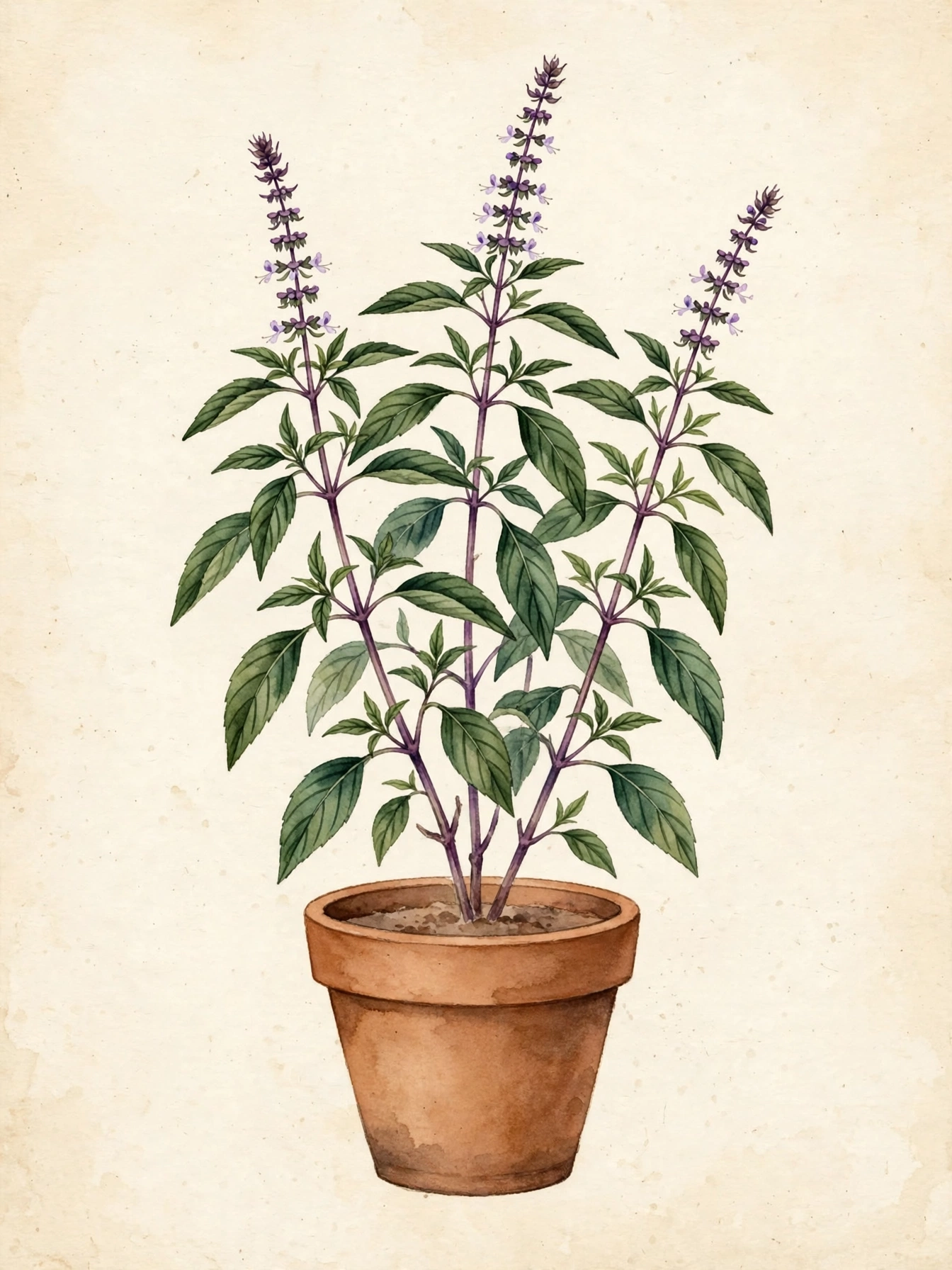
Thai basil (Ocimum basilicum var. thyrsiflora) is the anise-scented basil of Thai stir-fries and Vietnamese pho garnishes — purple stems, narrow glossy leaves, and a licorice-clove perfume that sweet Italian basil can’t imitate. It grows beautifully in containers, as long as you understand one thing: this plant wants heat. Treat it like the tropical herb it is and it will reward you all summer.
A note on how this guide was written: we haven’t grown Thai basil in our own garden yet, so this isn’t a personal growing diary. Everything below comes from university extension research, cited at the bottom.
Thai basil is not holy basil
Worth clearing up, because the names get tangled in recipes: Thai basil (O. basilicum) and holy basil (O. tenuiflorum, the “kaphrao” of true pad kra pao) are different species with different flavors. Holy basil is peppery and clove-like; Thai basil is sweeter, with an anise note. In the U.S., Thai basil is far easier to find as a plant, and most American “Thai basil chicken” recipes use it — which is exactly what our Thai Basil Chicken does. Both are delicious; they’re just not interchangeable if you’re chasing a specific traditional flavor.
The pot and the soil
A 12-inch pot (or larger) per plant is the sweet spot — Thai basil grows 18–24 inches tall and gets bushy. Use a quality potting mix with good drainage; basil hates wet feet. One plant per pot is the rule: crowded basil competes for light and airflow, which invites disease.
Heat, light, and water
Full sun — at least 6 hours a day — and warmth. Thai basil sulks below 50°F and grows fastest when nights stay above 60°F. Don’t rush it outside in spring; wait until the weather is settled and warm. University of Minnesota Extension lists basil as a warm-season annual that should go out only after the danger of frost has passed.
Water consistently so the potting mix stays evenly moist. Containers in full sun dry fast — check daily in summer. Water at the base of the plant rather than overhead; wet leaves encourage fungal problems.
Pinch early, pinch often
This is the single most important technique for basil. Once the plant is about 6 inches tall, pinch the growing tip just above a pair of leaves. Two new stems sprout from that point, and the plant branches instead of shooting straight up. Repeat every couple of weeks. Regular pinching is what turns a leggy seedling into a bushy, productive plant — and it delays flowering, which is exactly what you want (more on that below).
Don’t let it flower
When basil flowers, leaf production drops and the flavor turns bitter. Snip off flower spikes the moment they appear. If a plant gets away from you and flowers heavily, cut it back by a third — it will usually flush out new leaves. Toward the end of the season, you can let one plant flower if you want to save seed, but know that Thai basil crosses readily with other basils, so saved seed may not grow true.
Feeding
Basil is a moderate feeder. A half-strength balanced liquid fertilizer every 2–3 weeks during the growing season keeps container plants productive. Cornell Cooperative Extension notes that over-fertilized basil produces lots of leaves with diluted flavor — steady and light beats heavy and occasional.
Harvesting
Harvest in the morning when the oils are strongest. Take whole stems rather than individual leaves — cut just above a leaf node and the plant branches from that point. Never take more than about a third of the plant at once. Fresh Thai basil wilts fast; use it the day you pick it for the best aroma, or store sprigs in a glass of water on the counter (not the fridge — cold damages basil leaves).
In the kitchen
Thai basil goes in at the end of cooking — heat destroys its perfume, so stir it through off the heat. Our Thai Basil Chicken, Thai Basil Tofu and Green Bean Stir-Fry, and Thai Basil Fried Rice all depend on it.
Sources
- University of Minnesota Extension, “Growing basil in home gardens” — planting time, spacing, pinching, flowering. https://extension.umn.edu/vegetables/growing-basil-home-gardens
- Cornell Cooperative Extension — basil culture and fertilizing guidance. https://cce.cornell.edu/