
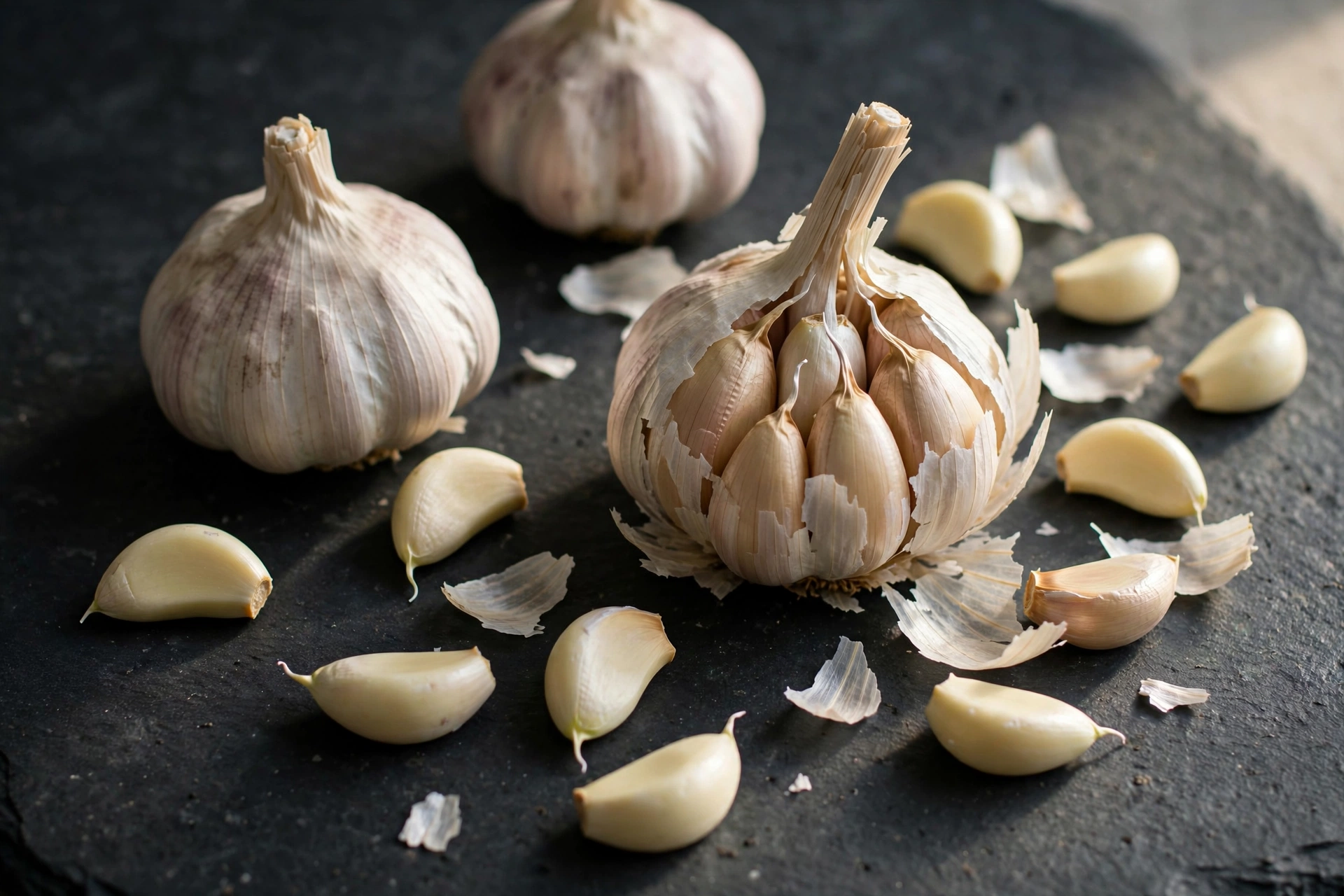
Identity — what it is (1-2 sentences)
Garlic is an allium bulb made up of individual cloves wrapped in papery skin, and the most broadly used aromatic across all of Asian cooking. The softneck type you see in nearly every grocery store keeps longer than hardneck varieties, which grow a woody central stalk (Purdue Extension). In Vietnam it is called *tỏi*.
Taste — flavor profile
Raw garlic is pungent, sharp, and sulfurous — the bite comes from compounds that form the moment a clove is cut or crushed. The finer it is chopped, the stronger its flavor (South Dakota State Extension). Cooking transforms it completely: gently sautéed garlic turns sweet, mellow, and nutty, while slow-roasted cloves become soft and caramel-like. Push it too far, though, and it turns bitter — browned garlic is the most common way a stir-fry goes wrong.
In the Kitchen — how it's used in pan-Asian cooking
Garlic is the opening move in countless Asian dishes. Alongside ginger, it is typically the first thing into a hot wok: sliced, smashed, or minced cloves bloom in oil for seconds before anything else is added, so the whole dish carries its fragrance. Vietnamese cooks pound garlic into marinades and dipping sauces; Chinese kitchens smash it into dumpling fillings and soups; Thai and Korean cooking lean on it for pastes, pickles, and stir-fries.
On herbandlime.com you will meet garlic everywhere: it deepens the broth in Hot and Sour Soup and Wonton Soup, gives Oi Muchim (Korean Spicy Cucumber Salad) its raw kick, and seasons the turmeric-scented noodles and toppings of Mì Quảng.
Working with it: Smash cloves with the flat of a knife to loosen the skin and release flavor, then slice, mince, or press to the texture the recipe asks for. For stir-fries, add garlic after ginger and before anything watery, and keep it moving — pale gold is perfect, dark brown is bitter.
Buying — how to choose at the store
Choose bulbs that feel heavy for their size with tight, dry, unbroken skins and firm, closed cloves (Purdue Extension; UC Agriculture and Natural Resources). Skip any bulb with green sprouts growing from it, soft or moldy spots, or loose, shriveled cloves — light-weight bulbs often have dried-out or decayed cloves inside. Purple- or red-striped skins are just varietal color, not a flaw.
Storage
Keep whole, unbroken bulbs in a cool, dry, dark spot with good airflow — a mesh bag in a pantry or cupboard is ideal — where they keep for weeks (Purdue Extension advises against refrigerating whole bulbs, which encourages sprouting). Once broken into cloves, peel and refrigerate them in a covered container; they stay firm for several weeks (UGA Extension). For longer storage, freeze chopped garlic in a sealed bag or freeze peeled cloves whole and grate off what you need (UC ANR).
Substitutes — 2-3 substitutes with brief context each
- Shallots: The closest one-for-one swap in cooked dishes — milder and slightly sweeter than garlic, with a similar allium depth. Use roughly one medium shallot where two or three cloves would go.
- Garlic powder: Serviceable in marinades, rubs, and soups where texture doesn’t matter. A small pinch stands in for a clove; it lacks fresh garlic’s pungency but keeps the savory backbone.
- Elephant garlic: A leek relative with very large cloves and a mild, sweet garlic flavor. Use more of it than you would true garlic — it’s gentle enough that it rarely overpowers.
Where to Buy
- Well-stocked supermarkets
- Farmers markets
- Asian grocery stores
What to look for
Pick heads that feel heavy and firm with tight, papery skin. Bigger cloves are easier to peel and usually milder.
What to avoid
Avoid soft heads, green sprouts shooting through the cloves, or any musty smell — sprouted garlic tastes bitter.