
Few soups earn their name the way hot and sour soup does. The first spoonful lands bright with vinegar, then comes the slow warmth of white pepper, and somewhere in between there’s the gentle silkiness of egg ribbons and soft tofu floating through a lightly thickened broth. It’s the soup that Chinese restaurants seem to have on permanent rotation, and for good reason — the flavor combination is bold, comforting, and hard to get tired of.
This version leans on the classic lineup: wood ear mushrooms and shiitake for earthy depth, bamboo shoots for a little bite, tofu for softness, and beaten eggs stirred in at the end for those delicate ribbons. Chinkiang black vinegar gives the “sour” its rounded, mellow tang (rice vinegar works in a pinch, but the dark vinegar is what makes it taste like the restaurant bowl). White pepper brings the “hot” — it’s sharper and more floral than black pepper, and it’s the non-negotiable spice here.
The whole thing comes together in about 35 minutes with mostly pantry ingredients. If you keep dried mushrooms and a bottle of black vinegar around, you’re never far from a pot of this.
Ingredients
For the broth:
- 6 cups low-sodium chicken broth (vegetable broth works for a vegetarian version)
- 2 tablespoons Chinkiang black vinegar, plus more to taste
- 2 tablespoons low-sodium soy sauce
- 1 tablespoon cornstarch dissolved in 3 tablespoons cold water (the slurry)
For the filling:
- 8 oz firm tofu, cut into 1/4-inch strips
- 1/2 cup dried wood ear mushrooms, rehydrated and thinly sliced (about 1 cup once soaked)
- 4 dried shiitake mushrooms, rehydrated and thinly sliced
- 1/2 cup canned bamboo shoots, julienned
- 2 large eggs, beaten
- 2 scallions, thinly sliced (whites and greens separated)
Seasoning:
- 1 1/2 teaspoons ground white pepper
- 1 teaspoon toasted sesame oil
- 1/2 teaspoon kosher salt, plus more to taste
- 1/2 teaspoon sugar
- 1 teaspoon grated fresh ginger

How to Make Hot and Sour Soup
- Prep the mushrooms. Place the dried wood ear and shiitake mushrooms in separate bowls and cover with hot water. Let them soak for 20 to 30 minutes, until fully softened. Squeeze out the excess water, trim away any tough stems, and slice thinly. (If you’re short on time, fresh shiitakes and pre-sliced wood ears from the produce aisle skip this step entirely.)
- Start the broth. Bring the chicken broth to a boil in a large pot or Dutch oven over medium-high heat. Stir in the ginger, soy sauce, salt, and sugar.
- Add the vegetables and tofu. Add the sliced mushrooms, bamboo shoots, and tofu strips to the pot. Reduce the heat to medium and let it simmer for 8 to 10 minutes, until the bamboo shoots have softened slightly and the flavors have started to meld.
- Thicken the soup. Give the cornstarch slurry a quick stir (cornstarch settles fast), then drizzle it into the simmering soup while stirring constantly. Let the soup come back to a gentle boil for 1 to 2 minutes until the broth turns lightly glossy and coats the back of a spoon.
- Add the sour. Stir in the black vinegar. Taste and adjust — hot and sour soup should be noticeably tangy. If your vinegar is mild or you like a bolder sour note, add another teaspoon or two.
- Make the egg ribbons. With the soup at a gentle simmer (not a rolling boil), slowly drizzle the beaten eggs into the pot while stirring the soup in slow circles with a chopstick or spoon. The eggs will set into soft, feathery ribbons almost immediately.
- Finish and serve. Turn off the heat. Stir in the white pepper, sesame oil, and the scallion whites. Ladle into warm bowls, top with the scallion greens, and serve right away.

Tips for the Best Hot and Sour Soup
Use white pepper, not black. This is the single biggest factor in getting the flavor right. White pepper has a sharp, almost floral heat that defines the soup’s “hot.” Black pepper tastes muddy here. Add it off the heat or right at the end so its punch doesn’t cook off.
Balance the vinegar to your bowl. Different brands of Chinkiang vinegar vary in strength, and some cooks like their soup sharply sour while others prefer it mellow. Start with the listed amount, taste, and add more a teaspoon at a time. The soup should make your mouth water a little — that’s the sign the sour is right.
Don’t skip the cornstarch slurry. The light body is part of the soup’s identity — it helps the seasonings cling to every spoonful and gives the broth that silky restaurant feel. Make sure the soup returns to a simmer after adding it, or the starch won’t fully thicken.
Keep the simmer gentle when adding eggs. A hard boil breaks the egg ribbons into tiny bits. A lazy simmer and slow drizzle gives you long, silky strands instead.
Rehydrate mushrooms properly. Dried wood ears triple in size and go from crunchy to pleasantly chewy once soaked. Rinse them well after soaking — they can hold onto grit. Save the shiitake soaking liquid and strain it into the broth for extra depth if you like.
Variations Worth Trying
- Vegetarian: Swap the chicken broth for a good vegetable broth and add a splash of extra soy sauce for depth. The soup loses nothing.
- Add pork: Many restaurant versions include thin strips of pork. Add 4 oz of julienned pork tenderloin with the mushrooms in step 3 and simmer until cooked through.
- Extra vegetables: Lily buds (golden needles) are traditional and add a lovely texture — soak them with the mushrooms. Napa cabbage or baby bok choy, shredded, also work well.
- Spicier: A drizzle of chili oil at the table lets everyone set their own heat level without changing the soup’s character.
What to Serve With It
This soup is filling enough to stand on its own for a light lunch, but it also makes a great opening act for a bigger spread. Pair it with something crisp and simple — fans of the Bok Choy and Mushroom Soup will find a lighter vegetable broth there, and for a full soup-themed evening, Tom Yum Soup with Shrimp brings a completely different kind of sour heat to the table. Steamed jasmine rice on the side turns the bowl into a proper dinner.
Storage
Hot and sour soup keeps well in the refrigerator for up to 3 days in a sealed container. The broth may thicken as it sits — thin it with a splash of water or broth when reheating. Reheat gently on the stove rather than microwaving, which can make the egg ribbons rubbery. The vinegar flavor mellows over time, so taste and add a small splash of fresh vinegar after reheating. Freezing isn’t ideal; the tofu turns spongy and the broth can separate.
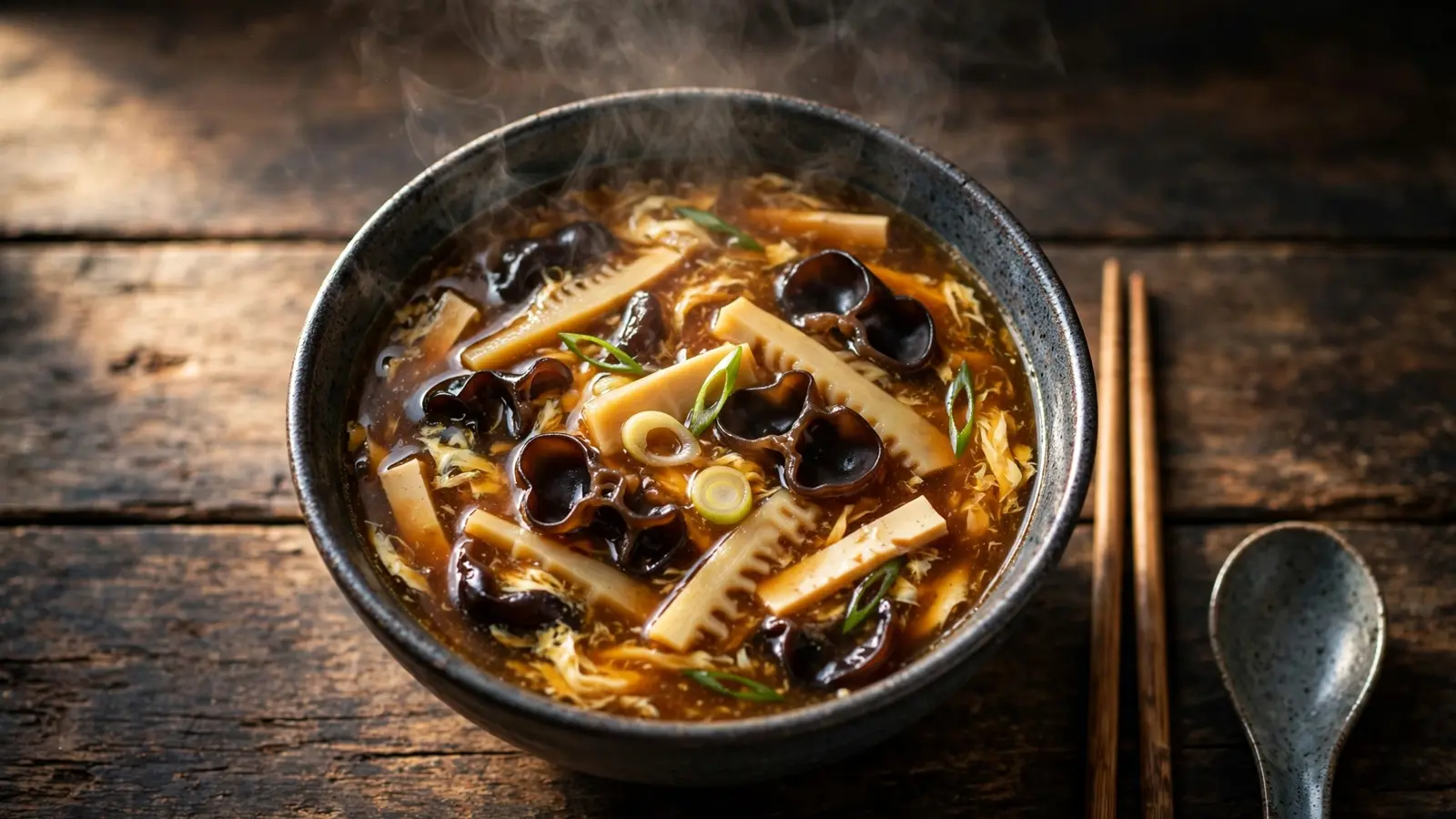
Hot and Sour Soup (Suan La Tang)
Ingredients
Method
- Place the dried wood ear and shiitake mushrooms in separate bowls and cover with hot water. Let them soak for 20 to 30 minutes, until fully softened. Squeeze out the excess water, trim away any tough stems, and slice thinly.
- Bring the chicken broth to a boil in a large pot or Dutch oven over medium-high heat. Stir in the ginger, soy sauce, salt, and sugar.
- Add the sliced mushrooms, bamboo shoots, and tofu strips to the pot. Reduce the heat to medium and let it simmer for 8 to 10 minutes, until the bamboo shoots have softened slightly and the flavors have started to meld.
- Give the cornstarch slurry a quick stir (cornstarch settles fast), then drizzle it into the simmering soup while stirring constantly. Let the soup come back to a gentle boil for 1 to 2 minutes until the broth turns lightly glossy and coats the back of a spoon.
- Stir in the black vinegar. Taste and adjust until the soup is noticeably tangy. If your vinegar is mild or you like a bolder sour note, add another teaspoon or two.
- With the soup at a gentle simmer (not a rolling boil), slowly drizzle the beaten eggs into the pot while stirring the soup in slow circles with a chopstick or spoon. The eggs will set into soft, feathery ribbons almost immediately.
- Turn off the heat. Stir in the white pepper, sesame oil, and the scallion whites. Ladle into warm bowls, top with the scallion greens, and serve right away.
2 thoughts on “Hot and Sour Soup: The Classic Chinese Takeout Bowl, Made at Home”