
Identity — what it is (1-2 sentences)
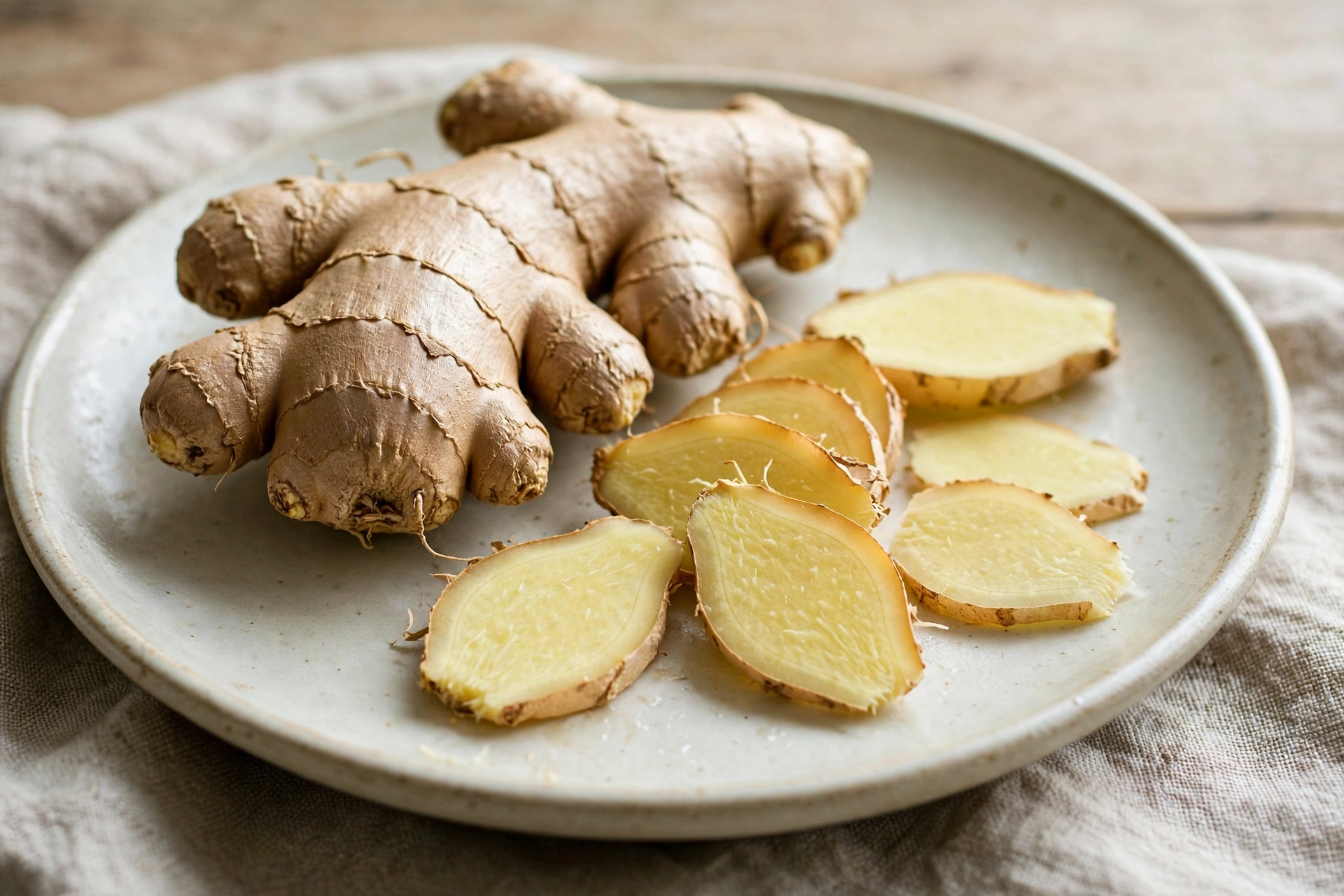
Ginger is the knobby underground stem — a rhizome, not a root — of a tropical plant in the same family as turmeric and galangal. It is called *gừng* in Vietnam and *khing* in Thailand, and it is one of the handful of aromatics that appears in Chinese, Japanese, Vietnamese, and Thai cooking alike.
Taste — flavor profile
Fresh ginger is warm, peppery, and bright, with a citrusy lift and a clean heat that tingles more than it burns. The warmth comes from gingerols, which mellow with long cooking and sharpen when dried — dried ground ginger tastes distinctly spicier and less fresh than the root (Health Insights review of gingerol/shogaol chemistry). Young, thin-skinned ginger is milder and juicier; older, thick-skinned pieces are more fibrous and pungent.
In the Kitchen — how it's used in pan-Asian cooking
Ginger plays three roles: aromatic base, bright garnish, and palate cleanser.
As an aromatic, it partners with garlic at the start of Chinese stir-fries and goes into simmered broths, where its warmth rounds out richness. It shows up in our Hot and Sour Soup and Wonton Soup for exactly that reason — a little grated ginger keeps a rich broth from feeling heavy. In Vietnamese cooking, charred or fresh ginger is part of the spice backbone of Phở Gà (Chicken Pho), where it perfumes the clear broth. In Japanese cooking, ginger turns up pickled — the sweet pink slices served with sushi — and grated fresh over dishes like Japanese Cucumber Sunomono, where its bite cuts the sweet vinegar dressing.
Sliced or steeped in hot water, it also makes a simple, warming tea — pleasant on its own or combined with lemongrass and mint.
Working with it: Peel with the edge of a spoon — it navigates the knobby bumps better than a knife. Grate it for even distribution in sauces and broths, julienne it for stir-fries where you want visible strands, or slice it thin for simmering and tea.
Buying — how to choose at the store
Pick pieces that feel firm and heavy with smooth, taut, light-brown skin and a spicy, fresh smell (Markon produce guide). Choose pieces with minimal knots for easier peeling. Avoid anything shriveled, soft, wrinkled, or moldy in the crevices — those are signs it is past its peak. Skin thin enough to scrape with a fingernail usually means a younger, juicier piece.
Storage
Keep whole, unpeeled ginger in a resealable bag with the air pressed out, in the crisper drawer of the refrigerator — it keeps for weeks (Texas A&M AgriLife Extension; Food52). If you have cut or peeled it, blot the cut surface dry first, since moisture shortens its life. For long-term storage, freeze the whole unpeeled root in a sealed bag; frozen ginger grates more easily than fresh, so there is no need to thaw it before use (Food52).
Substitutes — 2-3 substitutes with brief context each
- Galangal: Ginger’s closest relative and the natural swap in Thai and Southeast Asian dishes. It is sharper, more piney, and less sweet — excellent in curries and soups, but it will change the dish’s character.
- Dried ground ginger: Works in cooked dishes like marinades and braises where the ginger steeps or melts in. Use it sparingly — it is hotter and lacks the fresh, juicy brightness of the root.
- Lemon zest: In soups and teas where ginger mainly contributes brightness rather than heat, a strip of lemon zest captures some of the citrusy lift. It is not a flavor match, but it keeps the dish from tasting flat.
Where to Buy
- Well-stocked supermarkets
- Asian grocery stores
- Farmers markets
What to look for
Look for firm, smooth skin that snaps cleanly when you break a piece. Fresh-cut ginger should smell sharp and citrusy.
What to avoid
Avoid wrinkled, soft, or moldy pieces — old ginger turns fibrous and loses its heat.