
Identity — what it is (1-2 sentences)
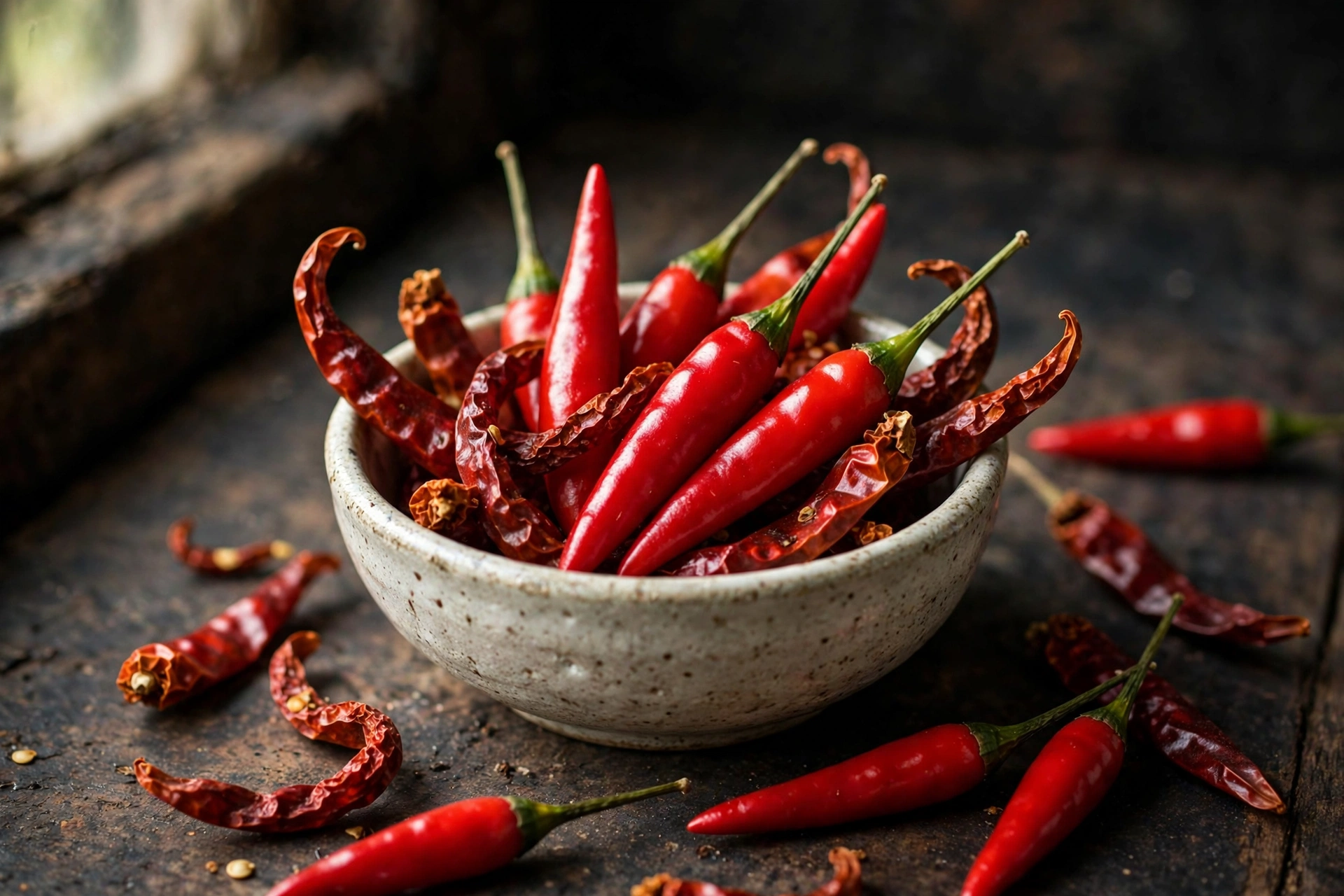
Chili peppers are the fruits of Capsicum plants, ranging from mildly warm to fiercely hot, and they show up fresh, dried, and ground across pan-Asian cooking. The tiny bird's eye chili — ớt hiểm in Vietnamese, prik khi nu in Thai — is one of the most important: small, thin-walled, and surprisingly intense.
Taste — flavor profile
Heat is the main event: the compound capsaicin is what makes chilies burn, and the more capsaicin a pepper carries, the hotter it tastes. But chilies aren't one-note — fresh ones also have green, almost fruity flavors, while dried chilies develop smoky, raisin-like depth. Bird's eye chilies hit fast and sharp; larger peppers like jalapeños are broader and grassier. Contrary to popular belief, most of the heat lives in the white pithy membrane inside the pepper (the placenta), not the seeds — scraping out the membrane is what actually tames a chili.
In the Kitchen — how it's used in pan-Asian cooking
In Vietnamese kitchens, fresh bird's eye chilies are sliced into nước mắm dipping sauce to give it its signature sting, and a dish of plain sliced chilies often sits on the table so each person can dial in their own heat. They're also pounded into chili salt or simmered into chili oil. In Thai cooking, prik khi nu is essential — whole, sliced, or pounded into pastes for everything from curries to salads. Our Vietnamese Green Papaya Salad gets its characteristic bite from fresh chilies pounded into the dressing. Korean cooking leans on chili flakes (gochugaru) and fresh chilies alike — the gentle heat in our Oi Muchim, the Korean cucumber salad, comes from Korean chili flakes. Central Vietnamese dishes like Mì Quảng are traditionally served with fresh chilies on the side.
Buying — how to choose at the store
Look for chilies with deep, vivid color and glossy, taut skin, avoiding any with shriveling, soft spots, or blemishes. Fresh-looking green stems are a good sign. Generally, smaller chilies pack more heat per bite than larger ones, since larger peppers have more mild flesh diluting the capsaicin. If you're unsure how hot a variety is, buy a few extra and taste a tiny sliver — it's the fastest way to calibrate. Dried chilies should be pliable and deeply colored, not faded or brittle. When chopping hot chilies, wash your hands well afterward and keep them away from your eyes.
Storage
Fresh chilies keep in the refrigerator for about a week to ten days; store them dry in a bag or container, and wash only right before using, since moisture speeds up spoilage. They freeze very well — whole or sliced, sealed in a freezer bag — and keep their flavor and heat for months, though they'll lose their crisp texture (fine for cooked dishes). Dried chilies and chili flakes last around a year in an airtight container kept away from direct sunlight and heat.
Substitutes — 2-3 substitutes with brief context each
- Serrano or jalapeño peppers: Widely available fresh and easy to find. They’re milder and grassier than bird’s eye chilies, so slice them thin and use a bit more to reach the same heat.
- Dried Thai chili flakes or crushed red pepper: A good pantry stand-in when fresh chilies aren’t around. They bring heat but a slightly different, drier flavor — best in cooked dishes, dipping sauces, and marinades.
- Gochugaru (Korean chili flakes): For Korean-style dishes like oi muchim, this is the authentic choice — fruity, mild-to-medium heat, and vivid red color. Don’t use it interchangeably with Thai chilies in Vietnamese or Thai recipes, where the sharper bite matters.
Where to Buy
- Asian grocery stores
- Farmers markets
- Well-stocked supermarkets
- Grow your own
What to look for
Look for glossy, firm peppers with bright color and fresh green stems. For Thai cooking, small bird’s eye chilies bring the classic heat.
What to avoid
Avoid soft, wrinkled, or mold-flecked peppers. When in doubt about heat, start with less — you can always add more.