
Identity — what it is
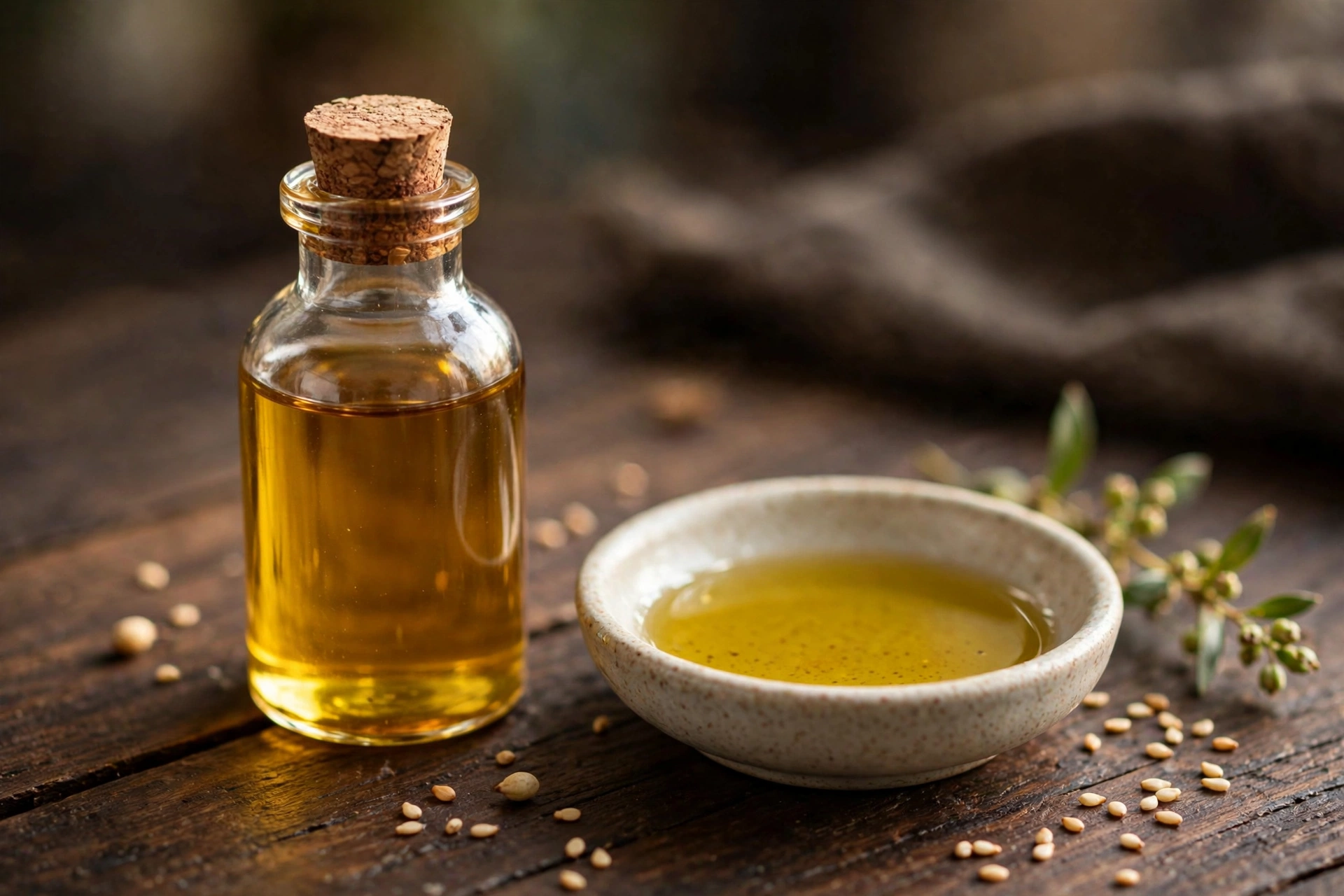
Toasted sesame oil is oil pressed from sesame seeds that have been roasted before pressing, which gives it a deep amber color and an intense nutty aroma. It is called dầu mè in Vietnam and chamgireum in Korea. Do not confuse it with pale, untoasted sesame oil — that is a neutral cooking oil, while the toasted version is a finishing seasoning used by the teaspoon, not the cup.
Taste — flavor profile
Toasted sesame oil tastes rich, nutty, and deeply aromatic — a few drops perfume an entire dish. It is much more assertive than the seeds themselves, with a roasted warmth that reads almost meaty in savory cooking. Because the flavor comes from the roasting, it has a relatively low smoke point: heated hard, it turns bitter instead of fragrant, which is why it goes in at the end.
In the Kitchen — how it’s used in pan-Asian cooking
Think of toasted sesame oil as a seasoning, not a cooking oil. Korean cooks drizzle it into the dressing for oi muchim, the spicy cucumber salad, where its nuttiness rounds out the chili heat, and it finishes bibimbap, soups, and marinated vegetables across Korean cooking. Chinese kitchens swirl a few drops into wonton soup just before serving, where it floats on the surface and hits your nose before the spoon reaches your mouth. It also goes into dipping sauces and cold noodle dressings, where there is no hot oil to carry flavor and the sesame has to do the work itself.
The rule is simple: add it off the heat, at the end, and taste as you go — you can always add another drop, but you cannot take one back.
Buying — how to choose at the store
Look for bottles labeled “toasted” or “roasted” sesame oil — the dark amber color is the giveaway. The ingredient list should say 100% sesame; blends cut with soybean or other oils taste muted. Because it goes rancid faster than neutral oils, buy small bottles rather than economical jugs, and prefer dark glass or tins that block light.
Storage
Keep it in a cool, dark cupboard away from the stove, tightly capped. For the longest life, refrigerate after opening — it may turn cloudy when cold, but that clears at room temperature and does not affect flavor. Give it a sniff before using: fresh toasted sesame oil smells intensely nutty, while rancid oil smells flat, crayon-like, or stale. Most bottles are at their best within six months of opening.
Substitutes — 2-3 substitutes with brief context each
- Perilla oil — the Korean cousin with a similar nutty-grassy character; the most natural swap in Korean dishes.
- Neutral oil plus toasted sesame seeds — warm a spoonful of neutral oil gently and stir in crushed toasted sesame seeds; it approximates the aroma in dressings and finishing drizzles.
- Peanut oil (roasted) — a different nutty note, but it supplies a similar aromatic richness in stir-fry finishing and dipping sauces.