
Ayam goreng is the fried chicken I make when I want spice flavor all the way through the meat. The chicken simmers in a turmeric and coriander paste first, so it comes out of the pot already seasoned and cooked through, and a short fry at the end gives it a crisp, golden crust. It takes about 50 minutes from the first shallot to the table, and it feeds four with rice.

What is ayam goreng?
Ayam goreng is Indonesian fried chicken built on a spice paste, usually called bumbu, rather than a flour coating. Shallots, garlic, fresh turmeric, galangal, lemongrass, and coriander are pounded or blended into a paste, the chicken is coated in it, and the chicken is simmered in that paste before it ever meets hot oil. The result tastes warm and earthy from the turmeric, lightly citrusy from the lemongrass, and savory from the salt and garlic, with no sweet glaze on top.
That simmer-first method is what sets it apart from the fried chickens it often gets grouped with. Japanese karaage marinates in soy, sake, and ginger, then gets a starch coating and a single fry. Korean yangnyeom gets fried twice and tossed in a sweet and spicy sauce. Ayam goreng has no starch coating and no sauce coating, so the paste itself has to carry the flavor, and the simmer is what drives it into the meat.
The spice paste ratio I use every time
Most ayam goreng pastes fail in one of two ways: too much turmeric, which turns bitter and stains everything yellow, or too little salt, which leaves the chicken tasting flat no matter how long it simmers. The ratio that keeps this version balanced is 6 shallots to 4 garlic cloves to 1 tablespoon of fresh grated turmeric, with 1 tablespoon of ground coriander and 1 tablespoon of grated galangal to back them up. For 2 pounds of chicken, that gives you about 3/4 cup of paste, enough to coat every piece thickly and still leave a spoonful clinging to the pot for the simmer.
Blend the paste with just 2 tablespoons of water, no more. A thin, watery paste slides off the chicken in the pot and never thickens into the coating you want. A thick paste clings, and as the simmer reduces it, it turns into a dark, fragrant layer that fries up into little crisp bits alongside the chicken. If your blender stalls, add water a teaspoon at a time and scrape down the sides between pulses.

Simmer first, then fry at 350°F
After coating the chicken, let it sit in the paste for 15 minutes, then add it to a pot with the lemongrass, bay leaves, and 1/2 cup of water. Cover the pot and simmer on low heat for 15 minutes, turning the pieces once halfway through. The chicken should be cooked through at this point, and most of the liquid should have reduced to a thick paste clinging to the pieces. Lift the chicken out and let it sit on a rack for 5 minutes so the surface dries a little, which helps the crust form in the oil.
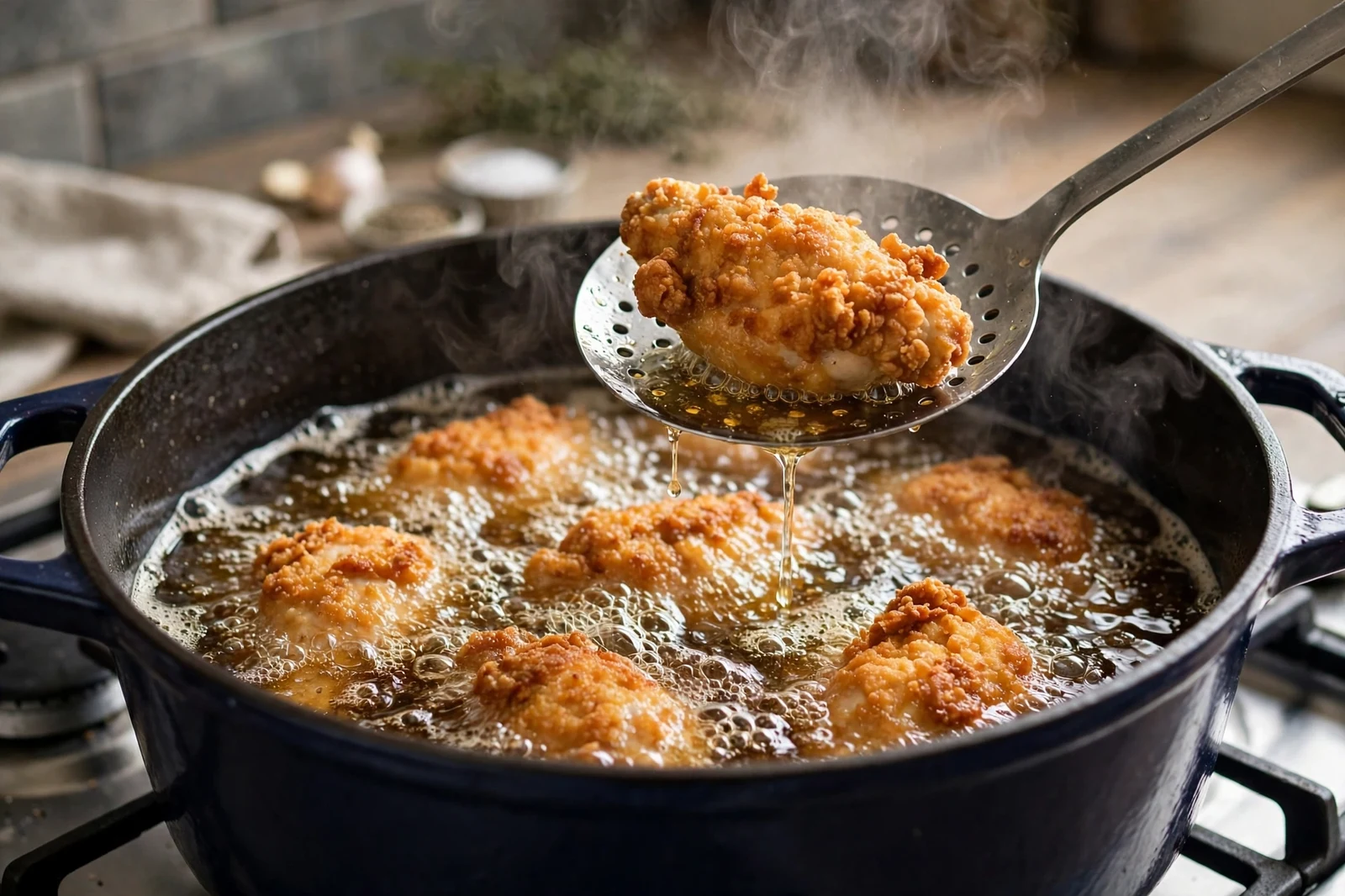
Heat neutral oil in a deep, heavy pot to 350°F and fry the chicken in two batches, about 5 minutes per batch, until the outside turns deep golden and crisp. Because the chicken is already cooked, this fry is only about the crust, so you can pull a piece as soon as it looks right instead of guessing about doneness. Drain each batch on a wire rack, not on paper towels, so steam can escape and the crust stays crisp while the second batch fries.

Frying without burning the paste
The same paste that gives ayam goreng its flavor is also the part most likely to burn. Turmeric and garlic darken fast in hot oil, so before the chicken goes into the pot, wipe off any thick clumps of paste hanging from the pieces and leave only a thin layer behind. The thick clumps will fall off in the oil anyway, sink, and scorch, and scorched bits give the whole pot a bitter taste.
Save the paste left in the simmering pot instead of throwing it out. Fry a spoonful of it in a small dry pan for 1 to 2 minutes until it turns crisp and fragrant, then scatter it over the finished chicken. It adds crunch and a second hit of spice, and it uses the part of the dish that most cooks wash down the drain. Keep the heat at medium for this step and pull the pan off the heat as soon as the paste smells toasted, since it goes from fragrant to burnt in under a minute.
Troubleshooting: Fix My Ayam Goreng
Most ayam goreng trouble comes from the paste or the oil temperature, and both are easy to correct on the next round. Pick what went wrong below for a concrete next step.
HERB & LIME · KITCHEN HELP
Fix My Ayam Goreng
Choose what went wrong to see a practical next step.
Possible cause
What to try next
For next time
From Paul's kitchen. Results vary with chicken size, oil, and stove heat, adjust timing to your setup.
Quick reference (also works without JavaScript)
The coating falls off in the oil
Cause: Thick clumps of paste do not stick to wet chicken skin, so they slide off as soon as the pieces hit hot oil.
Try: Lift out any loose paste with a slotted spoon so it does not scorch, and serve the chicken as it is, since the simmer already seasoned the meat.
Prevent: Let the simmered chicken rest on a rack for 5 minutes so the surface dries, and wipe off thick clumps, leaving only a thin layer of paste on each piece before frying.
The chicken is dry inside
Cause: Frying already simmered chicken for too long dries out the meat, since the simmer already cooked it through.
Try: Slice the thickest piece to check, and serve the moist pieces first, saving any dry pieces for fried rice or noodle soup the next day.
Prevent: Treat the fry as a crust step only, about 5 minutes per batch at 350°F, and pull each piece as soon as it turns deep golden.
The skin is not crisp
Cause: Steam trapped under or around the chicken softens the crust right after frying.
Try: Set the chicken on a wire rack in a single layer and leave it uncovered for a few minutes, so air can dry the crust again.
Prevent: Drain every batch on a wire rack, never on paper towels, and never stack the pieces while they are still hot.
The spice paste burns
Cause: Turmeric and garlic in the paste darken fast in hot oil, and loose paste that sinks to the bottom of the pot scorches first.
Try: Scoop out any dark bits from the oil at once, and lower the heat a little before the next batch goes in.
Prevent: Wipe thick clumps off the chicken before frying, keep the oil at 350°F with a thermometer, and fry the leftover paste separately in a small dry pan where you can watch it.
The chicken tastes too greasy
Cause: Oil below 325°F lets the chicken soak up fat instead of crisping, which usually happens when the pot is crowded or the thermometer is missing.
Try: Rest the chicken on a wire rack so excess oil can drip away, and blot only the underside lightly if needed.
Prevent: Heat the oil to 350°F before the first piece goes in, fry in two batches with space between the pieces, and let the oil recover its heat between batches.
Ayam Goreng: Indonesian Fried Chicken
Ingredients
Method
- Blend the shallots, garlic, turmeric, galangal, and ground coriander with 2 tablespoons of water until smooth and thick. Add water a teaspoon at a time only if the blender stalls, and scrape down the sides between pulses.
- Put the chicken in a bowl, season with the salt, and rub the spice paste over every piece until thickly coated. Let it sit for 15 minutes.
- Move the chicken and all of the paste to a heavy pot. Add the lemongrass, bay leaves, and 1/2 cup of water. Cover and simmer on low heat for 15 minutes, turning the pieces once halfway through, until the chicken is cooked through and the liquid has reduced to a thick paste clinging to the pieces.
- Lift the chicken onto a wire rack and let it sit for 5 minutes so the surface dries a little. Wipe off any thick clumps of paste, leaving only a thin layer on each piece.
- Heat neutral oil in a deep, heavy pot to 350°F. Fry the chicken in two batches, about 5 minutes per batch, until deep golden and crisp. Drain each batch on a wire rack.
- If you like, fry a spoonful of the leftover paste from the pot in a small dry pan over medium heat for 1 to 2 minutes until crisp and fragrant, then scatter it over the chicken. Serve at once with rice, cucumber, and sambal.
Notes
What to serve with it
Steamed jasmine rice is the standard partner, with sliced cucumber for cool crunch and sambal on the side for heat. That trio covers the whole plate: rice for bulk, cucumber for freshness, sambal for anyone who wants more fire than the paste itself gives. For a second main on the same table, Indonesian Nasi Goreng makes a good partner when you have leftover rice, and a bowl of Laksa turns the meal into a full Indonesian spread for a weekend dinner. Keep the sambal in its own bowl, since some people at the table will want none and others will want a lot.
More Indonesian recipes
Three more from the same shelf: Soto Ayam: Indonesian Chicken Soup is the chicken soup for nights you want something lighter; Sayur Lodeh: Indonesian Vegetable Curry is the coconut vegetable curry that pairs well with the same rice and cucumber; and Indonesian Nasi Goreng is the fried rice plate for using up leftover rice the next day.