
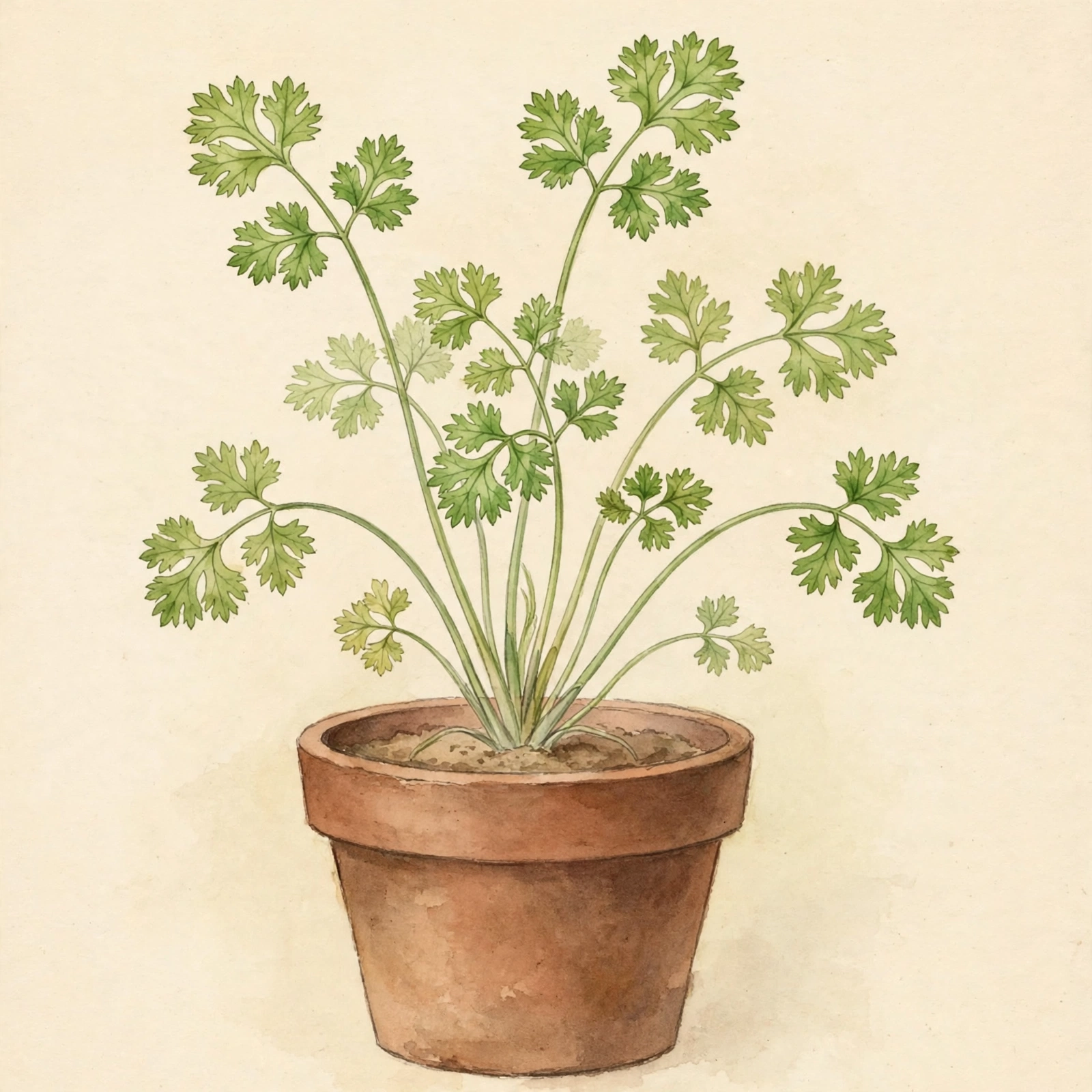
Cilantro is the diva of the herb garden: glorious for a few weeks, then — at the first hint of real heat — it bolts, flowers, and checks out. The trick isn’t fighting that cycle; it’s planning around it. Grown as a cool-season crop with succession sowing, cilantro gives you steady harvests in spring and fall, and a container makes the whole strategy easier.
A note on how this guide was written: we haven’t grown cilantro in our own garden yet, so this isn’t a personal growing diary. Everything below comes from university extension research, cited at the bottom.
Timing is everything
Cilantro is a cool-season annual. Utah State University Extension recommends sowing it in early spring, as soon as the soil can be worked — it germinates in cool soil and grows best before summer heat arrives. Once daytime temperatures regularly exceed the mid-70s°F, cilantro bolts. In hot-summer climates, treat cilantro as a spring and fall crop and don’t bother fighting July.
For fall harvests, sow again in late summer so plants mature in cooling weather. Timing is relative to your local frost dates — there’s no single planting month that works everywhere, so count back from your first fall frost.
The succession trick
Because each plant’s productive life is short, sow a new small batch every 2–3 weeks during the cool seasons. By the time the first sowing bolts, the next is ready to harvest. A wide, shallow container (or several small pots) works perfectly for this — dedicate one pot per sowing and rotate through them.
Container specifics
Cilantro grows a taproot and resents transplanting, so sow directly in the final container. A pot at least 8–10 inches deep gives the taproot room; wider is better for succession sowings. Use a quality potting mix, sow seeds about ¼ inch deep, and keep the mix consistently moist until germination (7–10 days). Thin seedlings to a few inches apart — crowded cilantro stays small and bolts faster.
Light and water
Full sun in spring and fall; in warm weather, afternoon shade delays bolting. Utah State notes that heat is the trigger, so anything that keeps the roots cool helps: a light-colored pot, mulch on the surface, and consistent watering. Let the top inch of mix dry between waterings, but don’t let the pot dry out completely — drought stress also triggers bolting.
Harvesting
Start harvesting when plants are about 6 inches tall, taking outer stems first. Like basil, cut above a leaf node — but cilantro doesn’t branch as enthusiastically, which is why succession sowing matters more than pinching. Harvest in the morning for the best flavor, and use it fresh: cilantro loses its punch quickly once picked.
When a plant bolts, don’t mourn it — let it flower. The flowers attract beneficial insects, and the seeds are coriander: let them dry on the plant, collect them, and you’ve got next season’s sowing (plus a spice jar).
In the kitchen
Cilantro is the fresh finish on so much Vietnamese and Thai cooking — pho garnishes, spring rolls, larb, salads. Our Vietnamese Chicken Cabbage Salad and Chicken Larb with Mint and Lime both use it generously.
Sources
- Utah State University Extension, “Cilantro in the Garden” — cool-season timing, sowing depth, bolting. https://extension.usu.edu/vegetableguide/cilantro