
Identity — what it is
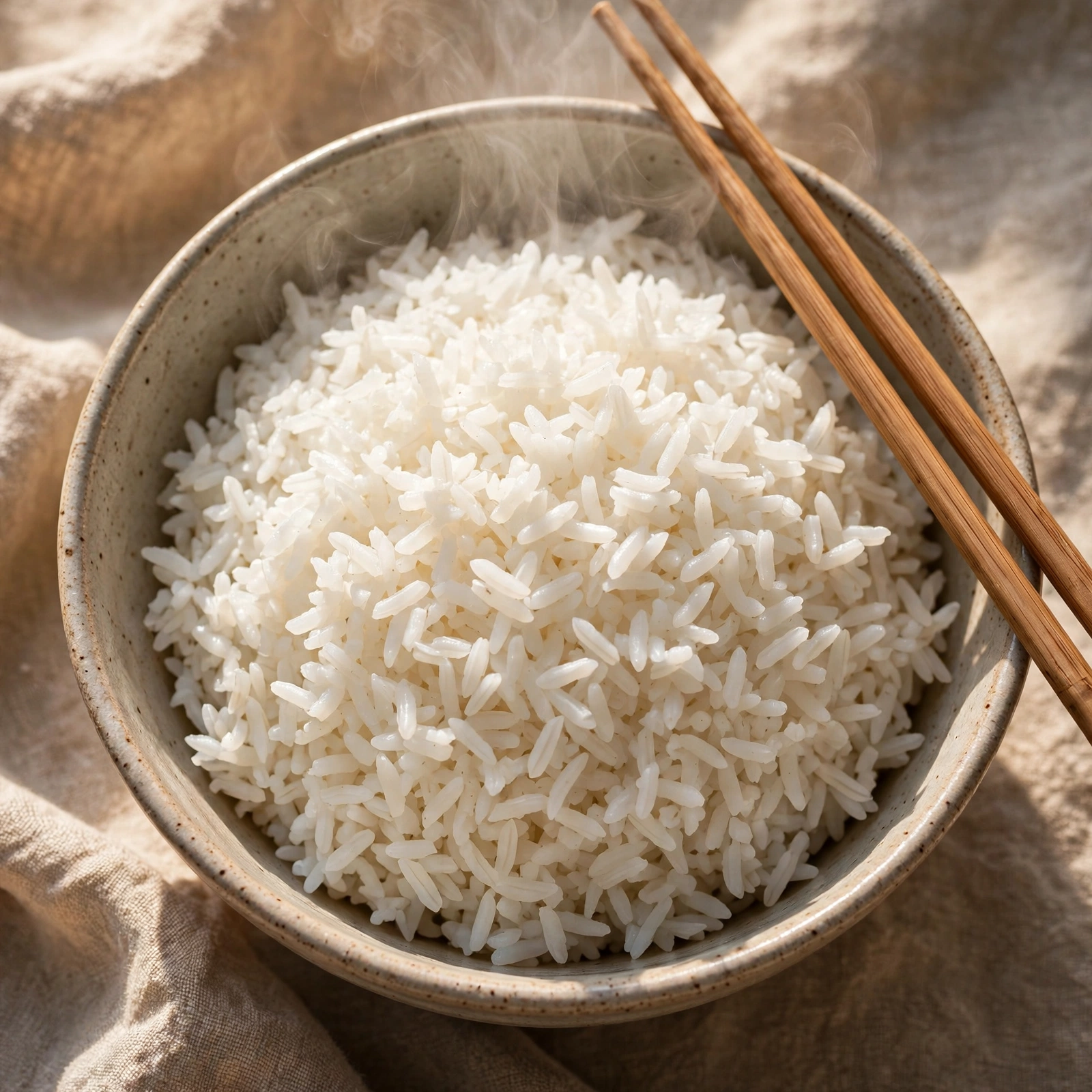
Jasmine rice is a long-grain aromatic rice grown mainly in Thailand, where it is called khao hom mali — literally "jasmine flower rice." The benchmark variety, Khao Dawk Mali 105, is grown across Thailand's north and northeast, with Cambodia and Vietnam producing their own jasmine cultivars as well.
Taste — flavor profile
The defining feature is the aroma. Lift the lid on a fresh pot and you get a floral, almost popcorn-like fragrance (the same family of aroma compounds found in pandan leaf). The grains cook up moist and soft with a faint natural sweetness, clinging together lightly — about three times as sticky as standard American long-grain rice, but nowhere near as gluey as glutinous rice. The texture is tender without being mushy, and each grain stays distinct enough to pick up with chopsticks.
In the Kitchen — how it's used in pan-Asian cooking
Jasmine rice is the default table rice across Thailand and much of Vietnam: the quiet foundation that balances bold, salty, and spicy dishes. It is the natural partner for bò lúc lắc — a bowl of steamed rice soaks up the savory pan juices. It also anchors cá kho tộ: spoon the caramel-dark braising liquid over the rice and eat them together.
Cook it with a gentle hand. Rinse the grains, use roughly equal parts rice and water by volume (slightly less water for new-crop rice), bring to a boil, then simmer low and covered until the water is absorbed. Let the pot rest off the heat for about ten minutes before fluffing — that rest is what gives you separate, glossy grains.
Buying — how to choose at the store
Look for bags labeled "Thai Hom Mali" or "khao hom mali" from Thailand if you want the real thing, since Thailand maintains an official standard for the name. Watch for "new crop" on the bag: jasmine rice's aroma fades noticeably as it ages, so a fresh harvest cooks up distinctly more fragrant. Long, translucent grains of consistent size signal good milling.
Storage
Keep uncooked rice in an airtight container in a cool, dry place; it keeps for months. Cooked jasmine rice refrigerates well for three to four days, and chilled leftover rice is ideal for fried rice, since the cold grains firm up and separate. For longer keeping, freeze portions in airtight bags and reheat with a sprinkle of water.
Substitutes — 2-3 substitutes with brief context each
- Standard long-grain white rice — handles everyday steamed-rice duty fine, though you will miss the floral aroma.
- Brown jasmine rice — the same fragrance with a chewier bite and longer cook time; a good pick when you want more texture.
- Glutinous (“sticky”) rice — not a true swap for steaming, but captures the cling-together spirit for dishes where that matters; it is too sticky for daily use.
Where to Buy
- Asian grocery stores
- Well-stocked supermarkets
- Online retailers
What to look for
Look for "Thai Hom Mali" and "Product of Thailand" on the bag — that is the protected name for true Thai jasmine rice. The grains should smell faintly floral when you open the bag.
What to avoid
Avoid bags that look dusty or have been sitting open in the store; old rice cooks up dry and flavorless.