
Identity — what it is
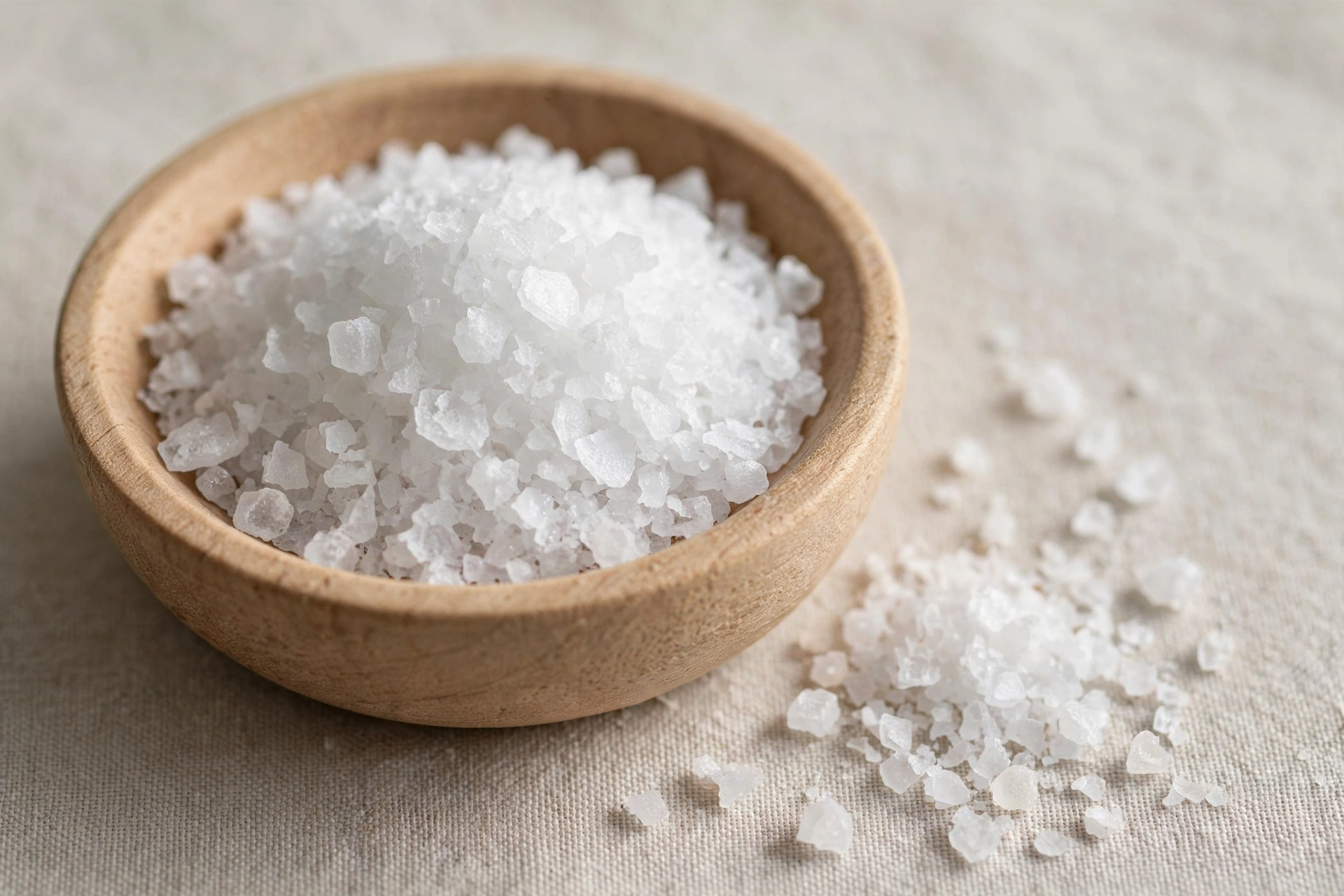
Kosher salt is a coarse-grained salt made without additives — no iodine, no anti-caking agents — originally produced for koshering meat, which is where the name comes from. Its large, flaky crystals dissolve quickly and are easy to pinch, which is why professional cooks season with it by hand rather than shaking it from a canister. It is the default seasoning salt for building flavor layer by layer.
Taste — flavor profile
Kosher salt tastes clean and purely salty, without the faint metallic edge some people detect in iodized table salt. Because the crystals are coarse and hollow, a spoonful of kosher salt contains less actual salt than the same spoonful of fine table salt — which means it is more forgiving when you season by feel.
In the Kitchen — how it’s used in pan-Asian cooking
Kosher salt is the salt you reach for at every stage: in the marinade, in the cooking liquid, and in the final adjustment. Vietnamese cooks use it in the muối tiêu chanh dip served with bò lúc lắc — salt mixed with cracked black pepper and lime juice, each diner dragging seared beef cubes through it. It seasons pickling brines like the one for đồ chua, where its additive-free purity keeps the brine clear, and it goes into doughs, batters, and soup broths where precise, clean salinity matters.
Season in layers rather than all at once: salt the protein before cooking, adjust the sauce as it reduces, and taste at the end. Food salted in stages tastes seasoned through; food salted once at the end tastes salty on the surface.
Buying — how to choose at the store
The two major brands differ in crystal size — Diamond Crystal’s flakes are lighter and hollower than Morton’s denser grains — so a tablespoon of one does not equal a tablespoon of the other. Pick one brand and learn its feel; consistency matters more than which you choose. Look for an ingredient list that says only “salt.” If a recipe was developed with the other brand, expect to adjust by feel rather than by the spoonful.
Storage
Salt never spoils — keep it dry and it keeps forever. The practical setup is a small open bowl or ramekin by the stove for pinching during cooking, refilled from a sealed box or bag stored in the cupboard. Keep the pinch bowl away from steam and splatter, and refresh it if it picks up moisture and clumps.
Substitutes — 2-3 substitutes with brief context each
- Sea salt (fine or coarse) — the closest swap; use it by weight rather than volume, since crystal sizes vary between brands and types.
- Table salt — works everywhere, but it is denser: use roughly half to two-thirds the volume of kosher salt, and expect a slightly sharper taste from the finer grain and additives.
- Flaky finishing salt — wonderful sprinkled over finished dishes for crunch and sparkle, but too precious and imprecise for everyday seasoning and brines.