
Identity — what it is (1-2 sentences)
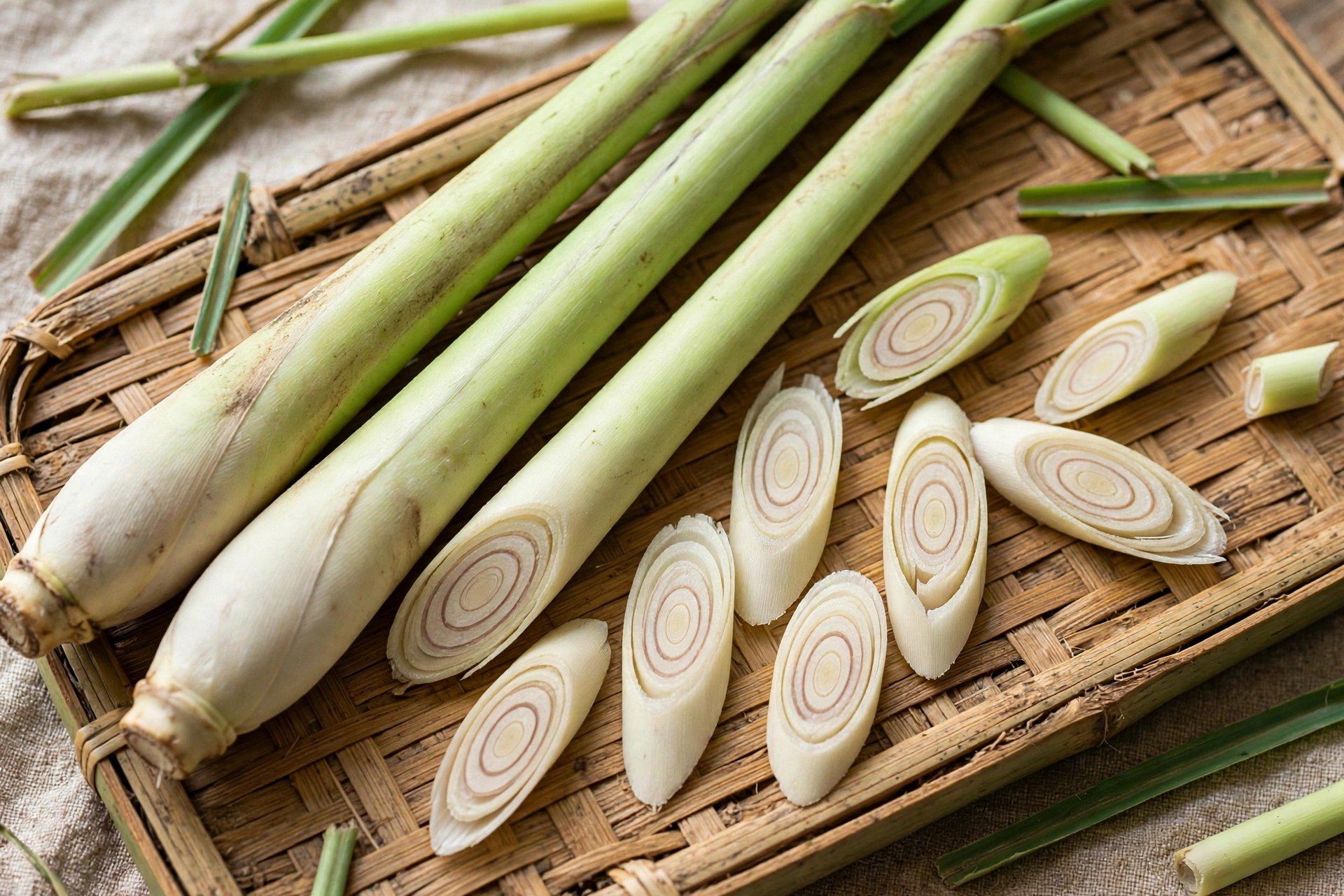
Lemongrass (*Cymbopogon citratus*) is a tall tropical grass whose fibrous stalks carry a bright citrus perfume. Known as *sả* in Vietnam, *tanglad* in the Philippines, and *serai* in Malaysia and Indonesia, it is a defining aromatic of Southeast Asian cooking.
Taste — flavor profile
Lemongrass tastes like lemon without the bitterness of lemon rind — light, refreshing, and clean, with a faint ginger-like warmth underneath (University of Wisconsin Extension). Its signature scent comes from citral, the same compound that gives lemon peel its lift. Unlike lemon juice, it never adds sourness, so it layers beautifully with garlic, chiles, and cilantro. Raw and unprepped, the stalk is woody and inedible; the flavor only releases once the tender inner core is bruised, sliced, or pounded.
In the Kitchen — how it's used in pan-Asian cooking
Lemongrass shows up in two forms: whole bruised stalks for simmering, and finely minced or pounded core for marinades and pastes.
In Vietnamese cooking, minced *sả* is a marinade essential — it seasons the beef cubes in Bò Lúc Lắc (Shaking Beef), where its citrus edge cuts the richness of the seared meat. It also perfumes clay-pot dishes like Cá Kho Tộ (Vietnamese Braised Fish in Clay Pot), simmering in the caramel sauce until the fish turns glossy and fragrant. In Thai kitchens, whole bruised stalks go into hot-and-sour soups and coconut curries, where they steep like bay leaves and are removed before serving.
Beyond savory dishes, the green tops and leftover stalks make a fragrant herbal tea — steep chopped fresh stalks in hot water, plain or alongside mint.
How to prep it: Slice off the dried root end and several inches of the woody green top — you want roughly the bottom 4–6 inches. Peel away the tough outer layers until you reach the pale, tender core. Bruise whole pieces with the back of a knife for soups, or slice the core into thin rings and mince it fine for marinades and stir-fries.
Buying — how to choose at the store
Look for stalks that feel firm and heavy with fairly green tops and a plump, slightly moist, yellowish base (Saveur; UW Extension). They should smell distinctly citrusy when you scratch the lower stalk. Avoid stalks that are dried out, brown at the top, or have visible soft or dark spots.
Storage
Wrap whole stalks tightly in plastic and refrigerate — they keep for about two weeks this way. Lemongrass also freezes well: freeze the whole stalk, or trim and chop it first and freeze it in a sealed bag for several months (Saveur; UW Extension). Frozen lemongrass is easier to slice thinly, so many cooks keep a stash in the freezer permanently. Dried stalks can be snipped into pieces and stored in an airtight jar, or ground to a powder.
Substitutes — 2-3 substitutes with brief context each
- Lemon zest: The closest pantry swap. A widely cited ratio is the zest of 1 lemon for about 2 stalks — it captures the citrus note but misses the herbal warmth, so add it near the end of cooking to keep it bright.
- Dried lemongrass: Roughly 1 teaspoon of dried equals 1 fresh stalk. It works in simmered dishes where the stalks steep and are removed; it lacks the fresh punch for raw-style marinades.
- Kaffir lime leaf or lemon zest + a sliver of fresh ginger: When a soup needs lemongrass’s perfume but you have none, a torn lime leaf (removed before serving) or a lemon-ginger combination approximates the citrus-floral character.
Where to Buy
- Asian grocery stores
- Farmers markets
- Well-stocked supermarkets
- Grow your own
What to look for
Choose firm, heavy stalks with a fragrant lemony smell when you scratch the base. The lower bulb should feel solid, not hollow.
What to avoid
Avoid dried-out, feather-light stalks or ones with mushy brown bases — they have lost most of their flavor.