
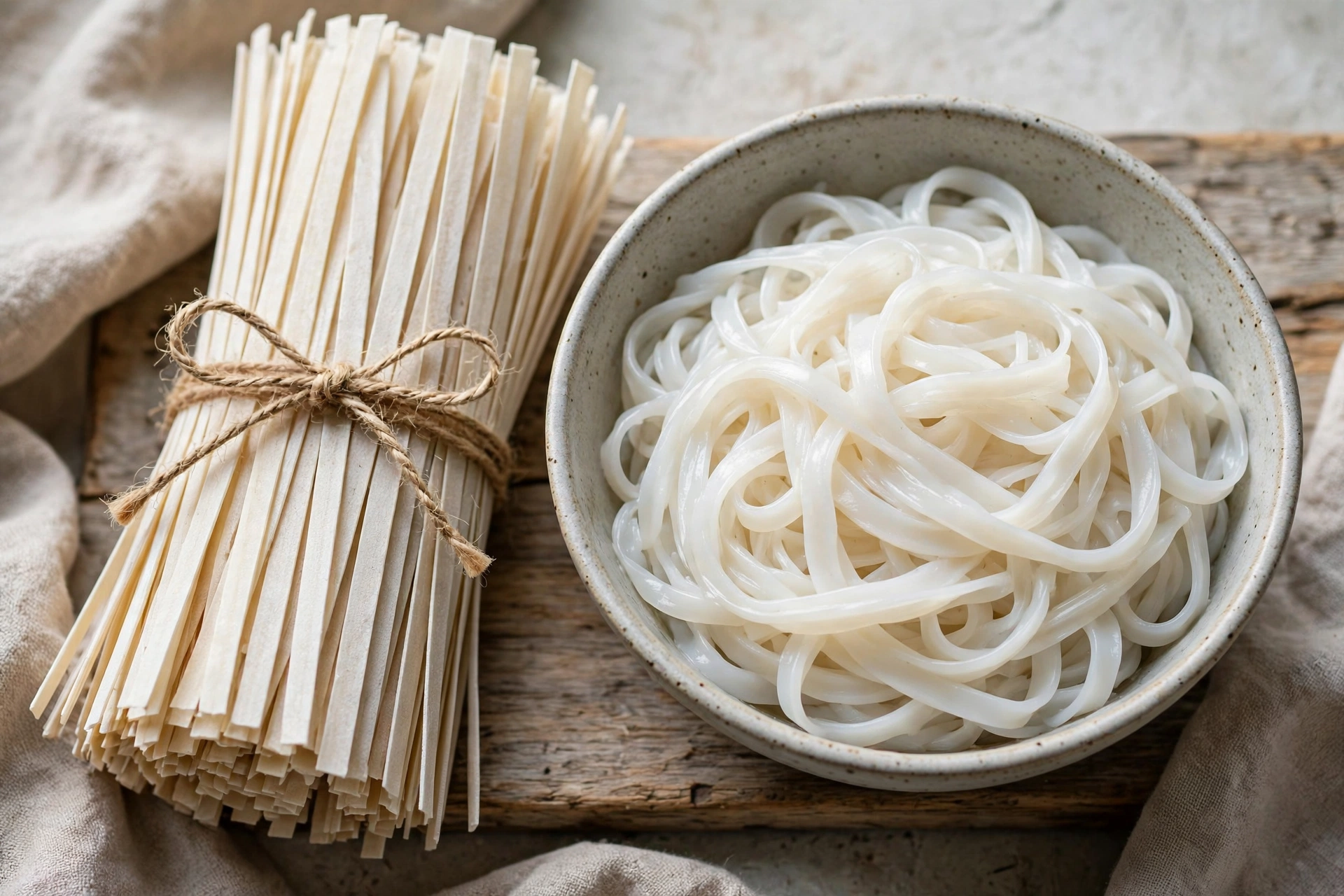
Identity — what it is
Rice noodles are noodles made from rice flour and water, steamed into sheets and cut — or extruded — into strands of different widths. They anchor the noodle soups of Vietnam and Thailand, show up across southern Chinese cooking, and are naturally gluten-free.
Taste — flavor profile
Rice noodles taste clean and neutral; their job is texture, not flavor. Fresh ones are soft, silky, and slippery with a tender chew, while dried ones rehydrate to something similar, just a touch firmer. Unlike wheat pasta, there is no al dente ideal here: undercooked is simply undercooked, and overcooked turns mushy fast.
In the Kitchen — how it's used in pan-Asian cooking
Width matters. Small rice sticks (sen lek, about 2 mm wide) are the classic choice for Vietnamese phở, where they swim in broth without overpowering it. Medium widths (around 3 mm) are the pad Thai noodle; broader flat ribbons go into stir-fries and braised dishes.
On this site you will find them in phở gà — reach for flat rice sticks labeled bánh phở — and in mì Quảng, where thick, flat noodles meet a turmeric-tinted broth. Dried noodles typically soak in hot water for ten to fifteen minutes before cooking; fresh ones need only a quick one- to two-minute blanch. Always cook the noodles separately from the broth to keep it clear, and give them a quick rinse to stop the cooking.
Buying — how to choose at the store
Match the noodle to the dish: look for bánh phở for phở, sen lek for the small sticks, and check the ingredient list — dried rice noodles should list just rice flour and water. Skip dusty, cracked bundles. Fresh rice noodles from the refrigerated or frozen aisle give the silkiest texture, but dried ones cook up beautifully with proper soaking.
Storage
Dried rice noodles keep six to twelve months in a cool, dry cupboard. Fresh noodles are perishable: refrigerate and use within a few days. They stiffen in the fridge, but a quick dip in hot water revives them. Cooked noodles keep a day or two refrigerated; toss them with a little oil to stop them from sticking together.
Substitutes — 2-3 substitutes with brief context each
- Wheat noodles (egg noodles, udon) — a different texture, but workable in brothy soups when rice noodles are not on hand.
- Mung bean (glass) noodles — another neutral, gluten-free option that soaks and cooks similarly and picks up broth flavors well.
- Spiralized vegetables (zucchini, daikon) — a light, grain-free bowl option; add at the very end so they stay crisp-tender.
Where to Buy
- Asian grocery stores
- Well-stocked supermarkets
- Online retailers
What to look for
Check the ingredient list: rice and water is all you need. Match the width to the dish — thin vermicelli for salads, flat wide sheets for pad see ew.
What to avoid
Avoid packages with lots of broken pieces at the bottom of the bag, and check the date — stale noodles turn brittle.