
Identity — what it is
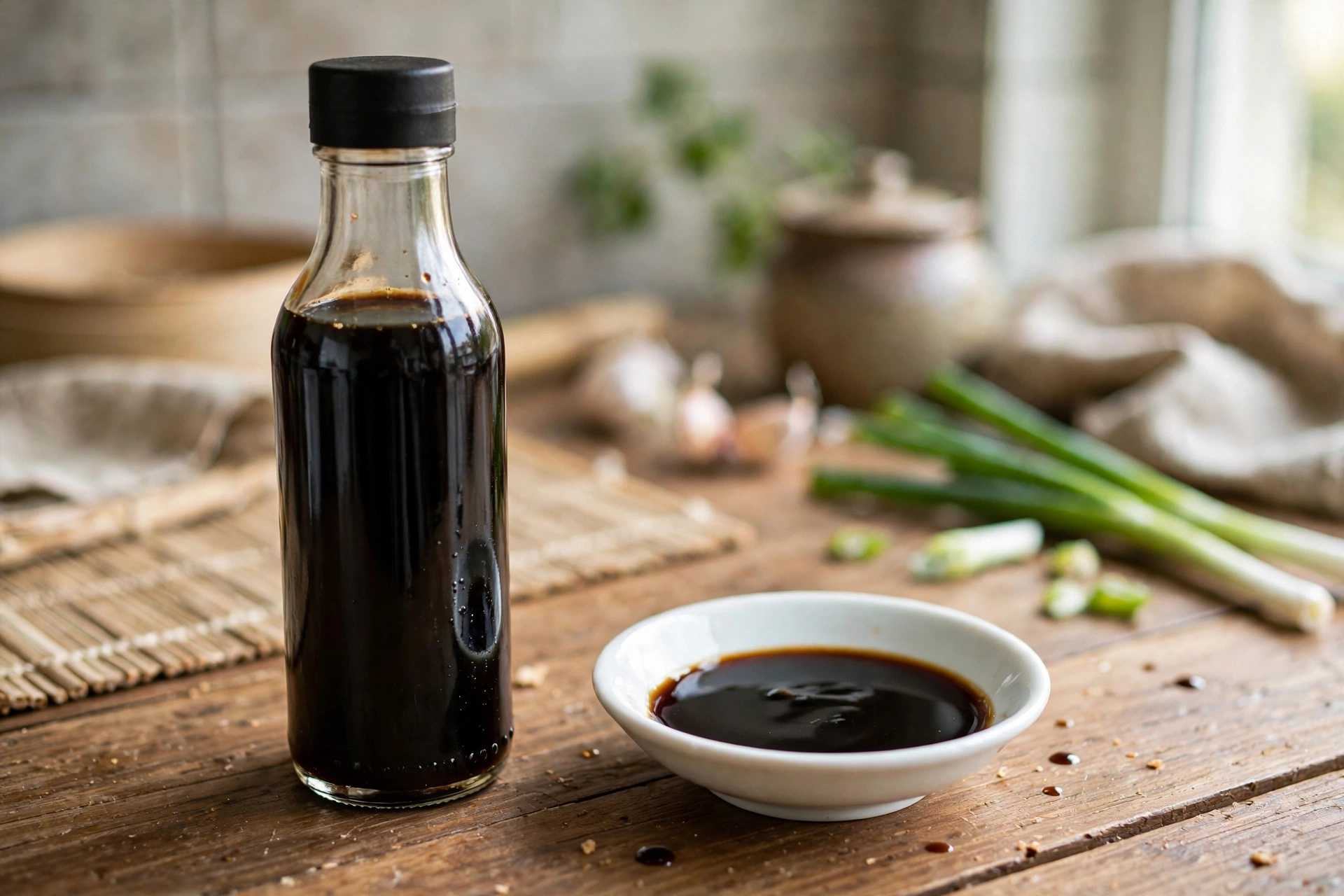
Soy sauce is a fermented seasoning made from soybeans, roasted wheat, salt, and water, aged for months until it turns into a dark, savory liquid. It is called nước tương or xì dầu in Vietnam, shoyu in Japan, and ganjang in Korea — and it is the single most-used bottled seasoning across East and Southeast Asian cooking. Most kitchens keep at least two kinds: light soy sauce for everyday seasoning, and dark soy sauce, which is thicker, darker, and slightly sweet, used in smaller amounts for color and depth.
Taste — flavor profile
Good soy sauce tastes salty first, then savory, with a rounded fermented depth underneath. Light soy is thinner and saltier, the workhorse for seasoning. Dark soy is less salty but richer, with a faint molasses-like sweetness from a longer aging and sometimes a touch of added sugar. Tamari, the Japanese variant brewed mostly from soybeans, tastes fuller and smoother, with a deeper roasted character.
In the Kitchen — how it’s used in pan-Asian cooking
Soy sauce seasons the way salt does, but it also adds color and a bass note of umami that salt alone cannot. Chinese cooks splash it into stir-fries at the end of cooking so it sizzles against the hot wok, and it anchors marinades for everything from dumpling fillings to roast meats. In Vietnamese kitchens, xì dầu mixed with a little sliced ginger becomes the dipping sauce for poached chicken, and it seasons the marinade for bò lúc lắc, where its savoriness balances the lime-pepper dip served alongside. Japanese cooking uses it in the sweet vinegar dressing for Japanese cucumber sunomono, where just a spoonful gives the salad its savory backbone.
Buying — how to choose at the store
Look for “naturally brewed” on the label and an ingredient list that reads like the real thing: soybeans, wheat, salt, water. Bottles made by chemical hydrolysis taste flat and sharp by comparison. For everyday cooking, a standard light (or “all-purpose”) soy sauce covers most needs; add a small bottle of dark soy when you start braising. If you avoid gluten, tamari is the usual pick — most tamari is brewed with little or no wheat, but check the label since it is not guaranteed.
Storage
Unopened, soy sauce keeps for years in a cool, dark cupboard. After opening, it can stay in the cupboard, but refrigeration keeps the flavor brighter for longer — especially for premium bottles. If the color darkens significantly or the aroma turns flat, it is past its best, though still safe.
Substitutes — 2-3 substitutes with brief context each
- Tamari — the closest swap, slightly richer and smoother; use it one-for-one in most dishes.
- Coconut aminos — milder, a touch sweet, and lower in sodium; good in dressings and marinades, though it lacks soy sauce’s fermented depth.
- Fish sauce — not a flavor match, but it supplies the same salty-savory punch in Southeast Asian dishes; start with half the amount and adjust.