
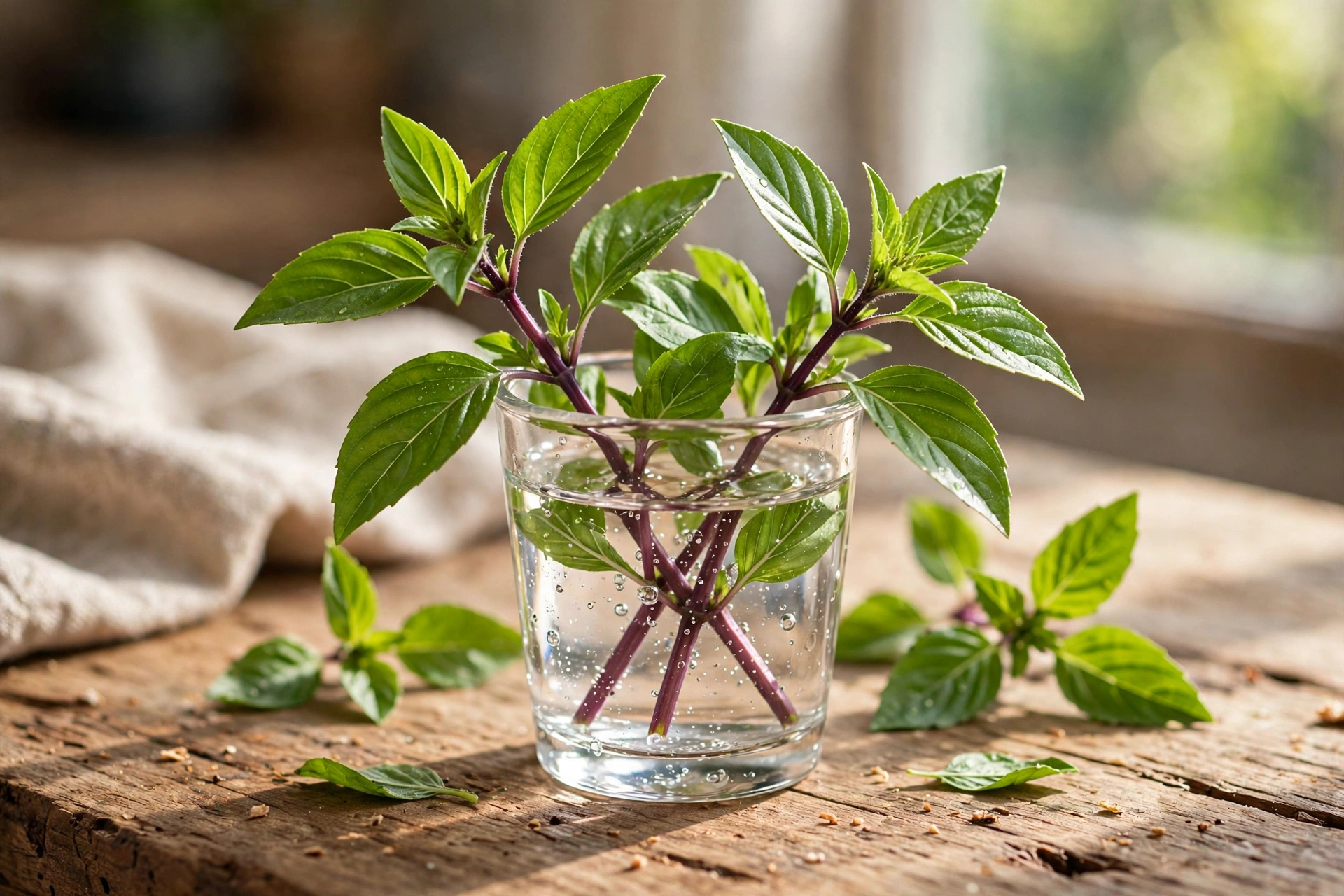
Thai basil — horapha in Thai, rau húng quế in Vietnamese — is a variety of sweet basil (Ocimum basilicum var. thyrsiflora) bred for Southeast Asia’s heat. It has sturdy purple-tinged stems, narrow green leaves, and a hardier constitution than its Italian cousin.
Taste
Thai basil is spicier and more assertive than Italian sweet basil, with a pronounced anise-licorice note layered over peppery, minty freshness. It also handles heat better: where sweet basil blackens and wilts, Thai basil survives a hot wok or a ladle of boiling broth, which is why it can be tossed into curries and soups while they are still cooking. That anise edge is what makes it unmistakable in a curry or a bowl of phở — sweet basil simply reads as a different herb.
Used In
In Vietnam it lands on the herb plate served with phở — tear it into phở gà at the table and let the hot broth release its aroma. Thai cooks fold it into green and red curries at the last minute, scatter it over stir-fries, and float whole sprigs in soups. The small purple flowers are edible too, with a stronger bite.
Buy
Look for vibrant green leaves and purple-tinged stems — that is the visual signature. Skip bunches with blackened or slimy leaves. Thai basil is widely sold at Asian markets and many mainstream grocers, and it grows easily from seed or nursery starts if you want a fresh supply on hand.
Prep
Rinse the leaves just before cooking and pat them dry — wet leaves spatter in a hot wok and dilute a sauce. Tear leaves by hand or roll and slice them; handle them once and add them late, because bruised edges blacken quickly.
Store
Treat it like cut flowers: trim the stems and stand the bunch in a glass of water on the counter. Basil dislikes the cold, and this keeps it fresh longer than refrigeration. Wrapped loosely in a damp paper towel inside a bag, it keeps in the fridge for a few days. It also freezes — wash, dry thoroughly, and seal in an airtight bag; thawed leaves suit cooked dishes.
Grow
Thai basil is one of the easiest Asian herbs to keep on a windowsill or patio: a pot, full sun, and warm weather will carry it through the season, and pinching the tips keeps it bushy. Our step-by-step guide covers pots, spacing, and harvest timing: How to Grow Thai Basil in Pots.
Cook With It
Add Thai basil at the end of cooking — into the hot wok last, off the heat, so the perfume survives — or tear it over finished bowls at the table. Recipes on this site that use it:
- Thai Green Curry with Chicken
- Pho Ga: Vietnamese Chicken Noodle Soup
- Vietnamese Chicken Cabbage Salad (Goi Ga)
Or tell the matcher what else is in your kitchen and see everything it unlocks.
Have Too Much?
Blend a big bunch into a pesto-style sauce with garlic, chiles, and oil, or freeze whole leaves in oil in an ice-cube tray and drop a cube into curries and soups later. Stems are too woody to eat but can scent a stock — remove them before serving.
Missing It?
Italian sweet basil is the easiest swap — milder and less anise-like, so use more of it and add it later in cooking. Holy basil (krapow) is peppery and clove-like rather than anise-y, and is the traditional choice for Thai stir-fries. Mint plus a pinch of star anise or fennel seed is an improvised stand-in that echoes Thai basil’s cool-and-warm duality in a pinch. None of these is quite Thai basil; expect a good dish, not the same one.
Ingredient ID: i-thai-basil · See the full Ingredient Atlas for more passports like this one.
Where to Buy
- Asian grocery stores
- Farmers markets
- Grow your own
What to look for
Look for vivid green-purple leaves with no black spots, and give the bunch a sniff — it should smell strongly of anise and clove. Stems should be firm, not slimy.
What to avoid
Avoid wilted bunches or leaves with dark patches; Thai basil bruises easily and declines fast once damaged.