
Khao piak sen is the bowl I make when I want chicken noodle soup with more chew and more aroma than the version I grew up with. The broth is light, seasoned with ginger, lemongrass, garlic, and fish sauce, and the noodles are cut by hand from a two-flour dough. They cook in minutes and turn soft on the outside while staying springy in the middle.
The part that matters most is the noodle dough. I use equal parts rice flour and tapioca starch, one cup of each, with boiling water. The tapioca gives the chew, the rice flour keeps the noodle tender, and the boiling water is what binds the dough at all. Warm or room-temperature water leaves a dough that crumbles instead of holding together, so the kettle has to be at a full boil when it hits the flour.
What is khao piak sen?
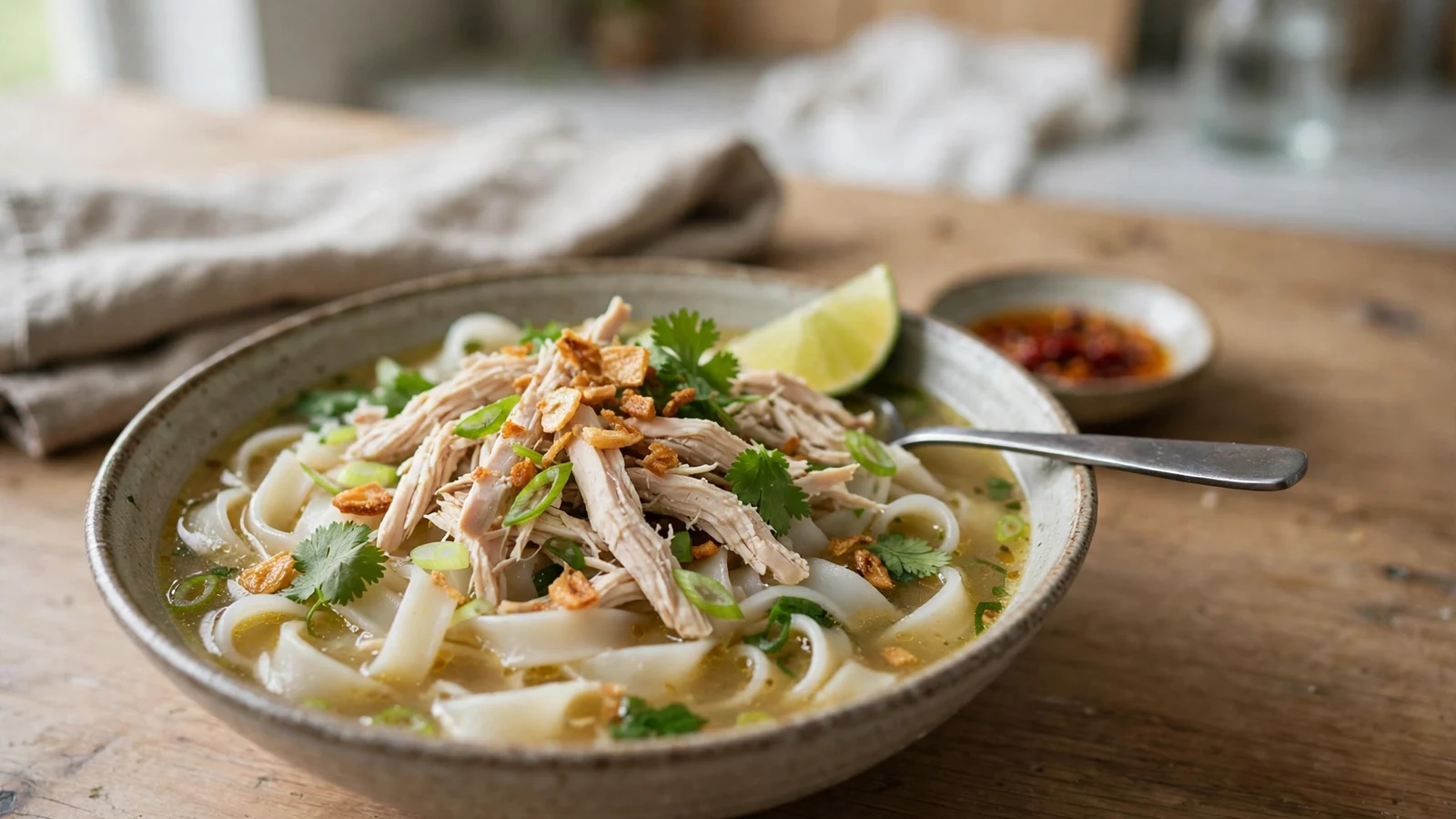
Khao piak sen is a Lao chicken noodle soup built around fresh rice noodles. The name points to the noodles themselves, wet rice noodles cut thick, closer to a wide udon shape than to thin rice vermicelli. The soup is a morning staple in Laos, served with shredded chicken, scallions, cilantro, fried garlic, and lime, and each eater seasons a bowl with fish sauce, chili oil, or extra lime at the table.
The broth stays light on purpose. It is a chicken broth with ginger and lemongrass, not a curry and not a heavily spiced stock, so the noodles and the toppings carry most of the flavor. If you cook the noodles right in the broth, the starch thickens it into a slightly silky soup. If you cook them in a separate pot, the broth stays clear. Both versions are served in Laos, and this recipe tells you how to choose.
A close cousin on this site is Lao Khao Poon: Red Curry Noodle Soup, which uses a coconut curry broth instead of this clear one. For a Lao table, Tam Mak Hoong: Lao Papaya Salad makes a sharp, crunchy side to the soft soup.
The broth
Start with bone-in chicken, thighs or a small whole chicken, because bones give the broth body that boneless breast cannot. Put the chicken in a pot with 12 cups of cold water, two bruised lemongrass stalks, a thumb of sliced ginger, a halved onion, and six smashed garlic cloves. Bring it to a boil, skim the foam that rises in the first ten minutes, then turn the heat down to a gentle simmer.
Skimming is the step that decides whether the broth looks clear or murky. Foam left in the pot breaks apart and clouds the soup, and no amount of seasoning fixes the look afterward. After about 40 minutes the chicken should pull easily from the bone. Lift it out, shred the meat, and season the broth with fish sauce and salt, tasting as you go. Fish sauce varies by brand, so add a tablespoon at a time until the broth tastes seasoned but not salty.

The noodles
Mix 1 cup rice flour, 1 cup tapioca starch, and 1/2 teaspoon salt in a bowl. Pour in 3/4 cup of boiling water and stir with a wooden spoon until the mixture cools enough to handle, then knead it by hand until smooth. If the dough crumbles, add boiling water one tablespoon at a time. If it sticks to your hands, dust in a little more tapioca starch. The finished dough should feel like soft play dough, smooth and not sticky.
Rest the dough for 10 minutes under a damp cloth. Roll it out on a floured surface to about 1/4 inch thick, thinner than you think you need, because the noodles swell as they cook. Dust the sheet with tapioca starch, fold it loosely, and cut it into strips about 1/2 inch wide. Toss the cut noodles with more starch so they do not stick together while the broth finishes.

Cooking the noodles two ways
For a thicker soup, slide the noodles straight into the simmering broth and stir gently so they do not clump. They cook in 2 to 3 minutes and turn partly translucent when they are done. The starch that comes off the noodles thickens the broth into a silky texture that clings to each spoonful.
For a clear broth, boil the noodles in a separate pot of water for the same 2 to 3 minutes, drain them, and divide them among bowls before ladling the hot broth over the top. This is the version to pick when you plan leftovers, since noodles stored in broth soak up the liquid overnight and leave almost no soup by morning.
Either way, return the shredded chicken to the pot for the last minute so it heats through, then ladle the soup into warm bowls. Top each bowl with sliced scallions, cilantro, and a spoonful of fried garlic. Serve lime wedges, chili oil, and extra fish sauce at the table so each person seasons a bowl to taste.
The same gentle-simmer logic applies to other chicken soups on this site. My Wonton Soup uses a lighter broth with the same skim-and-simmer approach, and the difference between the two bowls comes down to the noodle, not the method.
How to serve khao piak sen
Serve the soup hot, in deep bowls, with the toppings in small dishes on the side. Fried garlic matters more than it looks: it adds a toasted, savory crunch that the soft noodles and light broth do not have on their own. Make it by frying thinly sliced garlic in a little oil over medium heat until light gold, then lifting it out at once, since it darkens fast off the heat.
Leftovers keep in the fridge for up to 3 days, but store the noodles apart from the broth when you can. If a stored batch has already thickened into a solid mass, add about 1/2 cup of water per bowl, heat it gently, and season again with a little fish sauce. The noodles will loosen and the soup will taste right again.

Troubleshooting: Fix My Khao Piak Sen
If the dough crumbles, the noodles clump, or the broth turns out cloudy, the cause is usually the water temperature, the dusting, or where the noodles were cooked. The section below covers the five problems that come up most with this soup.
HERB & LIME · KITCHEN HELP
Fix My Khao Piak Sen
Choose what went wrong to see a practical next step.
Possible cause
What to try next
For next time
From Paul's kitchen. Results vary with chicken size, flour brand, and stove heat, adjust timing to your setup.
Quick reference (also works without JavaScript)
The noodle dough crumbles and will not hold together
Cause: The water was not hot enough to activate the tapioca starch, so the dough never fused.
Try: Start a fresh batch with water at a full boil, stirred in with a wooden spoon until cool enough to knead.
Prevent: Always pour boiling water over the flours, and knead tightly until the dough feels smooth like soft play dough.
The noodles fall apart in the pot
Cause: Too much water in the dough makes a weak noodle that breaks when it cooks.
Try: For the next batch, hold back some water and add it one tablespoon at a time only until the dough just comes together.
Prevent: Measure flour and water with the same cup, and stop adding water as soon as the dough forms a smooth ball.
The noodles stick together in a clump
Cause: Fresh rice noodles were not dusted with enough starch between folds and after cutting.
Try: Gently pull apart what you can and stir the noodles into the broth one handful at a time so they separate as they cook.
Prevent: Dust the sheet with tapioca starch before every fold and toss the cut noodles with more starch before they rest.
The broth turned thick and cloudy when I wanted it clear
Cause: Noodles cooked in the broth release starch, which thickens and clouds the soup.
Try: For this pot, serve it as the thicker style, it is a traditional version of the soup, and cook the next batch of noodles in a separate pot.
Prevent: Boil noodles in plain water, drain them, and ladle the hot broth over the top for a clear bowl.
The leftovers turned into a solid mass with no broth
Cause: Noodles left in the soup soak up the broth overnight until almost no liquid is left.
Try: Add about half a cup of water per bowl, heat gently, and season again with a little fish sauce.
Prevent: Store noodles apart from the broth whenever you can, and cook only what you plan to serve that day.
Recipe card
Khao Piak Sen: Lao Chicken Noodle Soup
Ingredients
Method
- Put the chicken, water, lemongrass, ginger, onion, and garlic in a large pot. Bring to a boil over high heat, skim the foam, then reduce to a gentle simmer and cook for about 40 minutes, until the chicken pulls easily from the bone.
- While the broth simmers, mix the rice flour, tapioca starch, and 1/2 teaspoon salt in a bowl. Pour in 3/4 cup boiling water, stir with a wooden spoon until cool enough to handle, then knead until smooth, adding boiling water one tablespoon at a time if the dough crumbles.
- Rest the dough for 10 minutes under a damp cloth. Roll it out on a floured surface to about 1/4 inch thick, dust with tapioca starch, fold loosely, and cut into strips about 1/2 inch wide. Toss the cut noodles with more starch.
- Lift the chicken from the broth, shred the meat, and discard the bones and aromatics. Season the broth with fish sauce and 1 teaspoon salt, tasting as you go.
- For a thicker soup, slide the noodles into the simmering broth and stir gently, cooking for 2 to 3 minutes until partly translucent. For a clear broth, boil the noodles in a separate pot of water for 2 to 3 minutes, drain, and divide among bowls.
- Return the shredded chicken to the pot for 1 minute to heat through, or ladle the broth and chicken over the drained noodles.
- Top each bowl with scallions, cilantro, and fried garlic. Serve with lime wedges, chili oil, and extra fish sauce at the table.
Notes
More Lao recipes
- Lao Khao Poon: Red Curry Noodle Soup
- Tam Mak Hoong: Lao Papaya Salad
- Chicken Larb with Mint and Lime
From the garden
Lemongrass is the one ingredient here I grow in a pot by the kitchen door. A stalk cut low, with the dry top trimmed off and the base bruised with the flat of a knife, gives the broth the same citrus note as a store-bought stalk, and the plant sends up a replacement shoot within weeks.