
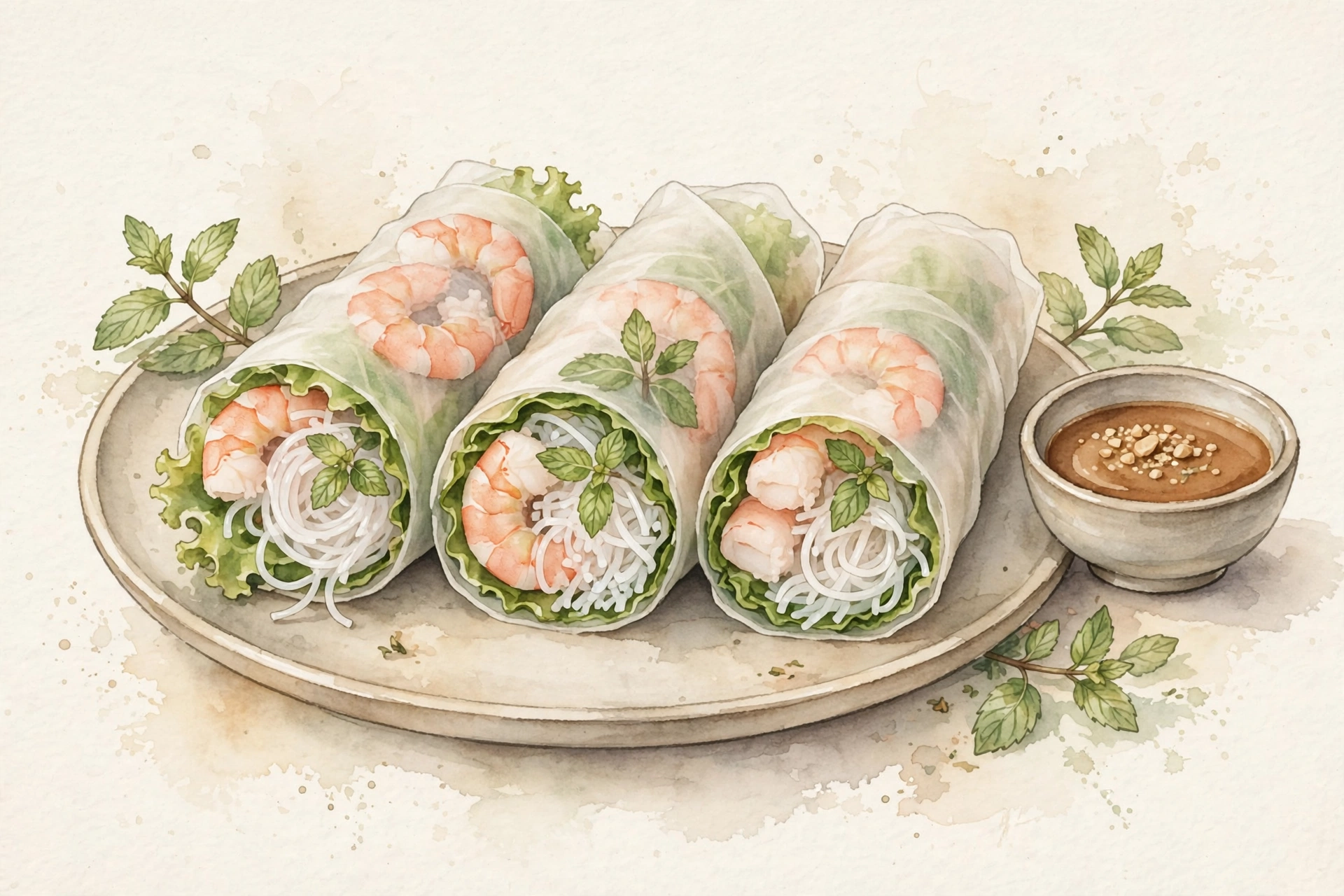
Goi cuon are the fresh, unfried Vietnamese spring rolls: translucent rice paper wrapped around shrimp, vermicelli, lettuce, and a tangle of fresh herbs. They are cool, light, and entirely about texture — the soft wrapper, the snappy herbs, the pink spiral of shrimp visible through the skin.
Rolling takes a little practice, but the technique is forgiving: a quick dip of the wrapper, snug (not tight) rolling, and a damp towel to keep finished rolls from sticking.
Ingredients
Makes 12 rolls.
- 12 round rice paper wrappers (22 cm / 8.5 inch)
- 24 medium shrimp (21/25 count), peeled and deveined — 2 per roll
- 4 oz (115 g) rice vermicelli noodles, cooked per package directions, rinsed cold and drained
- 12 butter lettuce leaves (or romaine hearts), ribs trimmed
- 1 cup fresh mint leaves
- 1/2 cup fresh cilantro leaves
- 1/2 cup Thai basil leaves
- 1 cucumber, cut into thin matchsticks
- 1 carrot, cut into thin matchsticks (or pickled carrots and daikon, do chua)
For serving: nuoc cham (Vietnamese dipping sauce) or peanut dipping sauce.
Method
- Cook the shrimp fully: bring a pot of salted water to a boil, add the shrimp, and cook until they are opaque and pink throughout with an internal temperature of 145°F (63°C) — about 2 minutes for medium shrimp. Immediately transfer to ice water to stop the cooking. Pat dry, then slice each shrimp in half lengthwise (this gives the pretty pink spiral visible through the wrapper).
- Cook the vermicelli per the package, rinse under cold water, and drain well — wet noodles make soggy rolls.
- Set up a rolling station: a wide shallow dish of warm (not hot) water for the rice paper, a damp clean towel or cutting board as the rolling surface, and all fillings within reach.
- Rice paper hydration: dip one wrapper in the warm water for 5 seconds — it should still feel slightly stiff when you pull it out. It softens as it sits. Over-soaking (leaving it in until fully soft) is the number-one beginner mistake; the wrapper turns gummy and tears. If the water cools down, refresh it with warm water.
- Lay the wrapper on the damp surface. About 1 inch from the bottom edge, layer: a lettuce leaf, a small bundle of vermicelli, cucumber and carrot matchsticks, and a few herb leaves.
- Fold the bottom edge up over the filling, fold in both sides, then place 2 shrimp halves (cut side down, pink side out) just above the folded section, and roll up firmly but gently. The roll should be snug — loose rolls fall apart; too-tight rolls tear.
- Cover finished rolls with a damp towel so they do not dry out or stick together. Do not stack them touching.
Tips and ingredient notes
- Rice paper: 22 cm rounds are standard; smaller ones are harder to roll. If a wrapper tears, it was either over-soaked or over-filled — both are fixable technique issues, not product flaws.
- Shrimp size: medium (21/25) fits the roll proportions; large shrimp overwhelm it. This recipe uses fully cooked shrimp only — raw shrimp are not used at any point.
- Lettuce: butter lettuce is pliable and traditional; romaine hearts add crunch. Avoid iceberg wedges (too thick).
- Herbs: mint is the non-negotiable one; cilantro and Thai basil to taste.
- Make-ahead limit: these are best within a few hours of rolling. Refrigerating makes the wrappers tough and chewy — serve the same day.
Storage and food safety
Allergen note: contains shellfish (shrimp). Serve with nuoc cham (contains fish) or peanut dipping sauce (contains peanuts) — check the dipping sauce allergens separately. Eat within a few hours of rolling; refrigerate leftovers promptly and do not hold overnight.