Ingredients
Method
- In a large pot, combine the fish, water, lemongrass, ginger, garlic, onion, turmeric, and fish sauce. Bring to a boil, then lower to a gentle simmer and cook 10-12 minutes, until the fish flakes easily.
- Lift out the fish, break it into bite-size chunks, and discard any bones. Strain the broth through a fine-mesh sieve and discard the spent aromatics.
- In a dry skillet over medium heat, toast the rice, shaking often, 4-5 minutes until deep golden and nutty-smelling. Cool, then grind to a fine powder in a spice grinder.
- Whisk the chickpea flour into the 1/2 cup cold water until completely smooth with no dry pockets.
- In the same pot, heat the peanut oil over medium heat. Add the shallots and cook 4-5 minutes until soft and translucent. Stir in the paprika, then add the flaked fish and cook 2 minutes so it picks up the seasoned oil.
- Pour the strained broth back into the pot and bring to a bare simmer. Slowly drizzle in the chickpea slurry while whisking constantly, then whisk in the toasted rice powder. Keep whisking until the broth starts to thicken.
- Add the banana stem or bamboo shoots (and shrimp paste, if using). Simmer 20-25 minutes, stirring now and then, until the broth coats the back of a spoon. Season with more fish sauce to taste.
- Cover the vermicelli with just-boiled water, soak 15 minutes until tender, then drain and rinse under cold running water. Shake the colander dry.
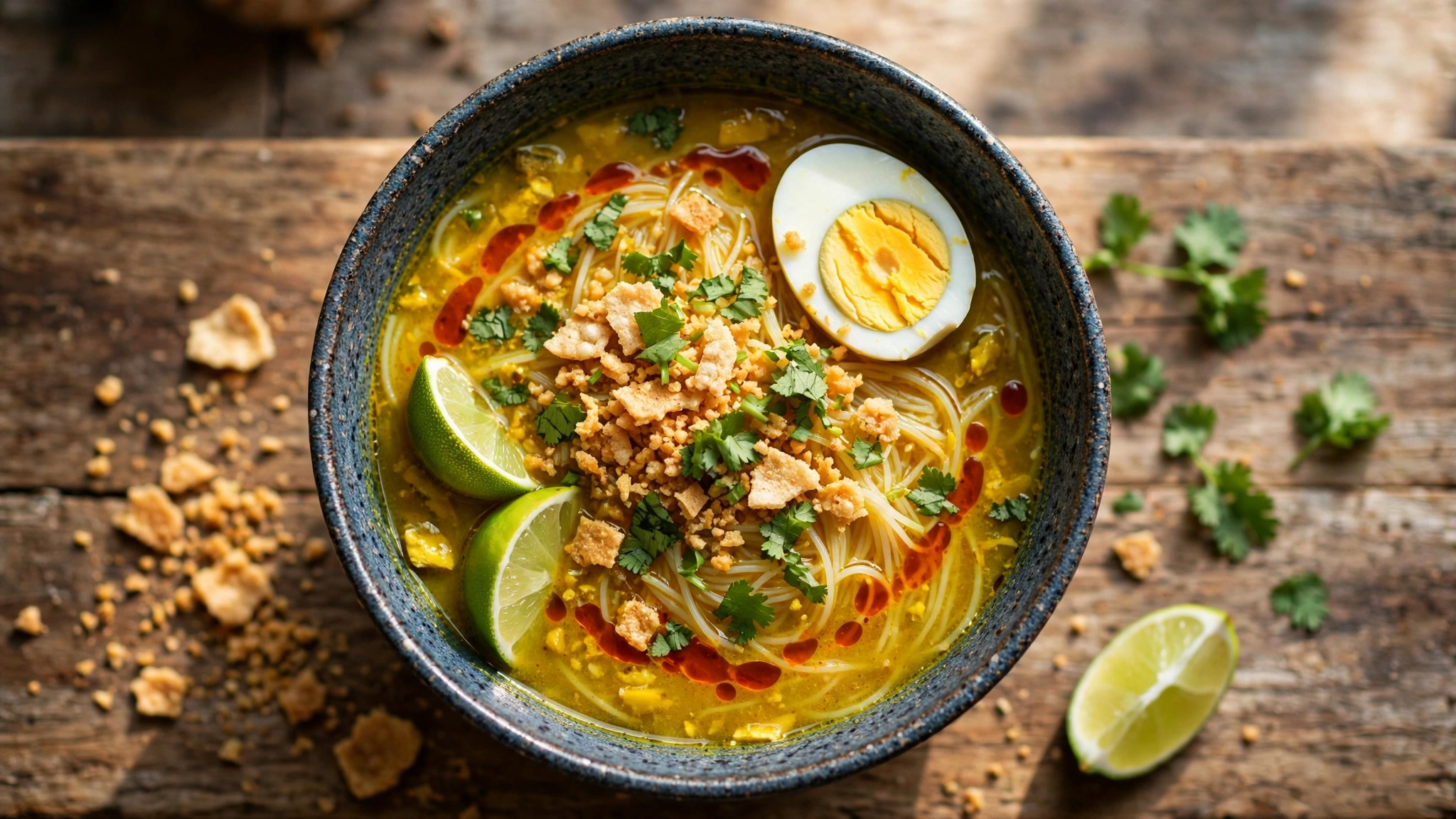
- Divide a handful of noodles into each bowl and ladle the hot broth over. Top with egg halves, a handful of crushed crackers, and cilantro. Serve with lime wedges, chili oil, and fish sauce so everyone finishes their own bowl.
Notes
Note 1: Make the slurry with cold water and pour it in slowly while whisking. Chickpea flour poured straight into a hot pot turns to lumps on contact; the same flour whisked into cold water first vanishes into the broth in seconds.
Note 2: Toast the rice until deep golden and nutty-smelling, not just pale. The toast color is what gives mohinga its dark-yellow glow; pale rice leaves a raw, starchy edge in the finished broth.
Note 3: If banana stem isn't available, canned bamboo shoots are the honest substitute — rinse them well under cold water first to tame the can flavor.
Note 4: Pull the fish off the heat as soon as it flakes. Overcooked poached fish breaks into mush and clouds the broth with a strong fishy edge.
Note 5: Leftover broth keeps 4 days refrigerated and thickens as it sits — thin with a splash of water when reheating, and always keep the noodles separate so they don't swell into the soup.